


Content last revised on October 25, 2026
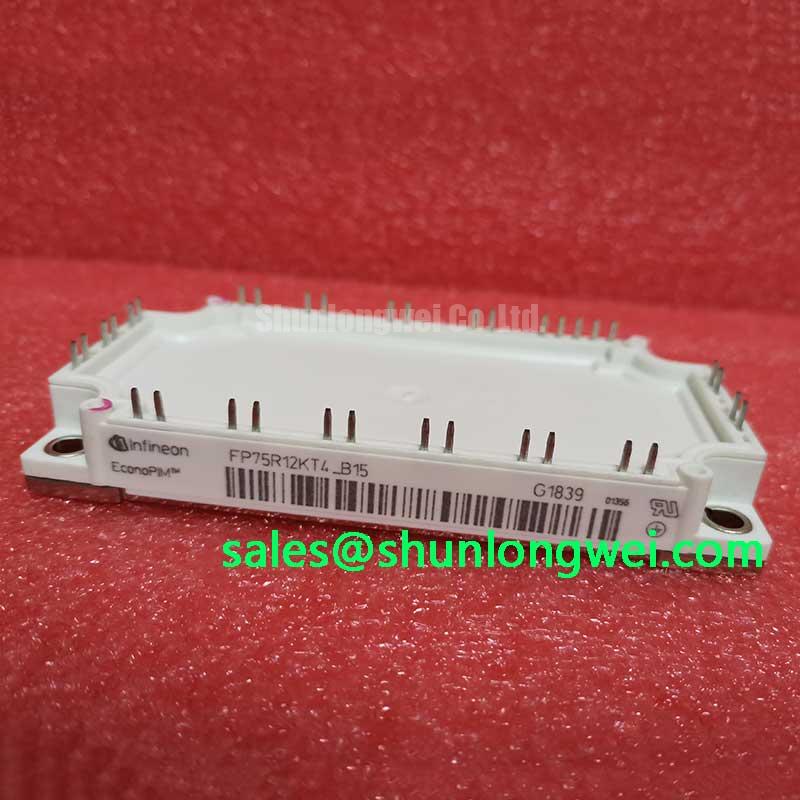
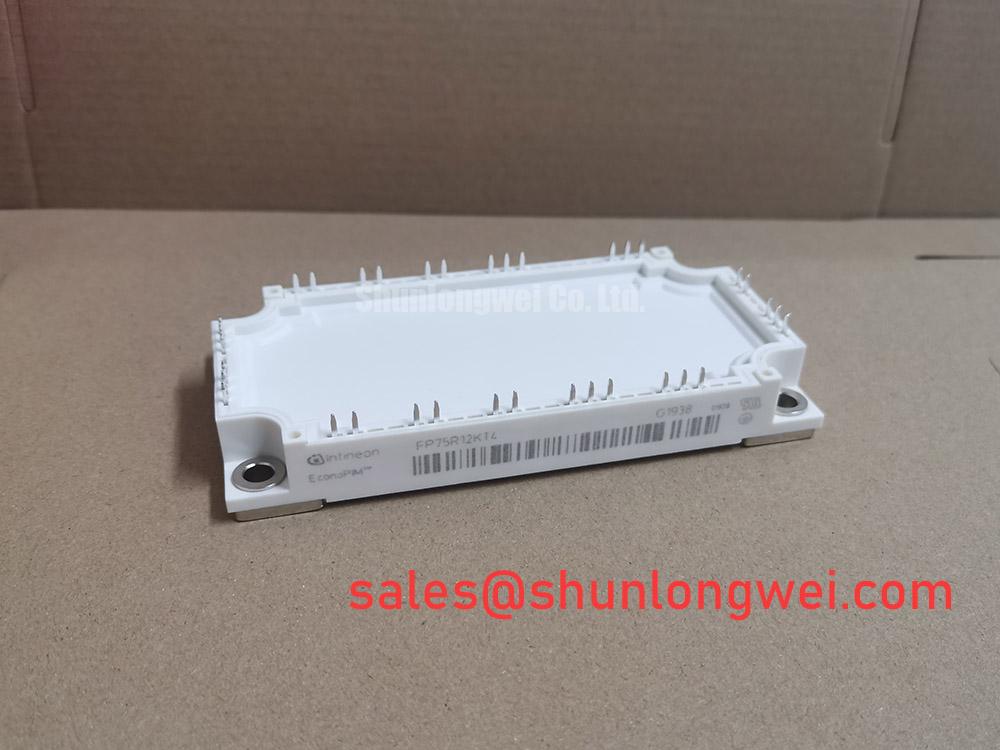
FP75R12KT4_B11 Operational Boundaries: Pre-Installation Junction Health Check
Cold screening should begin with the high-power terminals disconnected from the bus, motor, transformer, and any snubber network. Confirm that the module is fully de-energized and that stored energy has been safely discharged through the equipment’s approved discharge circuit. In diode-check mode, measure the expected forward-conduction paths in both polarities and compare readings between corresponding terminals where the module topology permits. The purpose is comparative screening rather than assigning a universal “pass” voltage to every meter and junction combination.
The antiparallel diode path deserves separate attention because a damaged diode can affect commutation even when the IGBT path appears open under a basic resistance test. Record the meter polarity, lead position, ambient condition, and instrument used. A reading that changes materially when the probes are repositioned, or a path that remains strongly conductive in both directions, warrants isolation from the surrounding circuit and a repeat measurement with short, clean test leads. Parallel components on the inverter power board can otherwise make a healthy module appear abnormal.
Gate leakage checks should be performed with the gate terminal referenced to its emitter according to the equipment service procedure. Keep the gate protected from uncontrolled static charge, avoid touching the terminal during measurement, and do not apply a drive voltage during this cold inspection. A low-resistance gate reading, unstable meter behavior, or unexpected continuity between gate and power terminals should be treated as a reason for controlled bench investigation rather than an immediate field energization decision.
For installation, inspect the EasyPIM mounting surface, terminal interfaces, insulator condition, and the mating busbar for contamination or mechanical distortion. The heatsink contact area should be clean and flat enough to support even thermal transfer. Designers should also preserve the required creepage and clearance of the complete assembly, especially where the 1200.0 V class rating is being evaluated in a humid cabinet or near conductive dust. The module rating does not independently certify the final assembly for insulation coordination, EMC, or safety compliance.
An industrial inverter welder and a medium-frequency induction heating supply can impose different current waveforms and commutation stresses. Before substitution, compare the original circuit topology, gate-driver arrangement, cooling method, terminal orientation, and protection network. The FD200R12KE3 may be reviewed as a separate, neutral comparison point when the equipment design calls for a different current class or electrical arrangement; it should not be treated as an automatic replacement.
FP75R12KT4_B11 Circuit Protection & Reliability: Calibrating High-Frequency Common-Mode Bearing Current
Long motor leads and discontinuities between the inverter output, cable, motor, and filter can create transmission-line reflections. Under an unfavorable impedance relationship, terminal voltage excursions may approach twice the local DC-link voltage, creating additional stress on the IGBT module, motor insulation, and cable termination. This is a design consideration, not an operating guarantee for this specific module. Verify the actual waveform at the module terminals and motor end with a suitably rated differential probe during controlled switching tests.
Common-mode current can also travel through motor bearings, shields, cabinet bonding paths, and protective earth conductors. The resulting current depends on switching transitions, parasitic capacitance, cable construction, motor geometry, grounding practice, and the filter topology. When investigating bearing-current alarms or unexplained high-frequency noise, measure common-mode current and compare it with the known-good equipment configuration rather than attributing the symptom to the module alone.
An output dv/dt filter or common-mode choke should be selected from measured switching behavior, cable length, motor insulation requirements, and the allowable loss and temperature rise of the complete drive. Its impedance must remain compatible with the control loop and commutation path. The filter manufacturer’s insertion-loss data, saturation behavior, and thermal limits should be checked alongside the module’s switching conditions. System engineers should verify that the filter does not introduce excessive overshoot at the module terminals or interfere with current regulation.
Phase-angle conduction control and line-frequency ripple smoothing influence the energy delivered to the DC link. A rectifier stage with insufficient smoothing can pass substantial ripple into the inverter, while an overly aggressive filter can alter inrush, regeneration, and fault energy. In a welder or induction heating supply, inspect the bus waveform under the actual load profile and correlate it with gate timing, current demand, and protective trips.
RC snubber networks can reduce ringing when their values and physical placement match the parasitic inductance of the switching loop. The network should be evaluated for pulse energy, resistor heating, capacitor voltage rating, and unwanted circulating current. Do not place a snubber remotely and assume it controls the voltage at the module terminals; the loop geometry and measurement point determine whether it is addressing the observed transient.
Fast semiconductor fuses and electronic short-circuit protection should be coordinated with the module’s permissible fault energy and the equipment’s available fault current. Fuse selection requires the manufacturer’s time-current and I²t data, while gate-driver desaturation or overcurrent protection must account for detection delay, blanking behavior, gate discharge strength, and turn-off overshoot. The final coordination should be confirmed by controlled protection testing with the enclosure, bus structure, and cooling system assembled as used in service.
FP75R12KT4_B11 Circuit Protection & Reliability: Gate Driver Auxiliary Power Sequencing
Gate-driver auxiliary power must be established and monitored before the high-voltage DC link is enabled. The driver supply should reach its valid operating region, its undervoltage lockout should be confirmed, and the control logic should block switching until the isolated gate channels are stable. This sequencing prevents an undefined gate state during bus charging and gives the protection circuit time to establish its fault response.
Where the driver architecture uses an active negative turn-off bias, the design target may be within the system-defined range of −5 V to −15 V. That range is an engineering integration condition supplied for the driver design, not an official FP75R12KT4_B11 module rating. The selected value, gate resistor arrangement, isolation supply capability, and driver common-mode behavior should be validated against the actual gate-emitter limits and switching waveform specified for the complete application.
Gate-loop parasitic inductance can convert a rapid collector-current change into gate-voltage ringing. Keep the gate-drive loop compact, route the return directly to the corresponding emitter reference, and separate high-current commutation paths from sensitive driver and fault-sense wiring. Gate resistance should be tuned from measured turn-on and turn-off behavior, balancing switching loss, overshoot, Miller-induced voltage rise, and electromagnetic noise. A resistor value that works on a bench fixture may not provide the same result after the production busbar and heatsink are installed.
The Miller plateau and the effective reverse-transfer capacitance influence how much driver current is needed to hold the gate in a controlled state during collector-voltage transitions. Active gate clamping can provide an additional safeguard against unintended turn-on, but its threshold, placement, and current capability must be matched to the driver topology. The system engineer should verify clamp action with isolated voltage probes while checking that the clamp does not delay the intended turn-off or create excessive negative gate stress.
Dead time should be established from the measured turn-off tail, driver propagation delay, temperature range, and opposing switch behavior. Excessive dead time increases diode conduction and recovery stress; insufficient dead time can create cross-conduction. The correct interval is therefore determined by the complete driver and power-stage test, not by the 1200.0 V or 75.0 A nameplate values alone.
When the inverter uses a front-end rectifier, the associated power path can be reviewed together with a neutral complementary-stage reference such as FS200R12PT4. This does not establish interchangeability, but it can help engineers map the relationship between rectification, DC-link ripple, and inverter switching protection. During maintenance, verify auxiliary supply startup, UVLO release, fault-latch reset, and gate waveform behavior before reconnecting the high-voltage bus.
Maintenance Note: After scheduled cabinet cleaning, check heatsink airflow, inspect thermal-interface material for drying or displacement, and trend terminal and heatsink temperature under a repeatable load before returning the equipment to production.
FP75R12KT4_B11 Field Troubleshooting: Separating Gate-Loop Oscillation from DC-Link Fault Energy
When a drive reports an overcurrent or gate-driver fault, capture the gate-emitter voltage, collector-emitter voltage, phase current, and DC-link waveform with properly rated probes before replacing the module. Gate oscillation may reflect loop inductance, driver saturation, Miller coupling, or an incorrect reference connection, while a power-stage transient may originate in busbar geometry, cable reflection, diode recovery, or snubber placement. Comparing the timing of each waveform helps separate these interacting conditions.
For repeated short-circuit events, inspect the protection sequence rather than relying on a single continuity measurement. Confirm that the fault detector responds, the gate is driven to the intended off-state, the auxiliary supply remains within its valid region, and the controller prevents immediate restart. The fuse, contactor, precharge circuit, and semiconductor protection should be reviewed as one energy-management system.
Practical troubleshooting references for switching behavior, gate control, thermal paths, and protection concepts are available in The Ultimate IGBT Knowledge Base. Use those principles alongside the original equipment schematic and measured waveforms when evaluating the FP75R12KT4_B11 in an industrial inverter welder or medium-frequency induction heating power stage.