Content last revised on August 28, 2026
AUO G121XN01 V001-S06: Precision 12.1-Inch Industrial XGA LCD for Extreme Thermal Environments
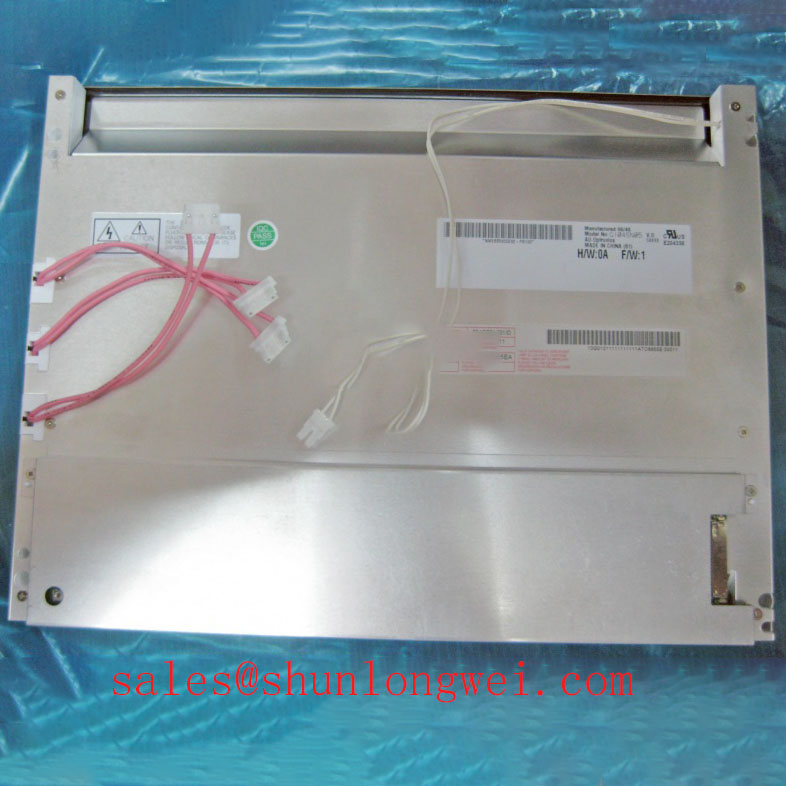
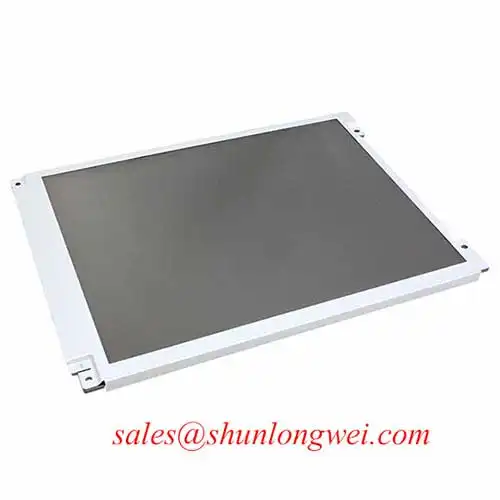
The G121XN01 V001-S06 is a high-performance 12.1-inch TFT-LCD module from AUO (AU Optronics), specifically engineered to bridge the gap between high-definition visual clarity and industrial-grade ruggedness. Featuring a native 1024 x 768 XGA resolution, this module is optimized for high-reliability industrial HMI and medical imaging platforms where environmental stability is non-negotiable. It addresses the critical engineering challenge of liquid crystal "slow-down" and backlight ignition failure in sub-zero conditions by supporting an ultra-wide operating temperature range of -30°C to +85°C.
Top Specs: 1024 x 768 Resolution | 500 nits Brightness | -30°C to +85°C Temp Range
Key Benefits: Superior thermal resilience prevents display artifacts; 50,000-hour LED life reduces long-term maintenance costs.
The G121XN01 V001-S06 solves the industry-wide challenge of display flickering and backlight degradation in fluctuating outdoor or heavy-industrial climates. For 12.1-inch systems prioritizing thermal margin and visual precision, the G121XN01 V001-S06 is the optimal choice.
Application Scenarios & Value
Achieving System-Level Reliability in High-Stress Industrial HMIs
In the design of modern industrial HMI systems for heavy machinery, engineers often struggle with display visibility under varying ambient light and thermal stress. The G121XN01 V001-S06 utilizes an a-Si TFT-LCD structure with a high 700:1 contrast ratio, ensuring that critical data is legible even in high-glare factory environments. A specific engineering challenge solved by this module is the "Cold Start" requirement in outdoor petroleum monitoring equipment. While standard consumer displays fail to initialize at temperatures below 0°C, the G121XN01 V001-S06 remains fully operational at -30°C without the need for external heaters, significantly simplifying the mechanical design and reducing power consumption.
Beyond traditional industrial use, this display is highly effective in medical imaging applications, such as portable ultrasound units, where the XGA resolution provides the necessary pixel density for diagnostic clarity. The integration of a LVDS (1 ch, 6/8-bit) interface ensures high-speed data transmission with low electromagnetic interference (EMI), a critical requirement for IEC 60601-1-2 medical EMC compliance. For applications requiring a different revision of this series, the related G121XN01 V0 offers similar core specifications in a different hardware configuration.
Key Parameter Overview
Decoding the Specs for Enhanced Industrial Durability
The following technical data provides a foundation for system integration and structural design for the G121XN01 V001-S06.
| Category | Technical Parameter | Value / Specification |
|---|---|---|
| Physical | Screen Size | 12.1-inch |
| Visual | Resolution | 1024(RGB) x 768 (XGA) |
| Optical | Luminance | 500 cd/m² |
| Optical | Contrast Ratio | 700:1 (Typical) |
| Interface | Signal Type | LVDS (1 ch, 6/8-bit) |
| Backlight | Light Source | WLED (Built-in Driver) |
| Thermal | Operating Temp | -30°C to +85°C |
| Durability | LED Life | 50,000 Hours (Minimum) |
Technical Deep Dive
Advanced Thermal Dissipation and Backlight Engineering
The internal architecture of the G121XN01 V001-S06 represents a significant advancement in thermal management for industrial displays. Unlike standard backlit modules that suffer from localized "hot spots" which can yellow the polarizer over time, AUO has implemented a distributed WLED array coupled with an integrated constant-current LED driver. This design distributes heat more evenly across the 279 x 209 x 9 mm chassis. Think of the backlight's thermal dissipation like a well-designed radiator in a high-performance engine: by maximizing the effective surface area for heat exchange, the module prevents the liquid crystals from reaching their isotropic point, even when the ambient environment hits +85°C.
From a signal integrity perspective, the LVDS interface is critical. By using differential signaling, the G121XN01 V001-S06 minimizes the impact of common-mode noise, which is prevalent in environments with large motors and Variable Frequency Drives (VFDs). This ensures that the 16.2M colors remain vivid and flicker-free. For a broader understanding of how these technologies fit into modern automation, consult our Engineers' Guide to TFT-LCD or explore our HMI Solutions Knowledge Base.
Industry Insights & Strategic Advantage
Future-Proofing HMIs through High TCO Efficiency
As Industrial 4.0 drives the demand for more data-dense displays, the transition from SVGA to XGA (1024x768) has become the new benchmark for 12-inch panels. The G121XN01 V001-S06 provides the ideal pixel pitch of 0.24 mm, allowing for complex SCADA dashboards to be rendered with crisp detail. Strategically, selecting a module with a 50,000-hour life cycle significantly lowers the Total Cost of Ownership (TCO). In a 24/7 manufacturing environment, this equates to over 5.7 years of continuous operation without backlight failure, outperforming consumer-grade alternatives by a factor of three.
Moreover, the AUO commitment to industrial longevity means this form factor is designed for long-term availability, reducing the risk of costly mechanical redesigns during the product's 10-year lifecycle. This stability is vital for sectors like medical imaging and heavy machinery, where re-certification is expensive and time-consuming. Utilizing high-reliability components like the G121XN01 V001-S06 aligns with global sustainability trends by reducing electronic waste through extended component lifespans.
FAQ
How does the -30°C operating temperature of the G121XN01 V001-S06 affect the liquid crystal response time?
At extreme low temperatures, liquid crystals naturally increase in viscosity, which can lead to "ghosting." However, the G121XN01 V001-S06 is optimized with a low-viscosity LC material that maintains a typical response time of 12/13 ms (Tr/Tf), ensuring that motion remains fluid even in cold-weather startup scenarios.
Does the built-in LED driver support PWM dimming for variable light conditions?
Yes, the integrated driver in the G121XN01 V001-S06 supports a wide dimming range via Pulse Width Modulation (PWM). This allows engineers to adjust brightness from the peak 500 nits down to minimal levels, which is essential for marine LCD applications or night-shift monitoring in control rooms.
For procurement professionals and systems engineers, the G121XN01 V001-S06 represents a strategic investment in reliability. By combining high-resolution XGA performance with a ruggedized thermal profile, it ensures that your HMI remains the strongest link in the industrial control chain. To further explore the engineering behind robust displays, visit our technical resource on Sunlight Readable HMI Design.