Content last revised on September 10, 2026
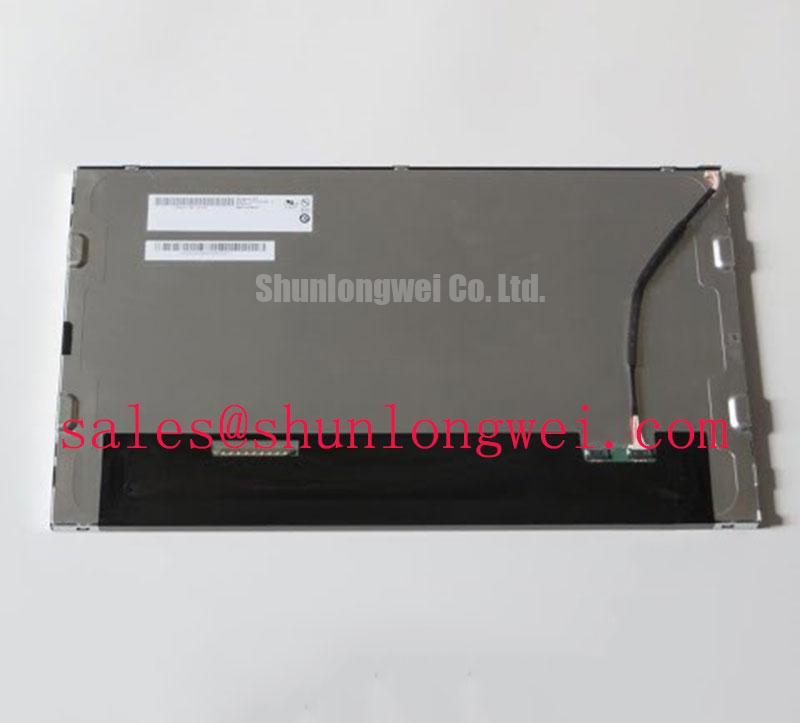
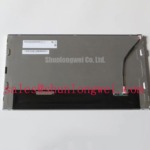
AUO G156HAN02.3 Industrial LCD Display Performance Analysis
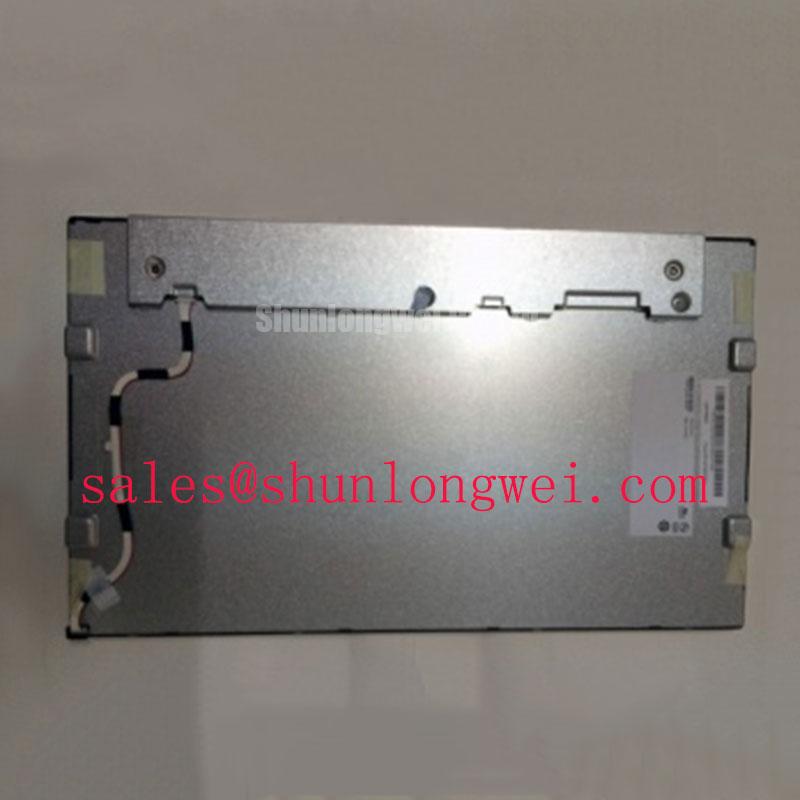
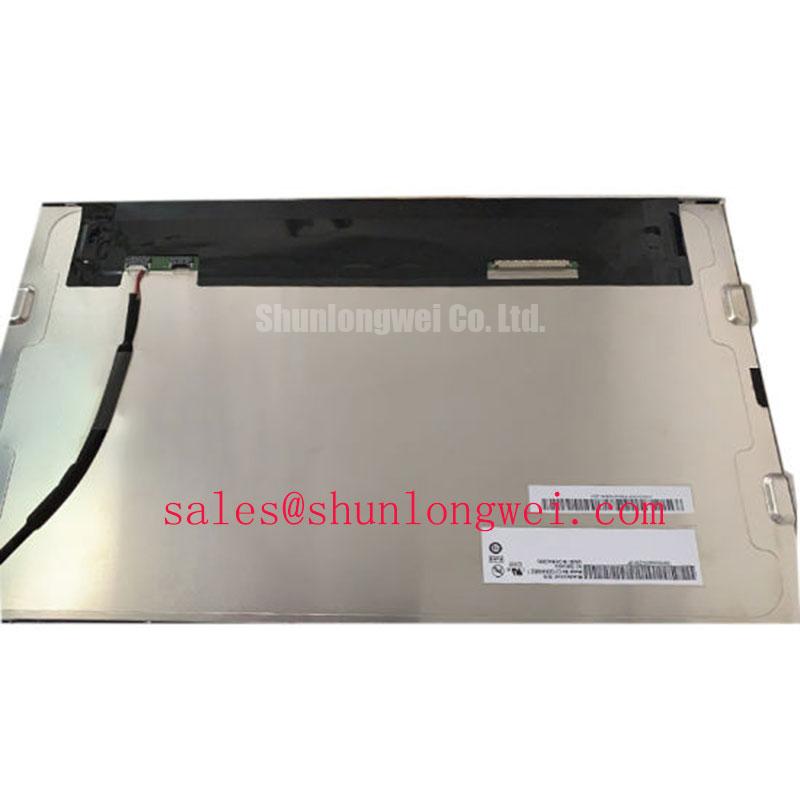
The AUO G156HAN02.3 represents a significant advancement in industrial-grade visualization, utilizing Advanced Hyper-Viewing Angle (AHVA) technology to deliver 1920x1080 FHD resolution with exceptional color consistency. Featuring a 500 cd/m² luminance and a 1000:1 contrast ratio, this 15.6-inch module is designed for environments where optical precision and wide viewing angles are non-negotiable. It effectively addresses the common engineering challenge of "grayscale inversion" found in standard TN panels, ensuring that critical data remains legible from any perspective. For medical HMI applications requiring high color fidelity and FHD clarity, the G156HAN02.3 is the optimal choice.
Key Parameter Overview
Decoding Specification Groups for Enhanced System Integration
To support precise engineering evaluation, the following table categorizes the core technical specifications of the G156HAN02.3. These values are derived from the official AUO technical documentation to ensure data integrity during the design-in phase.
| Category | Parameter | Technical Specification |
|---|---|---|
| Display Characteristics | Screen Size / Resolution | 15.6-inch / 1920 x 1080 (FHD) |
| Optical Performance | Luminance / Contrast | 500 cd/m² / 1000:1 (Typical) |
| Viewing Angle | Horizontal / Vertical | 89°/89°/89°/89° (AHVA) |
| Electrical Interface | Signal Type / Connector | LVDS (2-ch, 8-bit) / 30-pin |
| Backlight System | Type / Lifetime | WLED / 50,000 Hours (min) |
| Environmental | Operating Temperature | -10°C to +60°C |
Download the G156HAN02.3 datasheet for detailed specifications and performance curves.
Application Scenarios & Value
Achieving System-Level Benefits in High-Precision Visual Interfaces
In modern industrial design, the transition to 1080p resolution in a 15.6-inch form factor allows for higher information density without increasing the physical footprint. Engineers often face the challenge of display washout when a screen is mounted at eye level in a multi-monitor control room. The G156HAN02.3 solves this via its 89°/89°/89°/89° viewing cone, which functions much like a high-quality matte photograph rather than a reflective foil; the image remains vivid and accurate regardless of the viewer's position.
Consider a medical diagnostic station where precise color mapping is vital for identifying anomalies in imaging. The 16.2M colors (72% NTSC) capability of this panel ensures that subtle gradients are preserved. For systems that require different performance tiers, the G156HTN02.1 provides an alternative based on TN technology, though it lacks the superior viewing angles of the AHVA architecture. Understanding the engineering behind TFT-LCDs is essential for selecting the right panel for harsh industrial environments.
Technical & Design Deep Dive
Advanced Hyper-Viewing Angle (AHVA) vs. Conventional Architectures
The core technological advantage of the G156HAN02.3 lies in its AHVA (Advanced Hyper-Viewing Angle) mode. Unlike traditional a-Si TFT TN panels that rely on twisted liquid crystals, AHVA aligns liquid crystals horizontally. This prevents the "shifting" of light that causes colors to distort when viewed from the side. An intuitive analogy is looking through a set of window blinds: if the slats are horizontal (AHVA), you can see the scene outside clearly from many heights; if they are tilted (TN), the view is blocked unless you stand at a specific angle.
Integrating this module requires careful attention to the LVDS (2-ch, 8-bit) interface. At 1920x1080, signal integrity becomes paramount. Engineers must manage impedance control on the PCB traces to prevent ghosting or electromagnetic interference (EMI). Furthermore, the 50,000-hour backlight life ensures that the total cost of ownership (TCO) remains low, as the panel is unlikely to require replacement during the typical lifecycle of industrial equipment. For designs operating in bright conditions, reviewing our sunlight readable HMI guide can provide additional thermal and optical context.
FAQ
How does the AHVA technology in the G156HAN02.3 impact its performance compared to standard IPS?
AHVA is AUO's proprietary high-performance iteration of IPS (In-Plane Switching). It offers the same 89/89/89/89 degree viewing angles and color stability, making it superior to TN panels for professional-grade monitors and medical equipment where accuracy is the primary driver.
What are the power management considerations for the 500 nits WLED backlight?
The 500 cd/m² brightness provides excellent visibility for indoor industrial settings. While it consumes more power than lower-brightness panels, its efficiency is optimized through an integrated LED driver that supports PWM (Pulse Width Modulation) dimming, allowing the system to conserve energy when ambient light is low.
Can the G156HAN02.3 handle high-vibration industrial environments?
While the datasheet specifies standard industrial tolerances, the 30-pin LVDS connector is a robust industry standard. For extreme environments, we recommend utilizing a locking cable mechanism to ensure the G156HAN02.3 maintains a secure electrical connection during operation.
To ensure optimal system performance, procurement teams should verify specific mechanical tolerances and LVDS pinout configurations against their existing controller boards. For detailed technical support or to evaluate complementary products like the G156XW01 V0 for lower resolution requirements, contact our engineering sales team.