
Content last revised on September 10, 2026
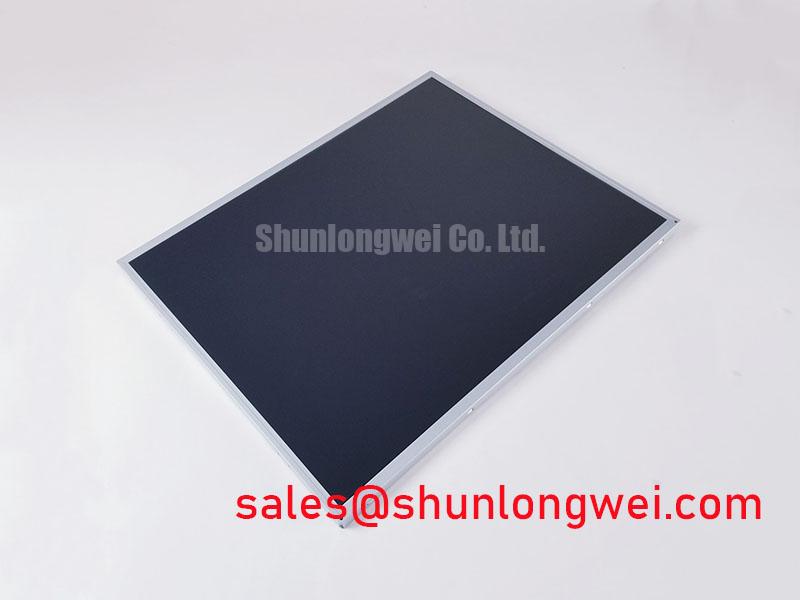
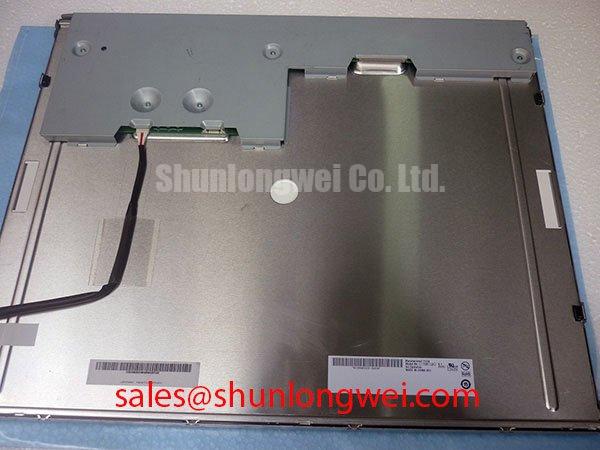
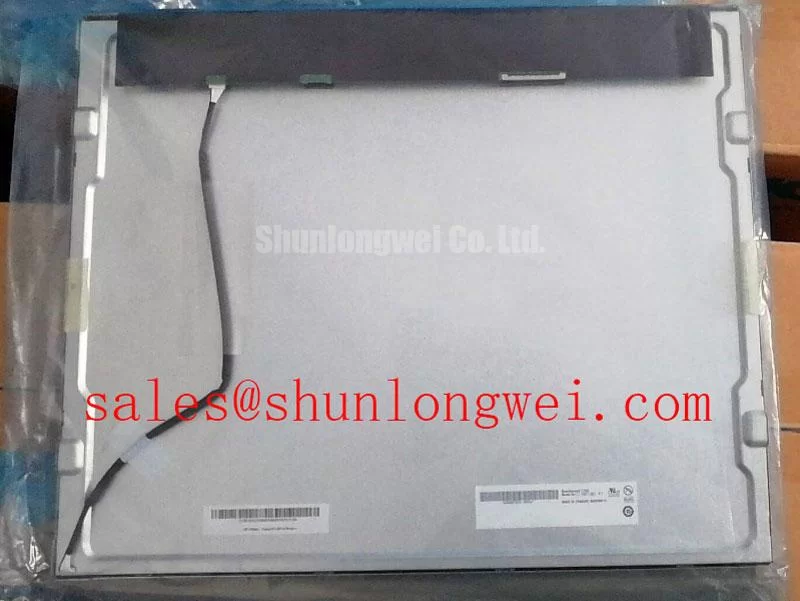
High-Performance AUO G190EG02 V104 19.0-inch SXGA Industrial LCD Display
The AUO G190EG02 V104 represents a specialized engineering solution for industrial-grade visualization, delivering exceptional 2000:1 contrast ratio and 1280x1024 SXGA resolution in a stable 5:4 aspect ratio. Optimized for 24/7 mission-critical environments, this 19.0-inch panel combines MVA (Multi-domain Vertical Alignment) technology with a robust WLED backlight system to ensure optical clarity from nearly any angle. For high-precision control rooms requiring stable imagery and superior grayscale rendering, the G190EG02 V104 is the optimal choice.
Top Specs: 19.0-inch | 1280x1024 | 2000:1 Contrast Ratio
Key Benefits: Exceptional optical depth for diagnostic precision and extended 50,000-hour LED life.
How does the 2000:1 contrast ratio directly impact operator efficiency? It minimizes visual fatigue by providing sharper text and deeper black levels, essential for complex monitoring tasks.
Key Parameter Overview
Decoding the Specs for Enhanced Optical Reliability
The G190EG02 V104 is designed with a focus on long-term stability and high-fidelity output. The SXGA resolution provides the vertical real estate necessary for legacy industrial software that requires a 5:4 format. Below are the critical technical specifications derived from the engineering documentation.
| Optical & Electrical Specifications | |
|---|---|
| Part Number | G190EG02 V104 |
| Manufacturer | AUO (AU Optronics) |
| Screen Size | 19.0-inch |
| Resolution | 1280x1024 (SXGA) |
| Display Mode | MVA, Normally Black, Transmissive |
| Brightness | 300 cd/m² (Typical) |
| Contrast Ratio | 2000:1 (Typical) |
| Viewing Angle | 178° (H) / 178° (V) |
| Interface Type | LVDS (2 ch, 8-bit), 30-pin Connector |
| Backlight Unit | WLED (Built-in LED Driver) |
Application Scenarios & Value
Achieving System-Level Benefits in High-Precision Monitoring
In modern industrial automation, the G190EG02 V104 addresses the specific challenge of "optical washout" in high-ambient light environments. By leveraging a 2000:1 contrast ratio, engineers can ensure that subtle color shifts in process control software remain visible, reducing the risk of operator error in Human-Machine Interfaces (HMI).
A typical high-fidelity engineering scenario involves the integration of this panel into medical diagnostic equipment or CNC machinery control stations. In these applications, the 178-degree viewing angle provided by MVA technology ensures that data remains accurate even when viewed off-center by multiple technicians. The integrated WLED driver simplifies the power architecture, reducing electromagnetic interference (EMI) and improving the overall thermal margin of the enclosure.
For systems that may require a thinner profile or different backlight characteristics within the same size class, the related G190ETN01.4 offers an alternative based on TN technology. However, for those prioritizing color depth and wide viewing stability, the G190EG02 V104 remains the standard for industrial reliability. This reliability is further supported by the LVDS interface, which is widely recognized as the industry benchmark for high-speed, low-noise data transmission in industrial display solutions.
Technical Deep Dive
A Closer Look at MVA Architecture and Thermal Longevity
The MVA (Multi-domain Vertical Alignment) architecture of the G190EG02 V104 is a significant upgrade over standard TN panels. In a TN display, liquid crystals twist to block light; in MVA, the crystals are aligned vertically and split into multiple domains per pixel. This allows light to pass through at more consistent angles, which is why the G190EG02 V104 achieves a massive 2000:1 contrast compared to the typical 500:1 or 1000:1 of consumer-grade displays.
From a thermal management perspective, the G190EG02 V104 utilizes a high-efficiency WLED backlight. Unlike older CCFL (Cold Cathode Fluorescent Lamp) backlights that generate significant heat and require bulky inverters, this LED system is integrated directly onto the PCB. This reduces the mechanical footprint and extends the MTBF (Mean Time Between Failures) to 50,000 hours. To visualize the advantage, think of the LED backlight as a modern solid-state drive (SSD) compared to an old hard disk; by eliminating the high-voltage inverter, you remove a common point of catastrophic failure in harsh industrial environments.
FAQ
How does the 2000:1 contrast ratio of the G190EG02 V104 influence the selection of an HMI enclosure?
The high contrast ratio reduces the need for aggressive anti-reflective coatings on the outer protective glass, as the panel inherently maintains deep blacks. This allows engineers to use standard tempered glass, reducing total system cost while maintaining excellent readability under high-intensity indoor lighting.
What are the primary electrical considerations when migrating from a 6-bit to the 8-bit LVDS interface of this panel?
The G190EG02 V104 utilizes a 2-channel 8-bit LVDS interface, supporting 16.7 million colors. Engineers must ensure the controller board supports 8-bit mapping to avoid "banding" in gradients. This 8-bit depth is crucial for medical imaging where precise grayscale transitions are required for accurate diagnostics.
As industrial systems evolve toward more data-dense visualizations, the selection of a display becomes a strategic decision impacting long-term TCO (Total Cost of Ownership). The G190EG02 V104 is not just a screen; it is a stabilized optical platform designed to meet the rigorous demands of the modern industrial ecosystem. For further insights into high-performance displays, consult technical resources provided by AUO to understand the full spectrum of available optical enhancements.