
Content last revised on September 10, 2026
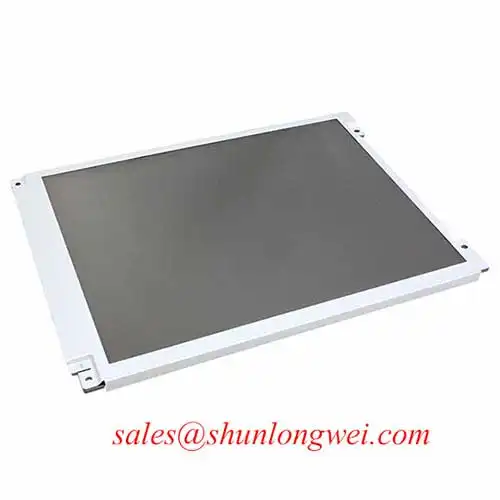
G238HAN01.1 AUO 23.8-inch 1920x1080 AHVA Industrial LCD Display
How can engineers eliminate color distortion and grayscale inversion in large-format industrial monitors? The AUO G238HAN01.1 addresses this through its proprietary AHVA (Advanced Hyper-Viewing Angle) architecture, ensuring optical consistency across a full 178-degree field of view. This 23.8-inch FHD panel delivers 1920 x 1080 resolution with a 1000:1 contrast ratio, making it a definitive choice for professional HMI and medical imaging applications. For medical diagnostic interfaces requiring uncompromising color precision and wide-angle legibility, the G238HAN01.1 is the optimal choice.
What is the primary benefit of its AHVA technology? It eliminates the "wash-out" effect common in TN panels, maintaining color saturation even at extreme viewing angles. For systems prioritizing high-definition clarity in a desktop-class industrial footprint, this LVDS-equipped module offers a seamless integration path.
Frequently Asked Questions
Addressing Core Design and Integration Queries
How does the AHVA technology in the G238HAN01.1 prevent grayscale inversion compared to standard TN industrial panels?
Unlike Twisted Nematic (TN) panels where liquid crystals tilt vertically, AHVA (AUO's IPS-level technology) utilizes lateral crystal orientation. This ensures that light passes through the substrate consistently regardless of the observer's position. In an industrial control room setting, this prevents critical data from becoming unreadable when viewed from the side, a common failure point in lower-tier displays.
What are the power and signal requirements for the G238HAN01.1's dual-channel LVDS interface?
The G238HAN01.1 utilizes a 2-port LVDS interface supporting 8-bit color depth (16.7M colors). It typically operates on a 5.0V logic supply. Engineers must ensure the LVDS clock frequency is precisely tuned to handle the 1920 x 1080 bandwidth to avoid "shimmering" or signal integrity issues in high-EMI industrial environments.
Does the G238HAN01.1 support long-term outdoor readability?
With a brightness of 250 cd/m², this model is designed primarily for indoor or semi-sheltered environments. For applications requiring direct sunlight readability, engineers often evaluate high-nit alternatives or consider optical bonding services. You can explore more on this in our guide to Sunlight Readable HMIs.
Key Parameter Overview
Decoding the Specs for Enhanced Optical Reliability
| Technical Parameter | Specifications | Engineering Value |
|---|---|---|
| Screen Diagonal | 23.8-inch | Large-format desktop class for data-dense HMIs |
| Native Resolution | 1920 x 1080 (FHD) | High pixel density for detailed medical/technical imaging |
| Display Technology | AHVA (IPS-Type) | 178/178 degree viewing angles without color shift |
| Luminance (Brightness) | 250 cd/m² | Standard indoor brightness for ergonomic viewing |
| Contrast Ratio | 1000:1 | Deep blacks and vibrant highlights for better UI clarity |
| Signal Interface | LVDS (2-ch, 8-bit) | Industry-standard robust interface for long-distance signals |
| Backlight Lifetime | 30,000 to 50,000 Hours | Reduces Total Cost of Ownership (TCO) in 24/7 operations |
Technical Deep Dive
Optical Stability through AHVA Architecture
The G238HAN01.1 stands out in the industrial display market due to its AHVA pixel structure. To understand the engineering advantage, think of AHVA pixels as precisely controlled optical shutters that maintain light integrity even when viewed from a steep diagonal. Standard panels often suffer from light leakage and phase shifts that distort colors; the AUO design locks the color coordinates, ensuring that a "warning red" in a SCADA system looks identical from every angle. For a deeper understanding of the underlying physics, refer to our analysis on TFT-LCD engineering basics.
Furthermore, the WLED backlight system is engineered for thermal efficiency. By optimizing the LED strip placement, AUO minimizes localized "hot spots" that can degrade liquid crystal performance over time. This thermal management is crucial for displays embedded in sealed kiosks or medical carts where airflow is restricted. For designers focusing on long-term reliability, understanding LED backlight energy efficiency provides a critical edge in system-level power budgeting.
Application Scenarios & Value
Achieving System-Level Benefits in High-Fidelity Visualization
In the field of medical imaging, such as radiology workstations or surgical displays, the G238HAN01.1 provides the necessary color gamut (72% NTSC) to distinguish subtle anatomical details. A common challenge for engineers is "color drift" during long shifts; the AUO panel's stable 1000:1 contrast ensures that grayscale transitions in X-ray or ultrasound feeds remain consistent. This reliability directly impacts diagnostic accuracy and user fatigue.
In industrial automation, this 23.8-inch panel serves as the primary hub for data-heavy consoles. Its FHD resolution allows for multiple windows—such as real-time video feeds, sensor telemetry, and control buttons—to be displayed simultaneously without compromising legibility. While this model is ideal for large-scale fixed consoles, for systems requiring a slightly smaller footprint without sacrificing wide-angle performance, the G215HAN01.1 offers a comparable AHVA experience in a 21.5-inch size.
The G238HAN01.1 represents a strategic investment for OEMs seeking to balance high-end optical performance with industrial-grade longevity. By leveraging AHVA technology, designers can future-proof their systems against the evolving requirements of Industry 4.0 and digital healthcare standards.
