
As power conversion and energy efficiency gain strategic importance across industries, the choice of the right IGBT module has become central for engineers and equipment manufacturers. In this detailed analysis, we compare the CM300DY-24A Mitsubishi IGBT Module and the 6MBI60FA-060 Fuji IGBT Module. We’ll explore each module’s core features, contrast their technical specifications, and dissect their real-world value in the fast-evolving power electronics landscape.
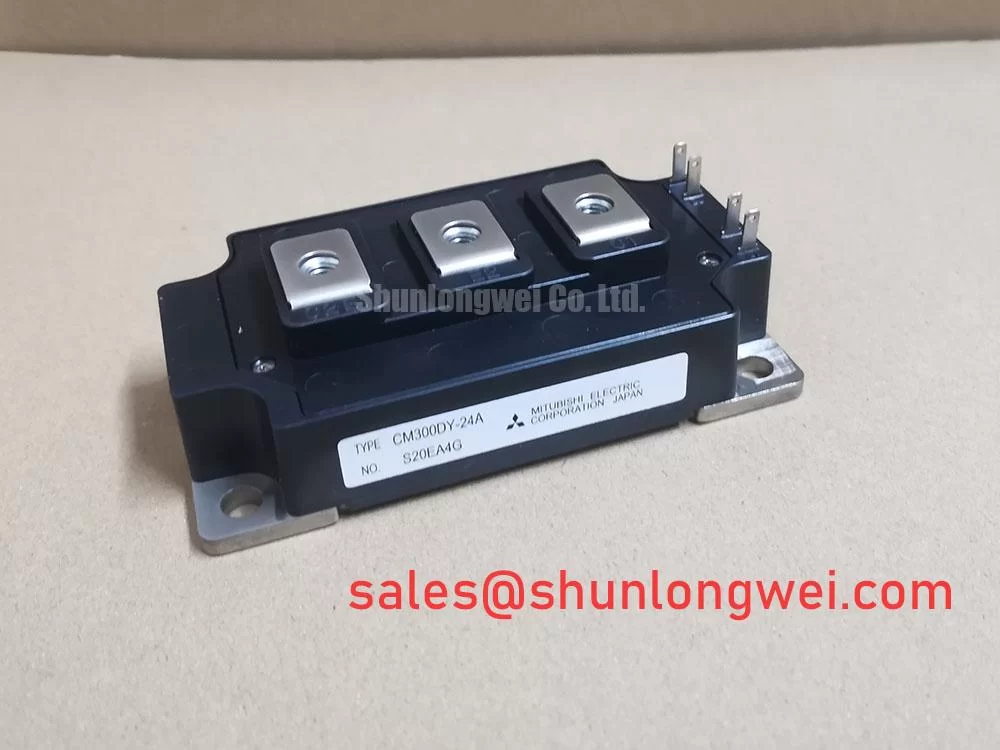
Side-by-Side: CM300DY-24A versus 6MBI60FA-060 Technical Specifications
Let’s clarify where each module stands by the numbers—a crucial perspective for any procurement manager or systems engineer tasked with optimizing design for high-power IGBT applications.
- CM300DY-24A Mitsubishi:
- Maximum Collector-Emitter Voltage (Vce): 1200V
- Collector Current (Ic): 300A @ 25℃
- Power Dissipation (Pc): 1890W
- Collector-Emitter Saturation Voltage: 2.1V (typical)
- Switching Rise Time: 180ns (typical)
- Configuration: Dual IGBT, Half-Bridge, Fast Recovery Diodes
- 6MBI60FA-060 Fuji:
- Maximum Collector-Emitter Voltage (Vce): 600V
- Collector Current (Ic): 60A continuous, 120A pulse (1ms) @ 25℃
- Power Dissipation (Pc): 360W
- Low Saturation Voltage
- Voltage Drive Capability
- Configuration: Six IGBTs, Three-Phase Inverter Topology
The CM300DY-24A clearly addresses very high voltage and current demands, while the 6MBI60FA-060 is optimized for mid-range applications requiring robust multi-phase support with independent channel flexibility.
Matching IGBT Module Capabilities to Industrial Realities
Choosing between these IGBT modules isn’t just about datasheets—it’s about deploying the right tool for the right scenario to meet modern industrial demands.
CM300DY-24A Mitsubishi: High-Power Scenarios
The robust voltage and current ratings of the CM300DY-24A make it a reliable workhorse in challenging, high-power, and high-efficiency environments such as:
- Heavy-duty industrial motor drive inverters
- Electric vehicle (EV) traction in high-voltage architectures
- Smart grid modules, utility-level energy storage, and distribution switching
- Large-scale UPS and data center power conversion systems
Pros: Exceptional current and voltage handling, integrated freewheeling diodes, proven performance record.
Cons: Larger footprint, higher gate charge (~1350nC), which may require robust gate drivers for fast switching.
6MBI60FA-060 Fuji: Versatility for Automation & Motor Drives
Engineered for flexible integration, the 6MBI60FA-060 is geared toward distributed control or automation, especially where multi-phase motor control is key, including:
- Inverters for AC/DC servo and industrial motor drives
- Robotic welding systems and CNC machine tools
- Industrial automation with modular power needs
- UPS and battery backup units where moderate power is sufficient
Pros: Compact multi-IGBT design, low saturation voltage, ease of drive, modular scalability.
Cons: Not suited for high-voltage, high-current scenarios; maximum Vce of 600V limits use in utility-scale or large industrial drives.

IGBT Modules in Context: Power Technology Evolution and Market Dynamics
The global shift toward electrification and digitized industry has driven IGBT module innovation at a breakneck pace. Silicon IGBT modules such as CM300DY-24A and 6MBI60FA-060 remain vital components, especially as more advanced topologies like wide-bandgap SiC and GaN transistors (notably championed by Infineon, ON Semiconductor, and STMicroelectronics) gradually expand their presence in ultra-high-speed, high-frequency, and efficiency-driven applications.
While SiC and GaN modules offer lower switching losses and higher temperature operation, their cost and integration complexity mean that robust, proven silicon IGBTs—like those compared here—are still the backbone for cost-sensitive, high-volume industrial and transportation electronics. Notably, Mitsubishi Electric and Fuji Electric have recently invested in next-generation IGBT lines, introducing enhanced thermal management, longer device life, and smarter gate drive compatibility to address evolving client demands in EVs and data centers.
“Smart” IGBT modules featuring digital diagnostics, adaptive switching, and extended SOA (safe operating area) are another key trend, primed to further reduce downtime in 24/7 industrial environments.
Solving Industry Challenges with Strategic IGBT Module Selection
High Voltage/Current Applications: For industries pushing the boundaries of electrification—think rail, grid infrastructure, or very large drive systems—the CM300DY-24A remains a top candidate thanks to its superior current capability and dual IGBT half-bridge construction. Engineers focused on high reliability in mission-critical environments typically opt for such modules, balancing performance with thermal management needs.
Multi-Phase Automation: By contrast, the 6MBI60FA-060 offers a streamlined solution for machine builders integrating multiple phases in single compact inverters, enabling flexibility across automation lines and smaller-scale drives.
For a broader exploration of IGBT technologies, visit our comprehensive IGBT product catalog and stay abreast of new release cycles and technical resources supporting next-generation power applications.
Making the Right Choice: A Product Selection Blueprint
When selecting IGBT modules, decision-makers must weigh technical, commercial, and strategic objectives. Here’s a concise guide:
- Specify Peak Voltage & Current: CM300DY-24A serves best at ratings above 600V/100A; 6MBI60FA-060 at moderate levels with channel flexibility.
- Evaluate Topology Needs: Half-bridge (Mitsubishi) for high-power, three-phase (Fuji) for balanced drives or modular expansion.
- Factor Application Longevity & Ecosystem: Both modules offer proven reliability, but consider ecosystem support and technical documentation—which are strong for both Mitsubishi and Fuji.
- Consider Integration Complexity: Higher gate charge or voltage may necessitate advanced drives or protection circuits, especially in demanding grid or mobility applications.
As digital manufacturing scales and electrification deepens, the market for both high-voltage IGBT modules and next-gen semi modules will remain buoyant—with adoption driven not just by technical prowess, but the right fit for industry-specific deployment.
In sum, both the CM300DY-24A Mitsubishi and 6MBI60FA-060 Fuji IGBT modules reflect the diversity and maturity of modern power electronics solutions. Whether your priorities center on raw performance, modularity, or lifecycle support, carefully matching an IGBT module to your ecosystem is key. As the frontier of SiC, GaN, and “smart” modules expands, procurement and engineering teams will benefit from a nuanced understanding of specification, application fit, and technology roadmaps.
Stay informed with industry news and robust product resources to make sure your power system designs stay competitive in this new age of industry electrification.