

Content last revised on September 13, 2026
Incoming Inspection and Product Identification
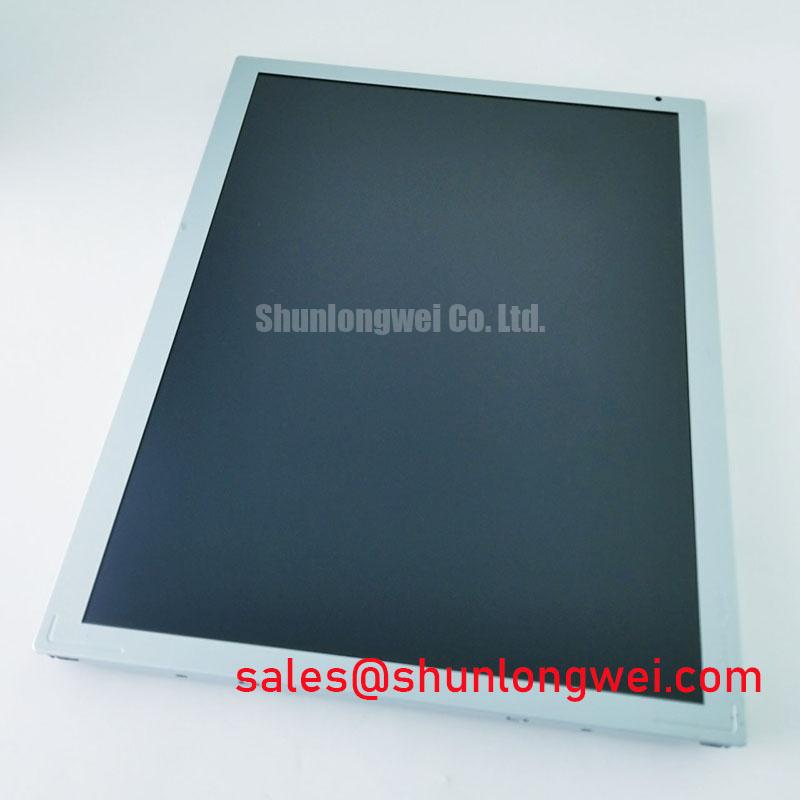
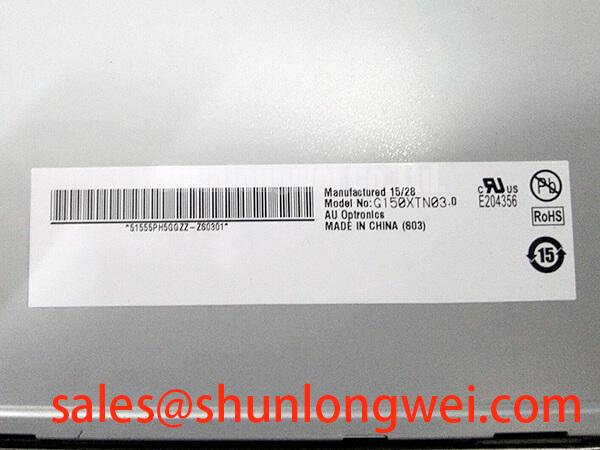
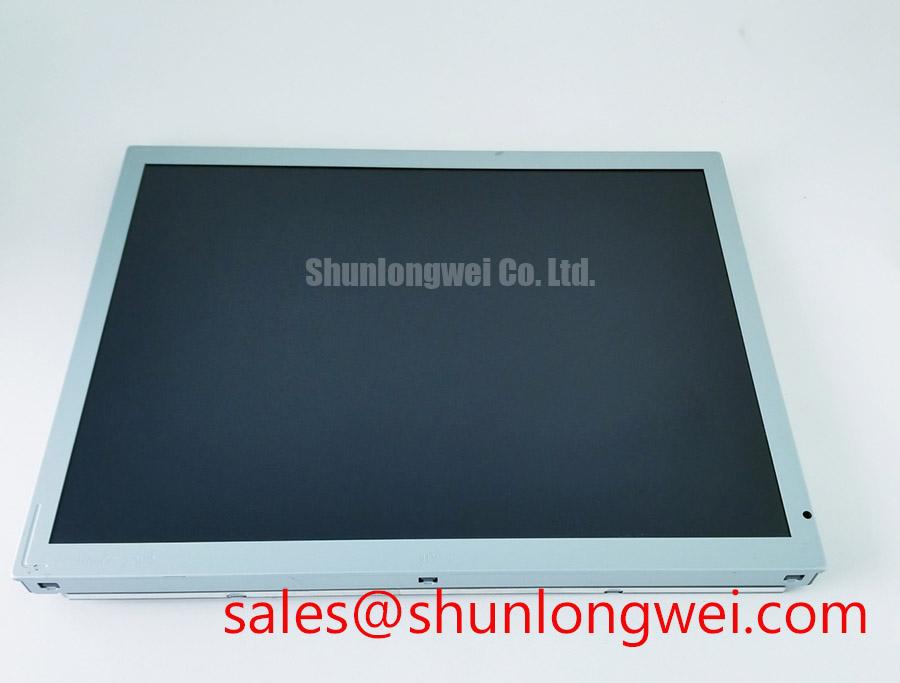
Begin the incoming inspection by checking the panel label, connector condition, glass edge, frame, and visible surface for transport damage before applying power to LC150X01-SL01. Record the identification exactly as marked and compare the replacement unit with the original panel documentation.
| Item | Verified information |
|---|---|
| Model | LC150X01-SL01 |
| Manufacturer | LG Display |
| Product category | Industrial Grade LCD/HMI Panel |
| Construction | TFT LCD Display Module |
| Specification status | Detailed specifications not confirmed in the supplied data |
The supplied factory information identifies this unit as an LG Display TFT LCD module for industrial HMI and display integration. Resolution, active-area dimensions, viewing direction, luminance, contrast ratio, operating temperature, input format, connector pinout, backlight architecture, and electrical timing are not included in the confirmed data available for this product page. The system integrator should verify each of these items against the original panel documentation before approving a field replacement.
Dual Channel CCFL High Voltage Resonant Inverter Striking Voltage and Ignition Debugging
Do not assume the backlight technology from the model number alone. A replacement assessment should begin by identifying the original inverter arrangement, lamp connection method, enable signal, dimming signal, and protection feedback path. The supplied factory parameters do not confirm whether this specific module uses a dual channel CCFL inverter, an LED backlight, or a particular ignition voltage. Applying a high voltage inverter intended for a different panel can cause improper startup, protection cycling, connector stress, or permanent damage.
For a surgical navigation display or ultrasound diagnostic terminal, engineers should compare the original startup waveform with the replacement panel requirements using an appropriately rated probe and isolated test arrangement. Observe the enable sequence, lamp or backlight current behavior, inverter restart pattern, and any audible activity during ignition. Acoustic noise can be associated with inverter magnetics, mechanical resonance, an unsuitable drive condition, or a loose mounting interface, so the signal path and mechanical assembly should be checked together rather than assigning a single cause.
A constant current LED driver must not be substituted for a CCFL inverter without confirming the panel interface and backlight electrical requirements. Likewise, a PWM dimming specification, a 1000 to 1 dimming ratio, a 1500 to 1650 Vrms ignition requirement, a 500 to 1 sunlight contrast requirement, and a 50000 hour half life are not confirmed factory specifications for LC150X01-SL01 in the supplied information. They should be treated as system level verification items, not product ratings.
The display enclosure and optical stack also require inspection under the actual ambient lighting expected in service. Anti glare performance, reflected sunlight readability, and contrast stability should be measured on the completed display assembly because cover glass, touch layers, optical bonding, and enclosure geometry can change the observed result.
Wide Temperature Operational Margin and Sub Zero Liquid Crystal Response
The supplied data does not verify a minus 30 degrees Celsius to plus 85 degrees Celsius operating range for this model. Before using the panel in an industrial thermal environment, the integrator should obtain the applicable LG Display data sheet and confirm operating temperature, storage temperature, humidity limits, condensation restrictions, and startup behavior.
At low temperature, liquid crystal response can change and visible gray transitions may become slower. That observation alone does not establish a product defect. A practical evaluation should display moving gradients, fine text, diagnostic patterns, and representative ultrasound imagery while monitoring the panel supply and interface signals. Compare the result at the intended cold start condition and after thermal stabilization. Any stated gray to gray response value must come from the applicable factory documentation or a controlled system measurement.
Interface verification is equally important. The source equipment should be checked for the correct LVDS or TTL electrical format, pixel mapping, clock polarity, color ordering, and power sequencing. JEIDA and VESA mapping should not be selected by assumption. If the original system uses LVDS, the replacement evaluation should compare differential clock quality, data alignment, enable timing, and signal integrity with a known good panel. If the interface is TTL, the required voltage levels and timing must be confirmed from the original documentation.
When a display is used in a high precision diagnostic terminal, thermal testing should include cable movement, connector retention, image restart behavior, and backlight response. The enclosure designer should control heat sources around the panel while preserving the manufacturer’s documented temperature limits. A thermal cycling result from the completed assembly cannot be presented as the factory rating of the LCD module.
For background on general TFT LCD operating principles and selection considerations, engineers can consult The Ultimate Guide to Industrial TFT LCD Technology. Semiconductor references concerning surface states and Schottky barriers, such as interface state density and passivation and Schottky barrier physics, do not define this LCD module’s display timing or optical performance.
Full Screen Primary Color AOI Screening and Background Uniformity Audit
Incoming inspection should use full screen red, green, blue, white, black, and neutral gray patterns where the controller supports them. Inspect the image from the normal viewing position, then use low angle illumination to reveal contamination, edge damage, scratches, nonuniform regions, and localized shadowing. A 45 degree flashlight check can help distinguish an external surface mark from a display or backlight irregularity, but it cannot by itself identify a COG driver fault or internal microfracture.
Record the location and repeatability of any stuck sub pixel, line defect, flicker, or dark region. Reconnect the source using the original cable and verify the same image through a known good signal path. If the defect changes with the input pattern, cable position, thermal condition, or enclosure pressure, those observations should be documented for further diagnosis. Do not assign a numerical acceptance limit unless it is stated in the applicable LG Display quality documentation or the equipment manufacturer’s inspection standard.
Background uniformity should be evaluated with the panel mounted in its intended orientation and with the final bezel, gasket, cover, and backlight control connected. Optical mura can be affected by mechanical pressure, uneven support, diffuser alignment, contamination, or electrical drive conditions. PWM frequency and duty cycle linearity are not confirmed for this model, so the integrator should verify the original backlight control method rather than applying a generic 200 Hz to 1 kHz setting.
💡 Pro Tip: Keep the differential display signal path symmetrical and verify clock and data alignment with an oscilloscope before changing the panel mounting or image-processing configuration.
Flush Mount Open Frame Bezel Integration and Perimeter Gasket Isolation
Measure the original panel opening, mounting-hole pattern, connector clearance, glass position, and rear component envelope before machining a replacement bezel. The confirmed product information identifies a TFT LCD Display Module but does not provide outer dimensions, active-area dimensions, hole locations, or mounting tolerances. Those values must be taken from the original mechanical drawing or verified directly against the replacement unit.
Use distributed support around the perimeter without placing concentrated force on the glass, visible area, or connector region. A gasket should provide stable positioning while allowing the panel assembly to accommodate normal thermal movement. The supplied data does not confirm an M3 fastener torque, gasket compression value, or bezel tolerance for LC150X01-SL01. These are system integration values that require mechanical validation on the completed assembly.
During installation, check the display first without full fastener preload, then inspect the white and black test patterns after the bezel is secured. Changes in corner brightness, edge shadowing, or dark-field uniformity may indicate mechanical loading, cable routing pressure, or optical interference. Releasing and evenly redistributing the support can help isolate the condition, but the result should be verified across temperature and vibration conditions relevant to the equipment.
If the source uses a high speed differential interface, the design should minimize discontinuities through the connector, cable, ground reference, and receiver transition. A 100 ohm differential target or a 50 picosecond skew budget should not be applied as a confirmed specification for this panel unless the original interface documentation states it. The system engineer should determine the required impedance, routing geometry, termination, and signal margin from the actual controller and panel interface.
Potential use in a high precision surgical or ultrasound diagnostic display should remain subject to complete electrical, optical, mechanical, thermal, and regulatory system validation. The confirmed identity for procurement and service evaluation is LC150X01-SL01, manufactured by LG Display, in the TFT LCD Display Module category.