

Content last revised on January 23, 2026
Sharp LM14X82: Technical Review of the 14-inch XGA CSTN LCD Module for System Integration
Introduction and Core Specifications
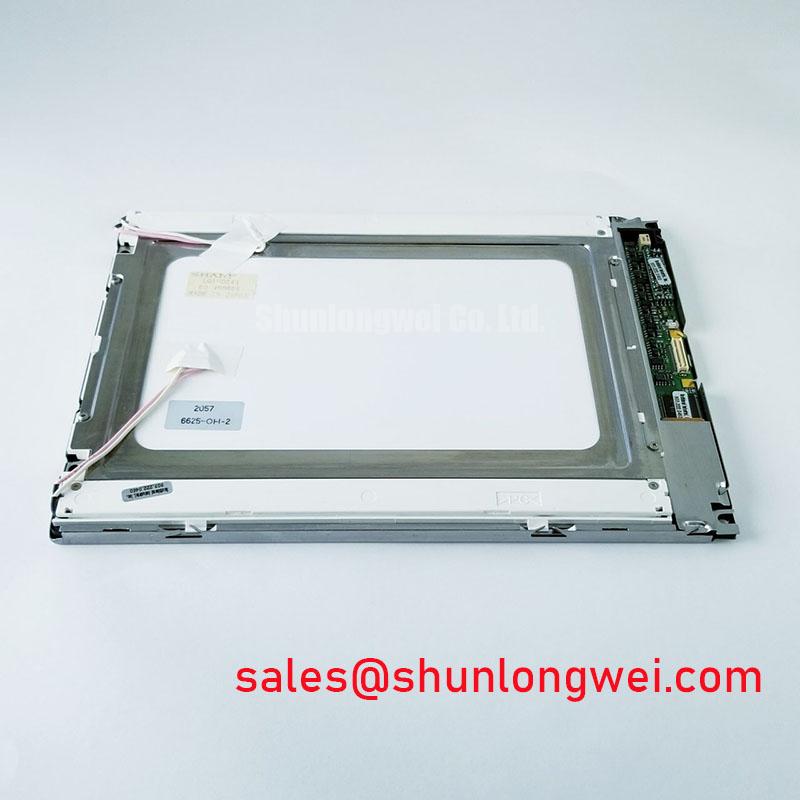
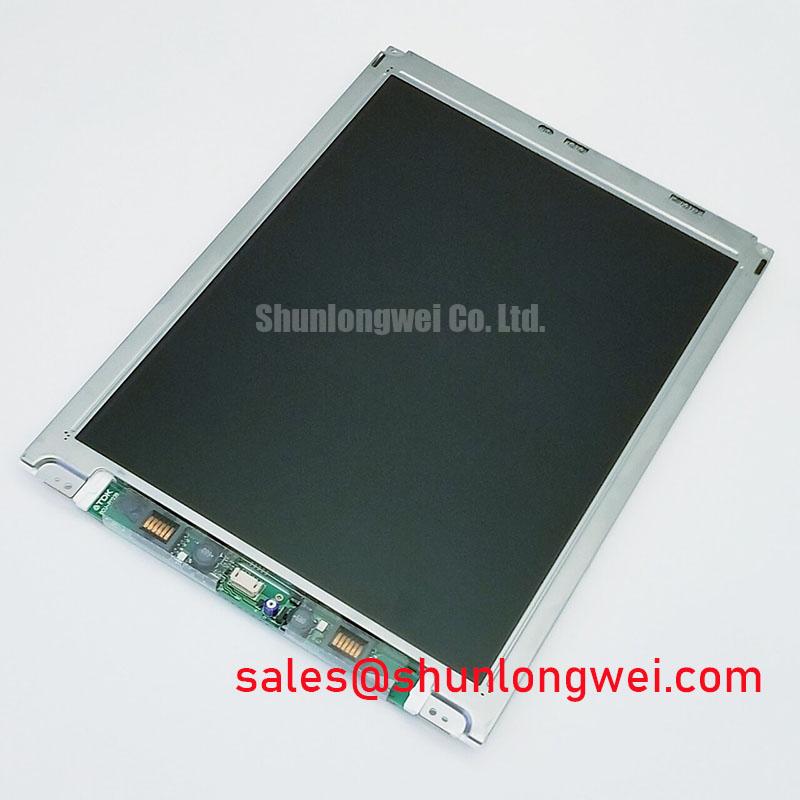
The Sharp LM14X82 is a 14-inch Color STN (CSTN) LCD module engineered to deliver XGA resolution for legacy system integration and Maintenance, Repair, and Operations (MRO). Offering a specific set of performance characteristics, this display serves as a critical component for extending the lifecycle of established industrial, medical, and test equipment. Its key specifications include a 14-inch diagonal screen | 1024x768 pixel resolution | integrated CCFL backlight system. This component provides a direct-fit solution for equipment originally designed with 14-inch passive-matrix displays, simplifying repair and minimizing system downtime. For maintaining industrial HMIs or test equipment reliant on a 14-inch passive-matrix display, the LM14X82 offers a form-fit-function solution.
Key Parameter Overview
Translating Datasheet Values into Integration Realities
The technical specifications of the LM14X82 are foundational for successful system integration, particularly in legacy applications. The following parameters are crucial for engineering evaluation. Each value is derived directly from the official component documentation.
| Parameter | Specification | Engineering Significance |
|---|---|---|
| Display Technology | Color STN (CSTN) LCD | Provides a cost-effective display solution for static or semi-static GUIs, ideal for instrumentation and control panels. |
| Resolution | 1024 x 768 pixels (XGA) | Offers high information density for displaying complex data, schematics, or detailed operator interfaces. |
| Active Area | 285.7 (H) x 214.3 (V) mm | Defines the usable screen real estate for UI/UX design and layout planning. |
| Pixel Pitch | 0.279 (H) x 0.279 (V) mm | Determines the sharpness and clarity of text and graphical elements on the screen. |
| Interface | 31-pin Connector (Dual Scan) | Ensures electrical compatibility with specific legacy controller boards designed for this interface standard. |
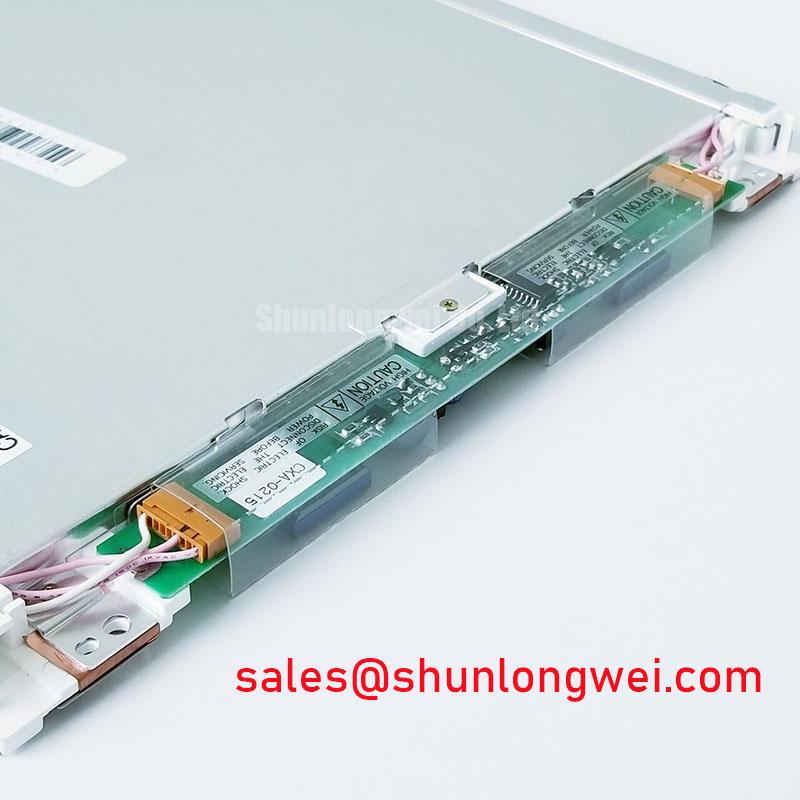
| Backlight System | 1x CCFL (Cold Cathode Fluorescent Lamp) | An integrated light source that requires an external CCFL inverter for operation. |
| Typical Power Consumption | 10.4 W (LCD Panel + Backlight) | A critical value for thermal management calculations and ensuring compatibility with the host system's power supply budget. |
| Operating Temperature | 0°C to +40°C | Specifies the ambient temperature range for reliable operation, suitable for controlled indoor environments. |
Download the LM14X82 datasheet for detailed specifications and performance curves.
Application Scenarios & Value
Enabling Lifecycle Extension in Industrial and Instrumentation Systems
The primary value of the LM14X82 lies in its ability to support and extend the operational life of existing capital equipment. In environments where system-wide upgrades are prohibitively expensive or require extensive re-certification, this module provides a targeted and efficient solution.
- Industrial HMI Panels: Many CNC machines, PLC controllers, and manufacturing execution systems (MES) were designed with CSTN displays. The LM14X82 serves as a form-fit-function replacement, restoring operator visibility without altering the underlying control software or hardware. Its XGA resolution is well-suited for displaying the complex GUIs common in these applications.
- Test and Measurement Equipment: Legacy oscilloscopes, spectrum analyzers, and network testers often feature integrated displays. A failed screen can render an entire piece of high-value equipment unusable. The LM14X82's defined interface and power requirements simplify the repair process for service technicians.
- Medical Monitoring Systems: In certain non-diagnostic monitoring applications, this display can replace failed screens on older patient monitors or lab equipment, provided the environmental and performance specifications align. This avoids the high cost and regulatory hurdles of replacing the entire certified medical device.
A key engineering challenge in these scenarios is ensuring compatibility with the existing system's power delivery. The datasheet's clear specification of logic and backlight power consumption allows engineers to verify that the host system's power supply and the required external CCFL inverter can be adequately supported. While the LM14X82 is ideal for these replacement scenarios, for new designs requiring wider viewing angles and faster response times, modern TFT-LCD panels such as the G150XNE-L01 may be more suitable.
Frequently Asked Questions (FAQ)
What is the significance of the "Dual Scan" architecture in the LM14X82?
The dual-scan architecture is a technique used in passive-matrix displays like this CSTN panel to improve performance. It effectively splits the screen into two halves (top and bottom) that are refreshed simultaneously. This doubles the refresh rate compared to a single-scan design, which helps to reduce ghosting and improve response time, making the display more suitable for GUIs with moving elements.
Does the LM14X82 require an external inverter for its backlight?
Yes. The module contains a Cold Cathode Fluorescent Lamp (CCFL) as its light source. CCFLs require a high-voltage AC supply to operate, which is provided by a separate inverter board. Engineers must source an inverter compatible with the lamp voltage and current specifications detailed in the LM14X82 datasheet.
How does a Color STN (CSTN) display like the LM14X82 differ from a modern TFT panel?
The primary difference is the pixel switching mechanism. CSTN is a passive-matrix technology where pixels are addressed by row and column, leading to slower response times and more limited viewing angles. In contrast, TFT-LCD is an active-matrix technology where each pixel is controlled by its own thin-film transistor, enabling faster switching, wider viewing angles, and higher contrast ratios.
What are the primary considerations for integrating the LM14X82 into a legacy system?
There are three critical verification steps: mechanical fit (outer dimensions and mounting points), electrical interface (matching the 31-pin connector and signal timing), and power supply compatibility (ensuring the system can provide the correct logic voltage and support an external CCFL inverter).
Industry Insights & Strategic Advantage
The Strategic Role of Legacy Components in Capital Equipment Lifecycle Management
In the world of industrial automation and high-value instrumentation, the concept of Total Cost of Ownership (TCO) extends far beyond the initial purchase price. The operational lifespan of machinery, often measured in decades, makes **Legacy System Maintenance** a critical engineering and financial discipline. Components like the LM14X82 represent more than just older technology; they are strategic assets for asset management.
The alternative to replacing a failed display is often a complete system overhaul. This introduces significant costs related to new hardware, software redevelopment, system re-qualification, and operator retraining. For regulated industries such as medical or avionics, this re-certification process can be exceptionally costly and time-consuming. The availability of a direct-fit replacement like the LM14X82 mitigates these risks entirely, providing a cost-effective and time-efficient path to restoring full operational capability. This approach aligns with sustainable industrial practices by maximizing the utility and lifespan of existing capital equipment.
Application Vignette
Revitalizing a Process Control HMI with a Form-Fit-Function Display
The Challenge: A manufacturing facility relies on a vintage but highly reliable process control system whose HMI panel has failed, rendering the screen unreadable. The original equipment manufacturer no longer produces the display, and a full system upgrade is quoted at over $30,000, requiring two weeks of production downtime for installation and commissioning.
The Engineering Solution: A maintenance engineer identifies the failed display as a 14-inch XGA CSTN panel. Using the system's technical manuals, they cross-reference the required specifications and find the Sharp LM14X82. A careful review of the LM14X82 datasheet confirms a perfect match: the 1024x768 resolution, the 31-pin signal interface, and the mechanical mounting points are identical. The power consumption is verified to be within the original system's budget.
The System-Level Benefit: By sourcing the LM14X82, the facility is able to replace the failed screen in a matter of hours, not weeks. The total cost of the repair is less than 5% of the quoted upgrade price, and critical production is resumed with minimal interruption. This scenario highlights the immense value of targeted component-level repair in an **Industrial HMI**, preserving the integrity and extending the life of a proven and reliable control system.
Strategic Component Sourcing
For engineering teams tasked with the long-term support of critical systems, the LM14X82 serves as a vital resource. Its adherence to established interface and form-factor standards provides a dependable solution for maintenance and repair, directly contributing to the reduction of operational downtime and the extension of equipment lifespan. Procuring such components is a strategic decision that supports business continuity and maximizes the return on investment in long-service capital equipment.