


Content last revised on October 13, 2026
High-Voltage Striking Potential and Secondary Coil Insulation Testing
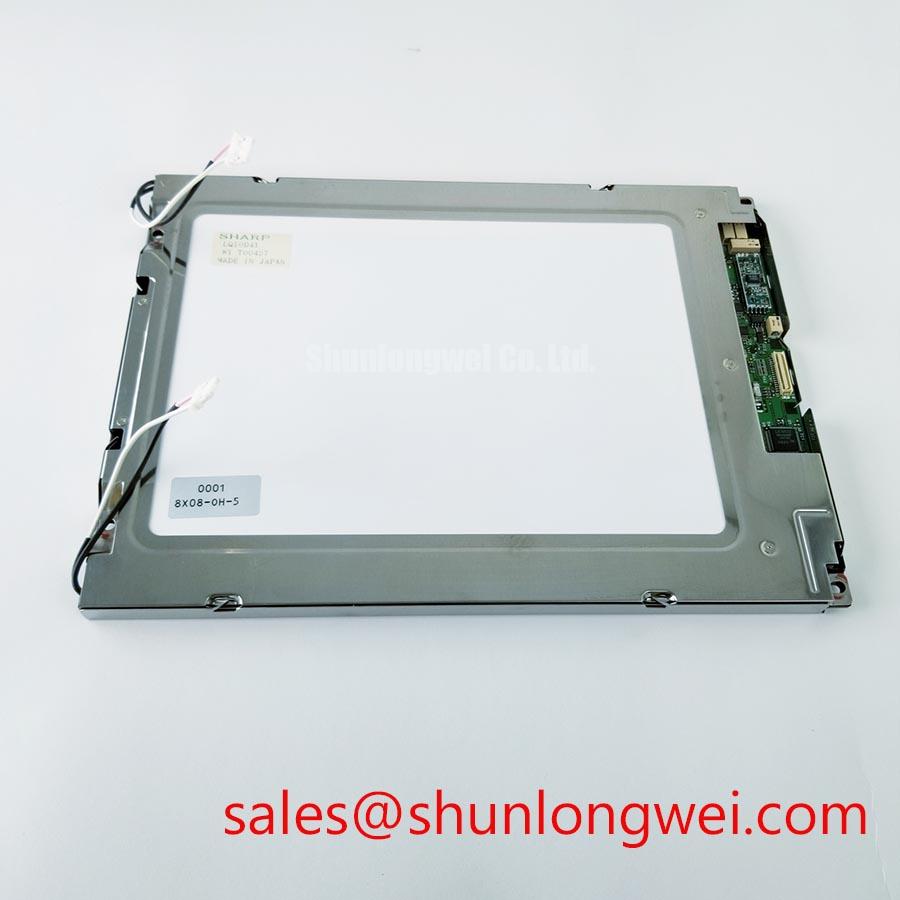
I separate image generation from illumination first when troubleshooting a dark Sharp LQ10D41 display. With the equipment safely accessible, external illumination can help reveal whether a faint image remains on the screen. A visible image supports investigating the illumination path, but it does not establish that every display supply and signal is correct. Compare the result with the controller’s startup behavior and the backlight enable sequence.
Design Consideration: Identify the installed backlight driver from its markings and the equipment schematic before choosing instruments. High-voltage striking measurements and secondary winding checks belong to a documented lamp inverter circuit, not to an assumed LQ10D41 specification. Use probes suitable for the actual waveform and voltage. An ordinary meter reading cannot establish ignition performance, while probing can load the circuit and change its behavior.
If the equipment documentation identifies an inverter, inspect its output connector and insulation for contamination, tracking or damaged sleeving while de-energized. Winding continuity alone does not demonstrate insulation integrity. Any insulation test should follow the driver manufacturer’s procedure, with sensitive electronics isolated as required; indiscriminate testing across an assembled display can damage connected circuitry.
Trace the complete chain from the equipment supply through enable control, illumination driver and panel connections. The Sharp LQ10D213 is another display module for comparison within a broader display assembly assessment, not a backlight driver or an established electrical companion to LQ10D41.
For temperature-dependent startup complaints, compare behavior after controlled stabilization within the panel’s documented operating range. Liquid-crystal response can slow as temperature falls, making delayed image transitions different from complete loss of illumination. Record ambient conditions, startup sequence and image recovery separately. Heating provisions, if present in the equipment, require assessment against that equipment’s thermal controls rather than an assumed panel feature.
Micro-Twist Mechanical Stress Fracture Prevention at the Glass and Driver Connections
Support the display assembly on its intended mounting surfaces before examining persistent lines or intermittent image loss; do not twist the frame to provoke a fault. As a Design Consideration, bending loads transmitted through the enclosure can disturb connections or stress a glass display assembly. This does not establish a particular internal driver attachment method for LQ10D41.
Use red, green and blue full-screen test images in sequence, followed by neutral and dark fields. Record whether a defect stays at the same screen coordinates, changes with image content or appears only during refresh. Oblique external illumination can help distinguish a faint underlying image from uneven illumination. Neither observation alone identifies a fractured driver connection, damaged cable or controller fault.
Inspect the accessible flexible cable for creases, abrasion and strain near its connector. Check that the locking mechanism closes evenly and that cable routing does not pull on the contact area when the enclosure closes. Repeated bending at the connector exit should be avoided; bend geometry and permissible movement come from the cable and assembly requirements, not a generic flex-cycle claim.
Field Alert: Disconnect equipment power and allow stored energy to discharge before releasing or reseating display and backlight connectors.
For unstable pixels or intermittent lines, compare the controller configuration with the panel’s specified interface, connector map and timing. Measure signals at an accessible receiver-side test point using an appropriate probing method. Clock quality, data setup and hold behavior should be assessed against the actual interface requirements. Do not infer a TTL or LVDS pinout from connector appearance.
At the replacement assessment stage, LQ084S3DG01 provides another Sharp display reference, but shared branding does not establish interchangeable dimensions, resolution or wiring. Engineers assessing CNC operator panels or robot teach pendants should compare the complete mechanical drawing, controller support and illumination connections before considering either module.
Preventing Localized Optical Compression and Dark-Field Unevenness
Check whether a dark patch changes after enclosure pressure is removed, without pressing directly on the screen. A pressure-sensitive pattern can support investigating assembly loading, but optical unevenness also warrants checking illumination, contamination and viewing conditions. Compare images with consistent brightness settings and observation angles so that enclosure effects are not confused with normal viewing-angle changes.
Design Consideration: Seat the LQ10D41 assembly against the intended supports without forcing the frame into alignment. Inspect bezel clearance, mounting boss height and cable clearance before tightening hardware. A trapped cable or uneven support can transfer load into the display even when the fasteners appear correctly seated.
Use the mounting hardware and tightening procedure specified for the equipment and panel assembly. Fastener size alone does not determine a safe tightening torque: thread engagement, bracket material and the load path matter. Where the assembly procedure calls for progressive tightening, verify even seating throughout rather than using screw force to close a dimensional mismatch.
Long-duration static HMI graphics deserve a separate image-retention check. Display a changing test pattern after the static screen and observe whether residual content changes over time. Review controller blanking or screen-management options where compatible with operator requirements. A retained pattern should not automatically be diagnosed as permanent damage.
For reduced brightness, compare consistent operating conditions and driver behavior before attributing the change to panel age. Brightness depreciation, service life and MTBF describe different properties and should not be treated as interchangeable guarantees. The Sharp Devices Europe Industrial Display Solutions resource provides manufacturer context for display products; model-specific limits still govern the assembly assessment.
Radiated Emissions Compliance (CISPR Class A/B) and Backplate Grounding
Correlate horizontal bands or pixel disturbance with nearby switching equipment before changing the display wiring. Observe whether the symptom follows motor operation, brightness control or another load transition. Capture supply behavior and display signals under the same conditions; temporal correlation helps narrow the investigation without proving a single interference path.
Design Consideration: Preserve the equipment’s documented chassis bonding and cable routing when installing LQ10D41. Shield termination, return-path continuity and separation from noisy power conductors should be assessed as one system. Neither multipoint bonding nor a star arrangement is universally correct, and a display backplate connection alone cannot establish emissions compliance.
If filtering or revised shield termination is considered, evaluate it against the confirmed interface and equipment grounding scheme. Additional components can affect signal integrity as well as interference. For brightness-related noise or flicker, inspect the installed driver’s control waveform and enable behavior against its documentation; modulation frequency and duty-cycle behavior remain system-dependent.
CISPR emissions assessment applies to the completed equipment under the relevant test conditions, not independently to this display module. The Sharp Display Solutions Official Portal offers broader display-system context. For enclosure, grounding and environmental integration considerations, the Industrial Display & HMI Solutions guide can support the equipment-level review. After any wiring change, repeat the operating condition that produced the disturbance and verify both image stability and required equipment compliance.