Content last revised on September 10, 2026
Industrial Precision with the LTM15C458S: Technical Evaluation for High-Reliability HMIs
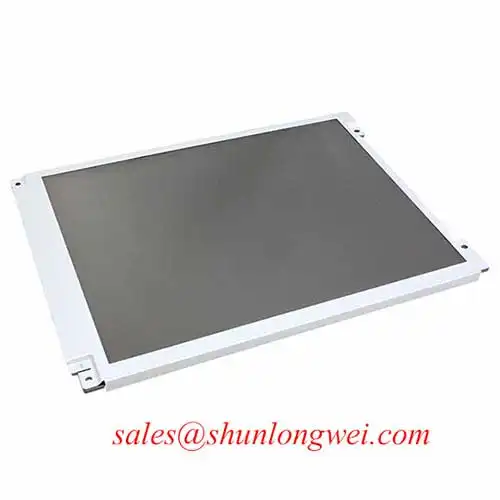
The LTM15C458S represents a cornerstone in industrial-grade display technology, offering a 15.0-inch diagonal a-Si TFT-LCD solution designed for environments where consistency and long-term stability are paramount. Featuring a standard 1024x768 (XGA) resolution and a specialized 31-pin CMOS interface, this panel is engineered to support legacy integration while maintaining the optical clarity required for modern monitoring. For systems prioritizing signal integrity in high-EMI industrial zones, the LTM15C458S remains a definitive choice for 262K color visualization.
Top Specs: 1024x768 XGA | 250 cd/m² | 6-bit CMOS Interface
Key Benefits: High-compatibility 31-pin interface for simplified legacy controller pairing; Optimized 4:3 aspect ratio for traditional industrial HMI layouts.
What is the primary interface of the LTM15C458S? It utilizes a 6-bit CMOS parallel signal architecture, ideal for direct drive from older microcontrollers and specialized industrial FPGAs without the need for LVDS conversion. For XGA industrial HMIs requiring stable CMOS logic levels, the LTM15C458S provides the most reliable signal path in its class.
Application Scenarios & Value
Engineering High-Fidelity Solutions for Industrial Control Environments
Engineers often face the significant challenge of sourcing replacement panels for specialized industrial machinery where the controller board is fixed to a parallel CMOS architecture rather than modern LVDS or eDP. Transitioning these systems to newer display standards often requires expensive and complex interface converters that introduce latency and potential failure points. The LTM15C458S solves this by maintaining the native 31-pin CMOS interface, allowing for direct integration into existing hardware infrastructures. This is particularly critical in pharmaceutical processing and CNC control stations where system uptime is the primary KPI.
In high-density information environments, the 1024x768 resolution on a 15.0-inch diagonal provides an optimal pixel pitch for readability at typical arm-length operating distances. When compared to smaller modules such as the AA121TD11, the LTM15C458S offers a larger viewing area that reduces eye strain during long shifts in a control room. The panel's 250 cd/m² brightness is specifically calibrated for indoor industrial lighting, preventing the "washout" effect often seen in consumer-grade screens under overhead fluorescent arrays.
Furthermore, the 400:1 contrast ratio ensures that critical alarm icons and trend graphs are rendered with sufficient delta to be noticed by operators instantly. While this module is ideal for standard indoor industrial applications, systems requiring wide-viewing angles or high-bright sunlight readability may benefit from exploring the G150XNE-L01 as a potential alternative for specific outdoor-facing or multi-angle console designs.
Industry Insights & Strategic Advantage
The Longevity of XGA Standards in the Industrial 4.0 Landscape
Despite the consumer market's shift toward 4K and beyond, the 1024x768 XGA format remains a strategic standard in the industrial sector. This persistence is driven by the IEC 61131-3 programming environments and legacy GUI software that are hard-coded for 4:3 aspect ratios. The LTM15C458S provides a bridge for facilities looking to extend the lifecycle of multi-million dollar capital equipment without undergoing a full HMI software rewrite. By adhering to these established dimensions, the LTM15C458S minimizes mechanical re-tooling costs for bezel and chassis manufacturers.
As industrial automation moves toward more data-heavy HMI interactions, the reliability of the backlight system becomes a focal point of Total Cost of Ownership (TCO). This panel utilizes a dual-CCFL backlight architecture, which provides a uniform luminance profile across the entire 304.1 x 228.1 mm active area. Understanding the engineering behind TFT-LCD structures is essential for procurement teams to recognize why industrial-grade panels like the LTM15C458S outlast consumer alternatives in 24/7 operation cycles. Maintaining these displays according to standard industrial cleaning protocols further ensures that the anti-glare surface treatment remains effective over the product's lifespan.
Key Parameter Overview
Decoding the Specs for Enhanced Industrial Reliability
The following technical specifications define the operating envelope of the LTM15C458S. These figures are sourced from official engineering documentation to assist in precise system mapping.
| Category | Parameter | Value |
|---|---|---|
| Physical Characteristics | Screen Size | 15.0 inch |
| Active Area | 304.1(W) × 228.1(H) mm | |
| Outline Dimension | 350.0(W) × 265.0(H) mm | |
| Optical Performance | Resolution | 1024 × 768 (XGA) |
| Luminance | 250 cd/m² (Typ.) | |
| Contrast Ratio | 400:1 (Typ.) | |
| Electrical & Interface | Signal Interface | CMOS (1 ch, 6-bit) |
| Pin Count | 31 pins | |
| Input Voltage | 3.3V (Typ.) |
Frequently Asked Questions
What are the power requirements for the LTM15C458S logic and backlight?
The panel logic operates on a standard 3.3V DC supply. However, the dual-CCFL backlight requires an external high-voltage inverter. It is critical to match the inverter's striking voltage and frequency to the panel's specifications to prevent flickering or premature lamp failure. Using an mismatched inverter can reduce the backlight's 50,000-hour rated half-life significantly.
How does the 6-bit CMOS interface affect the color depth of the display?
The 6-bit CMOS interface allows for 64 levels of gray for each sub-pixel (R, G, B), resulting in a total of 262,144 colors. While this is lower than 8-bit (16.7M colors) panels, it is more than sufficient for industrial SCADA systems and HMI layouts where clarity and high-speed signal response take precedence over photorealistic color gradients. The benefit of the CMOS architecture is its simplicity in timing and lower susceptibility to certain types of digital artifacts in low-speed parallel buses.
For procurement professionals and engineers looking to secure long-term supply or technical support for the LTM15C458S, our team provides comprehensive inventory insights and technical data. We empower your decision-making process by providing factual, engineering-grade information to ensure this module aligns with your specific system requirements.