

Content last revised on September 10, 2026
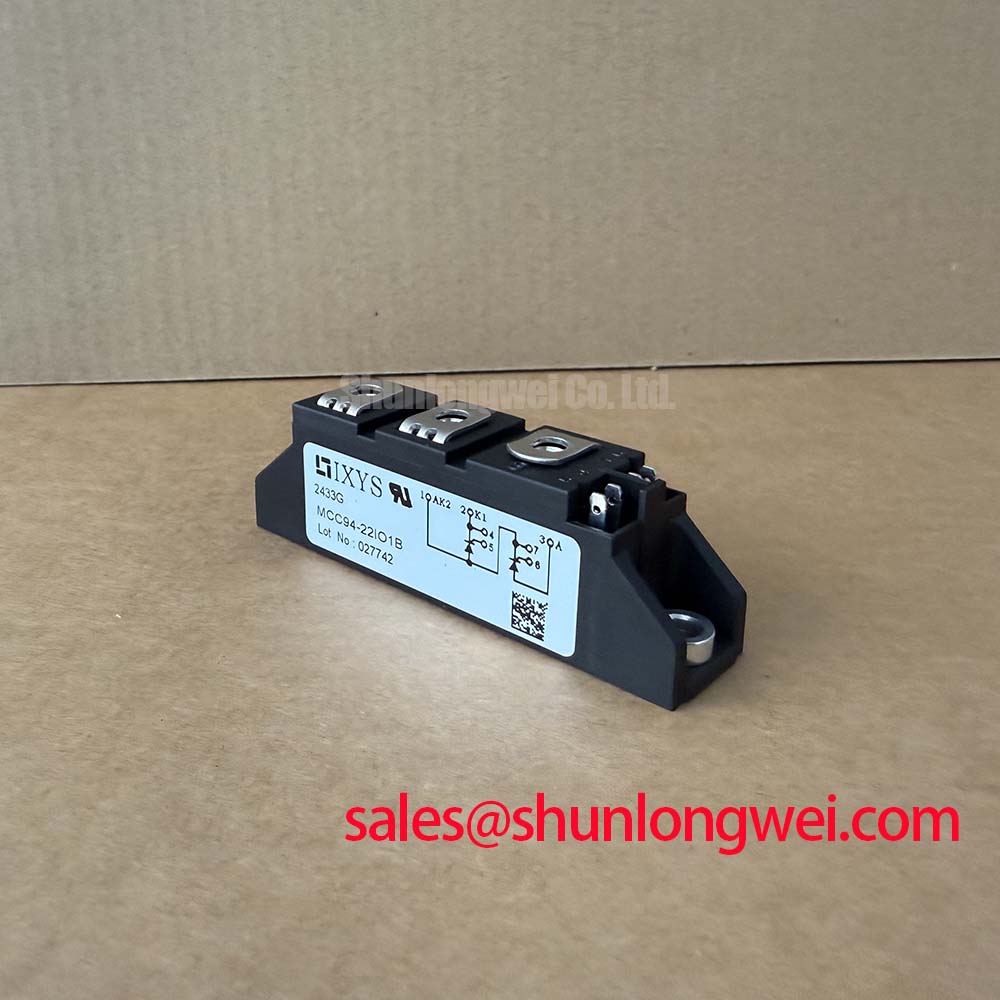
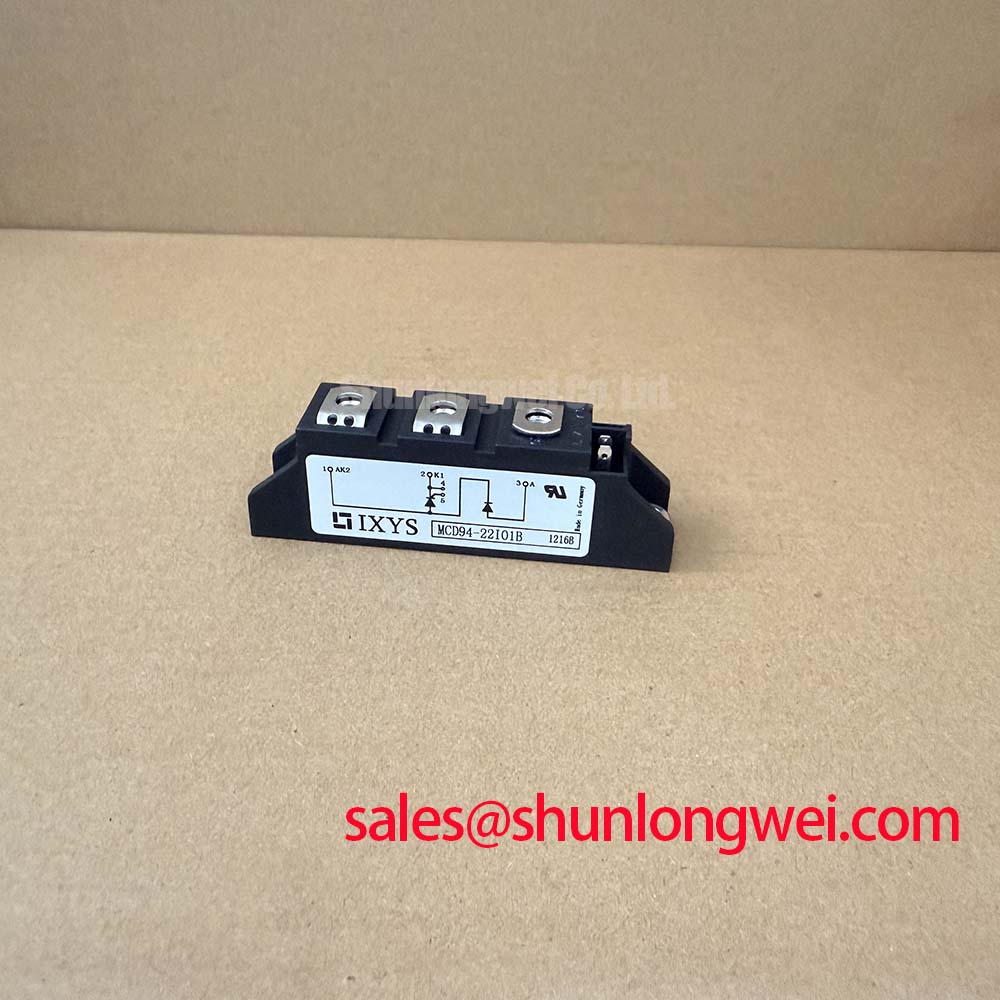
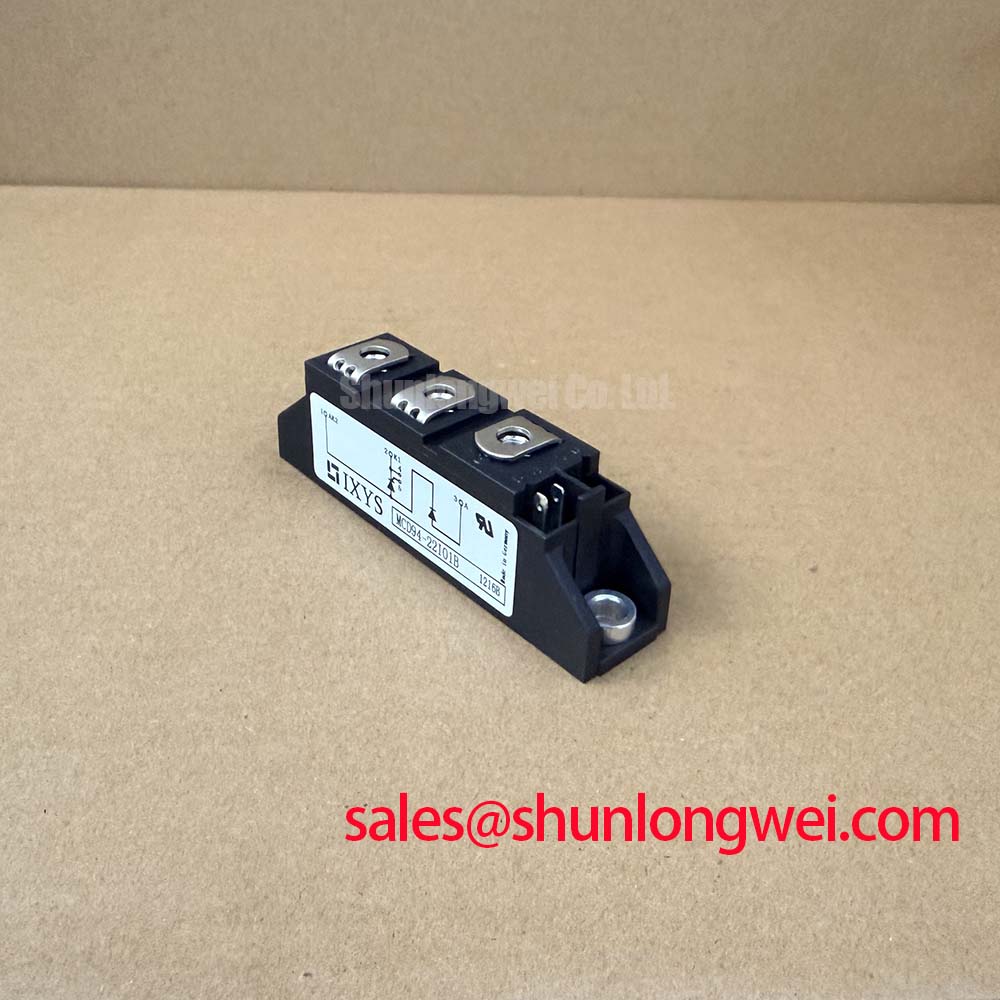
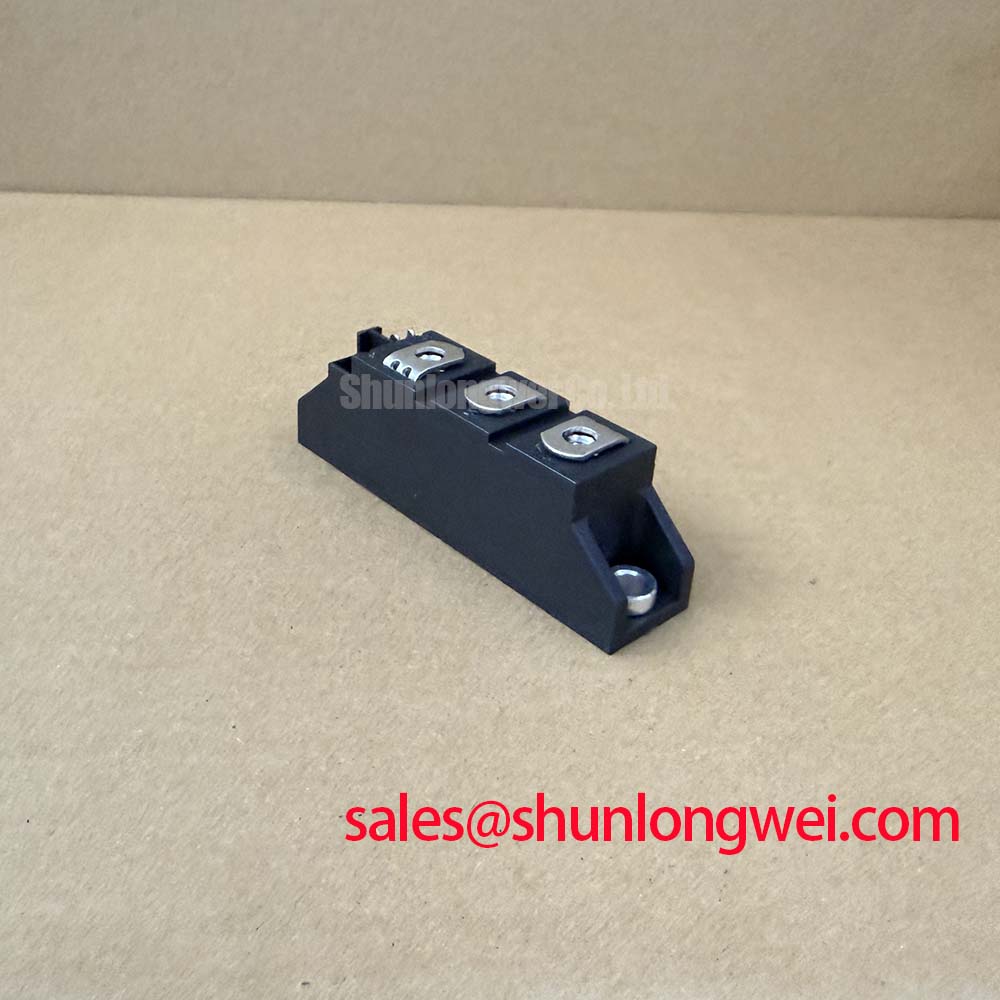
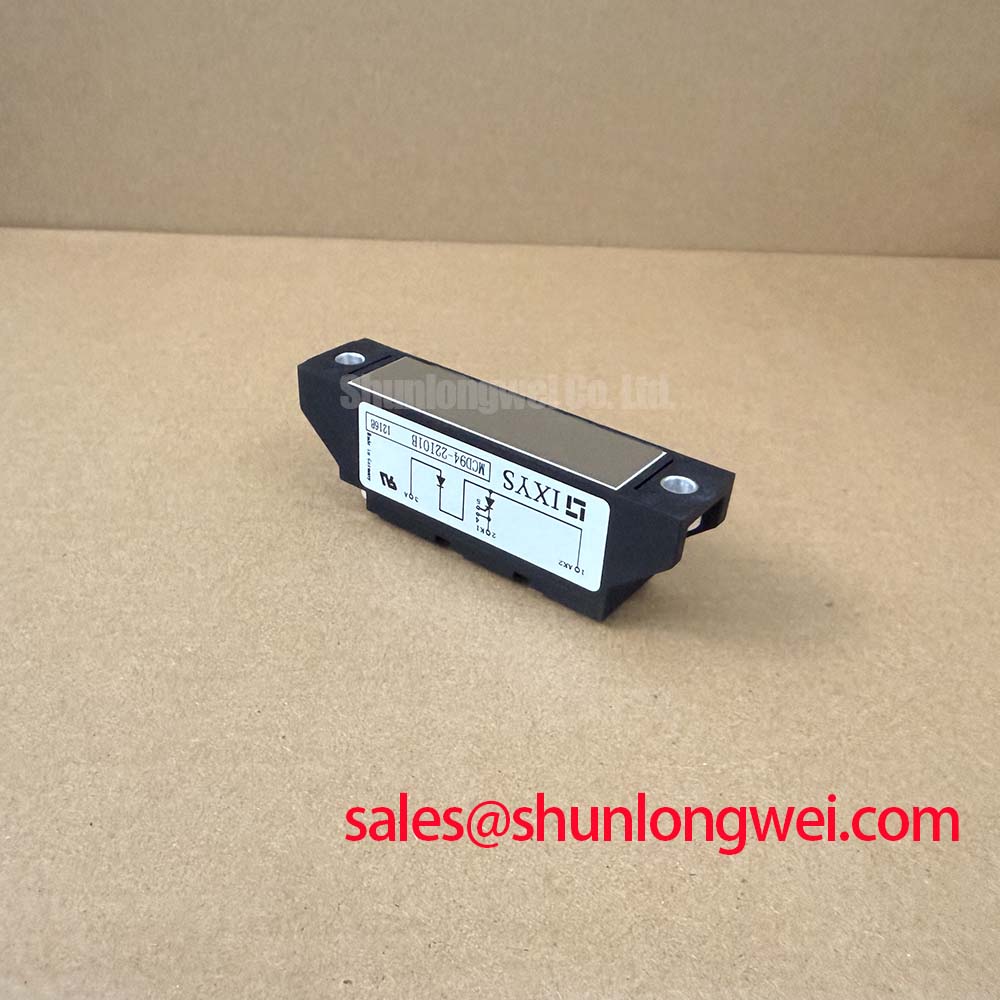
IXYS MCD94-22Io1B Thyristor/Diode Module
Product Overview & Technical Highlights
High-Voltage Isolation and Thermal Performance in Phase Control
The MCD94-22Io1B, manufactured by IXYS, is a high-performance thyristor/diode module housed in an industry-standard TO-240AA package. Featuring a repetitive peak reverse voltage of 2200V and an average on-state current of 104A, it provides high voltage clearance for harsh grid conditions. The module integrates a thyristor and a diode in series configuration, making it suitable for single-phase and three-phase rectification topologies.
The construction utilizes a Direct Copper Bonded (DCB) ceramic baseplate, which achieves a low junction-to-case thermal resistance of 0.22 K/W. This design enhances transient overload tolerance and extends power cycling lifespan. The 2200V repetitive peak voltage rating acts like an electrical dam. Just as a higher dam prevents unexpected floods from overflowing, a 2200V rating shields the internal silicon from mains voltage spikes, ensuring stability during grid fluctuations. For 2200V rectification requiring low thermal resistance, the MCD94-22Io1B provides optimal surge protection and power density.
Key Parameter Overview
Decoding the Specs for Enhanced Thermal Reliability
| Functional Group | Parameter Description | Symbol | Technical Value |
|---|---|---|---|
| Electrical Ratings | Repetitive Peak Reverse Voltage | VRRM / VDRM | 2200V |
| Average On-State Current (TC = 85°C) | IT(AV) | 104A | |
| RMS On-State Current | IT(RMS) | 180A | |
| Thermal & Surge Ratings | Max. Peak Surge Current (10 ms, 50 Hz) | ITSM | 1700A |
| I²t Value for Fusing (10 ms, 50 Hz) | I²t | 14.5 kA2·s | |
| Thermal Resistance (Junction-to-Case) | Rth(j-c) | 0.22 K/W | |
| Mechanical & Isolation | Isolation Voltage (RMS, 1 second) | VISOL | 4800V |
| Package Style | - | TO-240AA |
Download the MCD94-22Io1B datasheet for detailed specifications and performance curves.
Application Scenarios & Value
Achieving High Voltage Tolerance in Industrial Power Conversion
Engineers designing heavy-duty industrial systems frequently face the challenge of selecting rectifiers capable of handling high startup inrush currents. For example, in a three-phase motor drive system, starting a high-inertia motor generates a large input current spike that can easily damage standard diodes. With a peak surge current rating (ITSM) of 1700A and a fusing safety factor (I²t) of 14.5 kA2·s, the MCD94-22Io1B provides the necessary margin to withstand these heavy inrushes. This high energy absorption capacity simplifies the design of protective circuits, allowing system designers to coordinate input fuses without oversizing the semiconductors.
While the MCD94-22Io1B is suitable for designs requiring up to 104A average current at 2200V blocking voltage, applications needing alternative current capabilities can evaluate related thyristor options. For systems with lower voltage requirements but similar layouts, the MDC100-16 provides a standard alternative, whereas the SKKH106/16E offers another configuration option in a comparable footprint. Making an informed choice depends on the specific voltage transients and surge profiles of the local grid.
Technical & Design Deep Dive
A Closer Look at the DCB Ceramic Design for Long-Term Reliability
To achieve high reliability in high-voltage industrial applications, thermal control is paramount. The MCD94-22Io1B utilizes a Direct Copper Bonded (DCB) ceramic baseplate. This packaging technique bonds copper foils directly onto an alumina (Al2O3) ceramic substrate, creating a path with high dielectric isolation and low thermal resistance.
In operation, the junction temperature fluctuates during load variations. Think of this thermal resistance like a traffic bottleneck on a narrow bridge; a low Rth(j-c) of 0.22 K/W acts as a multi-lane highway that clears heat from the junction to the ambient cooling environment. This prevents thermal runaway and extends the module's power cycling lifespan. This mechanical structure is compatible with standard footprints from manufacturers like Semikron, allowing seamless mechanical mounting on standard heatsinks while ensuring electrical isolation of 4800V to the chassis.
For engineers designing power stages, referring to a power semiconductor selection guide can help verify thermal calculations. Additionally, following proper field engineering practices during mounting, such as applying the correct thermal paste thickness and terminal torque (2.5 to 4 Nm), is essential to avoid structural failures.
Frequently Asked Questions
Addressing Key Design and Thermal Engineering Queries
What is the primary benefit of the DCB ceramic baseplate?
It minimizes thermal resistance to 0.22 K/W while providing 4800V isolation.
What is the maximum surge capability of the module?
It handles a non-repetitive peak surge current of 1700A at 50Hz.
Can the MCD94-22Io1B be used in phase control systems?
Yes, its internal configuration combines a thyristor and a diode in series, making it suitable for half-controlled bridge rectifiers and AC voltage regulators.
To evaluate the MCD94-22Io1B for your upcoming industrial designs, contact our technical sales team for comprehensive support, stock availability inquiries, or formal price quotations.