



Content last revised on August 28, 2026
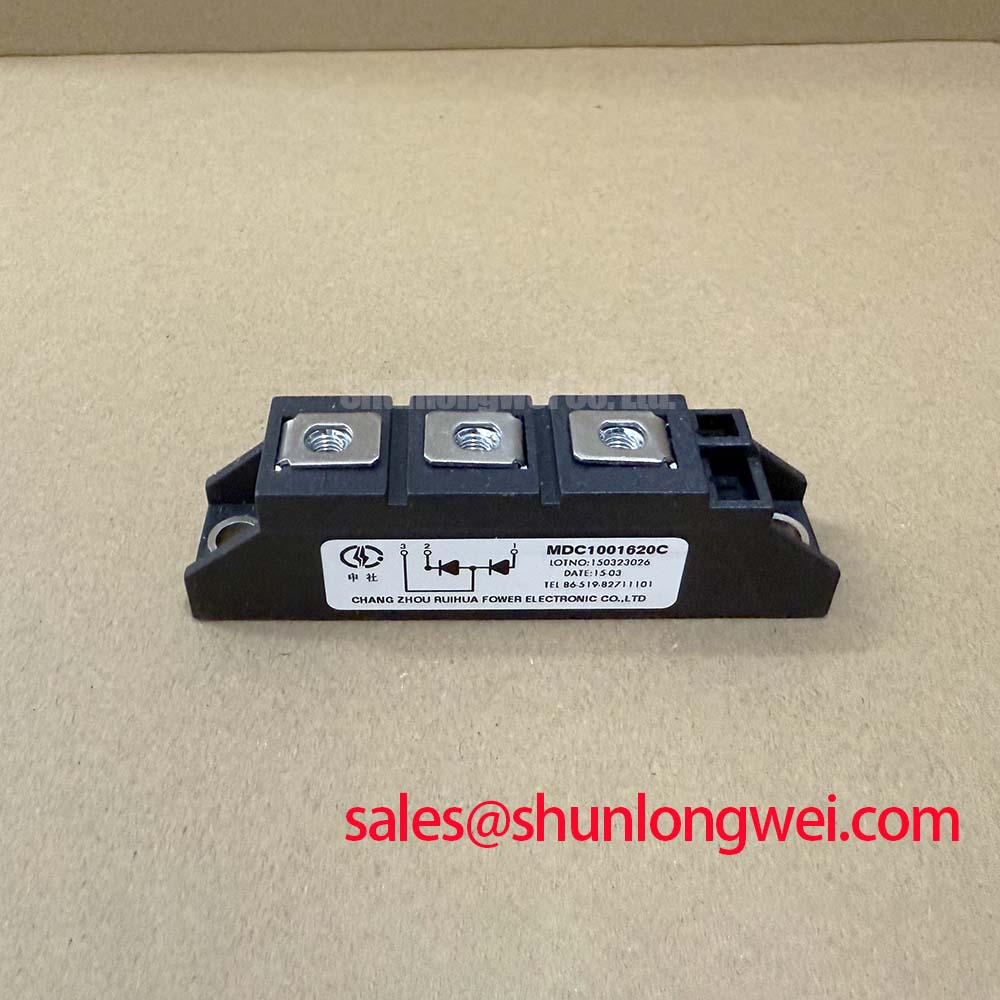
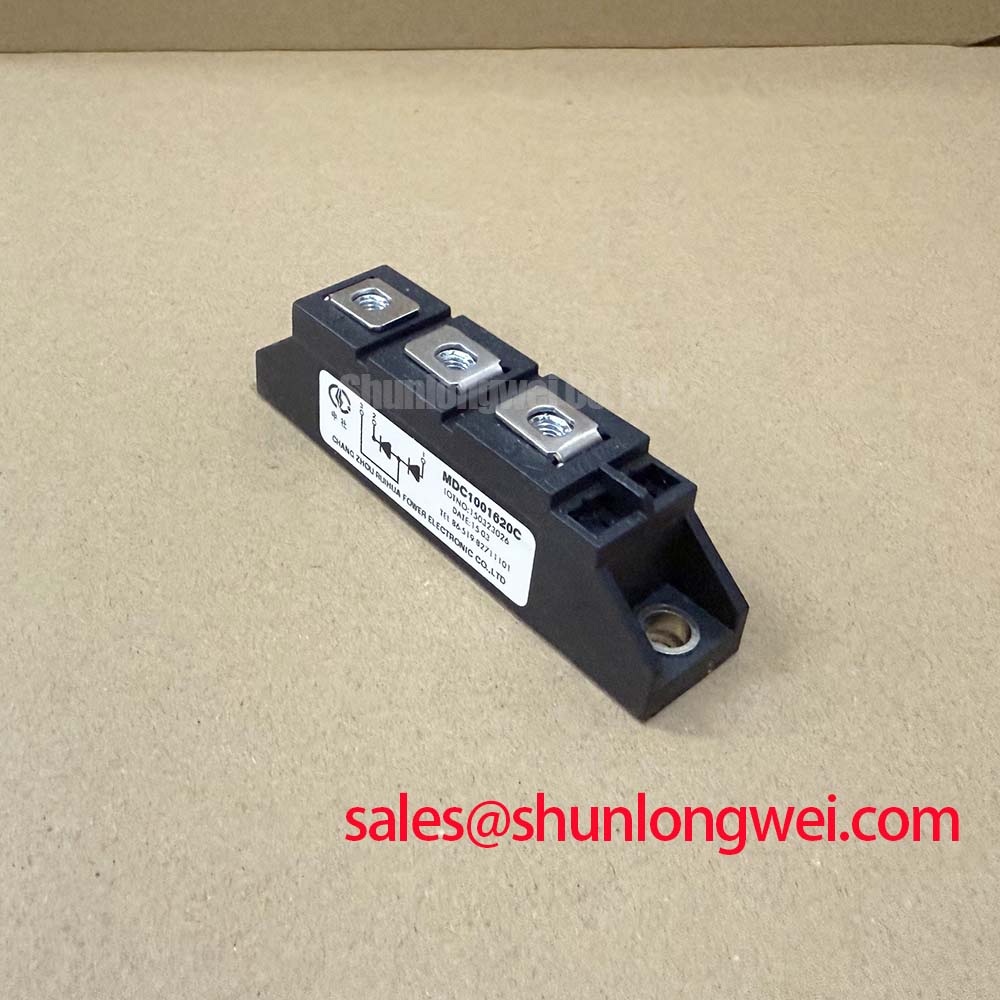
MDC1001620C: Datasheet for 1600V Thyristor/Diode Module
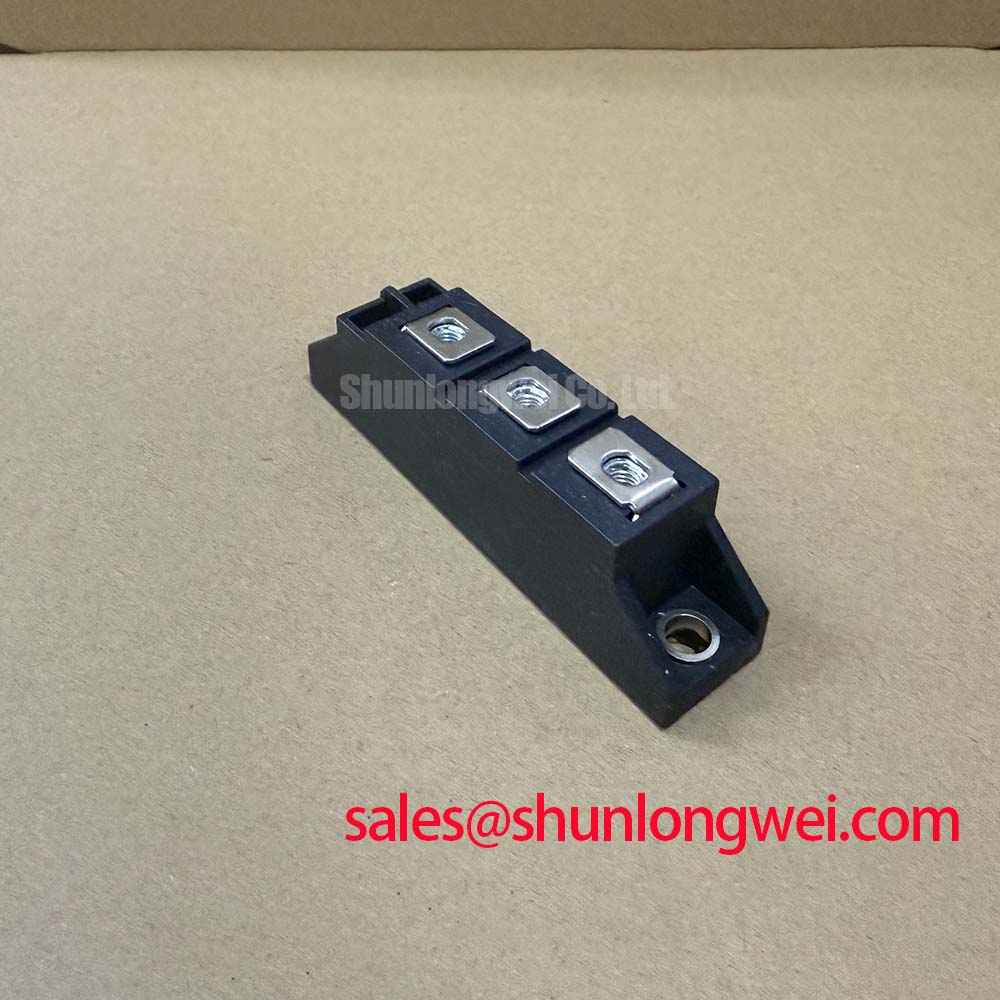
The MDC1001620C is a robust power control module engineered for exceptional thermal stability and long-term reliability in industrial systems. It delivers dependable performance through a design focused on minimizing thermal stress and simplifying system integration. Its construction, featuring an Alumina (Al2O3) Direct Bonded Copper substrate, provides superior thermal cycling endurance over conventional designs.
Top Specs: 1600V | 100A (Avg) | RthJC 0.26 °C/W
Key Benefits: Enhanced thermal performance. Simplified heatsink mounting.
Field-Proven Integrity: Deployment Snapshots
In high-demand industrial settings, consistent performance is the benchmark for component selection. The MDC1001620C is frequently integrated into the front-end of systems where controlled power is a prerequisite. For instance, in multi-kilowatt soft-starters for AC induction motors, this module provides the controlled rectification needed to prevent high inrush currents, thereby protecting mechanical drivetrains and reducing electrical stress on the grid. Its excellent thermal transfer capabilities ensure it can handle the repetitive power cycles inherent in such start-stop operations without degradation.
Comparative Data for Informed System Design
To support your design evaluation, this section provides factual data points for assessing the MDC1001620C against other power modules. This is not a recommendation, but a data-centric view to aid in aligning a component's capabilities with specific engineering requirements.
- Voltage Headroom: The 1600V VRRM rating provides a significant safety margin for operation on 400V, 480V, and even some 690V AC lines, a critical factor for systems deployed in environments with potential voltage transients.
- Thermal Interface: The module utilizes an electrically isolated baseplate. This design choice simplifies assembly by allowing direct mounting to a grounded heatsink without requiring additional, thermally resistive insulating pads, a common point of failure and thermal inefficiency in other solutions. For systems where space is constrained and thermal performance is critical, the MDS200A1600V offers a full bridge configuration within a similar footprint.
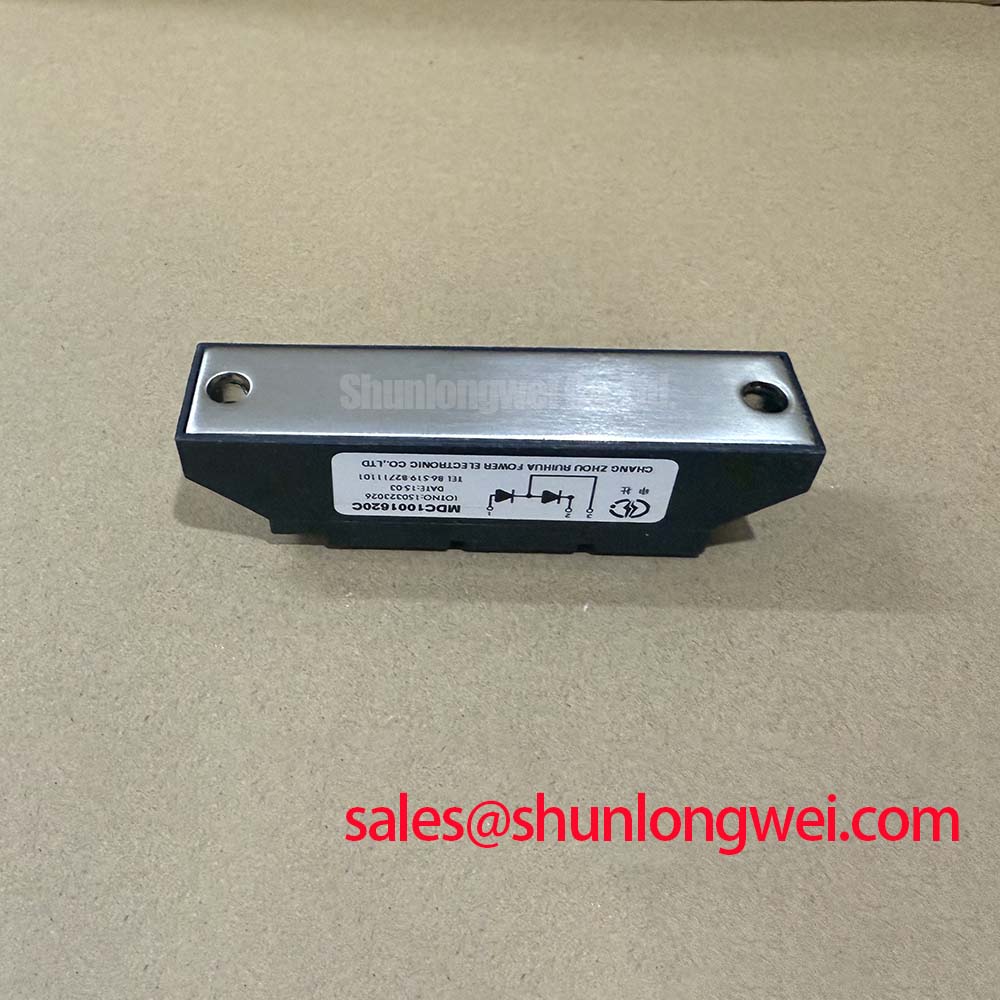
- Component Integration: By integrating a thyristor and a diode in a common cathode configuration, the MDC1001620C serves as a fundamental building block for AC controllers and controlled rectifiers, reducing component count compared to discrete solutions.
What is the best fit for the MDC1001620C? For industrial AC controllers up to 50kW prioritizing long-term reliability over high-frequency operation, this module offers an optimal balance of performance and thermal ruggedness.
Core Specifications for Thermal and Electrical Design
The following parameters, derived from the official datasheet, are crucial for system modeling and performance validation. The engineering significance of each value is provided to connect specifications to real-world application behavior.
| Parameter | Value | Engineering Significance |
|---|---|---|
| Repetitive Peak Reverse Voltage (VRRM) | 1600 V | Defines the maximum permissible instantaneous reverse voltage, ensuring device survival during line voltage fluctuations and transient events in industrial grids. |
| Average On-state Current (ITAVM) | 100 A (at TC = 85°C) | Specifies the maximum continuous average current the device can handle at a defined case temperature, a primary metric for sizing the module for a given load. |
| Thermal Resistance, Junction to Case (RthJC) | 0.26 K/W (Thyristor) / 0.4 K/W (Diode) | This value is analogous to the width of a pipe for heat flow; a lower number indicates more efficient heat transfer from the silicon chip to the module's baseplate, enabling cooler operation and higher reliability. |
| Isolation Voltage (VISOL) | 3000 V~ (50/60 Hz, RMS, t=1min) | Guarantees high electrical isolation between the active terminals and the mounting baseplate, simplifying safety compliance and heatsink design. |
| Maximum Junction Temperature (TVJM) | 150 °C | Indicates the upper limit for the silicon's operating temperature, providing a critical boundary for thermal design and ensuring a robust operational margin. |
Inside the MDC1001620C: A Foundation of Reliability
The operational resilience of the MDC1001620C is not accidental; it is engineered through specific material and design choices. At its core is a Direct Bonded Copper (DBC) substrate which features an Alumina (Al2O3) ceramic layer. This structure serves a dual purpose: it provides robust electrical isolation while simultaneously offering a highly efficient path for waste heat to travel from the semiconductor chips to the heatsink. What is the benefit of a DBC substrate? It yields enhanced power cycling capability by minimizing thermally-induced stress on solder joints, a common failure point in power modules.
Furthermore, the use of planar passivated chips is a key factor in the module's long-term stability. This technology protects the high-voltage junctions of the thyristor and diode from contaminants, ensuring that critical characteristics like blocking voltage remain stable throughout the device's operational lifespan. This contributes to a predictable and reliable performance profile, essential for industrial equipment designed for years of continuous service. For further reading on module construction, see this in-depth analysis of IGBT modules.
Powering Critical Systems: Where Reliability is Paramount
The MDC1001620C is specified for applications where controlled power delivery and operational uptime are fundamental requirements. Its blend of voltage rating and thermal efficiency makes it a suitable component for a range of industrial power conversion tasks.
- Soft Starters: In AC motor control, the module can be used to build phase-angle controllers that gradually ramp up voltage to the motor, preventing mechanical shock and electrical inrush current.
- Controlled Bridge Rectifiers: For battery chargers and DC power supplies, these modules can form one half of a fully controlled bridge, enabling regulation of the DC output voltage.
- AC Power Controllers: In applications like industrial heating or lighting control, the thyristor element provides an efficient method for modulating AC power delivered to a resistive load.
- Static Switches: The device can be employed in static transfer switches for uninterruptible power supplies (UPS), providing a reliable means of switching between power sources.
Strategic Implications: Enhancing System Uptime and Lifecycle Value
In today's competitive industrial landscape, the total cost of ownership (TCO) often outweighs the initial component cost. The design philosophy of the MDC1001620C directly supports this long-term view. By focusing on thermal robustness through its DBC construction and isolated baseplate, the module helps lower TCO in two distinct ways. First, it simplifies the thermal design, potentially reducing the size, cost, and complexity of the required heatsink and cooling apparatus. Second, its inherent reliability, stemming from stable chip technology and resistance to thermal cycling fatigue, translates to longer mean time between failures (MTBF). This leads to increased system uptime and reduced field service costs, which are critical metrics in industrial automation and power infrastructure. Understanding these thermal performance principles is key to unlocking system longevity.
Technical Inquiries on the MDC1001620C
1. What is the primary advantage of the common cathode configuration in the MDC1001620C?
The common cathode configuration simplifies the design of single-phase AC controllers and half-controlled bridge rectifiers. It allows both the thyristor (for control) and the diode (for freewheeling or return path) to share a common heatsink and a common cathode connection, reducing wiring complexity and component count.
2. How does the Alumina (Al2O3) DBC substrate improve reliability over other designs?
The Alumina DBC substrate provides excellent electrical isolation and a low thermal resistance path. Crucially, its coefficient of thermal expansion (CTE) is better matched to silicon compared to traditional insulated metal substrates. This reduces mechanical stress on the solder joints during temperature fluctuations, significantly improving the module's resistance to failure from thermal cycling.
3. What are the essential mounting considerations for this module to achieve datasheet thermal performance?
To achieve the specified RthJC, it is critical to ensure proper mounting. This involves applying a thin, uniform layer of thermal grease to a clean, flat heatsink surface (flatness tolerance typically within 50µm). The module must be secured using the specified torque for its mounting screws (M6 screws, 4-5 Nm) to guarantee optimal contact pressure without inducing mechanical stress on the ceramic substrate.
4. Can the MDC1001620C be used for high-frequency applications?
No, this is a line-frequency device. Thyristors (SCRs) are generally designed for applications at grid frequencies (50/60 Hz). Their turn-off time characteristics are not suitable for the high-speed switching required in applications like modern switch-mode power supplies or high-frequency inverters. For higher frequency needs, an IGBT Module would be the appropriate technology.
5. Is a snubber circuit required for this module?
In most applications, a snubber circuit (typically an R-C or R-C-D network) is highly recommended. It helps to limit the rate of rise of off-state voltage (dV/dt) across the thyristor, preventing false triggering, and dampens voltage overshoots during switching. The specific values for the snubber components depend on the circuit's layout and parasitic inductance.
From a design perspective, the true value of the MDC1001620C lies in its thermal predictability. The low and well-defined junction-to-case thermal resistance provides a solid foundation for thermal simulations, allowing engineers to design cooling systems with confidence and optimize for long-term operational stability rather than over-engineering for unknown variables. This focus on fundamental robustness is key to developing next-generation industrial equipment that is both powerful and durable.