


Content last revised on September 10, 2026
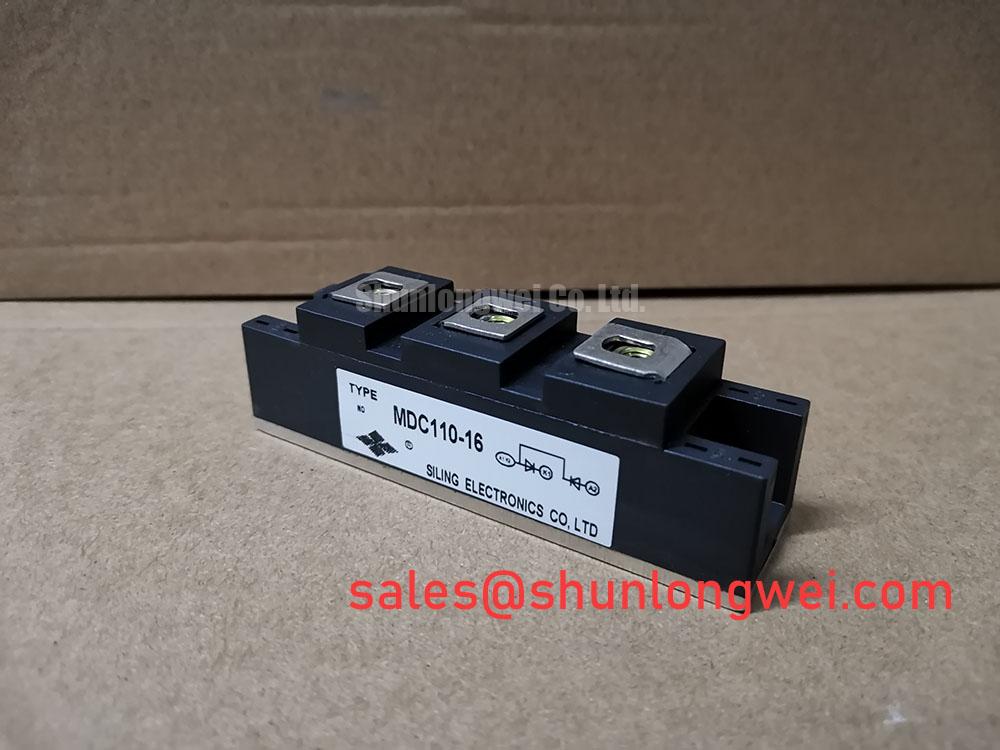
MDC110-16 Thyristor/Diode Module: Engineering Analysis for Controlled Rectification
An In-Depth Review of the MDC110-16 for High-Reliability Power Control Systems
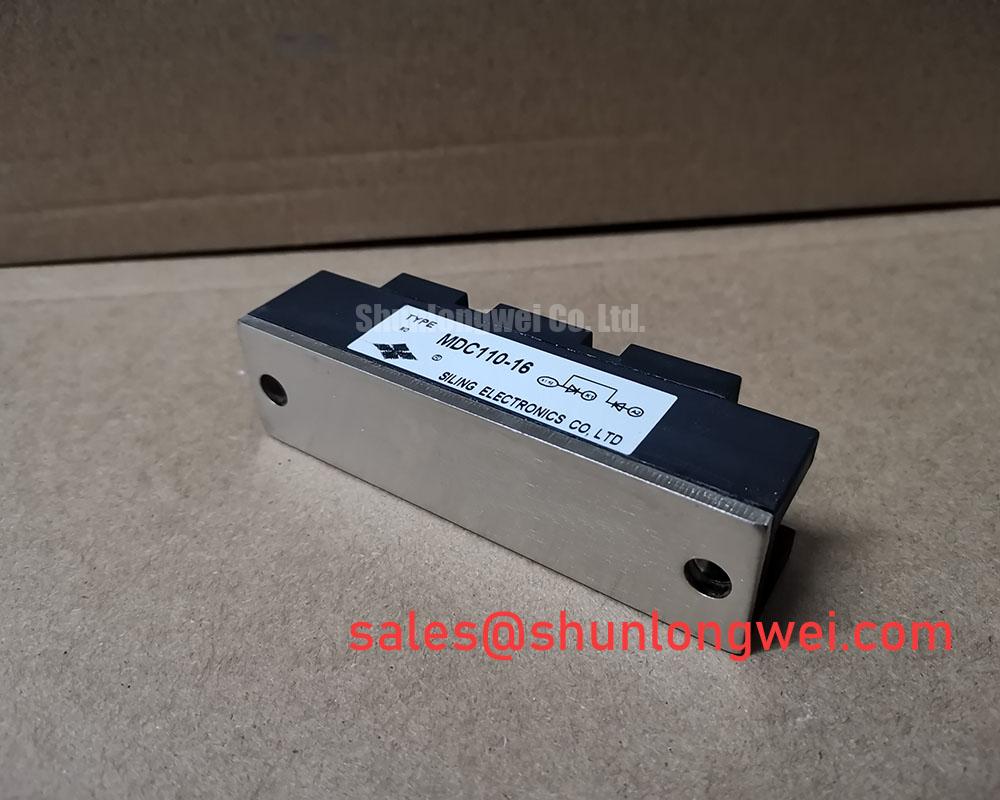
The MDC110-16 is a high-reliability Thyristor/Diode module designed for robust performance in industrial power control and rectification applications. Engineered for exceptional durability, it combines a 1600V blocking voltage with a formidable 1900A surge current capability and low thermal resistance (RthJC as low as 0.3 K/W). This ensures both long-term operational stability and efficient thermal management. The module directly addresses the critical engineering challenge of surviving high inrush currents common in motor control and capacitor charging circuits, offering a dependable solution for demanding environments. For systems requiring a lower voltage rating, the related MDC100-16 provides a similar current handling capability in a 1600V package.
Key Parameter Overview
Decoding the Specs for Enhanced Thermal Reliability
The specifications of the MDC110-16 are tailored for demanding power control applications where both electrical ruggedness and thermal efficiency are paramount. The following table provides a functional breakdown of its key parameters, based on the official manufacturer's datasheet.
| Absolute Maximum Ratings (TC = 25°C unless otherwise specified) | ||
| Parameter | Symbol | Value |
| Repetitive Peak Reverse Voltage | VRRM | 1600 V |
| Average Forward Current (TC = 85°C) | IFAV / ITAV | 110 A |
| RMS Forward Current | IFRMS / ITRMS | 172 A |
| Peak Forward Surge Current (10 ms, 50 Hz, half-sine) | ITSM / IFSM | 1900 A |
| Thermal and Mechanical Characteristics | ||
| Thermal Resistance, Junction-to-Case (Thyristor) | RthJC | 0.30 K/W |
| Thermal Resistance, Junction-to-Case (Diode) | RthJC | 0.40 K/W |
| Operating Junction Temperature Range | TvJ | -40 to +125 °C |
| Isolation Voltage (50/60 Hz, RMS) | VISOL | 3000 V~ |
Download the MDC110-16 datasheet for detailed specifications and performance curves.
Application Scenarios & Value
Achieving Robust Performance in Industrial Controlled Rectifiers
The MDC110-16 is best suited for power conversion systems where reliability under electrical stress is a primary design criterion. Its core value is demonstrated in applications prone to significant inrush current events.
A prime engineering scenario is in the design of an industrial soft-starter for three-phase induction motors. During motor startup, the initial current can be several times the nominal operating current. The MDC110-16's peak forward surge current (ITSM) rating of 1900A provides a substantial safety margin, preventing device failure during these transient conditions. This high surge capability is analogous to having a circuit breaker that can withstand a massive, momentary overload without tripping, ensuring the startup sequence completes successfully. This robustness eliminates the need for oversized components, enabling a more compact and cost-effective system design. Other key applications include:
- Controlled rectifiers for DC motor drives and electroplating supplies.
- Battery charging systems requiring precise voltage and current regulation.
- Temperature and lighting control circuits in industrial automation.
In these systems, the module's glass-passivated chips ensure stable blocking characteristics over a long operational life, a critical factor for equipment deployed in remote or difficult-to-service locations. For higher power AC line applications requiring similar surge robustness, designers might also consider the SKKD162/16.
Frequently Asked Questions (FAQ)
How does the 1900A ITSM rating impact the design of a motor soft-starter?
The high ITSM rating provides critical protection against the large, transient inrush currents experienced when starting a motor. This allows engineers to design the system with confidence that the power stage can survive repeated startup cycles without degradation or catastrophic failure, directly enhancing the overall reliability and longevity of the soft-starter.
What is the benefit of the module's 3000V isolation voltage?
The 3000V isolation voltage simplifies mechanical design and improves safety. It allows the module's baseplate to be mounted directly to a grounded heatsink without the need for additional, often bulky and costly, insulating materials. This reduces assembly complexity, improves thermal transfer, and helps meet safety standards like those found in the IEC 60947-4-2 standard for motor controllers.
Industry Insights & Strategic Advantage
System-Level Benefits of Component Ruggedness in Industrial Automation
In the context of Industry 4.0 and increasing automation, the total cost of ownership (TCO) is a more critical metric than initial component cost. Unplanned downtime in a manufacturing line or automated process can incur costs that far exceed the price of the power electronics. The MDC110-16's design philosophy aligns directly with this industry trend by prioritizing operational robustness.
Its combination of high surge immunity and a low Thermal Resistance value contributes to a longer Mean Time Between Failures (MTBF). For system integrators and OEMs, specifying a rugged component like the MDC110-16 in a DC motor control or rectifier bridge translates into a strategic advantage: a stronger brand reputation for reliability, lower warranty claim rates, and increased customer satisfaction. This focus on durability ensures that power conversion equipment remains a dependable asset, not a potential point of failure, in an increasingly connected and automated industrial landscape.
Technical Inquiries and Sourcing
To evaluate the MDC110-16 for your specific design requirements or to inquire about sourcing, please contact our technical sales team for further assistance. We can provide additional resources to support your design-in process and procurement needs.