

Content last revised on September 10, 2026
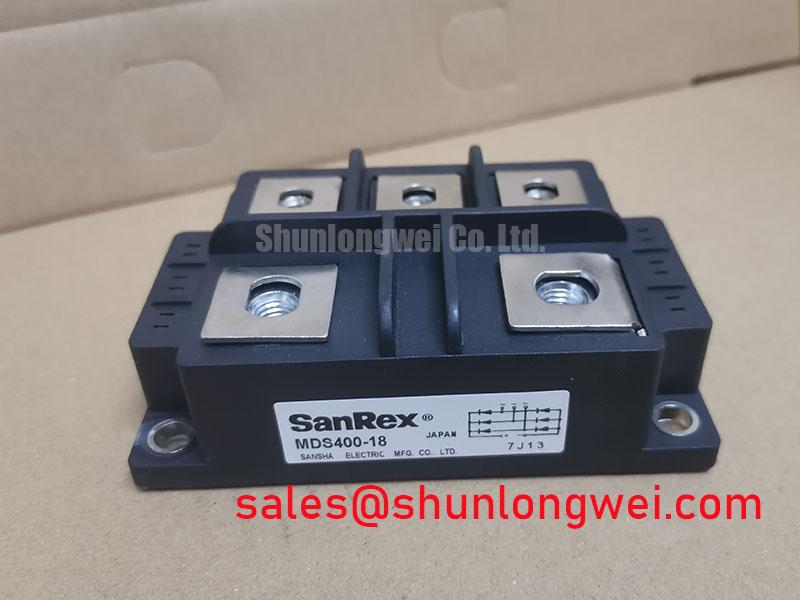
SanRex MDS400-18 Three-Phase Rectifier Module: Engineering for High-Current Industrial Power Conversion
Introduction: Core Specifications and Value Proposition
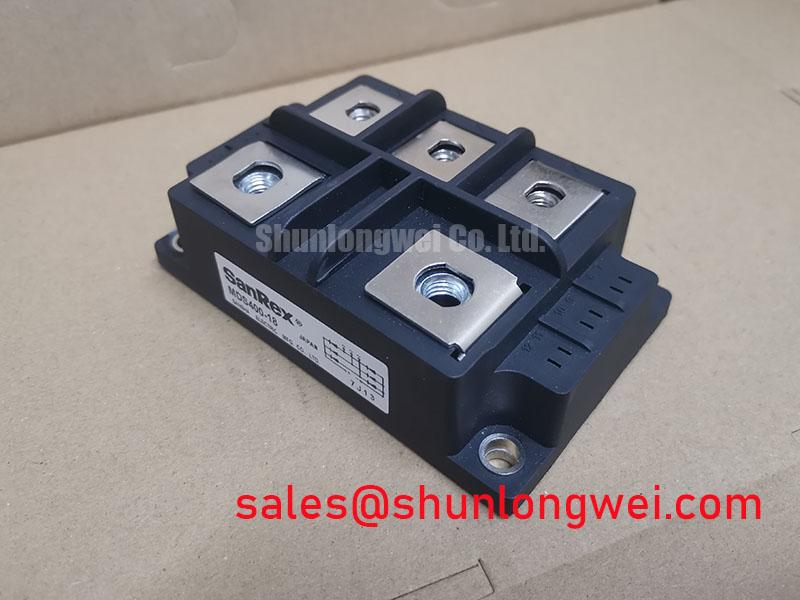
The MDS400-18 is a high-current three-phase rectifier module engineered for robust and reliable AC-to-DC power conversion in demanding industrial applications. It delivers a formidable combination of high current handling and substantial voltage overhead, ensuring system integrity under harsh electrical conditions. Key specifications include: 400A | 1800V | 2500V Isolation. The primary engineering benefits are its exceptional thermal stability and high electrical isolation, which translate directly to enhanced system longevity and safety. For engineers designing front-end rectification for high-power systems, the MDS400-18 addresses the critical need for a component that can withstand significant voltage transients and dissipate heat effectively. With a 400A current rating and 1800V reverse voltage, this module is an ideal front-end for high-power industrial motor drives.
Application Scenarios & Value
System-Level Benefits in High-Power Industrial Conversion
The MDS400-18 Three-Phase Rectifier Module is fundamentally designed to serve as the durable cornerstone of the power conversion chain in high-demand environments. Its robust specifications make it an excellent component for the input stage of systems that ultimately power heavy machinery and critical infrastructure. What is the key benefit of its 2500V isolation? It simplifies system safety design and enhances overall reliability.
- Variable Frequency Drives (VFDs): As the primary input rectifier, it reliably converts AC line voltage to the DC bus voltage that feeds the IGBT inverter stage. Its 1800V repetitive peak reverse voltage (VRRM) provides a significant safety margin for 400V, 480V, and even 690V industrial lines, protecting downstream components from voltage spikes.
- Industrial Power Supplies: In high-current DC power supplies for applications like electroplating or large-scale battery charging, the MDS400-18 ensures a stable and powerful rectified output, capable of sustaining a 400A average forward current.
- Welding Equipment: The module's high surge current capability (IFSM) is critical for inverter-based welding power supplies, allowing it to handle the intense, pulsed load demands without degradation.
- Uninterruptible Power Supplies (UPS): For large-scale UPS systems, this rectifier provides the dependable AC-to-DC conversion necessary for battery charging and for supplying the inverter stage during normal operation.
For systems requiring even greater current capacity, the related MDS500A/1600V offers a direct path for scaling up power handling capabilities.
Key Parameter Overview
Decoding the Specs for Enhanced Thermal and Electrical Reliability
The performance of the MDS400-18 is defined by a set of critical parameters that directly impact its reliability and suitability for high-power designs. Understanding these specifications is key to leveraging its full capabilities.
| Output & Forward Characteristics | |
|---|---|
| Average Forward Current (IF(AV)) | 400A (at TC = 100°C) |
| Peak Forward Voltage (VFM) | ≤ 1.35V @ 400A, Tj = 25°C |
| Non-Repetitive Surge Current (IFSM) | 3.0kA (t=10ms, 50Hz) |
| Voltage & Isolation Ratings | |
| Repetitive Peak Reverse Voltage (VRRM) | 1800V |
| Isolation Voltage (Viso) | 2500V (AC, 1 minute) |
| Thermal and Mechanical Specifications | |
| Operating Junction Temperature (Tj) | -40°C to 150°C |
| Thermal Resistance, Junction-to-Case (Rth(j-c)) | ≤ 0.10 °C/W |
| Mounting Torque | 5 N·m (M6) |
Download the MDS400-18 datasheet for detailed specifications and performance curves.
Technical Deep Dive
Implications of the Electrically Isolated Baseplate Design
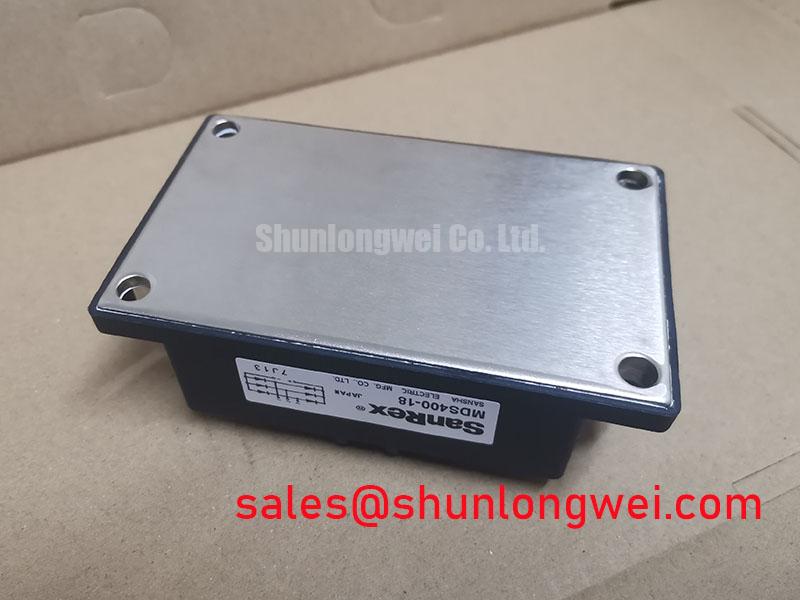
A critical, yet often overlooked, feature of the MDS400-18 is its design incorporating an electrically isolated mounting baseplate. This architecture provides a direct and significant engineering advantage by simplifying thermal design and enhancing system safety. The 2500V isolation rating between the terminals and the baseplate means that the module can be mounted directly onto a common chassis or heatsink without the need for additional, often thermally inefficient, insulating layers like mica or silicone pads.
This design directly impacts the module's thermal resistance. Think of thermal resistance (Rth(j-c)) as the width of a pipe for heat; a lower value means a wider pipe, allowing more heat to flow away from the semiconductor junction. By eliminating the extra thermal resistance of an external insulator, the module's low intrinsic Rth(j-c) of 0.10 °C/W can be more fully realized. This leads to a lower operating junction temperature for a given load, which is a key factor in improving the long-term reliability and lifespan of power electronic components. For engineers, this translates to a more streamlined assembly process and a more robust thermal management solution.
Frequently Asked Questions (FAQ)
Is the MDS400-18 suitable for use with a 480V or 690V AC industrial line?
Yes. Its 1800V Repetitive Peak Reverse Voltage (VRRM) rating provides a substantial safety margin for both 480V (approx. 679V peak) and 690V (approx. 976V peak) systems. This high breakdown voltage is crucial for reliable operation in industrial environments where voltage transients are common.
What is the significance of the 400A current rating being specified at a case temperature of 100°C?
Specifying the maximum average current at a high case temperature (TC = 100°C) is a conservative and practical rating. It indicates the module's robust capability to handle its full rated current under realistic, high-temperature operating conditions, providing confidence in its thermal performance without significant derating.
Does this module require any special mounting considerations?
The module features a standard industrial package with an isolated baseplate. To ensure optimal thermal performance, it is essential to mount it on a flat, clean heatsink surface using a thin layer of thermal interface material and apply the recommended mounting torque of 5 N·m to the M6 mounting screws to minimize contact thermal resistance.
Engineering and Procurement Inquiries
To evaluate the MDS400-18 Three-Phase Rectifier Module for your design, please contact our technical sales team for further specifications, application support, and to discuss your project's power conversion requirements. We can provide detailed information to help you integrate this high-performance component into your system architecture.