

Content last revised on September 10, 2026
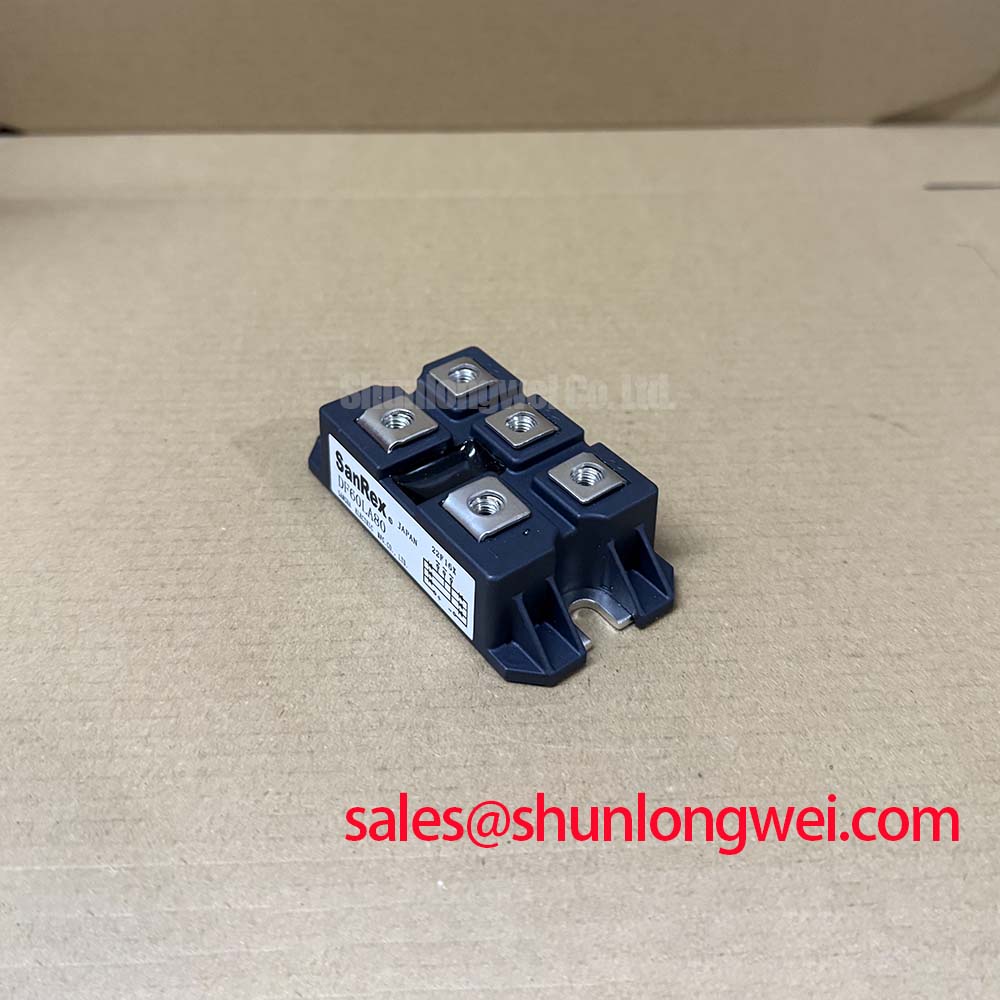
DF60LA80 Diode Module: Specs & Integration Features
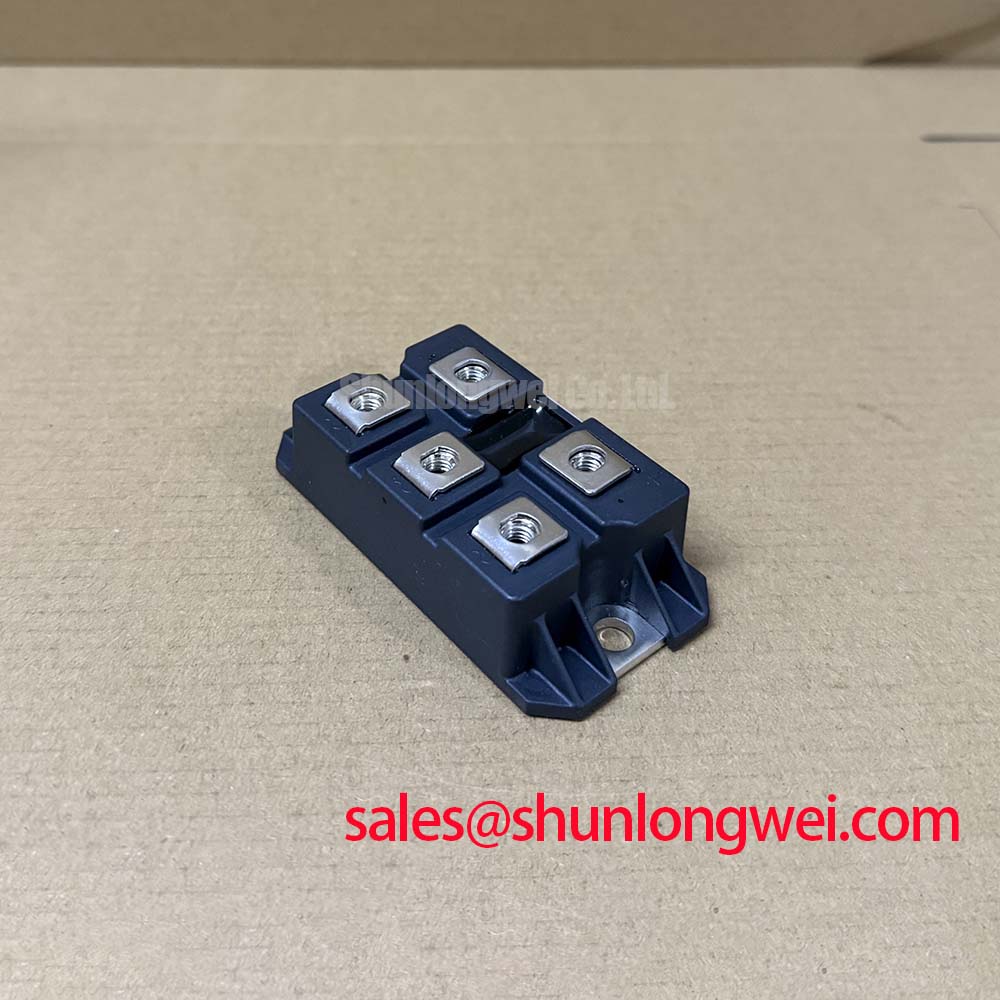
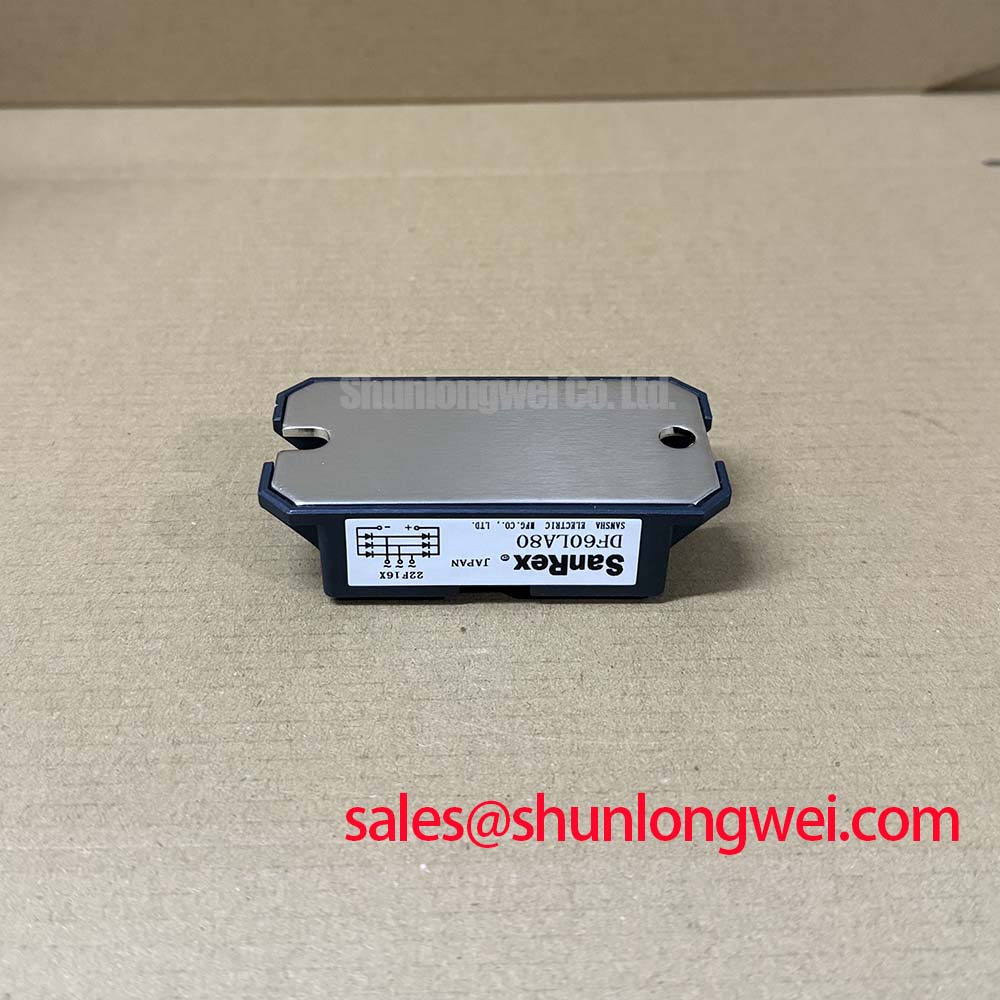
The Sanrex DF60LA80 Diode Module provides a streamlined foundation for three-phase power rectification, simplifying system architecture. With core specifications of 800V | 60A | 150°C Max Tj, this module is engineered for reliability. Key benefits include a reduced component count and simplified thermal management. Its integrated design directly addresses the need for compact and robust AC-DC conversion in industrial power supplies and motor control front-ends, offering a mechanically sound alternative to discrete diode solutions.
Core Electrical and Thermal Parameters for System Design
The DF60LA80 is defined by a set of performance characteristics crucial for its integration into power systems. These parameters form the basis for circuit design, thermal modeling, and reliability assessment. The following table highlights the specifications most pertinent to engineers focused on creating efficient and durable rectification stages.
| Parameter | Value |
|---|---|
| Repetitive Peak Reverse Voltage (VRRM) | 800 V |
| Average Forward Current (IO) | 60 A |
| Peak Forward Surge Current (IFSM) | 650 A (50Hz), 710 A (60Hz) |
| Forward Voltage Drop (VFM) | 1.2 V max |
| Operating Junction Temperature (Tj) | -40 to +150 °C |
| Mounting Torque | 1.96 N·m |
A Closer Look at the DF60LA80's Integrated Architecture
The fundamental value of the Sanrex DF60LA80 lies in its integrated three-phase bridge configuration. By housing six diodes in a single, electrically isolated package, the module replaces multiple discrete components. This consolidation is a key enabler of design simplification. What is the primary benefit of its integrated package? It significantly reduces assembly time and minimizes potential points of failure associated with complex wiring and soldering of individual diodes. The module's baseplate is isolated from the active terminals, rated for 2500V AC isolation voltage (VISO). This feature allows multiple modules to be mounted onto a common heatsink without requiring additional insulating materials, streamlining the mechanical and thermal design of the power assembly. This is analogous to a pre-fabricated plumbing manifold replacing multiple individual pipes and fittings; it reduces labor, minimizes leak points, and ensures a more compact, predictable installation.
System Integration and Application Value
The DF60LA80 is engineered to facilitate straightforward implementation in a variety of industrial power conversion systems. Its primary function is to provide the front-end rectification stage, converting three-phase AC input into a DC bus voltage for subsequent power stages, such as inverters or DC-DC converters. The module's 60A current rating and 800V reverse voltage capability make it a suitable component for systems operating on 200V to 400V AC lines.
- AC Motor Drives: Serves as the main input rectifier in Variable Frequency Drives (VFDs) and servo systems, providing the stable DC link voltage necessary for precise motor control.
- Industrial Power Supplies: Forms the core of the AC-DC conversion block in general-purpose power supplies, battery chargers, and welding equipment.
- Uninterruptible Power Supplies (UPS): Used in the rectifier stage of online UPS systems to convert incoming AC power for battery charging and inverter supply. For applications demanding higher current, the related DF200AA160 offers a 200A capacity within a similar module concept.
For systems operating on 400V AC lines where a high safety margin is paramount, the DF60LA80's 800V VRRM provides a robust solution against line transients.
Strategic Advantages in Industrial Power Design
In the context of modern industrial automation, the trend towards higher power density and simplified manufacturing places significant value on components that reduce system complexity. The DF60LA80 aligns with this by offering a pre-engineered, tested, and consolidated rectification solution. This approach shifts the design effort away from managing multiple discrete diodes and their associated thermal and mechanical challenges, allowing engineering teams to focus on higher-level system optimization. The use of such integrated modules contributes to a more predictable and scalable manufacturing process, which is a critical advantage in competitive markets. By standardizing the front-end rectifier, companies can accelerate time-to-market and improve the overall serviceability of their final products. This component philosophy supports the broader goals of creating more efficient and cost-effective power electronics, a cornerstone of advancing industrial capabilities. Further reading on power component selection can be found in our guide, IGBT vs. MOSFET vs. BJT.
Data to Support Your Rectifier Selection
Selecting the right rectifier module involves a careful review of key performance metrics against application requirements. The DF60LA80 offers a specific balance of voltage, current, and thermal performance. To aid in this evaluation, the table below presents its key specifications alongside another common module type for context. This data is provided to empower an informed design decision based on technical merits.
This comparison is for informational purposes only, based on publicly available datasheet values. Engineers should conduct their own evaluation for specific applications.
| Parameter | Sanrex DF60LA80 | Alternative Example (Generic 1200V/50A Module) | Engineering Consideration |
|---|---|---|---|
| Repetitive Peak Reverse Voltage (VRRM) | 800 V | 1200 V | The DF60LA80 is optimized for up to 400V AC lines, while a 1200V module offers a higher safety margin for 480V-600V lines but may have a higher forward voltage. |
| Average Forward Current (IO) | 60 A | 50 A | The DF60LA80 provides a higher current handling capability, suitable for more demanding loads within its voltage class. |
| Max Forward Voltage (VFM) | 1.2 V | ~1.25 V - 1.35 V | A lower forward voltage, like that of the DF60LA80, translates directly to lower conduction losses and reduced heat generation, simplifying thermal design. |
| Isolation Voltage (VISO) | 2500 V | 2500 V | Both offer standard isolation, enabling simplified mounting on a shared heatsink. The key is the combination of this feature with other electrical parameters. |
For a deeper understanding of how these specifications impact overall system reliability, explore our resource on IGBT failure analysis, which covers principles applicable to all power modules.
Frequently Asked Questions
1. What is the main advantage of using the DF60LA80 module over six discrete diodes?
The primary advantage is system simplification. The DF60LA80 reduces component count, simplifies the PCB layout and assembly process, and provides a pre-packaged thermal interface to a heatsink. This leads to higher reliability by minimizing wiring and solder joint failures, and it streamlines manufacturing.
2. How does the 1.2V forward voltage drop impact my design?
A lower forward voltage drop (VFM) directly reduces conduction losses. Power loss per diode can be estimated as VFM multiplied by the average forward current. At 60A, a VFM of 1.2V means lower heat dissipation compared to a device with a higher VFM, potentially allowing for a smaller heatsink or higher ambient operating temperature, which is a critical factor in compact designs.
3. Is the DF60LA80 suitable for 480V AC input applications?
While the 800V VRRM rating provides some margin above the peak voltage of a 480V AC line (~679V), it is generally recommended to use modules with a VRRM of 1200V or higher for 480V systems to ensure sufficient safety margin against voltage transients and line swells commonly found in industrial environments.
4. What does the mounting torque specification of 1.96 N·m signify for installation?
This specification is critical for ensuring proper thermal contact and mechanical stability. Applying the correct torque guarantees that the module's baseplate makes uniform, low-resistance contact with the heatsink, which is essential for effective heat transfer. Overtightening can warp the baseplate and compromise thermal performance, while undertightening can result in poor cooling and overheating.