



Content last revised on September 10, 2026
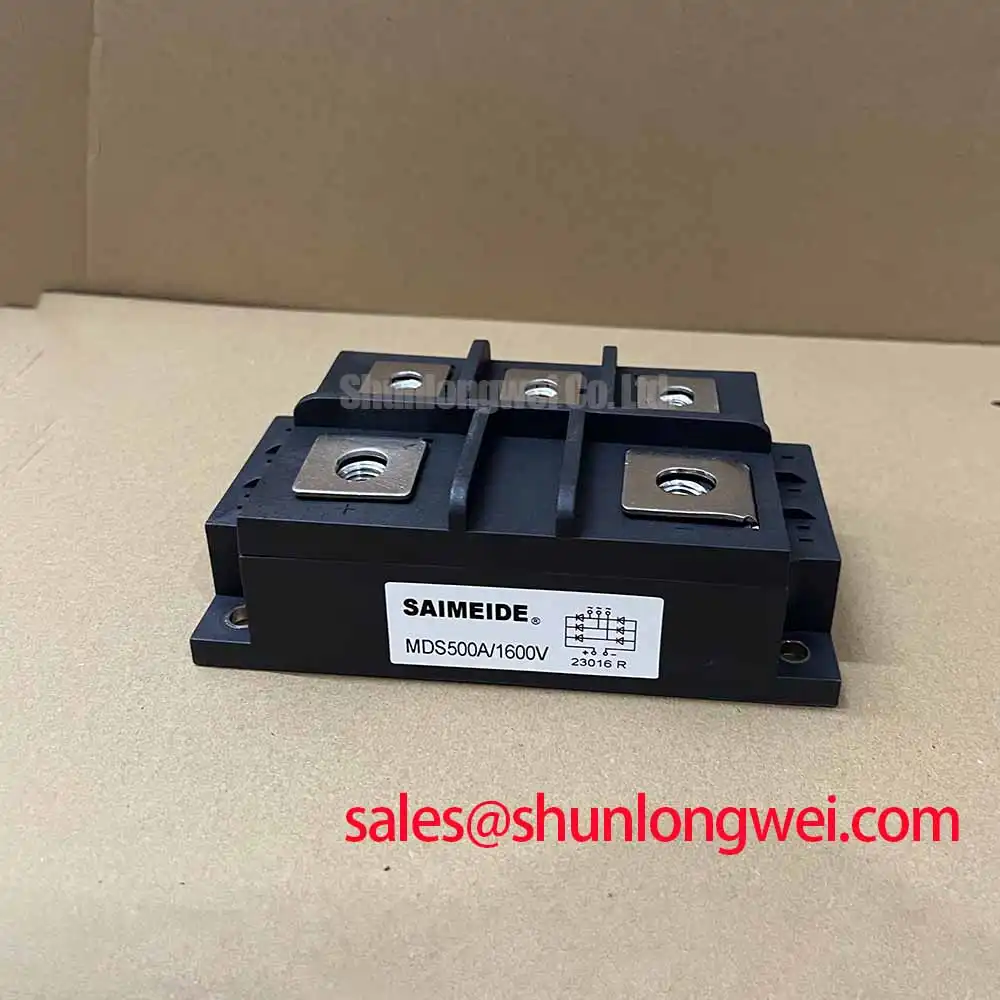
MDS500A SanRex 1600V 500A Three-Phase Bridge Rectifier Module
The MDS500A, a cornerstone of SanRex (Sansha Electric) power semiconductor portfolio, is a high-capacity three-phase bridge rectifier module designed for uncompromising thermal stability in heavy-duty industrial inverters and power conversion stages. With a peak repetitive reverse voltage of 1600V and an average output current of 500A, this module addresses the critical engineering need for high current density and robust electrical isolation in 400V and 480V line environments. For industrial motor drives prioritizing thermal margin and surge resilience, the MDS500A is the optimal choice.
Application Scenarios & Value
Optimizing Power Throughput in High-Demand Industrial Converters
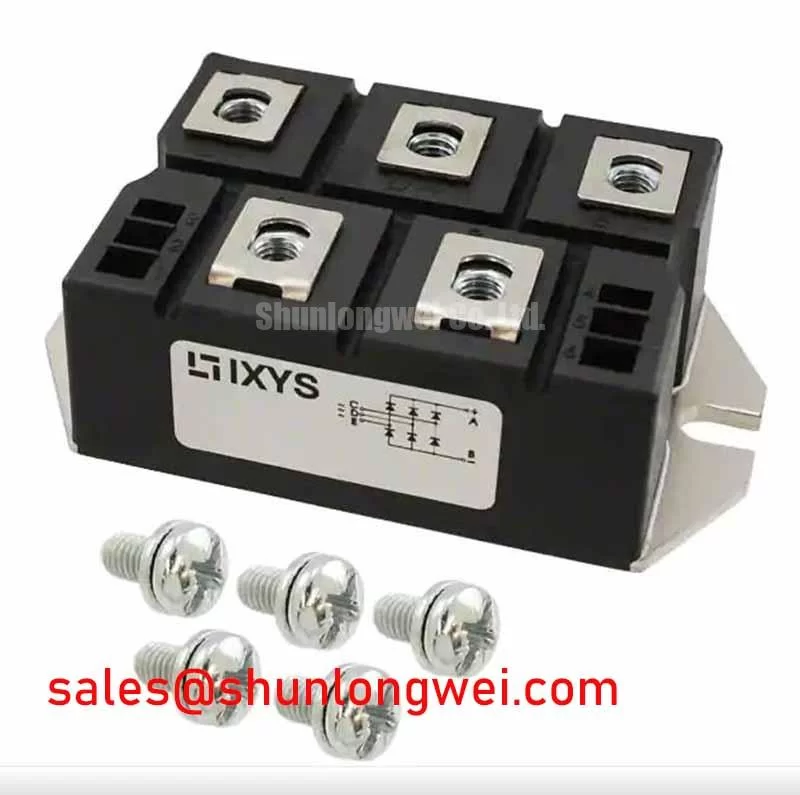
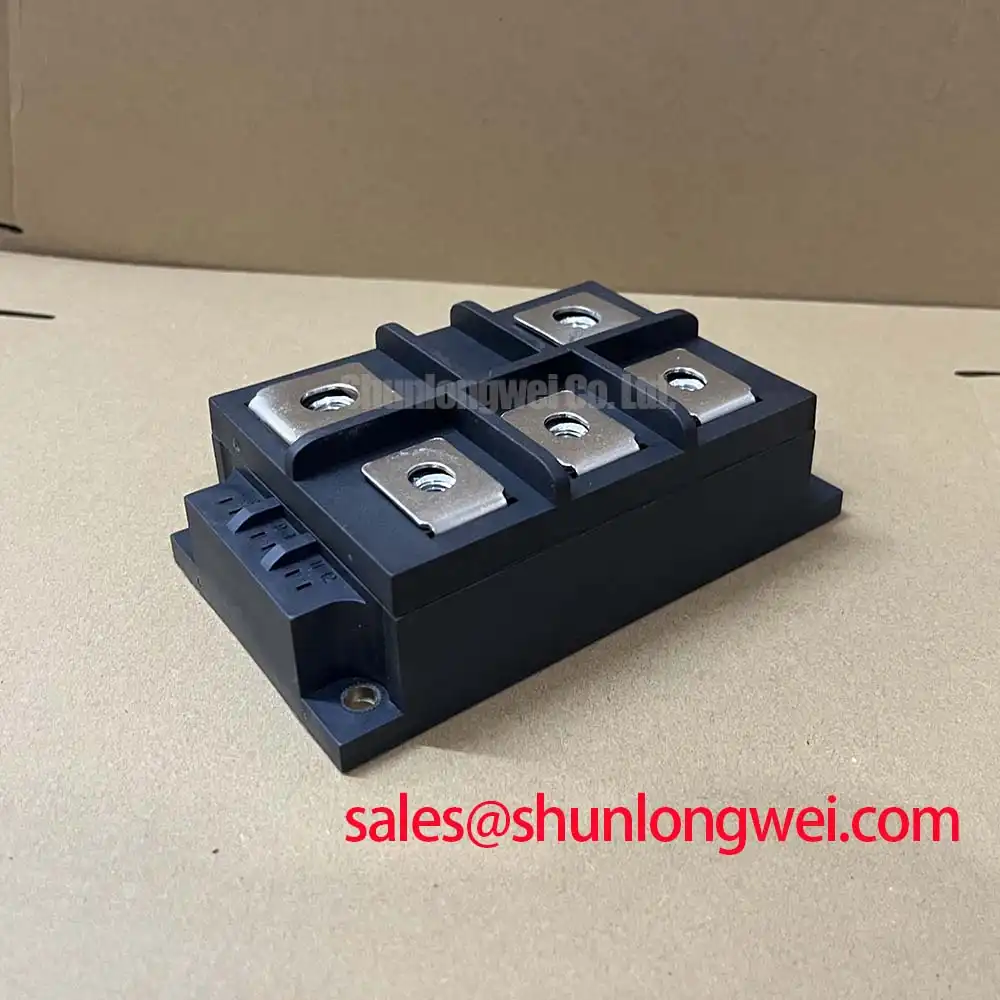
Engineers often face challenges when scaling the rectification stage of Variable Frequency Drives (VFD) or large-scale UPS systems, where discrete components fail to provide the necessary thermal mechanical integration. The MDS500A streamlines these designs by integrating six high-power diodes into a single, electrically isolated package. This integration significantly reduces the complexity of busbar layouts and cooling systems. In applications such as welding power supplies and battery charging infrastructure, the 500A continuous current rating allows for high-power delivery without the risks associated with paralleling smaller modules, which often lead to current imbalances and premature failure.
In the context of modern power infrastructure, the MDS500A is frequently employed in the front-end rectification of industrial inverters, ensuring a stable DC link from the AC grid. This module is particularly effective in environments requiring compliance with IEC 61800-3, where robust isolation and surge handling are paramount. While this model is ideal for high-capacity 400V systems, for designs requiring lower current handling but similar voltage overhead, the related MDS200A1600V offers a more compact footprint. For systems focused on modular dual-diode configurations, the MDC100-16 provides a versatile alternative for specialized circuit topologies. Integrating this module into a system often requires rigorous validation; engineers can refer to our field guide on how to test power modules to ensure long-term reliability.
Technical & Design Deep Dive
Exploring the Pressure-Contact Advantage and Thermal Dynamics
A technical analysis of the MDS500A reveals its reliance on advanced pressure-contact construction, which eliminates the solder-fatigue issues typically found in standard power modules. This design acts like a wide-lane highway for heat transfer, significantly reducing the thermal bottleneck between the diode junction and the baseplate. By maintaining a consistently low thermal resistance (Rth), the module can withstand extreme power cycling without degrading the internal electrical connections. This is a critical advantage in welding power supplies where the load is highly intermittent and the thermal stresses are severe.
The 1600V rating of the MDS500A provides a significant safety margin for 480V AC systems, where line transients and voltage spikes are common. To visualize the importance of this specification, consider the peak repetitive reverse voltage as a dam holding back a flood; the higher the dam, the less likely a surge will breach the barrier and cause catastrophic breakdown. In complex power architectures, understanding the relationship between rectification and switching is essential. Engineers may benefit from exploring the engineering analysis of IGBT modules to better understand how the MDS500A interacts with downstream power stages. Detailed insights into managing these components can be found in our Power Electronics Masterclass.
Key Parameter Overview
Decoding the Specifications for Enhanced System Reliability
| Key Technical Parameter | Standard Value | Engineering Significance |
|---|---|---|
| Repetitive Peak Reverse Voltage (Vrrm) | 1600V | Ensures safe operation on 400/480V AC lines with transient overhead. |
| Average Rectified Output Current (Id) | 500A | High-capacity throughput for heavy industrial loads and motors. |
| Surge Forward Current (Ifsm) | 5000A+ | Protects the module during startup inrush or accidental short-circuits. |
| Isolation Voltage (Viso) | 2500V AC | Simplifies safety compliance and allows mounting on grounded heatsinks. |
| Max Junction Temperature (Tj) | 150°C | Extended range for reliable operation in harsh thermal environments. |
Download the MDS500A datasheet for detailed specifications and performance curves.
Frequently Asked Questions
How does the high Ifsm rating of the MDS500A protect against system-level faults?
The Surge Forward Current (Ifsm) rating, typically exceeding 5000A for this module, allows the internal diodes to absorb significant current spikes during fault conditions or large motor startups. This prevents the junction from reaching the failure point before downstream protection devices, such as high-speed fuses, can clear the fault.
Why is the 2500V AC isolation voltage critical for multi-module paralleling?
The 2500V isolation rating ensures that the internal electrical circuit is completely decoupled from the baseplate. This allows engineers to mount multiple MDS500A modules or complementary IGBT modules on the same grounded heatsink without risking a ground fault or requiring additional insulating pads, which would increase thermal resistance.
Does the MDS500A support direct busbar mounting?
Yes, the terminal structure of the MDS500A is engineered for high-torque connections, supporting direct attachment to heavy busbars. This is essential for 500A applications where standard wire connections would suffer from excessive ohmic heating and mechanical stress.
How does the forward voltage drop affect the TCO of a 100kW inverter?
Lower forward voltage (Vf) directly reduces conduction losses. In a 100kW system running continuously, even a fractional reduction in Vf can translate to hundreds of kilowatt-hours saved annually, significantly reducing the Total Cost of Ownership (TCO) and easing the cooling requirements for the enclosure.
What thermal interface material is recommended to maintain the Rth(j-c)?
To maintain the low thermal resistance specified by SanRex, a high-conductivity thermal paste or a phase-change material with a rating of at least 3.0 W/m·K is recommended. Proper application ensures that the pressure-contact advantage of the module is fully utilized to transfer heat to the ambient environment.
As the landscape of global power electronics evolves toward higher efficiency and greater power density, the MDS500A remains a strategic component for engineers designing the next generation of VFDs and energy storage systems. Its balance of high current capability and proven mechanical reliability ensures it meets the rigorous demands of industrial automation and green energy infrastructure. For more technical comparisons, you can visit the Infineon portal for competitive benchmarks in rectification technology.