Content last revised on September 10, 2026
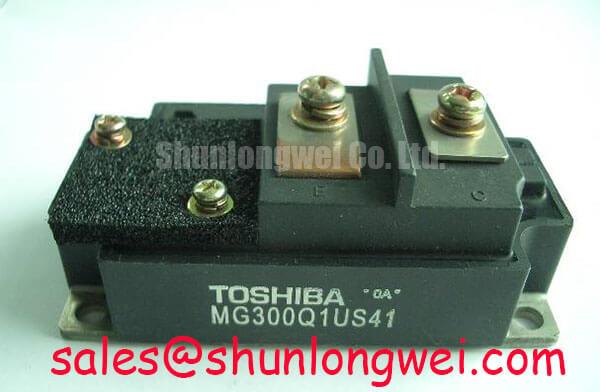
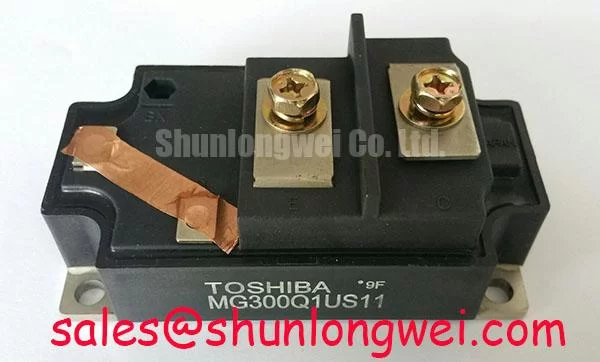
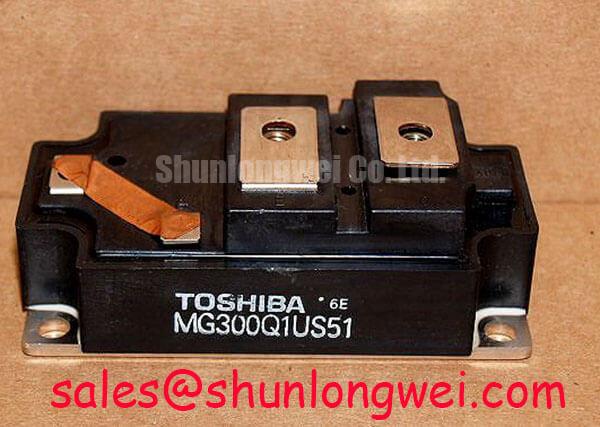
MG300Q1US51 Toshiba 1200V 300A Silicon N-Channel IGBT Module
The Toshiba MG300Q1US51 represents a specialized solution within the GTR (Giant Transistor) Module family, designed as a single-element (1-in-1) Silicon N-Channel IGBT. By prioritizing the balance between switching speed and conduction efficiency, this module serves as a foundational component for high-power conversion stages. It is specifically tailored for engineering environments where 1200V isolation and 300A current handling are required in a robust, industry-standard package. For 1200V motor drive stages prioritizing thermal efficiency over space, this 300A single-element module is the optimal choice.
What is the primary benefit of the low Vce(sat) in the MG300Q1US51? It significantly reduces conduction losses during high-current operation, enhancing system thermal efficiency and reducing heatsink requirements. What is the primary benefit of the low Vce(sat) in the MG300Q1US51? It significantly reduces conduction losses during high-current operation, enhancing system thermal efficiency.
Key Parameter Overview
Decoding the Specs for Enhanced Thermal Reliability
In power electronics design, the interaction between voltage drop and heat generation dictates the longevity of the system. The MG300Q1US51 is engineered with a focus on its Vce(sat) profile, ensuring that even at the maximum rated current of 300A, power dissipation remains within manageable limits. This is achieved through a refined Silicon N-Channel structure that optimizes the hybrid semiconductor structure common to high-performance IGBTs.
| Feature / Parameter | Specification Value | Engineering Significance |
|---|---|---|
| Collector-Emitter Voltage (Vces) | 1200V | High safety margin for 440V/480V AC line systems. |
| Collector Current (Ic) | 300A (Continuous @ Tc=25°C) | High current density for heavy industrial loads. |
| Vce(sat) (Typical) | 2.7V | Minimizes conduction heat for better efficiency. |
| Switching Time (tf) | 0.5µs (Max) | Enables higher frequency operation with reduced losses. |
| Isolation Voltage | 2500V AC (1 minute) | Ensures safety and compliance with international standards. |
Download the MG300Q1US51 datasheet for detailed specifications and performance curves.
Application Scenarios & Value
Achieving System-Level Benefits in High-Power Conversion
The MG300Q1US51 is frequently deployed in the inverter stages of high-capacity Variable Frequency Drive (VFD) systems. In these scenarios, the 300A rating allows the module to handle significant torque demands in industrial motors without triggering over-current protection. A typical engineering challenge in large-scale pumping or ventilation systems is the startup surge; the 1200V rating provides a necessary buffer against voltage spikes induced by long cable runs and inductive loads.
Furthermore, in Uninterruptible Power Supply (UPS) applications, the module's fast switching characteristics (0.5µs fall time) contribute to a cleaner output sine wave and reduced filter size. This efficiency is critical for modern data centers aiming for high PUE (Power Usage Effectiveness). While this single-element module is ideal for high-power single-phase or custom configurations, for systems requiring integrated half-bridge topologies at lower currents, the MG150Q2YS50 offers an alternative configuration.
FAQ
Technical Insights into Module Performance and Integration
How does the single-element configuration of the MG300Q1US51 affect system design compared to dual modules?
The 1-in-1 configuration offers engineers maximum flexibility in designing custom bridge topologies or specialized resonant converters. It allows for the separation of thermal loads across different heatsinks, which can be advantageous in high-density cooling designs where a dual-pack might create a localized thermal bottleneck.
What is the impact of the 2.7V Vce(sat) on the thermal management strategy?
A lower Vce(sat) functions much like "valve friction" in a hydraulic system—the lower the friction, the less energy is wasted as heat. At 300A, a typical 2.7V drop results in 810W of conduction loss per element. This requires a robust thermal management plan, typically involving forced-air cooling or liquid-cooled cold plates to keep the junction temperature below the 150°C limit.
Is the MG300Q1US51 suitable for high-frequency induction heating?
Yes, its optimized switching speeds make it capable of operating in the 10-20 kHz range, which is often required for induction heating applications. The low fall time (tf) of 0.5µs is key to preventing excessive switching losses at these frequencies.
Technical Deep Dive
A Closer Look at Switching Efficiency and Loss Reduction
The internal architecture of the MG300Q1US51 utilizes a non-punch-through (NPT) or similar silicon process characteristic of the era, which provides a positive temperature coefficient for Vce(sat). This feature is a "safety valve" for engineers: as the module gets hotter, its resistance increases slightly, which naturally helps in balancing current when multiple modules are used in parallel. Without this characteristic, one module might "hog" the current, leading to thermal runaway.
To visualize the importance of the Thermal Resistance (Rth), consider it the "highway width" for heat evacuation. The MG300Q1US51 features a highly optimized copper baseplate that ensures heat travels from the silicon die to the heatsink with minimal obstruction. In Servo Drive applications, where rapid acceleration and deceleration generate rapid thermal cycling, this low thermal impedance is vital for maintaining the structural integrity of the internal wire bonds and preventing fatigue. For deeper context on motion control standards, technology like Mitsubishi CSTBT™ provides a useful reference point for comparing carrier-stored trench gate designs.
Industry Insights & Strategic Advantage
Strategic Alignment with High-Efficiency Industrial Standards
The shift toward "Green Manufacturing" and the global push for carbon neutrality have placed a premium on power module efficiency. Components like the MG300Q1US51 are essential for the transition to 800V and 1000V DC bus architectures in industrial grids. By providing high current density in a reliable, discrete-element format, this module supports the modular design philosophy required for scalable renewable energy inverters and grid-tie storage systems.
Strategically, the use of proven silicon technology in the 1200V / 300A class allows manufacturers to maintain high reliability without the excessive costs associated with early-stage wide-bandgap materials. This makes the MG300Q1US51 a pragmatist's choice for industrial equipment that requires a 10-to-15-year operational lifecycle. In the context of industrial automation, ensuring that switching losses are minimized is no longer just a performance goal; it is a regulatory necessity as energy efficiency standards for motor drives continue to tighten globally.