Content last revised on September 10, 2026
MG400Q1US11: A Technical Analysis of the 1200V, 400A IGBT Module
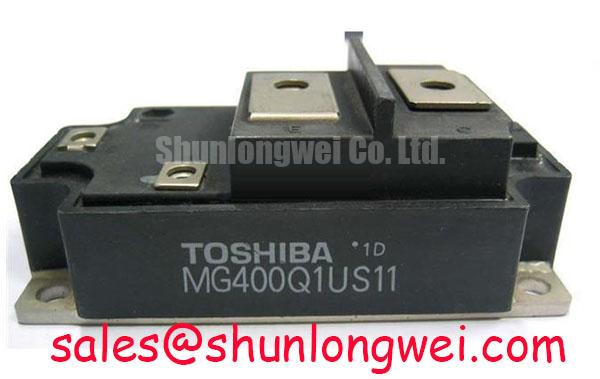
The Toshiba MG400Q1US11 is a high-power N-Channel IGBT module designed for robust performance in demanding switching applications. Engineered for reliability, this device delivers a potent combination of high current handling and efficiency, featuring core specifications of 1200V, 400A, and a low collector-emitter saturation voltage of 2.7V (max). These characteristics are engineered to reduce thermal design complexity and enable the construction of durable, high-power systems. For industrial power conversion systems requiring robust, high-current switching up to 400A, the MG400Q1US11 provides a reliable foundation with predictable thermal characteristics.
Application Scenarios & Value
Achieving System-Level Benefits in High-Power Motor Control
In the design of high-power industrial systems such as a Variable Frequency Drive (VFD), engineers face the critical challenge of managing significant inrush currents during motor startup and handling continuous heavy loads without thermal runaway. The MG400Q1US11 directly addresses this challenge with its robust 400A collector current rating, providing the necessary capacity to absorb these electrical stresses. Its low VCE(sat) of 2.7V at full load minimizes conduction losses, which in turn reduces the amount of waste heat generated. This simplifies the overall Thermal Management strategy, potentially allowing for smaller heatsinks and contributing to a more compact and reliable VFD system. Furthermore, the module's electrically isolated base facilitates easier and safer assembly onto a common heatsink, reducing manufacturing complexity. For applications demanding even higher current capacity or a different circuit topology, a dual module like the CM600DX-24T offers an alternative with a 600A rating.
Key Parameter Overview
Decoding the Specs for Enhanced Thermal Reliability
The performance of the MG400Q1US11 is defined by several key parameters that are critical for system design and reliability analysis. The following table highlights the specifications that directly influence its application in high-power electronics.
| Parameter | Value |
| Collector-Emitter Voltage (Vces) | 1200V |
| Collector Current (Ic) @ Tc=25°C | 400A |
| Collector-Emitter Saturation Voltage (VCE(sat)) @ Ic=400A | 2.7V (Max) |
| Gate-Emitter Threshold Voltage (VGE(th)) | 5.0 to 9.0V |
| Collector Power Dissipation (Pc) | 2200W |
| Thermal Resistance (Rth(j-c)) | 0.057 °C/W (Max) |
Frequently Asked Questions (FAQ)
Engineering Inquiries for the MG400Q1US11
What makes the MG400Q1US11 suitable for high-power motor control?
Its primary suitability comes from the combination of a high collector current rating of 400A and a 1200V breakdown voltage. This allows it to manage the demanding electrical loads and back-EMF typical in large industrial motors, providing a robust switching foundation.
How does the 2.7V VCE(sat) rating impact system design?
A low VCE(sat) directly reduces power lost as heat during the module's 'on' state (conduction loss). This lower heat generation simplifies heatsink selection, improves overall system energy efficiency, and increases the thermal headroom, enhancing operational reliability under sustained loads.
What is the primary engineering benefit of the module's isolated case?
The main benefit is simplified system assembly and enhanced safety. The isolated base eliminates the need for a separate, thermally conductive insulating pad between the module and the heatsink, which reduces component count, lowers assembly costs, and improves the consistency of the thermal interface.
How does the thermal resistance (Rth(j-c)) of this module influence heatsink selection?
What is the primary benefit of its low thermal resistance? Enhanced thermal efficiency by facilitating rapid heat transfer. The low thermal resistance of 0.057 °C/W signifies efficient heat transfer from the IGBT junction to the case. A lower Rth(j-c) means the junction temperature will be lower for a given power dissipation, directly impacting the required size and performance of the external heatsink to maintain a safe operating temperature.
Technical Deep Dive
A Closer Look at Conduction Loss and its Impact on Thermal Headroom
A pivotal parameter for any power-switching device is its collector-emitter saturation voltage, or VCE(sat) . For the MG400Q1US11, the maximum VCE(sat) is specified at a conservative 2.7V while conducting a substantial 400A. This figure is critical for calculating conduction losses, a primary source of heat in an IGBT. Think of VCE(sat) as the 'toll' the current pays to pass through the switch. A lower toll (lower VCE(sat)) means more of the electrical energy reaches its destination, and less is wasted as heat at the tollbooth. This efficiency is paramount in high-power systems where every watt of loss must be managed. The module's impressive Collector Power Dissipation (Pc) of 2200W is like the cooling capacity of a car's radiator. While the engine—the IGBT chip—produces heat from work, the radiator's rating determines how much heat can be safely removed before the system overheats. A higher Pc rating provides a larger safety margin for handling peak loads and thermal transients.
Industry Insights & Strategic Advantage
Meeting the Demands for Efficiency and Durability in Industrial Power Systems
The MG400Q1US11 aligns with persistent industry trends favoring greater energy efficiency and long-term reliability in industrial automation and power infrastructure. In applications like large-scale Variable Frequency Drive (VFD) systems, uninterruptible power supplies (UPS), and industrial welders, component failure leads to costly downtime. This module's design, emphasizing low power loss and robust power handling, serves as a foundational block for building systems that are not only efficient but also durable. By delivering performance that minimizes thermal stress, it supports the design of equipment with longer service lives and lower total cost of ownership, a key consideration for industrial asset managers. For a comprehensive overview of selecting modules based on these core principles, exploring a guide on voltage, current, and thermal management provides valuable context.
By integrating a component like the MG400Q1US11, designers can build power stages that are inherently more reliable. The module's characteristics allow it to withstand the rigors of industrial environments, contributing to system uptime and stability. This focus on durability is a strategic advantage in markets where equipment longevity is as important as initial performance.