Content last revised on September 10, 2026
AUO P215HAN02.1: Decoding the 21.5-Inch High-Brightness Industrial TFT-LCD
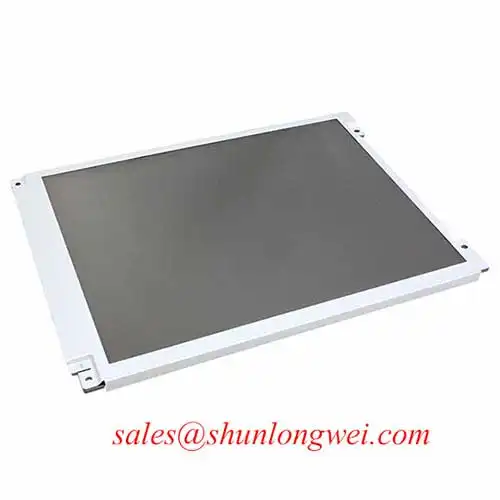
The AUO P215HAN02.1 represents a definitive engineering solution for sunlight-readable outdoor displays. By combining 1500 cd/m² ultra-high brightness with High-Tni liquid crystal technology, it fundamentally resolves visibility and thermal challenges in harsh environments.
Core specifications include a 1920x1080 FHD resolution, a 1000:1 contrast ratio, and a 2-channel LVDS interface for seamless system integration. What is the primary benefit of its High-Tni liquid crystal? It prevents display blackening under direct sunlight exposure. For outdoor digital signage applications prioritizing extreme readability and thermal resilience, this 1500 cd/m² module is the optimal choice.
Key Parameter Overview
Specifications and Their System-Level Engineering Value
| Specification | Technical Value & Engineering Interpretation |
|---|---|
| 1500 cd/m² Luminance | Ensures exceptional visibility in high ambient light, essential for outdoor sunlight readable HMI applications. |
| 1920x1080 FHD Resolution | Delivers sharp, high-density information display suitable for detailed schematics or high-definition public media. |
| 110°C High-Tni Liquid Crystal | Prevents isotropic clearing (screen blackening) under direct solar thermal loading, ensuring operational uptime. |
| LVDS (2 ch, 8-bit) Interface | Provides high-bandwidth, low-EMI data transmission, simplifying cable routing in complex industrial enclosures. |
| 50,000 Hours LED Lifetime | Reduces total cost of ownership by extending maintenance intervals in continuous 24/7 deployment scenarios. |
Application Scenarios & Value
Achieving Uncompromised Readability in Outdoor Kiosks
Engineers frequently face the challenge of maintaining display readability when deploying outdoor digital signage. Traditional panels wash out or overheat when subjected to direct ambient light, leading to a compromised user experience and hardware degradation. The P215HAN02.1 addresses this critical bottleneck with its 1500 cd/m² WLED backlight, ensuring that HMI interfaces remain vivid even under glaring midday sun.
By maintaining a high 1000:1 contrast ratio alongside its AHVA (Advanced Hyper-Viewing Angle) technology, the display guarantees uniform color accuracy across an 89/89/89/89 viewing radius. In practical field deployments, such as smart city transit kiosks or drive-thru menu boards, the integration of this 21.5-inch panel ensures continuous, high-fidelity operation without color inversion.
While this high-luminance model excels in outdoor environments, projects requiring standard brightness for indoor automation might consider the related G215HAN01.0 as an efficient alternative. Both models utilize the reliable LVDS interface, simplifying cross-platform migration for system architects building industrial TFT-LCD solutions.
Technical Deep Dive
Technical Analysis of High-Tni Liquid Crystal and LVDS Integration
How does this panel survive thermal stress without degrading? The technical advantage lies in its High-Tni (Isotropic Clearing Point) liquid crystal formulation. Standard consumer LCDs reach their clearing point around 70°C, at which the liquid crystals lose their orientation, causing the screen to develop permanent black spots.
The P215HAN02.1 utilizes a specialized fluid with a Tni of 110°C. Think of it like high-temperature synthetic oil in an industrial turbine; it maintains its structural integrity and performance metrics even under extreme, continuous thermal loads.
Furthermore, the 2-channel, 8-bit LVDS interface provides a highly robust, noise-immune pathway for high-definition video data. Analogous to a differential signaling highway, LVDS mitigates electromagnetic interference (EMI) while efficiently driving the 1920x1080 resolution at a stable 60Hz refresh rate. This minimizes the complexity of the control board design, allowing engineers to focus on the overall thermal management of the all-weather digital signage enclosure.
Frequently Asked Questions
Engineering Insights for Field Deployment and Reliability
- How does the 1500 cd/m² brightness of the P215HAN02.1 impact enclosure thermal design?
The high-output WLED backlight generates significant heat. Engineers must implement adequate passive heat sinks or active airflow within the enclosure to keep the operating temperature within the specified 0°C to 50°C range, ensuring the 50,000-hour backlight lifespan. - Why is the High-Tni (110°C) rating critical for sunlight readable HMIs?
Direct solar irradiance can heat the surface of the display far beyond ambient temperatures. The 110°C clearing point prevents the liquid crystals from turning isotropic, avoiding the blackening defect common in standard displays. - What are the systemic advantages of the AHVA technology used in this panel?
AHVA provides an ultrawide 89-degree viewing angle in all directions. This ensures that users interacting with the digital signage from off-axis positions experience no color shift or contrast degradation. - How does the 2-channel 8-bit LVDS interface simplify system integration?
The LVDS protocol reduces the number of physical connections required to transmit 1920x1080 video data, lowering EMI emissions and allowing for longer, more flexible cable routing within industrial chassis. - Is additional external driving circuitry required for the P215HAN02.1 backlight?
Yes, this LCD module does not contain an integrated driver board for the backlight. System designers must specify a compatible external LED driver capable of supplying the appropriate constant current for the 1500 cd/m² lighting array.
Designing for the elements requires components that do more than just display data—they must withstand the environment. The integration of high-temperature liquid crystals and high-luminance backlights shifts the design focus from mere visibility to long-term field survivability.