Content last revised on September 10, 2026
PM1200HCE330 High Voltage Intelligent Power Module (HVIPM)
How can power electronics designers eliminate external gate driver matching while switching thousands of amperes at multi-kilovolt DC-link voltages? The PM1200HCE330 from Mitsubishi Electric provides a single-package solution that integrates matched gate drive circuitry and comprehensive fault protection directly alongside a 3300V, 1200A IGBT switch. Top Specs: 3300V VCES | 1200A IC | 10.0 K/kW Rth(j-c)Q. Key Benefits: Minimizes stray gate loop inductance; provides autonomous overcurrent and short-circuit shutdown. For medium-voltage rail traction and grid converters requiring proven fault containment, this 3300V module delivers optimal switching precision and structural protection.
Frequently Asked Questions
Resolving Core Integration Challenges and Operational Inquiries
What internal protection features are integrated into the PM1200HCE330 module?
The unit incorporates monolithic gate-drive logic with built-in short-circuit protection, over-current limiting, control supply under-voltage lockout, and over-temperature detection directly monitoring the silicon junction conditions.
How does an integrated HVIPM compare to discrete gate drive assemblies?
An IPM (Intelligent Power Module) removes long trace routing between driver boards and gate terminals, mitigating parasitic oscillations and speeding system development as outlined in our analysis of IPM vs discrete IGBT design strategies.
What is the primary benefit of the built-in gate drive circuit?
It eliminates external driver tuning and suppresses parasitic ringing during high dV/dt switching.
How does the thermal resistance of 10.0 K/kW benefit high-power inverter cooling?
With an Rth(j-c)Q of 10.0 K/kW (0.010 °C/W), thermal energy transfers rapidly from the IGBT junction to the baseplate, functioning like an unrestricted thermal conduit to maintain junction temperatures (Tj) below maximum thresholds during heavy repetitive load cycles.
Can the PM1200HCE330 operate reliably under elevated DC-link voltages?
Yes, the module is rated for recommended DC-link voltages up to 2200V DC (nominal 1500V DC) with an absolute maximum collector-emitter voltage of 3300V, providing generous headroom within the SOA (Safe Operating Area) during inductive turn-off events.
Key Parameter Overview
Essential Electrical, Thermal, and Interface Specifications
| Parameter | Symbol | Rated Value / Condition | Engineering Significance |
|---|---|---|---|
| Collector-Emitter Voltage | VCES | 3300V (Tj = 25°C) | Enables direct coupling to 1500V–2200V DC-link traction and industrial supply rails. |
| Collector Current (DC) | IC | 1200A (Tc = 25°C) | Supports megawatt-scale power conversion in a single compact footprint. |
| Collector-Emitter Saturation Voltage | VCE(sat) | 3.05V (Typ. @ 1200A, 125°C) | Optimizes on-state conduction losses during continuous high-amperage operation. |
| Forward Voltage (FWDi) | VEC | 2.80V (Typ. @ 1200A, 125°C) | Ensures low freewheeling diode losses under inductive energy recirculation. |
| IGBT Thermal Resistance | Rth(j-c)Q | 10.0 K/kW (Max. Junction-to-Case) | High heat flux evacuation keeps die temperatures well within safe limits. |
| Isolation Voltage | Viso | 6000V AC (1 min, 50Hz/60Hz) | Meets stringent industrial and railway dielectric insulation requirements. |
| Control Supply Voltage | VD | 24.0V (22.8V to 25.2V) | Standard industrial gate control interface powering internal drive and fault logic. |
Download the PM1200HCE330 datasheet for detailed specifications and performance curves.
Technical & Design Deep Dive
Integrated Driver Topology and Fault Interception Architecture
High-voltage switching at 3300V and 1200A presents severe electromagnetic interference and layout challenges. The PM1200HCE330 incorporates custom internal drive stages that dynamically shape switching waveforms. By positioning the gate driver mere millimeters from the IGBT dice on an electrically isolated aluminum nitride (AlN) substrate, the design minimizes stray gate loop inductance.
How does the internal fault logic prevent catastrophic destruction? It detects short-circuit events within microseconds and initiates a soft shutdown sequence.
This soft turn-off mechanism functions like an automated emergency braking system for electric current: instead of slamming the gate off instantaneously—which would generate destructive overvoltage spikes across the 3300V collector—it gradually ramps down the channel current. Incorporating low-inductance busbars further limits voltage overshoot, a critical consideration when evaluating stray inductance mitigation in high-power converters.
Application Scenarios & Value
High-Power Electrification, Rail Propulsion, and Industrial Drives
The PM1200HCE330 is widely deployed in rolling stock traction inverters, medium-voltage motor drives (MVD), auxiliary power units (APU), and high-capacity static VAR compensators. In heavy-rail locomotive applications, converters encounter harsh vibration, rapid load cycling, and fluctuating overhead catenary voltages. Integrating protection and gate-drive functions directly into the power module reduces PCB component counts and enhances operational availability against harsh mechanical stress, aligning with proven rail transit reliability and failure models.
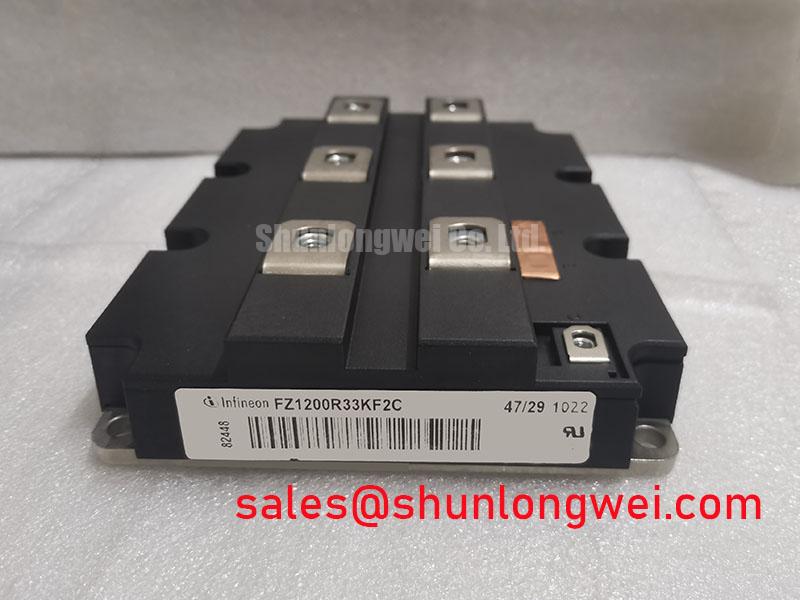
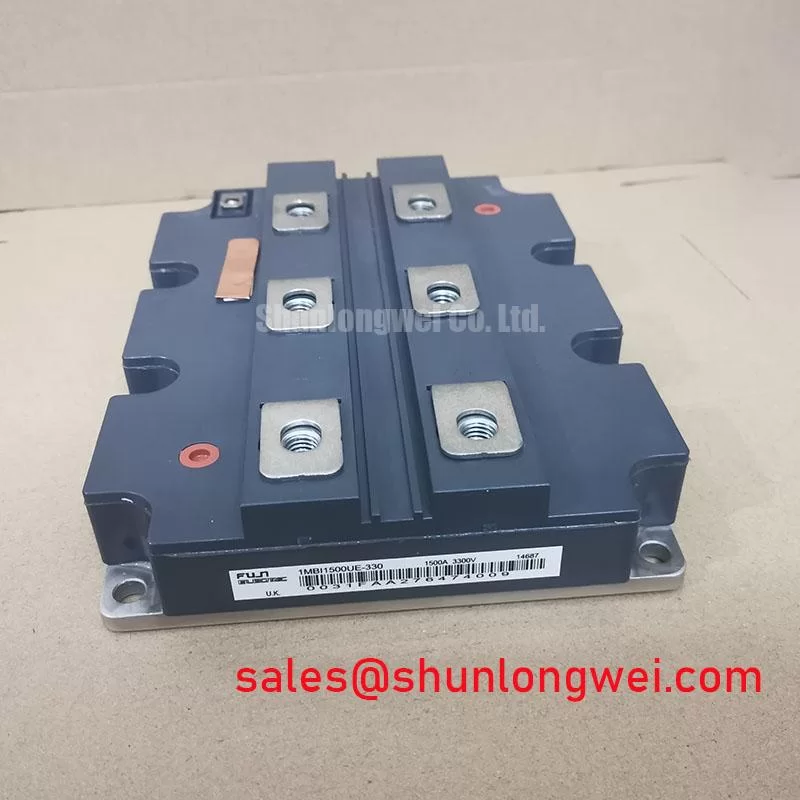
When engineering high-voltage power assemblies, hardware designers must weigh system layout density against conversion requirements. While the PM1200HCE330 provides a fully integrated 3300V 1200A intelligent power stage, applications demanding discrete external gate control at the same voltage and current level often utilize the FZ1200R33KF2C, whereas standard single-switch topologies with higher current demands can evaluate the 1MBI1500UE-330.
When selecting 3.3 kV switching platforms for mission-critical infrastructure, engineers must carefully balance thermal impedance, switching losses, and control integration. The integrated architecture of the PM1200HCE330 significantly reduces external driver development overhead while delivering robust, deterministic fault protection directly at the silicon interface.