



Content last revised on September 19, 2026
PM25RL1B120 Thermal-Electrical Optimization: Practical Thermal Feedback Tuning
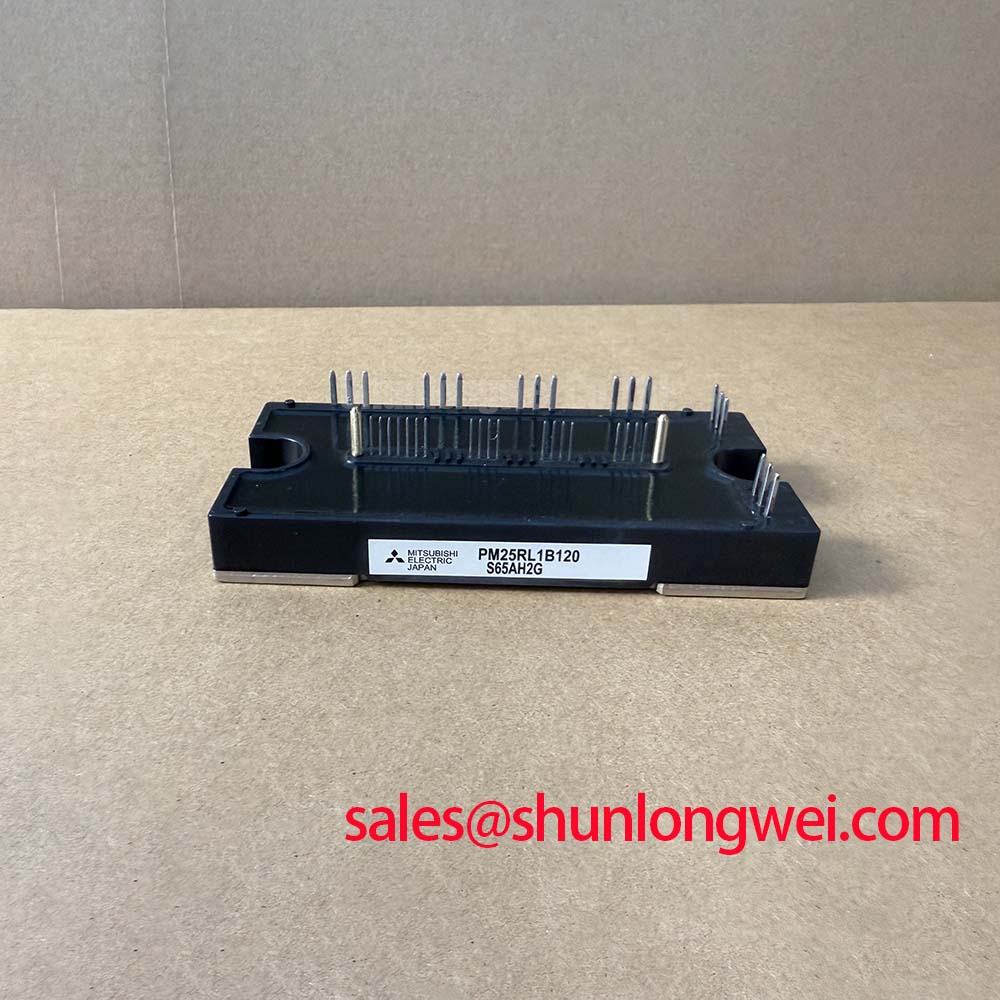
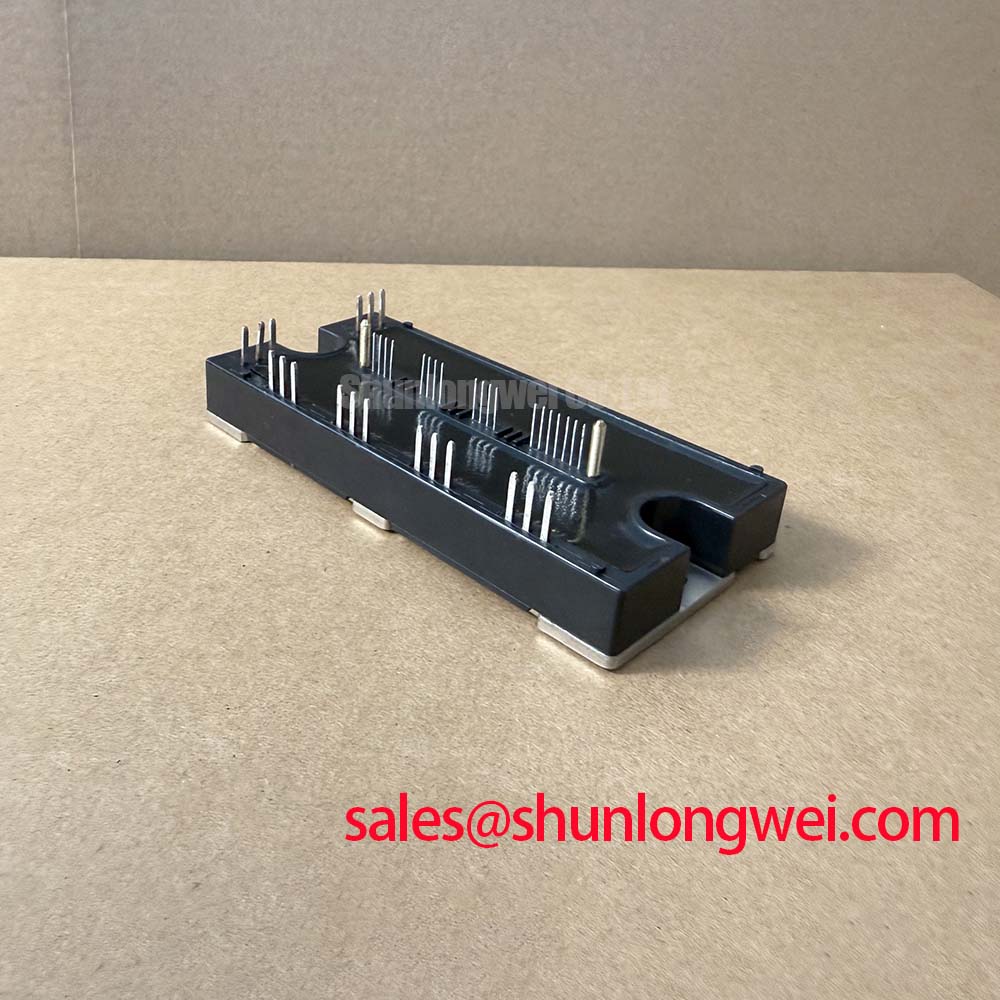
Begin a replacement inspection by confirming the marking against the approved service record, checking the power terminals for mechanical damage, and verifying that the equipment documentation calls for a 1200 V, 25 A Mitsubishi Electric IPM Module. The published product data identifies PM25RL1B120 as a Mitsubishi Electric IPM Module with a rated voltage of 1200.0 V and a rated current of 25.0 A. These are Official Specification values for initial compatibility screening; they do not replace the system designer’s switching, thermal, isolation, or protection verification.
| Parameter | PM25RL1B120 specification | Engineering classification |
|---|---|---|
| Manufacturer | Mitsubishi Electric | Official product identification |
| Product category | IPM Module | Official product category |
| Rated voltage | 1200.0 V | Official Specification |
| Rated current | 25.0 A | Official Specification |
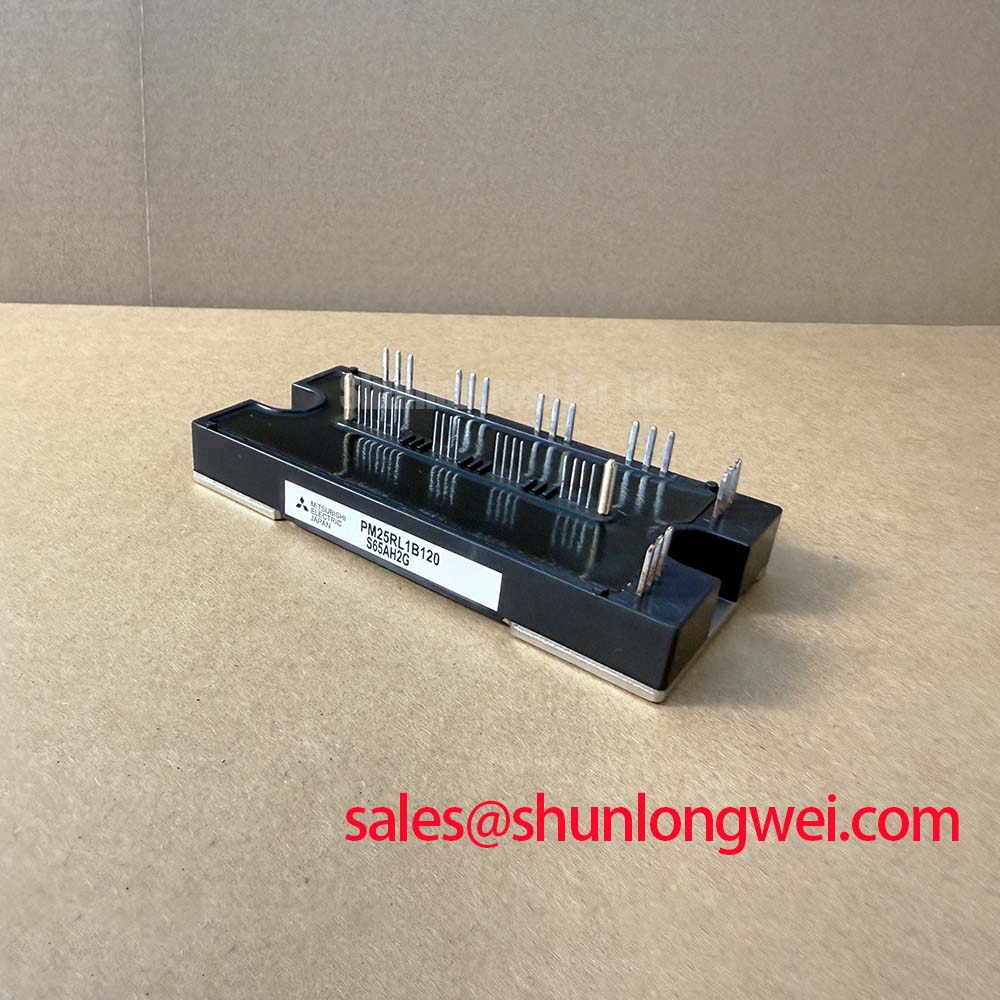
| Package | Mitsubishi IPM Module | Official physical description |
For a commercial string inverter or microgrid energy storage converter, the first thermal review should use the actual switching waveform, load profile, cooling arrangement, and enclosure conditions. The 25 A rating is a device-level reference and should not be interpreted as a guaranteed continuous system output under every temperature or switching condition. Designers should verify junction-temperature limits, case temperature, switching frequency, conduction loss, switching loss, and protection thresholds from the applicable Mitsubishi Electric documentation before approving a production design.
A useful Design Consideration is to assess whether the measured on-state voltage changes consistently as the module warms. A positive temperature relationship in the conduction characteristic can support more stable static current sharing in parallel paths, but the complete behavior also depends on gate timing, stray inductance, semiconductor matching, thermal coupling, and load distribution. This behavior should be measured rather than assumed to apply equally across all operating points.
Gate-loop symmetry is especially important where multiple switching paths share a DC bus. Keep the outgoing and return gate-drive conductors physically close, avoid routing them beside high-current commutation paths, and reference the driver return to the intended emitter or control reference shown in the approved circuit documentation. If the gate waveform differs between channels, compare the driver output directly at the module terminals and then inspect connector contact resistance, return-path routing, common-mode movement, and local decoupling.
The high-frequency supply path for a bootstrap driver also requires practical verification. The bootstrap capacitor must retain sufficient charge for the intended high-side gate pulse sequence, while the associated diode and resistor network must operate within their voltage, current, and recovery limits. The correct capacitance, diode type, charging interval, and refresh behavior are system-dependent; they should be established from the driver datasheet and confirmed with oscilloscope measurements during the shortest expected low-side refresh interval.
For engineering references on power-device operating principles, engineers can consult Mitsubishi Electric Power Semiconductors and High-Power Modules and Mitsubishi Electric Global Semiconductor Device Technologies. These resources provide manufacturer-level context, while the exact application limits must come from the documentation applicable to the selected part and drive circuit.
PM25RL1B120 Operational Boundaries: Mitigating Hard-Switching Transients
A 1200 V rating is an important selection boundary, but the voltage seen by the device during turn-off can include switching overshoot caused by commutation-loop inductance, device recovery behavior, busbar geometry, and probe placement. The practical test is to measure the collector-emitter waveform at the module terminals with a suitable high-voltage differential probe, then compare the peak against the permitted switching conditions in the relevant manufacturer documentation. A nominal DC-link reading alone cannot confirm switching safety.
Short-circuit protection must be treated as a coordinated system function. An intelligent power module may include fault detection and controlled shutdown features, but the exact detection method, blanking interval, short-circuit withstand capability, and soft turn-off behavior must be confirmed from the part-specific documentation. Do not infer a type-I or type-II short-circuit limit, a sub-microsecond response, or a safe operating duration from the IPM category alone.
During bench evaluation, use a controlled current-limited source and begin with reduced electrical stress. Capture gate voltage, collector-emitter voltage, phase current, fault output, and driver supply behavior on the same time base. If a fault occurs, preserve the waveform rather than repeatedly restarting the test. A fault indication can be associated with overcurrent, undervoltage, excessive switching noise, incorrect enable timing, or a genuine power-stage event, so the signal path should be checked against a known-good reference.
Minimize parasitic inductance in the DC-link and commutation loop to reduce inductive overshoot. The busbar arrangement, capacitor position, module terminal geometry, and current return path should be evaluated as one structure. A film snubber capacitor may be appropriate when the measured ringing requires additional local energy absorption, but its voltage rating, pulse-current capability, ESL, mounting position, and damping effect must be selected from the measured waveform. The system engineer should verify the result with double-pulse or equivalent switching tests rather than relying on a layout target alone.
Gate resistance and two-stage soft turn-off are also system-dependent. A controlled first turn-off interval can limit current fall rate, followed by a final gate transition that completes isolation, but the timing must coordinate with the protection circuit and the module’s specified gate conditions. Excessively slow turn-off can increase switching loss and thermal stress; excessively fast turn-off can increase voltage overshoot and electromagnetic interference. Select the initial values from the driver and module documentation, then tune them against measured peak voltage, current slope, fault response, and thermal performance.
The freewheel path deserves equal attention. Reverse-recovery behavior of the external or integrated diode path can produce a current spike that increases stress on the IGBT and bus structure. A softer recovery characteristic may reduce high-frequency ringing, but the resulting conduction and switching losses must be evaluated over the real current and temperature range. The reverse-recovery softness factor is therefore a measurement and device-selection consideration, not a universal pass or fail number for this model.
Fast semiconductor fuses can provide an additional layer of fault-energy coordination in suitable converter architectures. Their clearing characteristic should be compared with the protected semiconductor’s permitted short-circuit and overload conditions using the manufacturer’s time-current and I²t data. Fuse selection should not be represented as a substitute for the IPM’s own gate shutdown, current sensing, DC-link isolation, or hardware interlock functions.
Preventing Spurious Faults: Baseplate Convexity Compensation and Screw Guidelines for PM25RL1B120
Thermal interface preparation begins with clean, flat mating surfaces and a controlled application method suitable for the selected heatsink and interface material. The required interface thickness, spread pattern, compression behavior, and electrical insulation properties are not confirmed by the basic product data listed for PM25RL1B120, so the system integrator should follow the interface-material manufacturer’s process and the module’s mechanical documentation.
Baseplate flatness and heatsink flatness should be checked before installation when a replacement is being fitted into an existing inverter. A convex or distorted surface can reduce the real contact area, while excessive clamping force can deform the assembly or place uneven stress on the package. If the original installation uses an approved mounting plate, insulating sheet, spring arrangement, or torque sequence, retain that mechanical concept unless a documented engineering change has been completed.
Use a cross-tightening sequence so that the module seats progressively rather than rotating around one fastener. The correct screw type, washer arrangement, lubricant condition, thread engagement, and final torque must come from the Mitsubishi Electric mechanical specification or the equipment service documentation. General fastener practice is a Design Consideration only and must not be presented as a PM25RL1B120 factory value.
Bench Diagnostic: Disconnect the DC link and control supply before touching the module, gate-drive connector, or snubber wiring, then verify the absence of hazardous voltage with an approved instrument.
After installation, inspect the interface perimeter for displaced material and check that the heatsink sits without visible rocking. Thermal behavior should be reviewed during a controlled load test by comparing case-temperature rise, phase-current balance, and fault history. A rising temperature may involve interface resistance, airflow, switching loss, current imbalance, or sensor placement; it should not be assigned to one cause without measurement.
Control wiring can also create apparent thermal or protection problems. Keep the gate-drive return separate from high-current power returns unless the approved topology intentionally joins them at a defined reference point. Common-mode ground movement can alter the apparent gate voltage at the module terminals and may cause incomplete turn-off, false fault detection, or increased switching loss. Verify the actual gate-to-emitter waveform at the module rather than measuring only at the driver board.
For replacement evaluation, the neutral comparison reference SKIIP37AC12T4V1 may be reviewed as a separate power-module option, but electrical ratings, pin assignment, mechanical dimensions, protection behavior, gate requirements, and thermal interfaces must be checked independently. It should not be treated as a drop-in replacement for PM25RL1B120 without a documented compatibility study.
Benchtop Waveform Tuning: Suppressing Cres-Induced Gate-Voltage Spikes on PM25RL1B120
Begin waveform tuning with the gate signal at the module terminals, not at the controller output. During the opposite switch transition, displacement current through device capacitances can move the inactive gate potential. The resulting disturbance may be influenced by common-emitter inductance, driver output impedance, gate-loop geometry, isolation capacitance, probe grounding, and the speed of the active device. A gate-voltage spike should therefore be investigated as a complete commutation-loop issue.
A dedicated active Miller clamp can provide a low-impedance path that holds the inactive gate near its intended off-state during the opposite transition. Whether it is suitable depends on the gate-driver architecture and the module’s specified gate-emitter voltage limits. The clamp should be located close to the driver output and connected with a compact return path. Its operation must be checked during minimum dead time, maximum measured dv/dt, startup, shutdown, fault turn-off, and recovery from an undervoltage event.
Negative gate bias is sometimes used as a Design Consideration to increase immunity to induced turn-on, but the permitted negative gate-emitter voltage is device and driver dependent. The value must be taken from the applicable Mitsubishi Electric documentation and verified at the module pins under dynamic conditions. A negative supply can also increase driver complexity, isolation requirements, turn-off current, and the risk of damage if the reference shifts during a fault.
Do not judge cross-conduction solely from the controller’s logic timing. Measure both complementary gate signals, the switching-node voltage, and the phase current while checking dead-time distortion caused by propagation delay, driver saturation, isolation-channel behavior, and temperature. If the waveform changes after attaching a probe, review probe capacitance and return-loop placement before modifying the gate network.
Gate damping can be tuned as a Typical Starting Point using the driver manufacturer’s recommended range, followed by controlled adjustment while monitoring turn-on loss, turn-off overshoot, gate ringing, and thermal rise. The final setting is system-determined. It should be validated at the highest intended DC-link condition, the relevant load current, and the operating temperature range rather than selected from a generic resistor value.
For converters using resonant or quasi-resonant operating modes, switching transitions should be interpreted together with the tank or leakage path, diode recovery, bus capacitor placement, and control timing. The technical reference Resonant Topologies in Home Appliances offers broader topology context, while the PM25RL1B120 application decision still requires measurements from the actual commercial string inverter or microgrid storage power stage.
When the final bench waveform is acceptable, repeat the test after the complete heatsink, enclosure, cable harness, current sensor, protection circuit, and control firmware are installed. This confirms that mechanical assembly, common-mode coupling, airflow, and system-level fault handling have not changed the electrical conditions observed on the open bench.