Content last revised on September 10, 2026
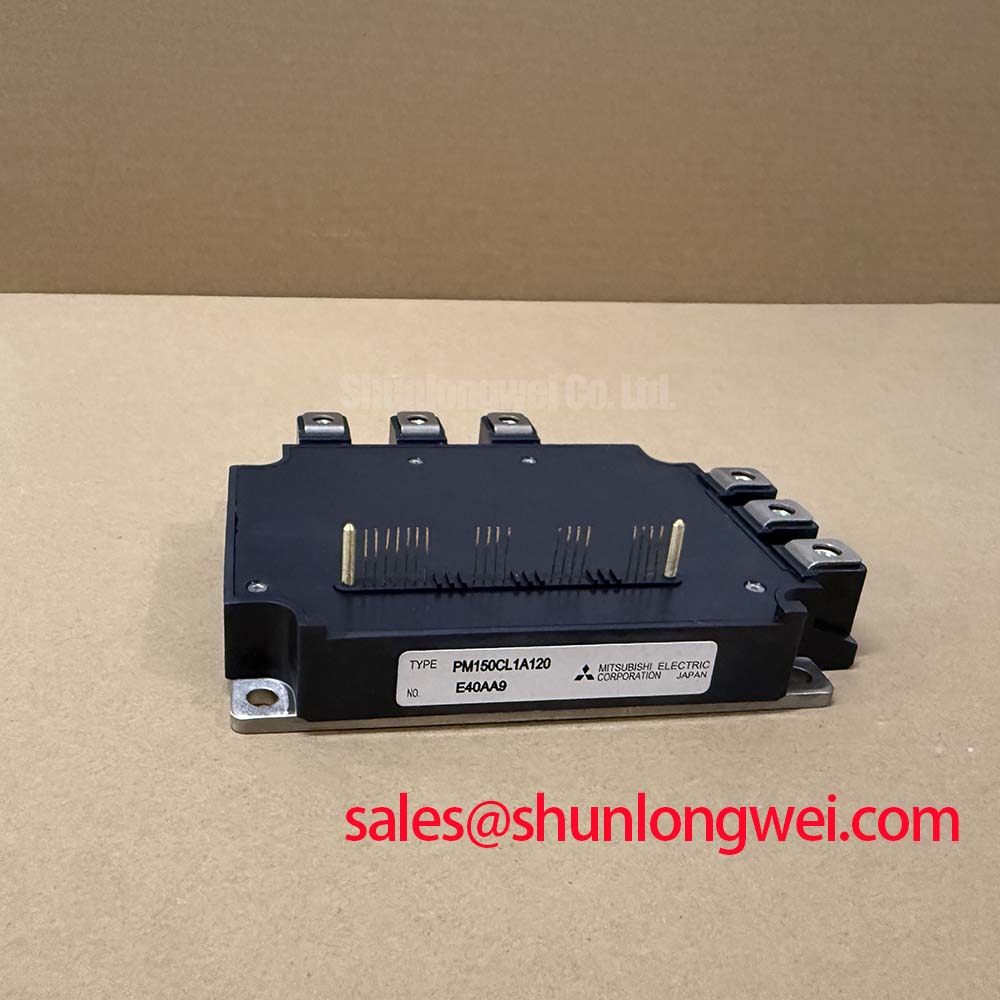
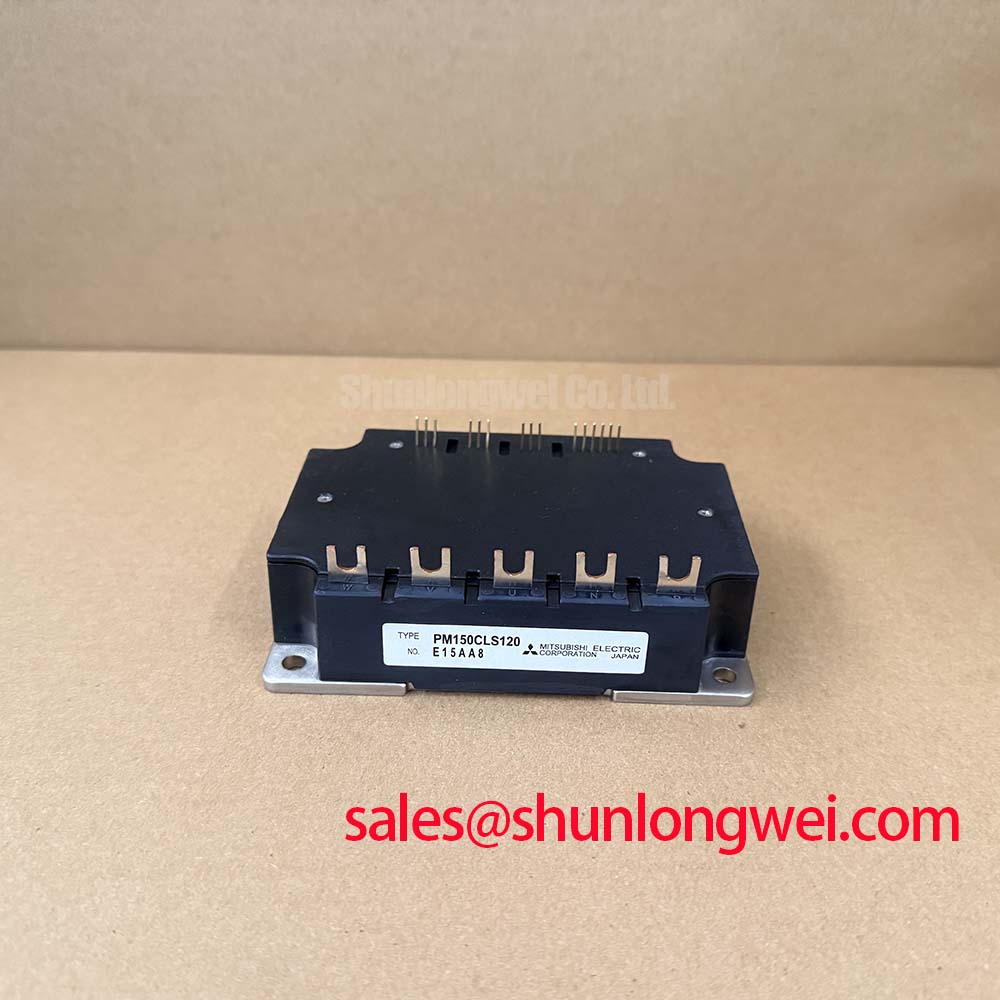
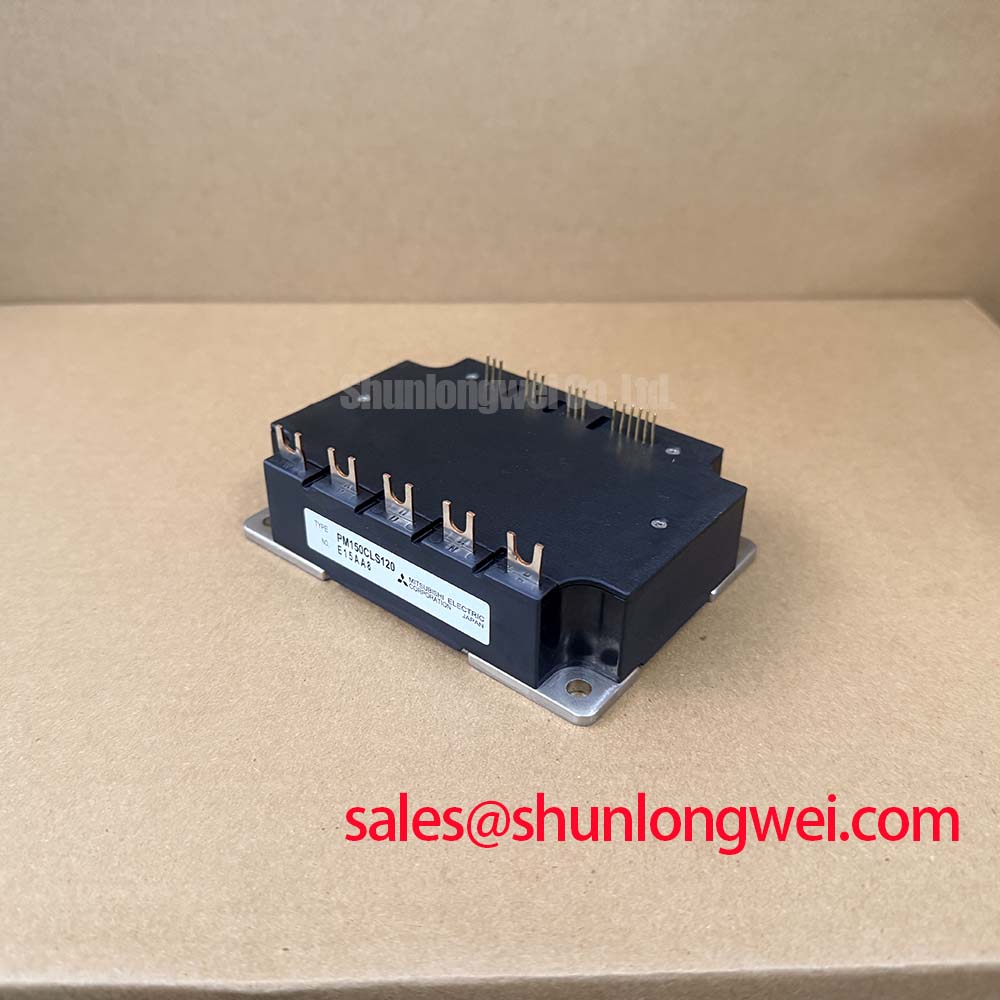
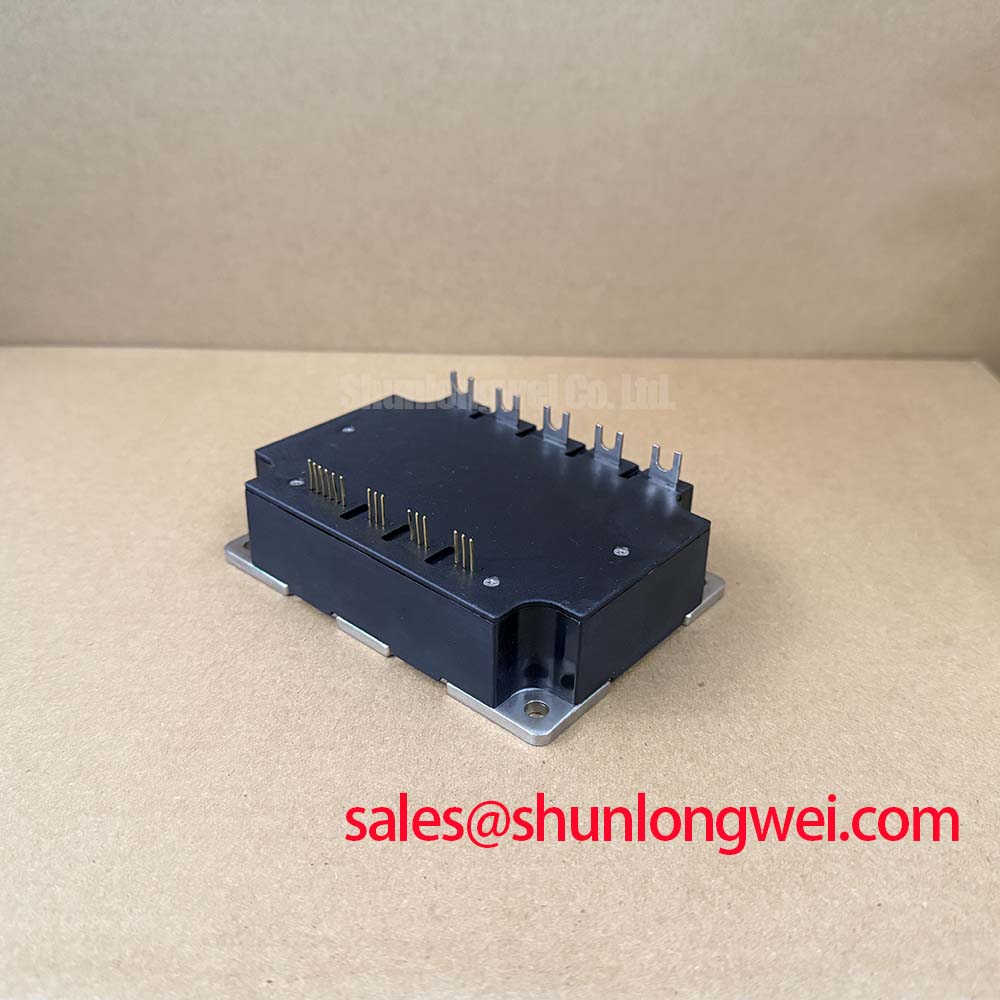
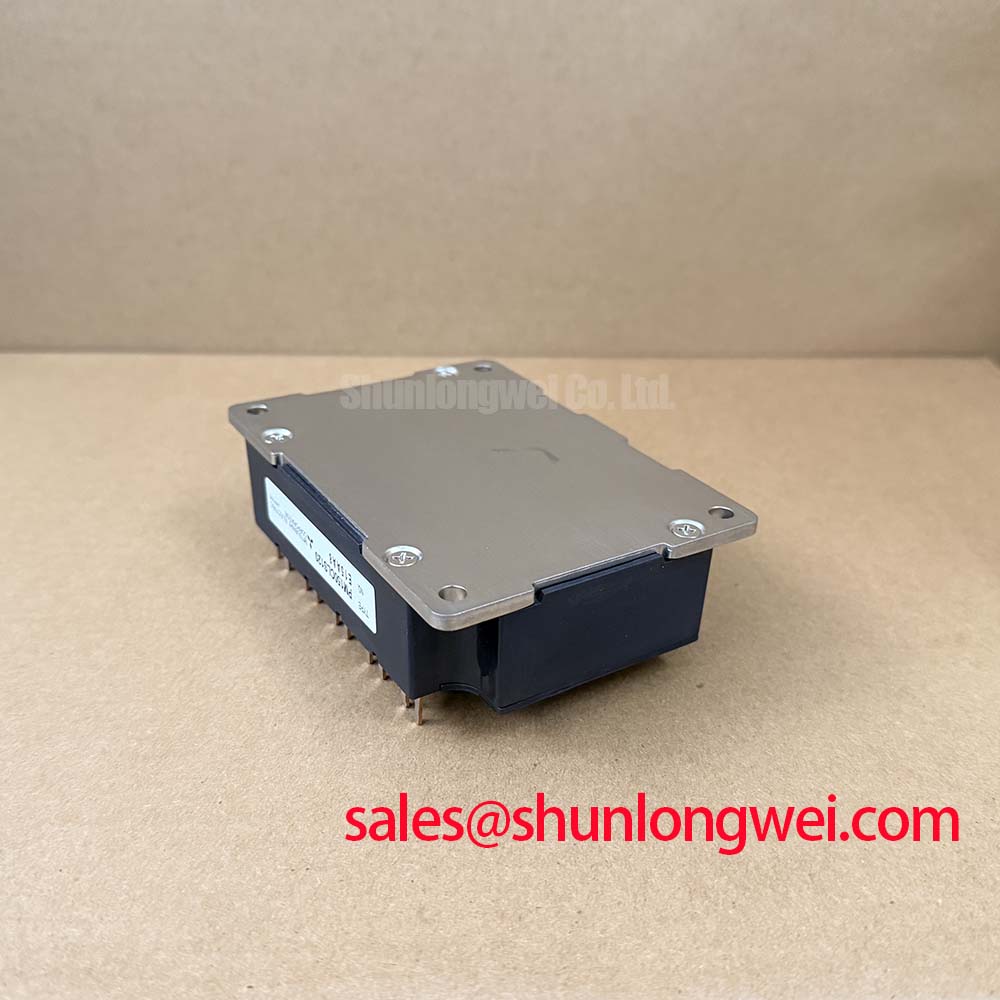
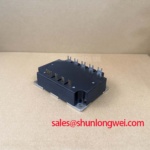
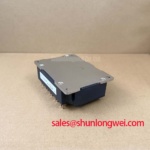
PM150CLS120 Mitsubishi Intellimod L-Series Three-Phase IGBT Inverter: High-Efficiency Power Control
The PM150CLS120, a member of the Mitsubishi Intellimod L-Series, is a 1200V / 150A three-phase power module designed to streamline inverter stage layout by integrating gate drive and protection components on a single substrate. For detailed design guidelines on high-power topologies, refer to our in-depth analysis of IGBT modules.
Key Specifications: 1200V | 150A | Rth(j-c)Q 0.15 °C/W
- Reduced footprint: Eliminates discrete driver and sensor layouts.
- Enhanced thermal margin: Employs high-conductivity flat-base packaging.
Engineers seeking a 1200V IPM for industrial motor drives often struggle to balance gate-drive layout parasitics with reliable fault shutdown speeds; this module solves that trade-off by placing drive electronics and fast-acting detection circuits on the same substrate. For 1200V industrial motor drives prioritizing integrated protection and minimal thermal footprint, the PM150CLS120 is the optimal choice.
Application Scenarios & Value
Optimizing System-Level Efficiency in Industrial Motor Drives
Engineers often face significant layout challenges when designing three-phase inverters for Variable Frequency Drives (VFDs) and high-precision servo systems. Managing stray inductances between discrete gate drivers and IGBTs is a constant source of electromagnetic interference (EMI) and voltage spikes. In standard systems, a sudden motor lock or winding short can cause rapid desaturation of the power switch. Detecting this condition externally and shutting down the drive safely requires high-speed sensing loops that are vulnerable to signal delays and noise, which often compromises the module's safety window.
When evaluating overall system complexity, comparing an IPM vs discrete IGBT setup reveals distinct trade-offs in board space and protection logic. The PM150CLS120 addresses these issues through its integrated gate driver and instantaneous short-circuit protection. Under a locked-rotor overload condition in a CNC spindle drive, collector current climbs rapidly. The internal circuit monitors this current directly at the chip level, executing a soft shutdown sequence within microseconds of exceeding the threshold. This autonomous intervention protects the 150A IGBT switches before external microcontrollers can register the fault, preventing catastrophic failure of the inverter bridge.
As a highly integrated Power Module, the device integrates power switching, gate drive, and control supply monitoring. For applications requiring similar specifications in different packaging styles or current capacities, related options such as the PM150CSD120, the PM75CLS120, or the PM50CLS120 are documented in their respective specifications.
Technical & Design Deep Dive
Thermal Integration and Gate-Drive Protection Architecture
The core architecture of the PM150CLS120 relies on integrated High-Voltage ICs (HVICs) that drive the gates of the IGBTs directly. Traditional systems require isolated supply voltages and optocouplers for each high-side switch. The integrated L-Series architecture simplifies this layout. By hosting control logic on the same baseplate as the power switches, it ensures noise immunity. This layout prevents parasitic turn-on due to high dv/dt transients.
Thermal management is another critical area. The junction-to-case thermal resistance Rth(j-c)Q of 0.15 °C/W dictates how much heat can be dissipated. To optimize system heat dissipation paths, engineers can read about the impact of case interfaces in our guide on IGBT thermal performance. Think of thermal resistance like the flow of water through a pipe. A lower thermal resistance of 0.15 °C/W acts as a wider pipe, allowing the heat generated in the silicon junction to drain rapidly to the heatsink. This prevents localized hot spots that lead to early semiconductor fatigue. The module features on-chip temperature sensors that trigger an over-temperature (OT) fault output if the baseplate exceeds safe thresholds, executing a controlled shutdown.
The module's control logic functions similarly to an automotive airbag system. Instead of waiting for a central computer (the external system controller) to process sensor inputs and deploy a response, the localized high-voltage IC (HVIC) detects overcurrent immediately at the source. It deploys a protective soft shutdown before the energy levels can destroy the power devices. This local protection minimizes propagation delays, safeguarding the 1200V IGBTs under extreme fault conditions. Ensuring the system operates within its designated Safe Operating Area (SOA) requires careful balance during high-frequency operation.
What is the isolation voltage of PM150CLS120? The module provides AC 2500V electrical isolation.
What protections are integrated within the module? Over-temperature, short-circuit, overcurrent, and control supply under-voltage protections are built-in.
Key Parameter Overview
Decoding Electrical and Thermal Metrics for Reliable Design
Evaluating electrical and thermal boundaries is vital during IGBT module selection. The following table groups the key specifications of the module by functional sectors:
| Inverter Sector (Power Switches) | |
|---|---|
| Collector-Emitter Voltage (VCES) | 1200V |
| Collector Current (IC) | 150A at TC = 25°C |
| Collector-Emitter Saturation Voltage (VCE(sat)) | 1.65V (typical, Tj = 25°C, VD = 15V) |
| Diode Forward Voltage (VEC) | 2.3V (typical, -IC = 150A) |
| Control Sector (Integrated Gate Drive & Logic) | |
| Control Supply Voltage (VD) | 20V (maximum rating) |
| Input Voltage (VCIN) | 20V (maximum rating) |
| Isolation Voltage (VISO) | 2500V AC (1 minute, 60Hz sinusoidal) |
| Thermal Sector (Package & Mounting) | |
| Thermal Resistance, Junction to Case (Rth(j-c)Q) | 0.15 °C/W (per element, IGBT) |
| Thermal Resistance, Junction to Case (Rth(j-c)F) | 0.23 °C/W (per element, FWDi) |
| Contact Thermal Resistance (Rth(c-f)) | 0.023 °C/W (per module, thermal grease applied) |
Frequently Asked Questions
Addressing Critical Engineering Inquiries on IPM Integration
How does the thermal resistance of 0.15 °C/W impact heatsink design?
A lower thermal resistance of 0.15 °C/W allows the IGBT junction to dissipate heat more efficiently, reducing the surface area and bulk volume required for the heatsink while maintaining a safe junction temperature.
Can the PM150CLS120 prevent desaturation damage during a short circuit?
Yes, the integrated protection circuitry detects overcurrent and short circuits directly, executing a soft gate-drive shutdown to prevent destructive desaturation conditions.
Why is the 2500V AC isolation voltage critical for industrial drives?
It provides electrical isolation between the power semiconductor chips and the grounded baseplate, ensuring operator safety and protecting control logic from transient faults.
What is the benefit of the integrated gate drive in the L-Series IPM?
It eliminates the parasitic loop inductance typically found between discrete gate drivers and IGBTs, minimizing electromagnetic interference and voltage ringing.
What occurs during a control supply under-voltage (UV) fault?
The internal gate drive shuts down to prevent the IGBTs from operating in their high-loss linear region, protecting the module from thermal overload.
For procurement teams evaluating inventory options, please contact our sales representatives to verify current availability and request technical documentation for the PM150CLS120.