Content last revised on August 28, 2026
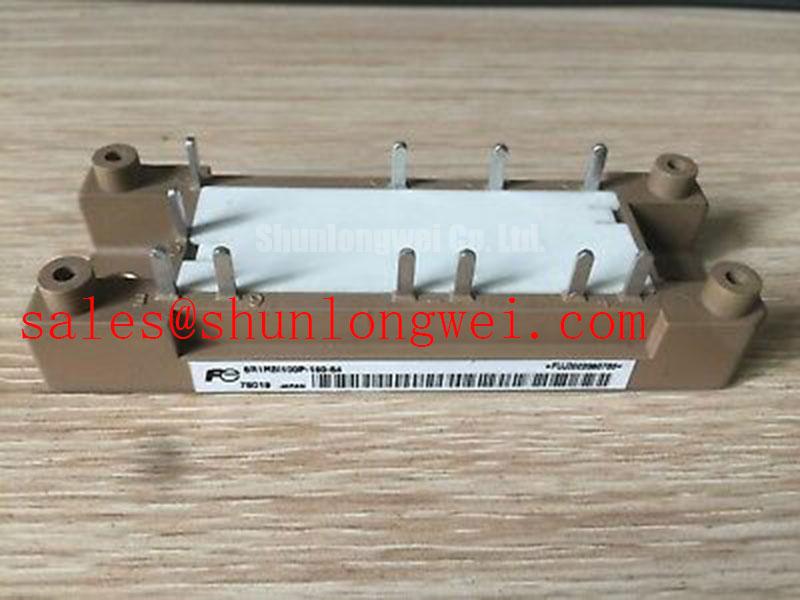
6R1MBI100P-160 Fuji Electric 1600V 100A Power Integrated Module
Product Overview & Engineering Significance
Maximizing System Efficiency through High-Density Power Integration
The 6R1MBI100P-160 is a high-performance Power Integrated Module (PIM) developed by Fuji Electric, designed to streamline the power stage of industrial motor control systems. By combining a three-phase diode bridge rectifier and a high-speed IGBT switching section into a single, thermally optimized package, this module addresses the critical need for footprint reduction without compromising electrical isolation or thermal overhead. Rated at 1600V and 100A, it provides a robust solution for 400V to 480V AC line applications where voltage transients and high reliability are paramount.
For industrial drives requiring a compact 1600V solution with integrated rectification, the 6R1MBI100P-160 provides superior power density over discrete configurations. This integration not only simplifies the Bill of Materials (BOM) but also minimizes parasitic inductance between the converter and inverter stages, directly enhancing switching performance. Engineers evaluating this module often prioritize its high Vces rating, which offers a significant safety margin against inductive kickback and grid fluctuations in harsh industrial environments. What is the primary benefit of the 6R1MBI100P-160 design? It integrates bridge rectification and IGBT switching into one module, reducing PCB space requirements while maintaining high-voltage isolation.
Key Parameter Overview
Decoding Technical Specifications for System-Level Reliability
The technical parameters of the 6R1MBI100P-160 are tailored for mid-range industrial power conversion. The following data points represent the absolute maximum ratings and key characteristics essential for hardware design and thermal modeling.
| Parameter Description | Value / Rating | Engineering Significance |
|---|---|---|
| Collector-Emitter Voltage (Vces) | 1600V | Provides critical headroom for 480V AC systems and high-voltage transients. |
| Collector Current (Ic) | 100A | Optimized for medium-duty motor drives and industrial UPS systems. |
| Integration Architecture | PIM (Bridge + IGBT) | Reduces component count and parasitic loop area for improved EMI. |
| Isolation Voltage (Viso) | 2500V AC | Ensures safety compliance and protects low-voltage control circuitry. |
| Operating Junction Temperature (Tj) | Up to 150°C | Maintains performance stability under high-load industrial cycles. |
Download the 6R1MBI100P-160 datasheet for detailed specifications and performance curves.
Application Scenarios & Value
Achieving System-Level Benefits in Space-Constrained Industrial Drives
The 6R1MBI100P-160 is predominantly utilized in Variable Frequency Drives (VFDs) and servo controllers. In these applications, the module's PIM structure allows for a more streamlined layout. For instance, in an automated conveyor system, the high I²t rating of the input diode bridge allows the system to handle the initial charging of the DC link capacitors without the need for oversized discrete components. This specific engineering advantage reduces the overall chassis size of the drive, a critical factor for control cabinet density. If your system requires higher current handling within the same voltage class, related modules like the 2MBI200VA-120-50 offer specialized alternatives, though the 6R1 series remains the standard for integrated bridge-inverter functionality.
Beyond traditional motor control, this module is an excellent candidate for industrial Welding Power Supplies and Uninterruptible Power Supplies (UPS). The 1600V rating is particularly advantageous in geographic regions with unstable power grids, as it prevents IGBT failure during transient overvoltage events. Designers can leverage The Core Trio of IGBT Module Selection to better understand how current, voltage, and thermal resistance interact within this specific Fuji Electric package. By utilizing the 6R1MBI100P-160, engineers can ensure compliance with IEC 61800-3 standards while simplifying the cooling assembly through a single thermal interface.
Technical Deep Dive
A Closer Look at the PIM Architecture and Thermal Dissipation
The internal architecture of the 6R1MBI100P-160 is a masterclass in power electronics layout. The integration of the 3-phase rectifier and the IGBT into one module acts similarly to a "system-on-a-chip" for power stages. Think of the PIM structure as a pre-optimized highways system; instead of long, winding country roads (discrete wiring) that create delays and traffic (stray inductance), the module provides a direct high-speed expressway between the AC input and the switched output. This reduces the voltage spikes (V=L*di/dt) during fast switching transitions, which is vital when operating at 1600V.
Thermal management is handled through a high-conductivity copper baseplate. The Rth(j-c) (junction-to-case thermal resistance) is meticulously balanced to ensure that heat from both the rectifier and the IGBT can be dissipated through a single heatsink. This requires careful consideration of the Thermal Resistance parameters during the design phase. By concentrating the heat source, engineers can utilize larger, more efficient cooling fins or liquid cooling plates, often leading to a more reliable Thermal Design than distributed discrete components would allow.
Industry Insights & Strategic Advantage
Addressing the Global Demand for Industrial Electrification
As global industries pivot toward Industry 4.0 and more aggressive energy efficiency mandates, the role of integrated power modules like the 6R1MBI100P-160 has become strategic. High-voltage IGBTs are the backbone of efficient power conversion, and the shift toward higher bus voltages (such as 800V DC and above) makes 1600V rated components essential for long-term reliability. This module aligns with the trend of "miniaturized industrialization," where control electronics must become smaller while handling higher power densities.
Strategically, adopting a PIM solution mitigates risks associated with assembly errors. In a standard production environment, mounting a single 6R1MBI100P-160 is significantly more reliable than mounting 6-9 discrete diodes and IGBTs. This reduces the probability of improper torque application on mounting screws or uneven thermal paste distribution, both of which are leading causes of IGBT failure. For procurement teams, this module represents a streamlined supply chain, reducing the number of line items and simplifying inventory management for complex inverter designs. For more on the evolution of these technologies, consult the 2025-2026 Global IGBT Market Outlook.
Frequently Asked Questions
How does the 1600V Vces rating of the 6R1MBI100P-160 impact safety in 400V AC systems?
The 1600V rating provides a substantial safety margin. In 400V-480V systems, the DC bus often reaches 650V-780V. The 1600V limit allows the module to withstand significant voltage spikes and surges common in industrial environments without reaching the avalanche breakdown point.
What are the cooling requirements for the 6R1MBI100P-160 when operating at its full 100A capacity?
At 100A, the IGBT generates significant conduction and switching losses. A high-performance aluminum heatsink with forced air cooling or a liquid-cooled plate is required. It is essential to monitor the Tc (case temperature) to ensure it stays within the limits specified in the Fuji Electric technical manual to prevent thermal runaway.
Does the integration of the bridge rectifier affect the overall switching speed of the IGBT section?
No, the rectifier and IGBT sections are electrically isolated within the module until externally connected. However, the physical proximity reduces loop inductance, which can actually allow for cleaner switching waveforms and reduced Switching Loss compared to using a separate discrete bridge and IGBT module.
Can the 6R1MBI100P-160 be used in parallel for higher power applications?
While technically possible, paralleling PIM modules is complex due to the integrated rectifiers. Generally, for higher power, it is more efficient to move to a higher-rated single module or a dual-pack configuration like the 2MBI300N-120, as IGBT Paralleling requires precise gate drive synchronization and thermal balancing.
The 6R1MBI100P-160 stands as a testament to Fuji Electric's engineering capability in the power semiconductor field. It offers a balanced approach to integration, thermal management, and electrical robustness, making it a reliable choice for the next generation of industrial inverters and power conversion systems. For further technical guidance, exploring Fuji Electric Power Modules resources can provide deeper insights into specific gate drive requirements and protection circuit designs.