Content last revised on September 16, 2026
Transient Dynamics & Electrical Design: Fault-Clearing Dynamics: Type-I/II Desatur on PM50RL1B120
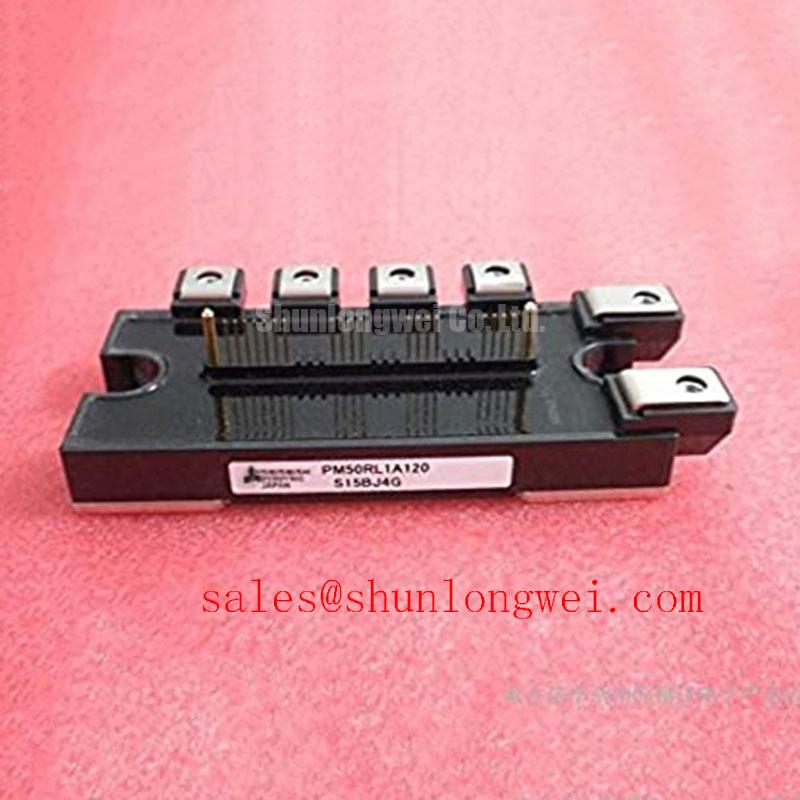
With the drive cabinet isolated and the DC link confirmed discharged, first compare the removed module’s terminal arrangement, mounting footprint, and cold-state terminal readings against the original equipment documentation before fitting PM50RL1B120. This Mitsubishi Electric intelligent power module has a specified 1200 V collector-emitter voltage rating and a 50 A DC collector current rating under the datasheet conditions. Its official 7-pack configuration combines a three-phase inverter bridge with a dedicated brake circuit, while integrated short-circuit, overtemperature, and undervoltage protection functions support fault handling within the module’s intended operating architecture.
| Official specification | Value | Integration relevance |
|---|---|---|
| Manufacturer | Mitsubishi Electric | Verify the complete part marking and original control-board interface before replacement. |
| Collector-emitter voltage | 1200 V | Official voltage class for industrial power conversion systems. |
| DC collector current | 50 A | Rated collector current under the specified datasheet conditions for electrical and thermal evaluation. |
| Power circuit arrangement | 7-pack | Three inverter legs plus a braking circuit in one IPM package. |
| Isolation voltage | 2500 V AC for 1 minute | Official isolation withstand specification between relevant isolated sections. |
| Built-in protections | SC, OT, UV | Short-circuit, overtemperature, and control-supply undervoltage protection functions. |
When an inverter has failed under load, do not assume that a replacement IPM alone will correct the original trigger. Inspect the DC-link buswork, motor cable termination, braking resistor path, gate-drive supply connections, current-sensing circuit, and controller fault records where available. The PM50RL1B120 includes official SC, OT, and UV protection functions, but the system-level response still depends on how the controller recognizes a fault, removes the drive command, records the event, and prevents an immediate restart into an unresolved load-side condition.
Desaturation terminology is commonly used when an external driver or controller observes abnormal collector-emitter behavior during a commanded on-state. Type-I and Type-II classifications are controller and protection-architecture concepts, not published individual performance values for this module. The system integrator should therefore verify the actual protection sequence from the original drive schematic, controller firmware documentation, and the PM50RL1B120 manufacturer documentation used by the equipment builder. It is not appropriate to infer a specific fault-detection time or short-circuit withstand duration from the module’s 1200 V and 50 A ratings alone.
A practical Design Consideration is to review the turn-off path as a complete loop rather than treating protection as a digital event. If a high fault current is interrupted abruptly, stray inductance in the DC-link connection and busbar layout can add an inductive voltage overshoot to the collector-emitter stress. A controlled, staged turn-off strategy may be used by the surrounding driver design to limit that event, subject to switching-waveform validation on the actual machine. The relevant test is not an assumed safe setting: it is a measured comparison of collector-emitter waveform, DC-link voltage, current response, and fault signal timing under controlled conditions.
For field diagnosis, inspect whether the controller remains latched in fault after power cycling, whether a brake command had been present before the trip, and whether output wiring shows damage or contamination. A persistent trip may arise from a load fault, damaged control-supply path, incorrect command sequencing, sensing error, or power-stage damage. Isolate these possibilities methodically. With the inverter disconnected from its motor where the equipment procedure permits, compare phase-to-phase and phase-to-frame conditions with the known service limits of that machine rather than assigning a fault from one meter reading.
⚠️ Field Alert: Disconnect and verify discharge of every stored-energy path before removing control connectors or power terminals, because a retained DC-link charge can damage the replacement module and the measurement instrument.
The module’s 2500 V AC for 1 minute isolation rating is an Official Datasheet Specification, but it is not a substitute for checking creepage, clearance, contamination, cable strain relief, and enclosure condition in the assembled drive. Those installation characteristics remain system responsibilities. Where a service board uses bootstrap-derived gate-drive power, the original timing and recharge conditions must be preserved; Mitsubishi Electric’s DIPIPM™ bootstrap circuit design guidance is relevant background for reviewing bootstrap-dependent power-stage control arrangements.
Transient Dynamics & Electrical Design: Long Motor Lead Reflected Wave Voltage on PM50RL1B120
Before installing PM50RL1B120 into an electric material-handling or forklift traction inverter, measure the physical motor lead route and inspect every intermediate connector, contactor, output choke, and cable repair. A long lead behaves as a transmission path during fast switching edges. When its characteristic impedance differs from the motor terminal impedance, part of the incident voltage wave can return toward the inverter. Under unfavorable conditions, the motor-end voltage can approach twice the DC-link voltage as a reflected-wave phenomenon. This is a system-level behavior, not an official PM50RL1B120 voltage guarantee or a universal result for every cable assembly.
The correct response is waveform verification at the inverter output and, where safe and appropriate, at the motor end using a measurement setup suitable for the drive environment. Cable length, motor winding condition, switching pattern, grounding arrangement, probe method, and filter placement affect what is seen. Designers should evaluate an output dv/dt filter, sine-wave filter, or motor choke when measured terminal stress, insulation concerns, acoustic behavior, or conducted and radiated noise require mitigation. Component selection and attenuation targets must be determined from the actual inverter, cable, motor, and switching test data.
The freewheeling paths inside an inverter also affect observed switching behavior. Diode reverse recovery can interact with commutation current and parasitic loop inductance, producing ringing or increased voltage stress. A snubber network can sometimes reduce a measured resonance, but it must be evaluated as part of the complete commutation loop. An arbitrary snubber value can move the resonance, add losses, or mask a different wiring issue. Engineering Recommendation: first document the waveform repeatability, probe grounding method, DC-link condition, and operating command before changing passive suppression parts.
In equipment supplied from a phase-controlled rectifier or another nonideal DC source, the DC-link waveform can vary with conduction angle and line harmonic content. That variation can alter braking behavior and switching stress during acceleration, deceleration, or load reversal. The dedicated brake circuit within the official 7-pack arrangement should be checked against the original braking resistor, brake control command, and DC-link monitoring circuit. Do not assume that a brake resistor fault, unstable source, or regenerated load is caused by the IPM without confirming those external paths.
For comparison during a repair assessment, the CM50DY-28H can be reviewed as a separate power semiconductor reference. Its presence in a comparison does not establish electrical, mechanical, control-interface, protection, or pin-compatible substitution for PM50RL1B120. The original module topology, terminal geometry, drive logic, thermal interface, and fault behavior must each be confirmed.
Assembly Integrity & Layout Architecture: Implementing Dynamic Gate Impedance Control for Robust PM50RL1B120
Start assembly inspection at the mating surfaces. Remove residue, check the heat-sink flatness condition, inspect the module base contact area, and follow the equipment manufacturer’s tightening sequence and fastener requirements. Uneven mechanical loading can degrade thermal transfer and can also distort power-terminal alignment. The 50 A DC rating is an Official Datasheet Specification, yet usable current in a finished inverter remains dependent on cooling performance, switching conditions, load cycle, ambient environment, and the equipment’s thermal protection strategy.
Because PM50RL1B120 is an intelligent power module with integrated drive circuitry, any dynamic gate-impedance or gate-transition control is generally part of the module’s internal driver design unless the approved documentation identifies an external adjustment. The external control board and layout still affect command timing, control-supply stability, common-mode behavior, and the switching loop. Separate turn-on and turn-off paths, active Miller-clamp arrangements, and controlled negative off-state gate bias may be used in some power-stage designs, but their availability and implementation must be verified from the original control-board and module documentation rather than assumed for PM50RL1B120.
Do not presume that an auxiliary Kelvin emitter terminal is available simply because other power modules use one. The system integrator should verify every PM50RL1B120 control and power terminal directly from the approved module documentation and the original board layout. If separate signal-return and power-current paths are provided by the equipment, preserve that routing intent during repair. Routing a sensitive gate-return conductor alongside a high-current bus path can make the driver observe a different reference potential during switching, which may contribute to false commands or uneven switching behavior.
The most useful bench check is comparative. Inspect the removed module and the replacement assembly for bent terminals, incomplete seating, damaged connector latches, loose busbar hardware, heat-sink contamination, and cracked solder joints on the driver board. Then compare the gate-drive supply rails and command waveforms against a known-good phase path where the service procedure allows. A waveform that appears abnormal may indicate a control-supply issue, a return-path disturbance, an incorrect dead-time relationship, a gate-driver problem, or a load-side event. It should be verified with suitable isolated measurement methods rather than interpreted as evidence of one specific failure mechanism.
Negative off-bias is often discussed as a way to improve immunity to dv/dt-induced false turn-on, but its suitability is set by the driver, the module documentation, insulation coordination, and measured switching behavior. For a broader discussion of the design rationale, see Evolution of Negative Off-Bias Gate Drive Circuits. This is engineering reference material and does not define a mandatory PM50RL1B120 gate-bias value.
PM50RL1B120 Operational Boundaries: Evaluating Isolated DC-DC Power Supply Sizing for High Limits
Confirm the isolated control-power architecture before applying operational power to a repaired inverter. PM50RL1B120 has official built-in undervoltage protection, identified as UV, but the surrounding isolated DC-DC supply, bootstrap arrangement where used, distribution wiring, decoupling network, and controller sequencing determine whether the available control supply remains stable through load transients. A supply that starts normally without switching load can still dip when the inverter commutates current or when multiple control channels demand recharge simultaneously.
The module’s 2500 V AC isolation voltage for 1 minute is an Official Datasheet Specification. It should not be converted into a claim about reinforced insulation level, system working voltage, common-mode transient immunity, or regulatory compliance for the complete drive. Those outcomes depend on the isolator components, printed-circuit-board creepage and clearance, enclosure pollution conditions, cable routing, grounding topology, and applicable equipment standards. The system designer should confirm isolation coordination and transient performance from the documentation for the actual isolated power supply and gate-drive components.
Common-mode transients can couple through isolated power supplies, drivers, sensors, and communication interfaces. If spurious gate commands or unexplained UV, OT, or SC events are suspected, inspect the timing relationship between the fault line, gate command, local control supply, DC-link movement, and phase voltage. Check whether the behavior changes with motor cable arrangement, shielding termination, brake operation, or one specific switching state. This evidence helps distinguish a control-reference disturbance from a persistent power-stage or load fault without inventing a single-cause explanation.
For electric forklift traction equipment, the integration review should also include contactor sequencing, battery-side transients, regenerative-braking command logic, motor thermal inputs, and charger or service-port interactions where applicable. The 1200 V and 50 A official ratings identify the module’s electrical class; they do not independently approve it for a particular vehicle, battery voltage, traction motor, or safety function. Retain the original protection-chain logic and validate operation against the equipment manufacturer’s commissioning procedure after any power-module service.