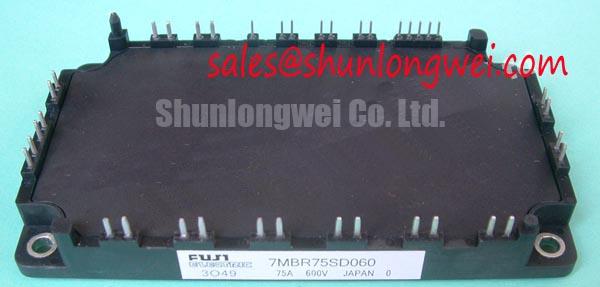
Content last revised on September 21, 2026
PSS75SAA2F6 Thermal Electrical Optimization: Optimizing Control-Signal Loop Geometry to Prepare Practical Tuning
| Parameter | Official Specification |
|---|---|
| Manufacturer | StarPower |
| Model | PSS75SAA2F6 |
| Product Category | IGBT Module |
| Collector Emitter Voltage | 600 V VCES |
| Continuous Collector Current | 75 A IC |
| Peak Collector Current | 150 A ICP for up to 1 ms |
| Control Supply Voltage | 20 V maximum VD |
| Input Interface | 5 V line with Schmitt trigger |
| Integrated Protection | Short circuit and under voltage protection |
| Isolation Voltage | 2500 Vrms Viso |
| Junction Temperature | −30°C to +150°C Tj |
Probe the control input and emitter or reference switching path with a short ground spring, then compare the control waveform at the module terminals with the driver output; ringing that appears only at the power device usually points to shared return inductance, probe error, or unsuitable control-loop geometry.
The PSS75SAA2F6 accepts a 5 V line input through a Schmitt trigger interface, while its control supply voltage is rated at 20 V maximum. The control reference must remain tied to the intended emitter reference of the switching leg. Long control wiring, shared return paths, and routing beside high-current collector or emitter conductors can add mutual coupling and create false control transitions.
As a Design Consideration, route the control signal and its return as a compact pair and keep the control return separate from the main high-current emitter path wherever the module topology provides a suitable auxiliary control reference. The purpose is to reduce emitter voltage movement seen by the internal driver. The correct geometry remains system dependent because the module pin arrangement, driver isolation method, busbar construction, and switching frequency all influence the result.
During commissioning, check the control input and switching behavior at the actual module terminals rather than relying only on a driver board test point. Verify that the input logic reaches the expected Schmitt trigger threshold, that the control supply remains stable during switching, and that the short-circuit and under-voltage protection functions do not interact unexpectedly with the command. If a replacement board produces a different waveform from the original assembly, compare loop placement, return routing, connector pin assignment, and grounding before changing external control components.
In a commercial string inverter or microgrid energy storage converter, the upstream rectifier and DC link also affect the switching environment. The SKM75GAL063D may be evaluated as a neutral reference for an associated front end or auxiliary power stage, but electrical compatibility must be established from the complete circuit rather than from current rating alone. A same-class reference such as MG75H6EL1 can support a comparison exercise, but it should not be treated as an automatic substitute.
PSS75SAA2F6 Thermal Electrical Optimization: Thermal Time Constants and Peak Junction Practical Tuning
After a high-current event, record the switching waveform, case temperature, cooling interface condition, and protection response together; a current reading alone cannot establish whether the junction temperature stayed within the official −30°C to +150°C Tj range.
The module has an official continuous collector current rating of 75 A and a peak collector current rating of 150 A for up to 1 ms. These values identify the product ratings under their specified conditions, not a universal operating recipe for every inverter. Repeated overload pulses, switching losses, ambient temperature, heatsink impedance, airflow, and thermal cycling must be evaluated as a complete system.
A Design Consideration for pulsed operation is to use a transient thermal model with the available junction-to-case, case-to-heatsink, and heatsink-to-ambient data from the applicable technical documentation. A multi-RC model can estimate the junction response by applying the measured loss waveform to each thermal time constant. The calculated peak must then be checked against the official junction temperature limit, with the system engineer validating the result through thermal measurement and controlled switching tests.
Do not infer thermal margin from a cool external baseplate alone. Inspect the mounting surface for uneven contact, contamination, displaced thermal interface material, and fastener loading that may tilt the module. The thermal interface should be applied as a uniform thin layer suitable for the selected heatsink and mounting method. The fastener sequence and torque should follow the mechanical specification of the module assembly and the actual screw hardware.
Where a high-side driver uses a bootstrap supply, size the bootstrap capacitor from the complete gate-charge requirement, driver quiescent current, refresh interval, leakage, switching duty, temperature, and the minimum permitted driver supply. The required gate charge for this exact module is not provided in the supplied specification set, so capacitor selection must not be inferred from the 75 A current rating. Confirm the driver supply at the high-side circuit during the longest expected on time and check the module’s 20 V maximum control supply rating during abnormal transients.
⚠️ Field Alert: Remove control and power connections only after the DC link has been discharged and verified with an appropriate meter.
Field Diagnostics and Commissioning: High dv/dt Cross-Conduction and Shoot-Through in PSS75SAA2F6 Topologies
Capture both complementary control signals and the DC-link switching node on an isolated, bandwidth-suitable oscilloscope before replacing the module; overlapping commands, false control movement, or a protection response during a fast transition should be investigated as a system interaction rather than assigned to one component without evidence.
The integrated short-circuit and under-voltage protections provide valuable fault information, but they do not replace correct dead time, driver isolation, control-loop design, and busbar layout. Check whether the fault occurs during turn-on, turn-off, DC-link energization, or a load transient. The timing pattern can help separate a control-sequencing issue from a power-loop overshoot or a disturbed emitter reference.
An Engineering Recommendation is to minimize the common impedance shared by the control return and the high-current commutation path. Keep the driver loop physically compact, avoid routing the input signal parallel to the switching node, and verify that external control components, any accessible clamp network, and the protection return are connected according to the actual module terminal arrangement. Clearance and creepage must be selected from the working voltage, pollution environment, insulation system, and applicable equipment standard rather than from the IGBT current rating.
If an externally accessible gate-drive node is provided by the system design, active Miller-clamp circuitry may be considered when measured collector-voltage transitions couple into the gate circuit. Its operation must be coordinated with the module’s input interface and driver timing. A negative gate bias is not an official PSS75SAA2F6 specification in the supplied data, so any negative bias level, including commonly discussed values, requires confirmation against the driver design and the manufacturer’s complete electrical documentation. It must not be introduced through the module control terminals as a default repair setting.
For a long motor cable or distributed load, inspect the switching node and load terminals for reflected-wave behavior. A high-voltage spike may result from cable impedance, termination, stray inductance, or measurement technique. The mitigation principle is to control the commutation path and verify peak voltage at the module terminals under the real DC-link condition. Any snubber, filter, or damping network must be selected from measured energy, switching loss, insulation coordination, and system thermal limits.
When the module is used in a photovoltaic string inverter or microgrid converter, also inspect the phase-controlled rectifier or active front end for abnormal current shaping. Excessive mains harmonics can increase DC-link ripple and create a repeating thermal and electrical stress pattern. The correction belongs to the complete converter control and input-filter design, not to the IGBT module alone.
Assembly Integrity and Layout Architecture: Implementing Atmospheric Neutron Radiation Impact on PSS75SAA2F6
When a field unit fails at elevated altitude, preserve the failed module, record DC-link voltage, load current, switching temperature, installation altitude, and protection history, then compare those records with a known-good waveform before assigning the event to atmospheric radiation.
Atmospheric neutron effects, single-event burnout, and failures in time require device-technology data, mission-profile information, altitude exposure, applied-voltage distribution, and an authoritative reliability model. No SEB threshold, neutron FIT rate, altitude derating factor, or service-life value is established by the supplied PSS75SAA2F6 parameters. Such figures must not be calculated from the 600 V VCES rating alone.
As a Design Consideration, higher installation altitude can change cooling performance and environmental insulation conditions, while the electrical stress remains determined by the converter’s DC link, switching overshoot, load profile, and control response. The system engineer should verify peak collector-emitter voltage during turn-off, account for parasitic inductance, and confirm that the measured transient remains inside the approved operating boundary. Clearance and creepage should be reviewed against the working voltage, pollution degree, material group, enclosure, and relevant safety standard.
For field diagnostics, inspect the module base, terminals, busbars, control wiring, fuse coordination, and protection logs. A fast semiconductor fuse should be coordinated with the converter’s short-circuit behavior and the permissible I²t of the complete protection path. The module’s integrated short-circuit protection does not by itself define the external fuse rating, fault-clearing time, or dead short-circuit energy limit. Those values must be established from the complete inverter design and verified during controlled testing.
The 2500 Vrms isolation voltage is an official module specification, but it is not an automatic certification of the finished inverter. The completed assembly still requires insulation verification, mechanical inspection, thermal testing, and EMC evaluation as applicable to the equipment. For repair teams documenting test methods and failure evidence, the Field Engineer’s Handbook provides a useful reference point for structured measurements and reliability review.