Content last revised on September 21, 2026
Benchtop Waveform Tuning: Mitigating Stress via Evaluating Thermal Capacitance vs Heat Sink on QM10HB-2H
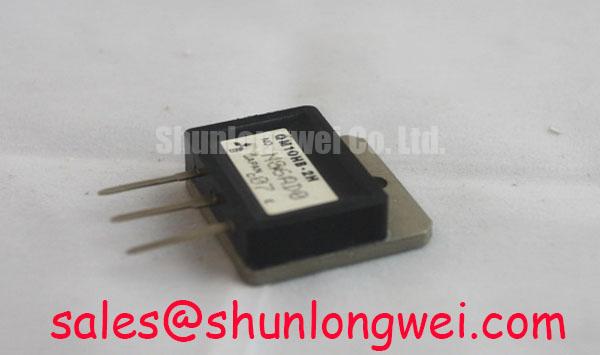
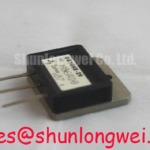
With equipment isolated and the DC link discharged, first inspect the QM10HB-2H terminals, case surface, mounting face, and connection hardware for loose conductors, damaged insulation, heat discoloration, or uneven contact marks before applying any meter probes. This Mitsubishi Electric unit is an Isolated Darlington Module with an official current rating of 10.0 A; its published working-voltage description is Standard Industrial Rating. The original equipment documentation remains necessary to confirm circuit voltage limits, terminal functions, drive conditions, and protection thresholds.
For a unit removed from a commercial string inverter or micro-grid energy-storage assembly, cold-state checks can help identify obvious external faults before replacement. Compare terminal-to-terminal readings, with test polarity reversed where appropriate, against a known-good assembly or the documented circuit path. A meter result alone cannot establish switching integrity, dielectric performance, or thermal behavior. It should be treated as an initial screening result that guides the next measurement.
Transient junction heating cannot be derived from the 10.0 A rating alone. The actual peak junction temperature during pulsed overload depends on the semiconductor losses, pulse duration, repetition pattern, case-to-heat-sink interface, heat-sink thermal mass, airflow, and the original manufacturer thermal data. As an Engineering Calculation, a system engineer can model the device-to-case path using the applicable multi-RC transient thermal impedance curve, then combine that response with the measured case or heat-sink condition. This establishes a defensible temperature margin without presenting a generic heat-sink result as a factory limit for this model.
Design Consideration: keep the high-current path compact and inspect busbar, lug, and heat-sink mating surfaces for contamination or mechanical distortion. These conditions can increase resistive loss and make waveform tuning appear unstable even when the module is not the only contributor.
Field Alert: Tighten mounting hardware according to the equipment maker’s bolt specification and apply thermal interface material as a uniform thin film so a distorted mounting face does not create a localized thermal path problem.
When evaluating a hardware substitution, compare the circuit topology, terminal arrangement, isolation requirements, voltage class, current duty, thermal interface, and drive behavior rather than matching a part number family by appearance. The QM200HA-HK is a separately listed module that requires a full electrical and mechanical compatibility review; its presence does not establish it as a drop-in replacement for QM10HB-2H.
Preventing Spurious Faults: Active Miller Clamp Implementation Guidelines for QM10HB-2H
In a switching assembly, begin by probing the installed drive path at the module connection point and comparing the measured waveform with the original control-board requirements. The QM10HB-2H Mitsubishi Electric isolated Darlington module should not be assigned an assumed gate-drive voltage, gate resistor, switching-frequency range, or active Miller-clamp requirement when those values are not confirmed by the applicable module and equipment documentation.
Active Miller clamping is a Design Consideration for switching devices whose control node can be disturbed by rapid collector-voltage movement. A low-impedance clamp path can hold the intended off-state control node when the driver supports that function, reducing the chance that coupled transient energy produces an unintended turn-on event. Whether this approach applies to the installed QM10HB-2H circuit depends on the original driver architecture, wiring inductance, return-path layout, control reference, and measured switching waveforms.
Negative control bias is also system-determined. It can affect off-state noise immunity and device stress, but it must be evaluated against the allowable input conditions of the exact module, driver, isolation supply, and protection circuit. Do not transfer a negative-bias value from an unrelated IGBT application to this Darlington module. During commissioning, verify turn-on and turn-off waveforms, current response, and the controller’s fault behavior under controlled operating conditions.
Where inverter commutation, precharge circuitry, or a rectifier stage is under investigation, the QM100HY-2H can be reviewed as a related peripheral-topology module. It must be assessed independently for its published ratings and the function it performs in the equipment; it does not define the drive or thermal requirements of QM10HB-2H.
Thermal derating across changing switching frequency and ambient temperature should be established from measured losses and the original system cooling condition. Check fan operation, air-channel blockage, heat-sink fastening, temperature-sensor placement, and controller limits. A repeated fault may involve the driver supply, current sensing, control timing, thermal interface, or load-side condition, so no single waveform symptom should be treated as conclusive proof of module failure.
Field Diagnostics & Commissioning: Common-Mode Transient Immunity in Harsh Industrial QM10HB-2H Topologies
Before reconnecting an inverter assembly, verify that control connectors are seated, protective-earth connections are intact, insulated wiring has not chafed against the heat sink, and the module mounting arrangement matches the original equipment layout. The official information supplied for QM10HB-2H identifies an isolated Darlington-module package, but it does not provide a confirmed reinforced-isolation rating or a common-mode transient immunity value. Neither a greater-than-five-kilovolt barrier claim nor a greater-than-100-kilovolt-per-microsecond CMTI claim should be assigned to this product without authoritative documentation.
Design Consideration: separate sensitive control returns from high-current commutation loops where the equipment layout permits, minimize shared impedance, and verify the resulting noise margin with a properly referenced oscilloscope measurement. Common-mode disturbance can be introduced through driver supplies, cable shields, sensing circuits, controller grounds, or probing methods. A differential measurement against a known-good signal path is more useful than interpreting a single probe trace in isolation.
Digital board diagnostics may include boundary-scan capability where the controller design supports it. The Boundary Scan JTAG IEEE 1149.1 digital test protocol concerns board-level interconnect testing and does not validate power-module switching behavior or isolation. It can still help separate a controller or connector fault from a power-stage investigation when the equipment manufacturer has exposed the relevant test access.
Likewise, the Hall effect describes the basis of many current-sensing technologies, but it does not provide a direct pass-fail test for this module. If a Hall-based sensor is installed in the inverter, compare its offset, signal stability, supply condition, and measured current response with the system service information before attributing a protection trip to the QM10HB-2H.
For broader integration practices involving drive routing, thermal paths, and switching-loop management, consult the IGBT Design & Integration engineering guide as general reference material. Any recommendations from a general guide still require verification against this module’s official data and the host equipment design.
Transient Dynamics & Electrical Design: Four-Quadrant Power Flow Topologies for Grid-Connected QM10HB-2H
When a commercial string inverter or micro-grid energy-storage system is expected to transfer energy between a battery rack and a DC link, first identify the actual converter topology and the function assigned to the QM10HB-2H position. Four-quadrant power flow is a system-level capability created by the complete arrangement of switches, freewheel paths, control logic, current sensing, DC-link hardware, and protection functions. The designation Isolated Darlington Module and the official 10.0 A rating do not by themselves establish that QM10HB-2H provides bidirectional operation in a particular installation.
During peak-shaving investigations, capture current direction, DC-link voltage, command timing, heat-sink condition, and fault records through a controlled operating sequence. Cyclic loading can produce thermal swings that depend on the actual duty cycle and cooling response. The system integrator should verify peak current, voltage overshoot, diode or commutation behavior, and thermal margin against the original electrical design before restoring service.
Design Consideration: reduce parasitic loop inductance where practical to limit turn-off overshoot, then validate peak conditions with switching tests against the DC-link voltage and device limits specified for the original assembly. Avoid assigning a fixed inductance target, switching frequency, voltage margin, or reliability lifetime to QM10HB-2H without the corresponding manufacturer source and equipment-level test data.
For service procurement, record the complete module marking, mounting arrangement, terminal connections, host-board revision, and measured operating conditions. This preserves the evidence needed to evaluate an equivalent repair path while keeping the decision tied to verified electrical compatibility rather than a generalized application claim.