Content last revised on September 10, 2026
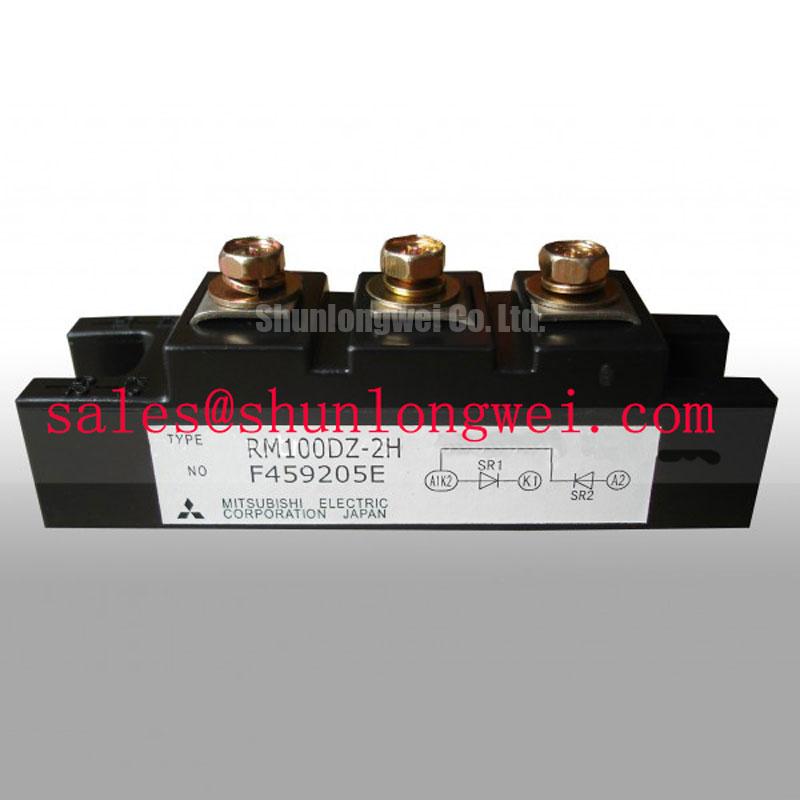
RM100DZ-24 Mitsubishi Electric 1200V 100A Diode Module
The RM100DZ-24, manufactured by Mitsubishi Electric, is a high-performance diode module designed for industrial power rectification and switching applications. By integrating two high-voltage diodes in a series configuration, this module provides a compact and thermally efficient solution for systems requiring robust current handling and high insulation voltage. Its design prioritizes long-term reliability in harsh electrical environments, making it a staple in heavy-duty power conversion hardware.
Key Parameter Overview
Decoding the Specs for Enhanced Thermal Reliability
Technical specifications provide the foundation for system-level safety margins. The RM100DZ-24 is defined by its ability to withstand significant electrical stress while maintaining low thermal resistance. Below is a detailed breakdown of its primary electrical and thermal characteristics.
| Parameter | Official Value | Engineering Significance |
|---|---|---|
| Repetitive Peak Reverse Voltage (VRRM) | 1200V | Ensures safety margins for 400V and 480V AC line rectification. |
| Average Forward Current (IF(AV)) | 100A | High current density for compact inverter input stages. |
| Surge Forward Current (IFSM) | 2000A | Provides a robust buffer against transient inrush currents during startup. |
| Isolation Voltage (Visol) | 2500V AC | Guarantees safety and compliance with international dielectric standards. |
| Thermal Resistance (Rth(j-c)) | 0.25 °C/W | Facilitates rapid heat transfer from junction to baseplate. |
Download the RM100DZ-24 datasheet for detailed specifications and performance curves.
To better understand the Surge Forward Current (IFSM) of 2000A, consider it the structural integrity of a high-pressure dam. Just as a dam must withstand a sudden flood without breaching, this diode module can handle massive, millisecond-long current spikes—often caused by capacitor charging or motor startup—without catastrophic failure. For engineers, this translates to fewer blown fuses and higher system uptime.
Application Scenarios & Value
Achieving System-Level Benefits in High-Frequency Power Conversion
For industrial drives prioritizing thermal margin, this 1200V module is the optimal choice for front-end rectification. The RM100DZ-24 is frequently utilized in the Input Rectification Stage of Variable Frequency Drives (VFD) and Uninterruptible Power Supplies (UPS). Its series diode configuration allows for a simplified bridge layout, reducing the number of external connections and potential failure points.
Consider a high-fidelity engineering scenario involving a 30kW industrial motor controller. During the initial power-up phase, the DC-bus capacitors demand an immense amount of energy, creating a peak current surge. The IFSM rating of 2000A in the RM100DZ-24 ensures the module survives these repeated inrush cycles, which are a primary cause of degradation in lesser-rated components. Furthermore, the 2500V isolation voltage allows for direct mounting on grounded heatsinks, simplifying the mechanical assembly and enhancing user safety according to IEC 60664-1 standards.
While the RM100DZ-24 handles 100A loads with precision, systems requiring higher current handling for heavy-duty welding or large-scale electrolysis might evaluate the QM150DY-24 for expanded capacity. Conversely, for active switching requirements in the same voltage class, the CM200DY-24H provides high-speed IGBT performance. For more on module integration, see our guide on decoding power module datasheets.
Technical Deep Dive
A Closer Look at Thermal Management and Insulation Integrity
The internal architecture of the RM100DZ-24 utilizes a specialized copper baseplate and an alumina (Al2O3) ceramic insulator. This combination is critical for managing the 0.25 °C/W Thermal Resistance. To visualize this, imagine a high-speed drainage system designed to prevent water accumulation during a storm. The thermal interface acts as the pipes; if they are too narrow (high resistance), heat builds up at the junction, leading to thermal runaway. The RM100DZ-24 ensures the "pipes" are wide enough to move heat away efficiently, maintaining the junction temperature within safe limits even under continuous load.
Reliability is further enhanced by the module's Power Cycling Capability. Unlike discrete diodes that may suffer from lead-frame fatigue, the module's internal bonding and packaging are engineered to handle the expansion and contraction caused by fluctuating temperatures. This is vital for applications like battery chargers or welding power supplies where the load is rarely constant. Understanding why Rth matters is essential for calculating the required heatsink dimensions and ensuring the module operates within its Safe Operating Area (SOA).
Application Vignette
Optimizing Power Quality in Uninterruptible Power Supplies
In a UPS system, the rectifier must convert incoming AC to DC to charge batteries and power the inverter. The RM100DZ-24 is particularly effective here because its low Forward Voltage Drop (VF) minimizes conduction losses, directly contributing to higher overall system efficiency. When integrated with a high-quality Thermal Interface Material (TIM), the module ensures that the heat generated during constant charging cycles is dissipated without stressing adjacent sensitive electronics. This stability is a key factor in achieving the high reliability required for data center and medical facility power backup systems.
Frequently Asked Questions
How does the Rth(j-c) of 0.25 °C/W directly impact heatsink selection?
A lower Rth(j-c) allows for a smaller heatsink while maintaining the same junction temperature. For the RM100DZ-24, this value means that for every watt of dissipated power, the junction temperature only rises by 0.25°C above the case temperature, providing engineers with more thermal headroom in compact enclosure designs.
Is the RM100DZ-24 suitable for 3-phase rectification?
Yes. Since the RM100DZ-24 contains two diodes in series, three of these modules can be used to construct a complete 3-phase bridge rectifier. This modularity allows for easier replacement and thermal distribution across a larger surface area compared to a single integrated bridge.
What is the primary benefit of the 2000A surge current rating?
The 2000A Surge Forward Current rating protects the module against short-duration high-current events, such as the initial charging of DC-bus capacitors in a drive. This prevents diode failure during "cold starts," a common failure point in industrial power electronics.
Can this module be used in 690V AC systems?
No. For 690V systems, peak voltages can exceed 1000V, leaving insufficient safety margin for a 1200V rated module like the RM100DZ-24. Engineers should look for 1600V or 1700V rated modules to ensure reliable operation under line fluctuations.
Does the 2500V isolation voltage meet global safety standards?
Yes, the 2500V AC isolation rating ensures that the internal high-voltage components are safely separated from the mounting base, meeting UL and CE requirements for most industrial machinery and power conversion equipment.
As a specialized distributor, we provide verified technical data to support your engineering decisions. For procurement inquiries or technical support regarding Mitsubishi Electric power semiconductors, please contact our technical sales team for current availability and logistical support.