
Content last revised on September 10, 2026
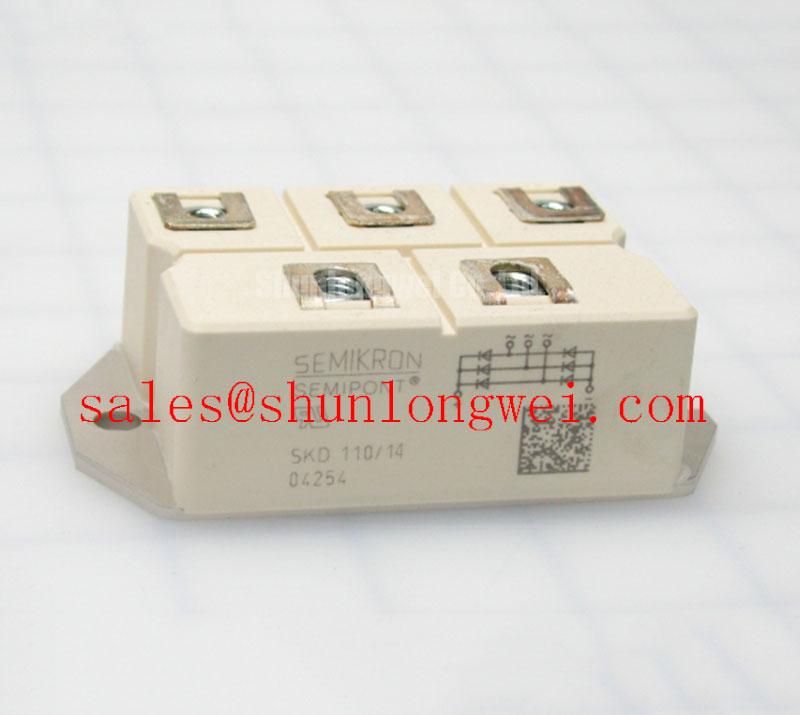
Semikron SKD110/14 Three-Phase Bridge Rectifier Module: Engineering Insights & Technical Specs
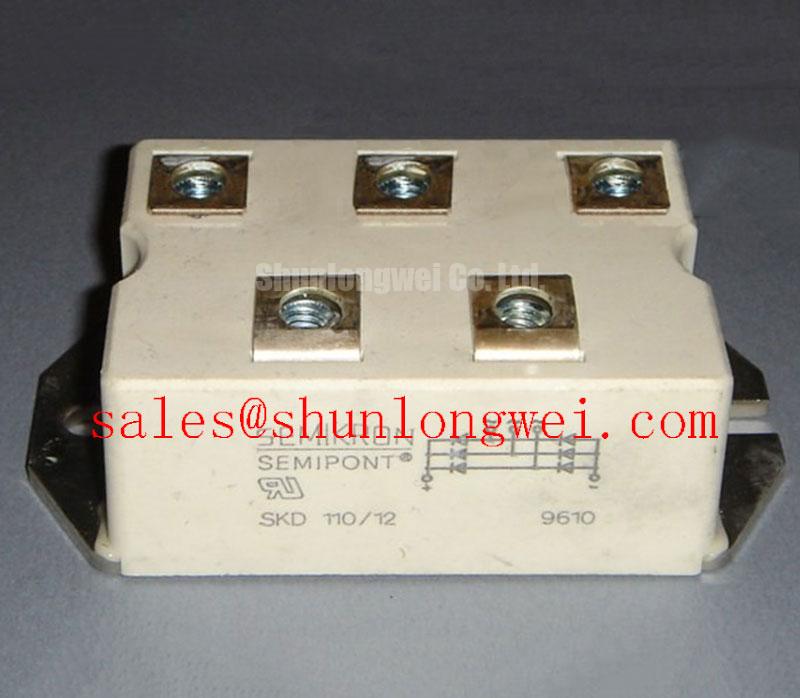
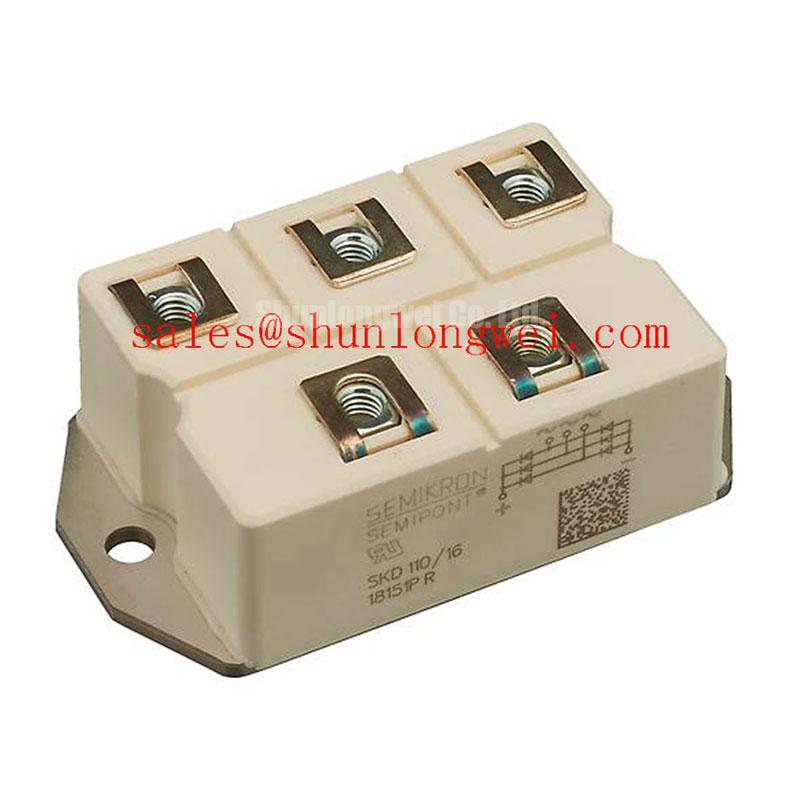
The Semikron SKD110/14 delivers robust 1400V blocking voltage and high surge current capability for industrial power rectification.
Key Specifications: 1400 V | 110 A | Rth(j-c) 0.15 K/W.
Key Benefits:
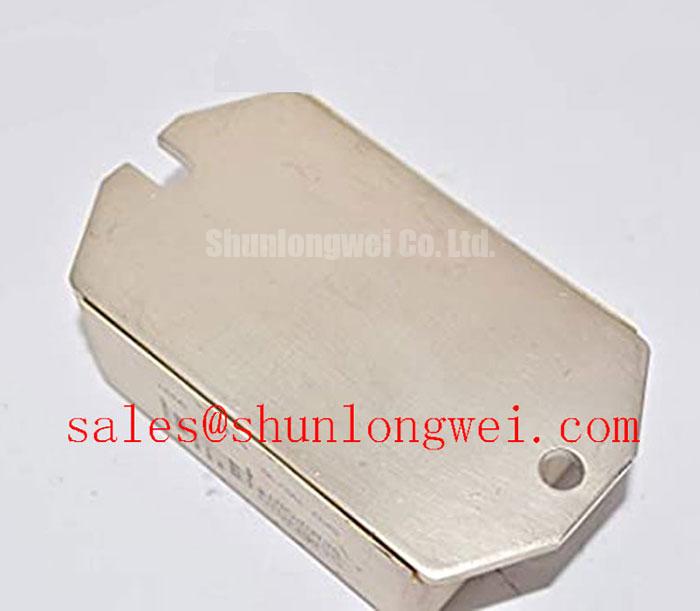
- Robust isolated copper base plate design.
- High surge capability against line transients.
With its 1400 V rating, this rectifier handles 480V AC input lines safely, absorbing high transient voltage spikes without degradation. For 480V AC motor drives demanding high surge reliability, this 1400 V three-phase rectifier module is the optimal choice.
Key Parameter Overview
Decoding the Specs for Enhanced Thermal Reliability
| Voltage Ratings | ||
|---|---|---|
| Repetitive Peak Reverse Voltage (VRRM) | 1400 V | Maximum recurring peak reverse voltage rating. |
| Non-Repetitive Peak Reverse Voltage (VRSM) | 1500 V | Transient surge voltage withstand capability. |
| Isolation Voltage (Visol) | 3000 V AC | RMS voltage rating for 1 minute (isolated base plate). |
| Current & Switching Ratings | ||
| Nominal Output Current (ID) | 110 A | Continuous output current at Tcase = 100 °C. |
| Surge Forward Current (IFSM) | 1200 A | Peak half-sine surge current (10 ms at Tvj = 25 °C). |
| Max. I2t Value for Fusing (i2t) | 7200 A2s | Energy absorption rating for protective fuses. |
| Forward Voltage Drop (VF) | 1.9 V | Maximum drop at IF = 300 A (Tvj = 25 °C). |
| Thermal & Mechanical Characteristics | ||
| Thermal Resistance Junction-to-Case (Rth(j-c)) | 0.15 K/W | Total resistance for the bridge assembly. |
| Thermal Resistance Case-to-Heatsink (Rth(c-s)) | 0.03 K/W | With thermal compound, total assembly. |
| Operating Junction Temperature (Tvj) | -40 to +150 °C | Safe operating temperature range. |
| Module Weight & Package | 270 g / SEMIPONT 4 | G 37 case outline with screw terminals. |
Download the SKD110/14 datasheet for detailed specifications and performance curves.
Application Scenarios & Value
Achieving System-Level Benefits in High-Power Conversion
Variable Frequency Drives (VFDs) often encounter heavy capacitive load charging currents upon startup. If the rectifier cannot withstand this initial surge, catastrophic device failure occurs. The SKD110/14 mitigates this failure risk by offering a surge forward current (IFSM) rating of 1200 A. This robust peak surge capability allows engineers to simplify pre-charge circuits without over-specifying the module.
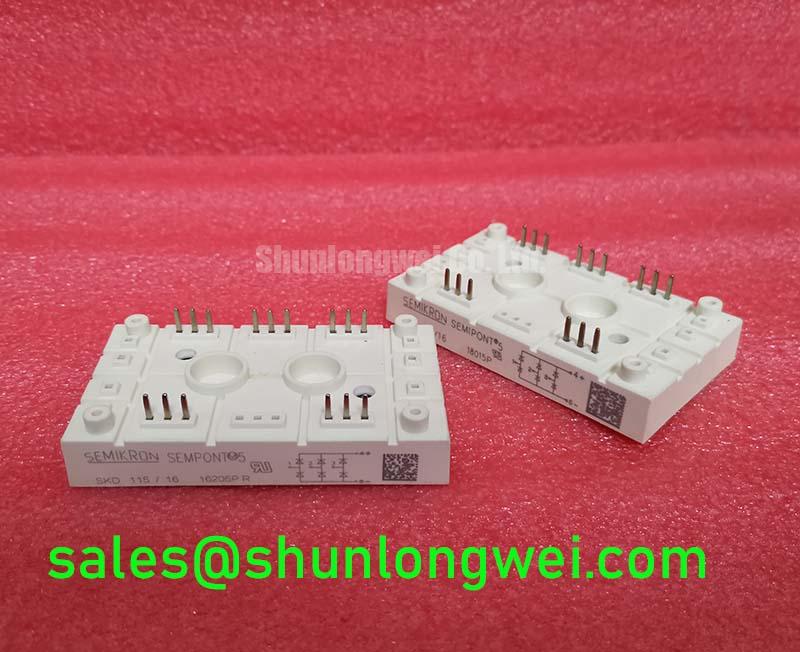
This module is also widely used in battery charger rectifiers and DC motor field supplies. When designing these systems, selecting the appropriate voltage margin is critical. For systems requiring higher output current at a higher voltage class, the related SKD160/16 offers 160A and 1600V. For minor current adjustments, the related SKD115/16 is also available. Engineers can refer to our power semiconductor selection guide to compare configurations.
Technical & Design Deep Dive
Analyzing the Thermal Stack and Mechanical Design of SEMIPONT 4
The internal design of the SKD110/14 focuses on minimizing thermal bottlenecks. Its total junction-to-case thermal resistance (Rth(j-c)) is rated at a low 0.15 K/W. To put this in perspective, thermal resistance acts like a highway toll booth for heat. A high resistance creates a thermal gridlock, raising junction temperatures. A low resistance of 0.15 K/W acts as a multi-lane express toll, allowing heat to rapidly escape to the heatsink. This helps prevent thermal runaway during continuous operation at 110 A.
Furthermore, the 1400 V repetitive peak reverse voltage acts like a high-altitude reservoir dam. If the normal system voltage is 480V, this 1400V barrier ensures that unexpected voltage surges—like flash floods on a river—are safely contained. This design protects the internal rectifier diodes from electrical breakdown. This high-margin barrier is essential in heavy industrial environments where line voltage fluctuations are common. Detailed thermal layout planning is discussed in our guide to thermal resistance management.
Frequently Asked Questions
Addressing Common Integration and Design Questions
How does the 0.15 K/W thermal resistance affect heatsink selection?
What is the primary benefit of its low thermal resistance? It allows smaller heatsink designs by accelerating heat dissipation. This total Rth(j-c) of 0.15 K/W limits junction temperature rise, enabling high power density layouts.
Why is the 1200 A surge current rating (IFSM) critical for mains input stages?
This rating ensures the module survives transient spikes without failing. The 1200 A rating protects the bridge against massive grid fluctuations and initial inrush current spikes.
What isolation protection does the SEMIPONT 4 package provide?
Can the SKD110/14 mount directly to a heatsink? Yes, its isolated copper base plate permits direct chassis mounting. The 3000 V AC isolation rating removes the need for external insulating pads.
For technical support or to request pricing for the SKD110/14, please contact our sales engineers today. To learn more about Semikron's power electronics portfolio, visit Semikron.