Content last revised on September 10, 2026
SKiiP32NAB12T1: Streamlining High-Density Motor Drives with Solderless CIB Integration
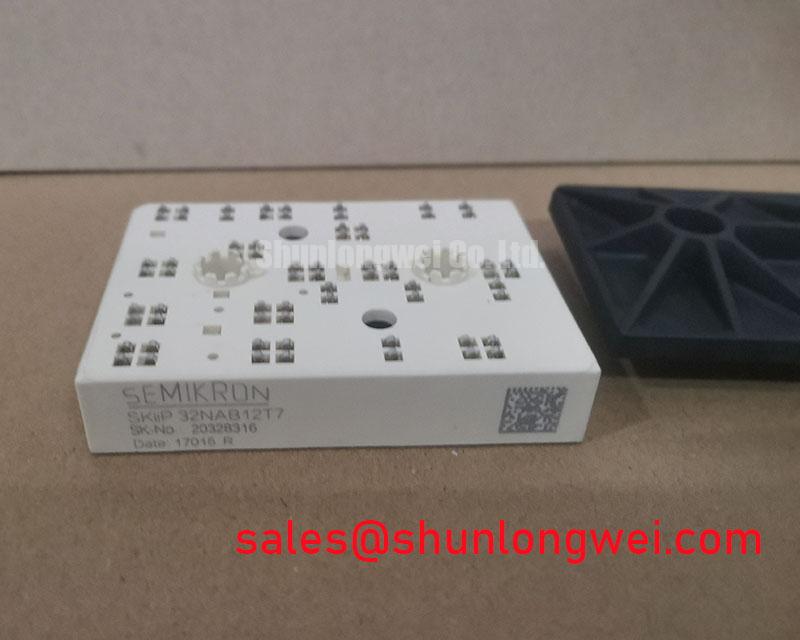
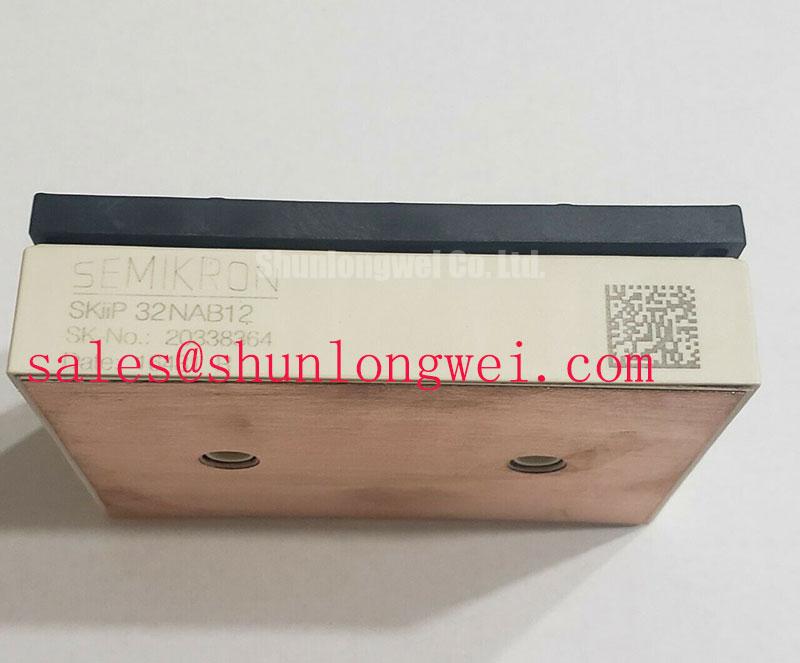
Are you struggling to manage PCB space and thermal reliability in compact industrial motor drives? The Semikron Danfoss SKiiP32NAB12T1 directly addresses this persistent engineering challenge. This intelligent power component integrates a complete 3-phase bridge rectifier, braking chopper, and 3-phase bridge inverter into a single, cohesive footprint. By utilizing advanced spring-contact technology, this module removes traditional soldered joints, significantly lowering the risk of stress-induced cracking during severe thermal cycling. What is the primary benefit of its pressure-contact design? Enhanced long-term reliability by eliminating solder fatigue. Key specifications include a 1200V blocking voltage, 45A continuous collector current, and 2500V isolation capacity. These precise metrics translate to drastically reduced component counts and exceptional thermal cycling resilience. For compact 1200V motor drives prioritizing rapid assembly, this 45A integrated module is the optimal choice.
Frequently Asked Questions
Addressing Core Engineering Concerns Early
How does the spring-contact system of the SKiiP32NAB12T1 improve inverter lifespan?
Spring contacts exert consistent mechanical pressure against the PCB pads. This physical design completely avoids the brittle fracture issues commonly found in soldered connections when exposed to harsh industrial thermal cycling.
What are the primary advantages of its integrated CIB topology?
By combining the converter, inverter, and brake functions into one compact 82mm x 59mm package, it drastically reduces stray inductance. This highly integrated layout minimizes the required PCB footprint and simplifies the overall system routing.
Can the built-in braking chopper handle continuous regenerative loads?
The internal chopper is precisely designed for dynamic braking in variable frequency motor drives. For prolonged regenerative braking, external resistors must be carefully sized to manage the peak 90A surge limits while keeping the internal junction temperature below 150°C.
What thermal management practices are recommended for this package?
Applying a high-quality thermal interface material and utilizing M5 screws for uniform mounting pressure is strictly required. This ensures optimal heat dissipation from the internal Direct Bonded Copper substrate directly to the external heatsink.
Key Parameter Overview
Highlighting the Metrics for System Integration
The following table outlines the critical performance metrics that define this module's capability in high-stress industrial applications.
| Parameter | Value | Engineering Impact |
|---|---|---|
| Blocking Voltage (VCES) | 1200V | Provides sufficient electrical headroom for 400V to 480V AC line industrial grids. |
| Continuous Current (IC) | 45A | Supports the steady-state load requirements of compact, sub-20kW motor drives. |
| Peak Surge Current (ICM) | 90A | Ensures robust handling of transient overloads and harsh motor start-up spikes. |
| Isolation Voltage (Visol) | 2500V | Guarantees safe separation between the high-power switching side and delicate control logic. |
| Package Topology | CIB | Integrates the rectifier, chopper, and inverter for maximum spatial efficiency. |
Download the SKiiP32NAB12T1 datasheet for detailed specifications and performance curves.
Technical Deep Dive
Decoding the Solderless Architecture for Streamlined Assembly
The transition from discrete components to highly integrated modules marks a significant shift in power electronics design. The SKiiP32NAB12T1 belongs to the renowned MiniSKiiP spring-contact technology family, which fundamentally alters how engineers approach PCB mating and long-term reliability.
To fully understand the value of the integrated layout, think of this CIB topology like a system-on-chip (SoC) for power electronics. Instead of wiring distinct functional blocks across a large printed circuit board, the entire high-current power path is tightly contained within the module. This drastically slashes parasitic inductance and improves overall switching efficiency.
Furthermore, the physical connection method offers unmatched durability. The pressure-contact interface acts much like a high-performance vehicle's suspension system. As the module heats up and cools down under varying loads, the materials expand and contract at different rates. The spring contacts seamlessly absorb these micro-expansions, preventing the transfer of damaging mechanical stress to the fragile PCB traces.
Application Scenarios & Value
Achieving System-Level Benefits in Compact Motor Drives
Designing a Variable Frequency Drive (VFD) for industrial conveyor belts presents a unique set of spatial and thermal challenges. Engineers must fit the entire power conversion stage into a confined IP65-rated enclosure. Simultaneously, the system must handle severe motor start-up surge currents and absorb frequent regenerative braking energy during rapid deceleration phases.
The SKiiP32NAB12T1 directly addresses these stringent operational requirements. Its 1200V and 45A ratings effortlessly handle the electrical stress of industrial heavy-load start-ups. Meanwhile, the integrated braking chopper smoothly routes regenerative energy to external dissipation resistors without requiring any separate active switching circuitry.
In environments subject to frequent start-stop operations, the elimination of baseplate soldering ensures that constant thermal cycling does not degrade the electrical connections. This prevents sudden field failures and minimizes costly maintenance downtime. For systems requiring higher current handling beyond the integrated 45A limit, the related FZ400R17KE3 offers a 400A capacity for dedicated high-power inverter stages.
Embracing this level of power integration represents a massive strategic advantage. By adopting modular, solderless CIB designs, manufacturers can successfully transition toward highly scalable, automated assembly processes. This forward-thinking approach not only shortens the product time-to-market but also establishes a rigid foundation for highly resilient industrial automation infrastructure.