

Content last revised on September 10, 2026
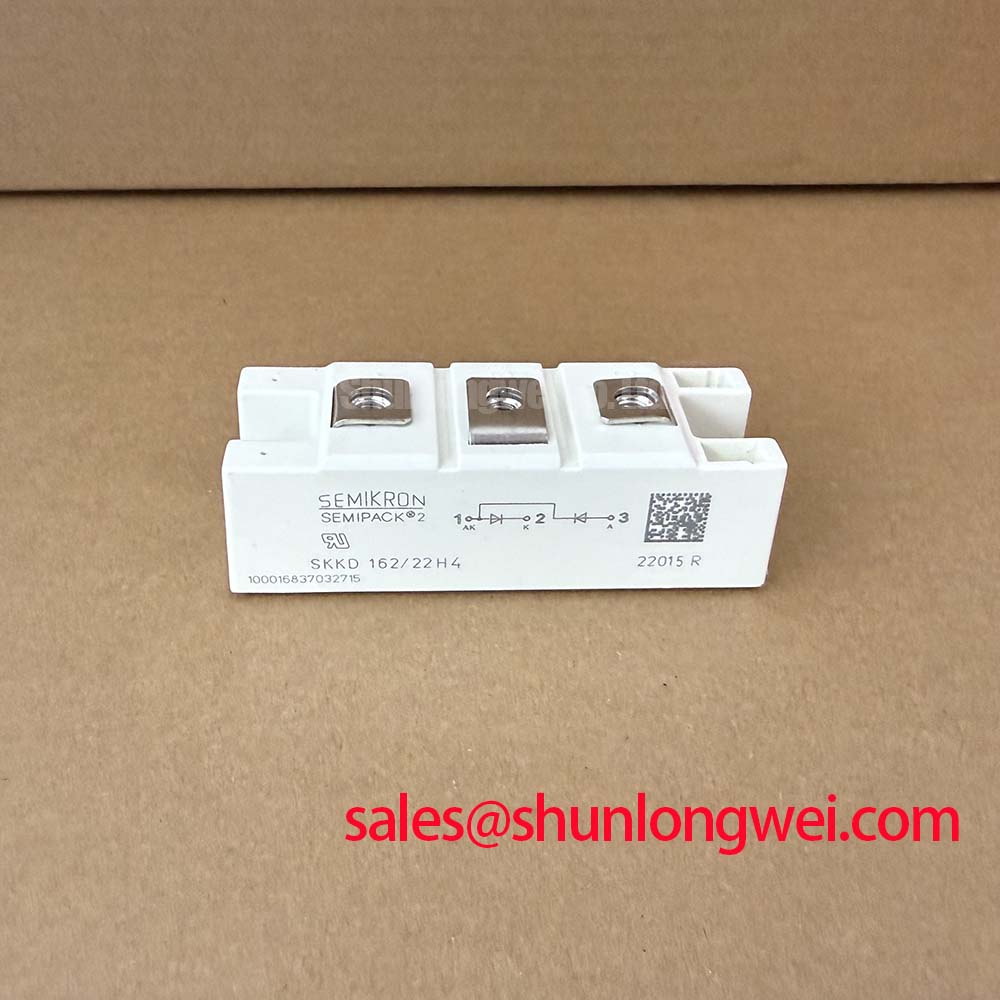
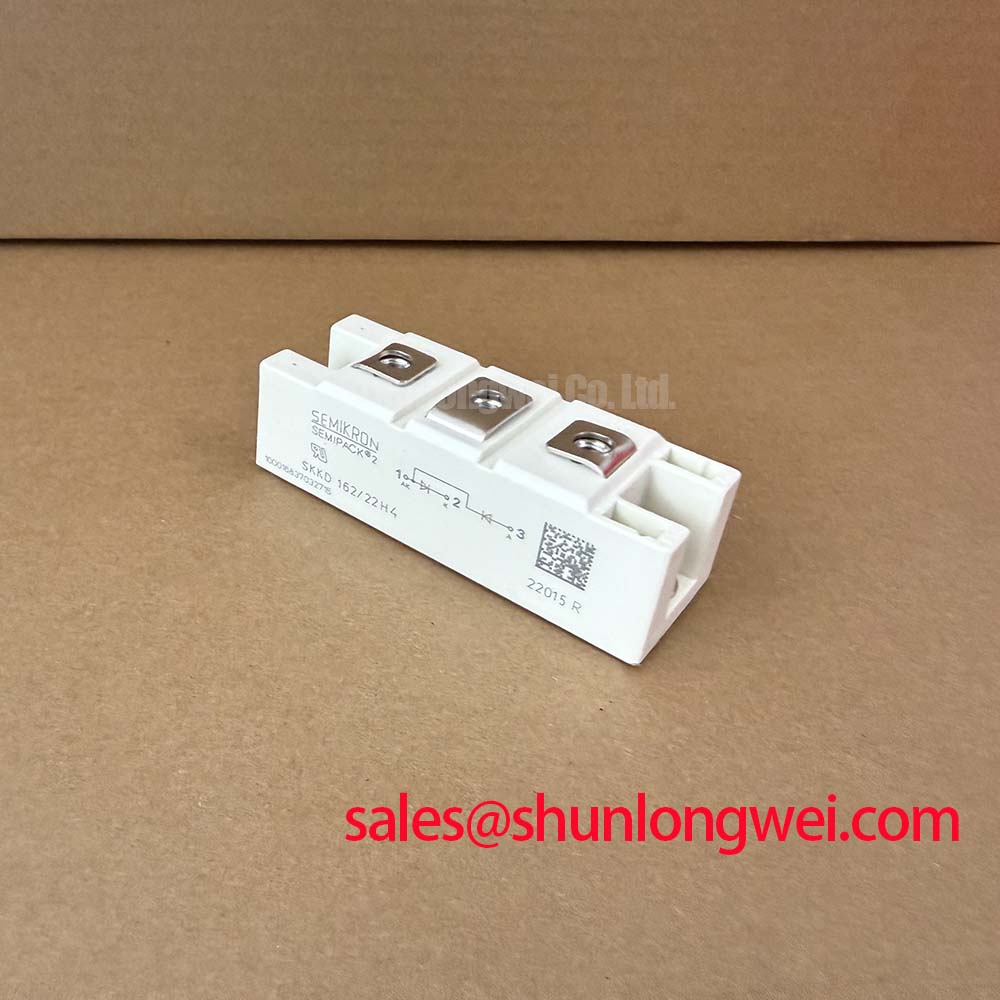
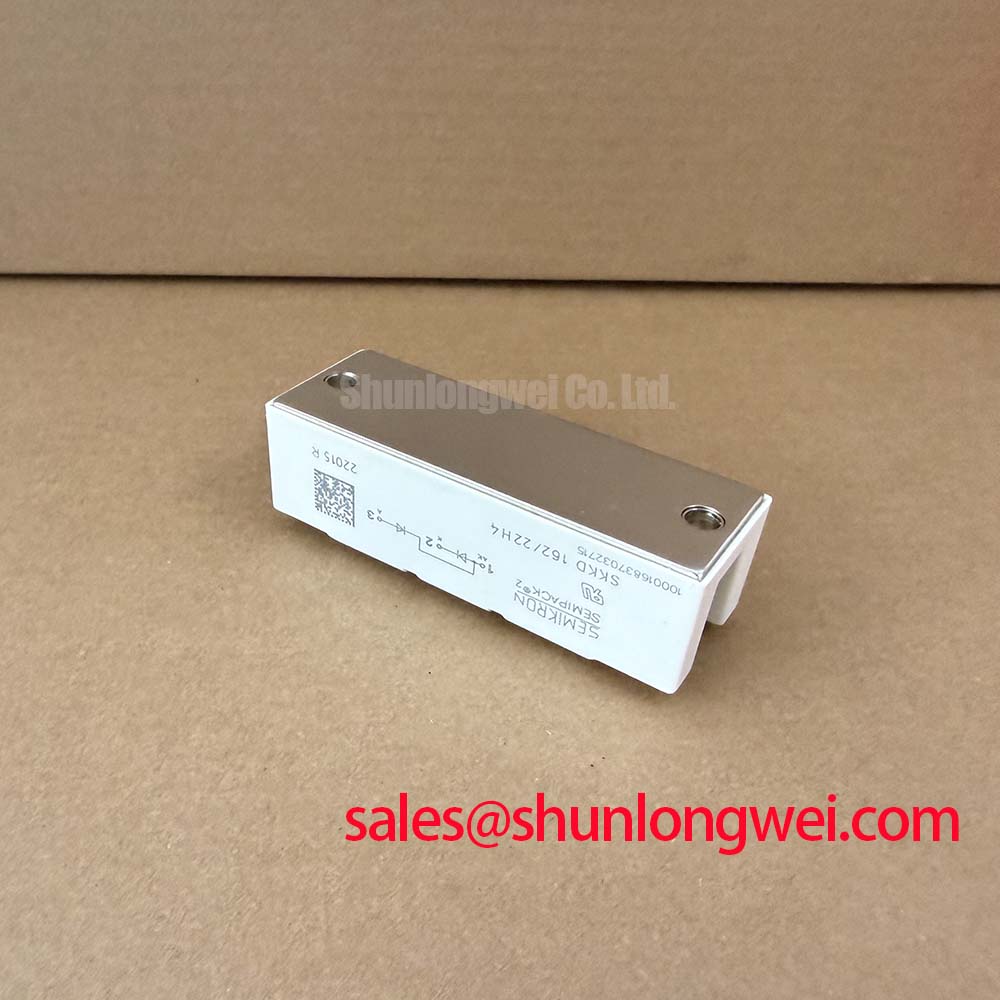
SKKD162/22H4 Semikron Danfoss Dual Diode Rectifier Module: Maximizing Thermal Integrity and High-Voltage Isolation
How do design engineers guarantee continuous system uptime when line rectifiers in motor drives face extreme thermal stress and high-voltage grid transients? The SKKD162/22H4, manufactured by Semikron Danfoss, is a dual diode rectifier module designed to address these exact industrial challenges.
Featuring a high blocking voltage of 2200V and an average forward current of 195A at a case temperature of 85°C, this module is built for demanding power conversion tasks. With its specialized H4 high-isolation package, this diode doubler is a robust solution for line rectification. For 690V industrial line systems prioritizing safety margins, this 2200V module is the optimal choice.
Frequently Asked Questions
Resolving Critical Engineering and Design Inquiries
What is the advantage of the 2200V voltage rating in the SKKD162/22H4 for line rectification?
A 2200V blocking voltage provides a larger safety margin against line transients. This makes it ideal for 690V industrial grids, where voltage spikes commonly damage lower-rated modules.
How does the H4 suffix affect the isolation voltage of this SEMIPACK 2 module?
The H4 designation indicates enhanced electrical isolation. It provides an isolation voltage (Visol) of 4800V AC for 1 second, compared to the standard 3600V AC rating, preventing dangerous flashovers.
How does the low thermal resistance Rth(j-c) impact heatsink design?
With a junction-to-case thermal resistance of 0.09 K/W per module, heat is rapidly transferred to the cooling system. This enables engineers to reduce the heatsink size and improve system power density.
How does the hard soldered joint structure improve long-term reliability?
The module utilizes hard soldered joints. This construction prevents solder fatigue under repetitive thermal cycling, significantly extending the service life of the module in heavy-run machinery.
Key Parameter Overview
Decoding the Specs for Enhanced Thermal Reliability
| Parameter Description | Symbol | Value | Highlight / Impact |
|---|---|---|---|
| Repetitive Peak Reverse Voltage | VRRM | 2200 V | High Voltage Safety Margin |
| Average Forward Current (Tc = 85°C) | IF(AV) | 195 A | Heavy Load Capacity |
| Isolation Voltage (AC, 1 min) | Visol | 4000 V | Enhanced H4 Dielectric Strength |
| Surge Forward Current (10 ms, Tvj = 25°C) | IFSM | 6000 A | Transient Overcurrent Protection |
| Junction-to-Case Thermal Resistance (Per Module) | Rth(j-c) | 0.09 K/W | Excellent Heat Dissipation |
| Junction Temperature Range | Tvj | -40 to +135 °C | Extended Operating Limits |
Download the SKKD162/22H4 datasheet for detailed specifications and performance curves.
Technical & Design Deep Dive
A Closer Look at the Solder-Joint Ruggedness and High-Voltage Isolation
At the core of the SKKD162/22H4 design is the balance between thermal management and electrical isolation. The module achieves a junction-to-case thermal resistance (Rth(j-c)) of 0.09 K/W per module. Thermal resistance acts like a heat bottleneck. If a heat path is like a single-lane road, heat builds up quickly, leading to thermal runaway.
In contrast, the low thermal resistance of this module is like a wide, multi-lane superhighway, allowing heat to escape to the heatsink efficiently. This maintains a stable junction temperature (Tvj) even during continuous operation at 195A. What is the primary benefit of the low thermal resistance? It prevents thermal runaway by facilitating rapid heat dissipation.
Furthermore, the H4 rating provides a robust dielectric barrier. The internal isolation voltage of 4800V AC behaves like a robust concrete dam. While a standard dam might breach under a heavy storm surge, the H4 isolation acts as an extra-tall barrier that easily holds back electrical surges.
This protects sensitive microcontrollers and gate drives from high-voltage spikes originating from the industrial grid. Why does the module feature a 4800V isolation voltage? It ensures system safety by preventing high-voltage flashovers. For engineers comparing different components, consulting a power semiconductor selection guide is recommended.
Additionally, understanding the root causes of thermal issues can prevent field failures, as detailed in our analysis on preventing overtemperature and overvoltage failures.
Application Scenarios & Value
Achieving System-Level Benefits in High-Voltage Motor Drives
In heavy-duty industrial environments, such as variable frequency drives (VFD) and AC/AC converters, line rectifiers are constantly subjected to severe voltage surges and high startup currents. For example, during the initial startup of a heavy conveyor belt or a large industrial fan, the motor draws a massive inrush current. An inadequate rectifier module would quickly fail under this thermal and electrical stress.
However, the SKKD162/22H4 has a peak surge forward current (IFSM) of 6000A (at 10 ms). This exceptional surge capability acts as a protective shield, absorbing transient startup currents without degradation.
Additionally, this dual diode module is widely utilized as a non-controllable input rectifier. It provides a stable DC link voltage for transistorized motor controllers. By ensuring a low forward voltage drop (VF) of maximum 1.5V at 500A, the module minimizes conduction losses, directly translating to higher system efficiency.
For systems requiring lower blocking voltages or alternative current configurations, the related SKKD162/16 and SKKD162/18 modules are available to meet diverse design requirements.
As industrial grids move toward higher efficiency and tighter integration, the demand for high-reliability components is accelerating. The transition to smart manufacturing and carbon-neutral operations requires power electronics that can operate continuously in hostile environments. High-isolation diode modules like the SKKD162/22H4 provide the necessary foundation for this transition. By securing the front-end rectification with robust thermal dissipation and superior voltage margins, companies can future-proof their motor control and energy conversion systems against grid instability and thermal stress.