
Content last revised on August 28, 2026
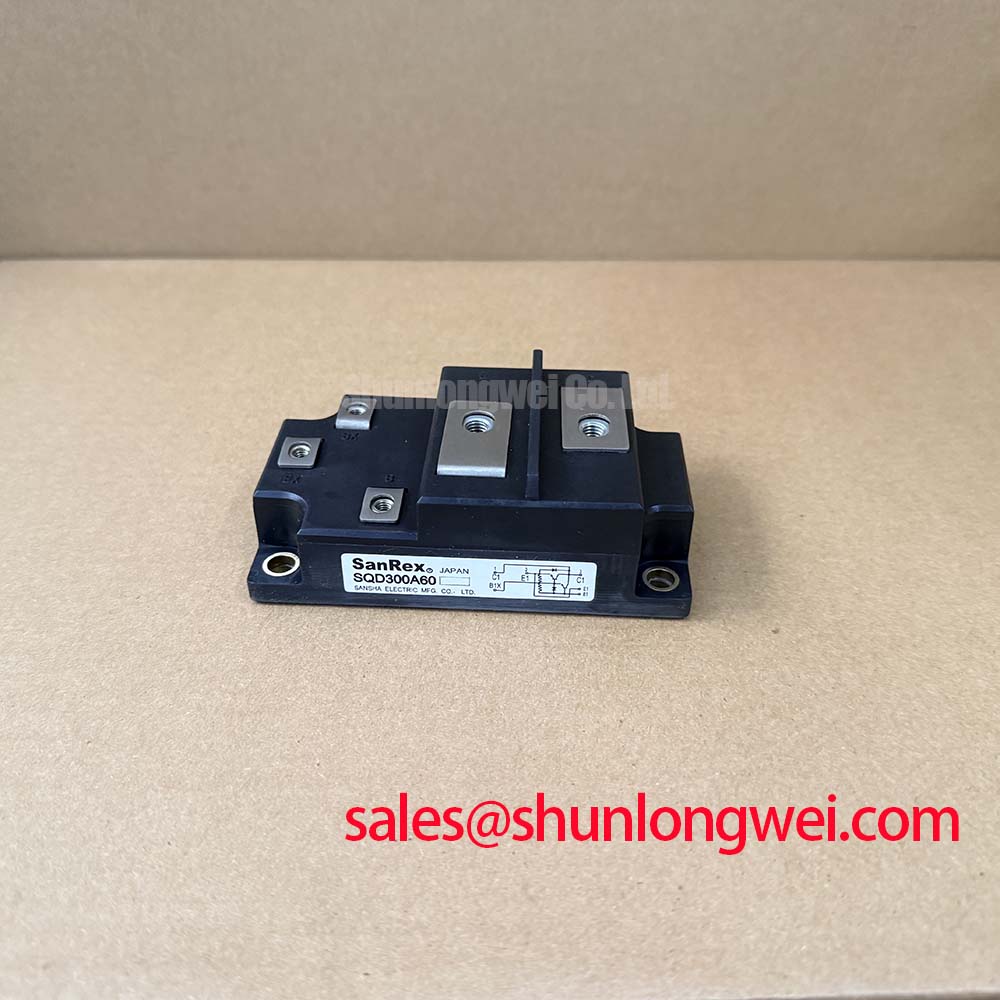
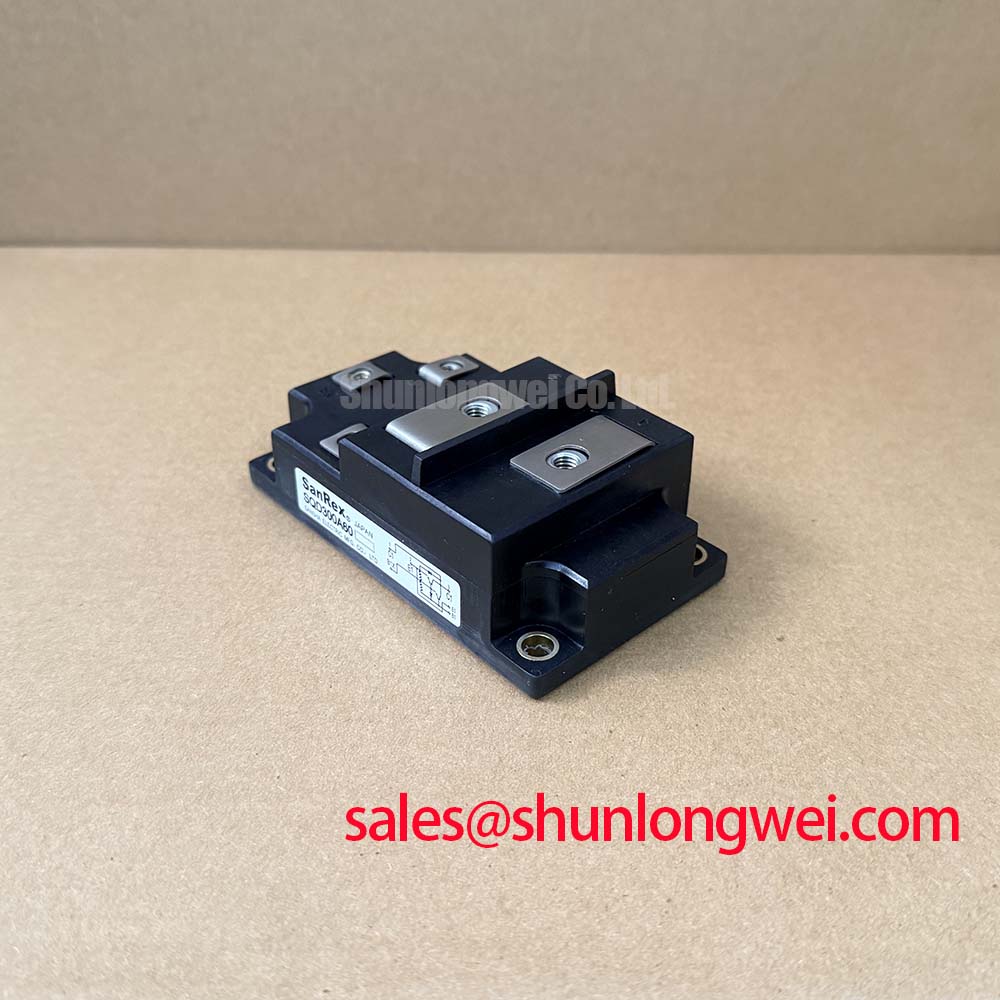
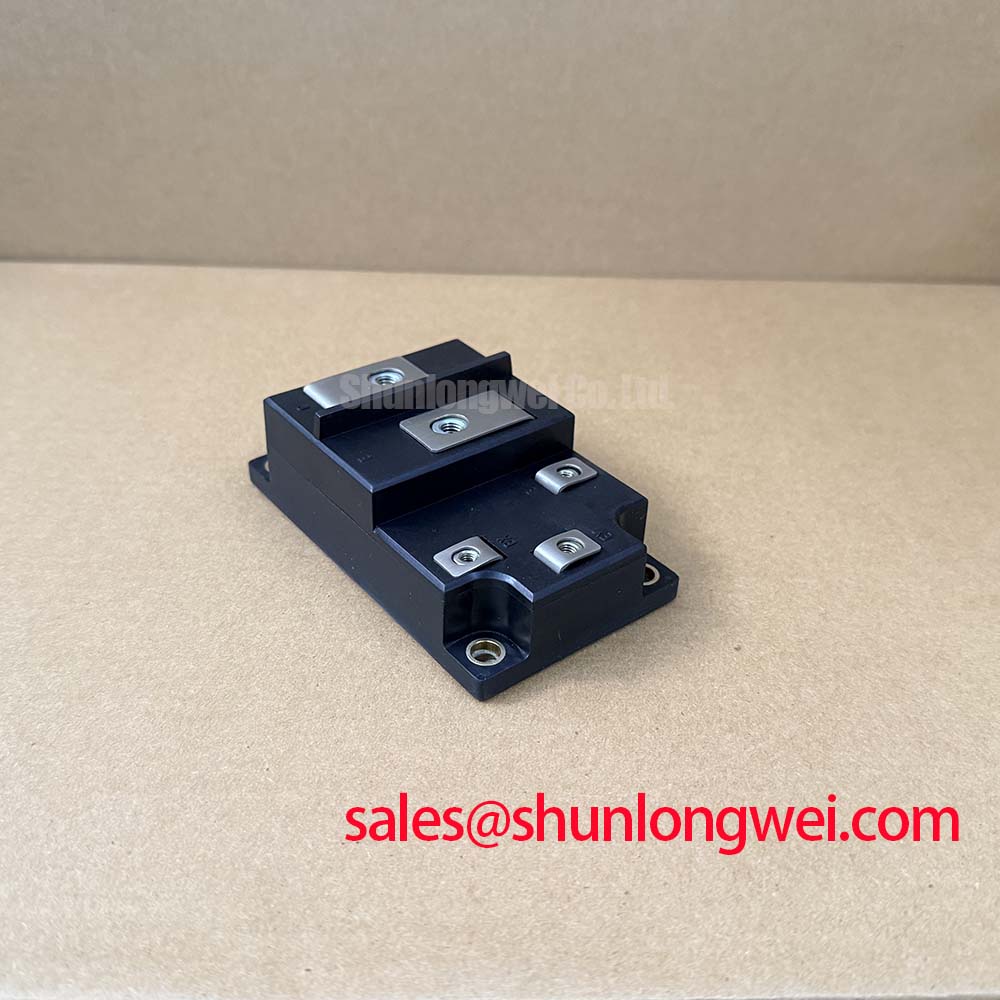
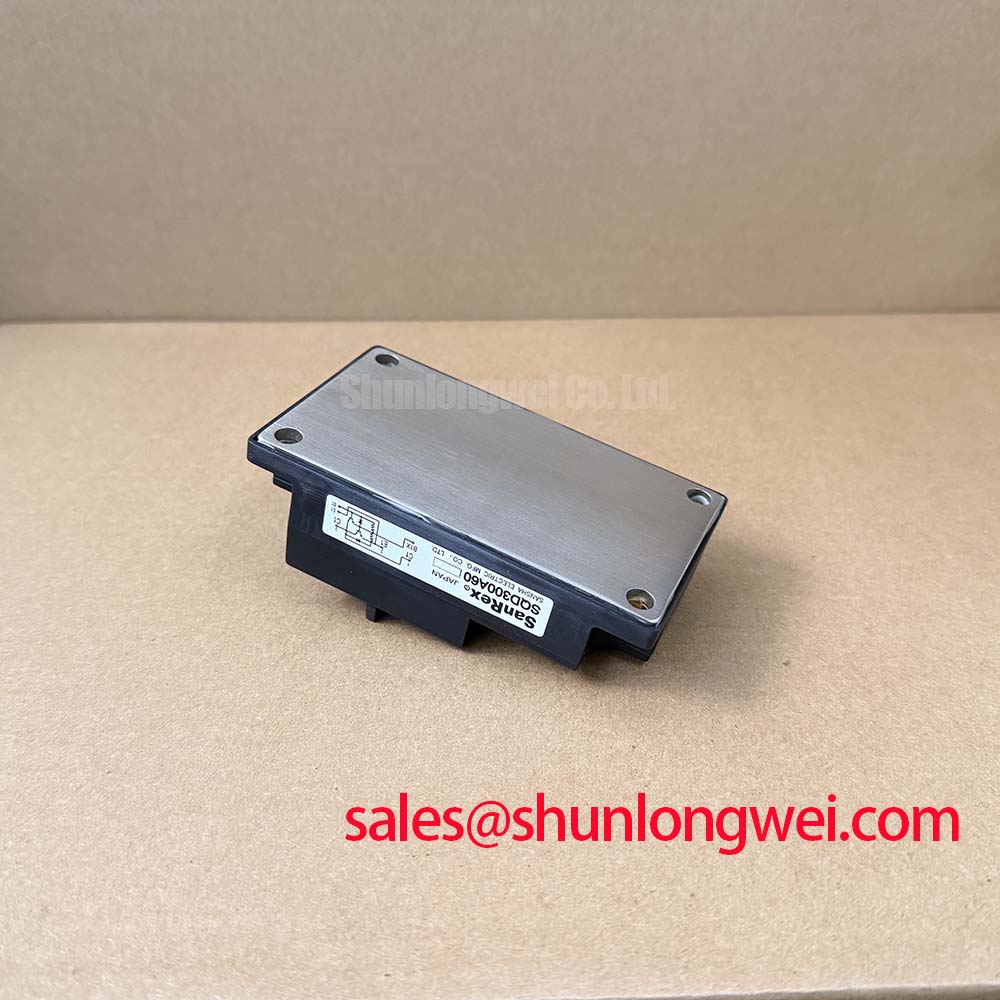
SanRex SQD300A60 Darlington Transistor Module
The SQD300A60, manufactured by SanRex, is a high-current NPN Darlington transistor module designed for switching applications. Offering a collector-emitter voltage of 600V and a continuous collector current of 300A, it integrates a reverse-parallel fast recovery freewheeling diode. This setup resolves the engineering challenge of handling inductive spikes in motor drives by clamping reverse transients. Operating within a junction temperature range of -40°C to +150°C, this module delivers robust thermal performance with a 1380W total power dissipation rating.
Key Parameter Overview
Decoding the Specs for Enhanced Thermal Reliability
Understanding the electrical boundaries of the SQD300A60 is essential when interpreting power semiconductor specifications for industrial inverter designs. The following tables group the parameters by absolute maximum ratings, electrical characteristics, and thermal and mechanical limits.
Table 1: Absolute Maximum Ratings (Tj = 25°C)
| Symbol | Parameter | Maximum Rating | Unit |
|---|---|---|---|
| VCBO | Collector-Base Voltage | 600 | V |
| VCEX | Collector-Emitter Voltage (VBE = -2V) | 600 | V |
| VEBO | Emitter-Base Voltage | 10 | V |
| IC | Collector Current (Continuous) | 300 (600 for pulse width ≤ 1ms) | A |
| -IC | Reverse Collector Current | 300 | A |
| IB | Base Current | 18 | A |
| PT | Total Power Dissipation (TC = 25°C) | 1380 | W |
| VISO | Isolation Voltage (A.C. 1 minute) | 2500 | V |
Table 2: Electrical Characteristics (Tj = 25°C)
| Symbol | Parameter | Test Conditions | Min. | Max. | Unit |
|---|---|---|---|---|---|
| ICEX | Collector Cutoff Current | VCEX = 600V, VBE = -2V | - | 3.0 | mA |
| IEBO | Emitter Cutoff Current | VEBO = 10V | - | 1000 | mA |
| hFE | DC Current Gain | IC = 300A, VCE = 2V / 5V | 100 | - | - |
| VCE(sat) | Collector-Emitter Saturation Voltage | IC = 300A, IB = 4.0A | - | 2.0 | V |
| VBE(sat) | Base-Emitter Saturation Voltage | IC = 300A, IB = 4.0A | - | 2.5 | V |
| ton | Turn-on Time | VCC = 300V, IC = 300A, IB1 = 6A, IB2 = -6A | - | 2.0 | µs |
| ts | Storage Time | VCC = 300V, IC = 300A, IB1 = 6A, IB2 = -6A | - | 12.0 | µs |
| tf | Fall Time | VCC = 300V, IC = 300A, IB1 = 6A, IB2 = -6A | - | 3.0 | µs |
Download the SQD300A60 datasheet for detailed specifications and performance curves.
Application Scenarios & Value
Achieving System-Level Benefits in High-Current Switching
For high-current VVVF motor drives requiring robust thermal margin, this 300A Darlington module with isolated base is the optimal choice. Engineers frequently encounter startup current surges in heavy conveyor systems. The SQD300A60 module supports a peak collector current of 600A for pulse widths under 1 millisecond, which safely accommodates motor startup transients without degradation.
Additionally, the integrated fast recovery freewheeling diode directly clamps inductive flyback voltage. For systems requiring alternative power levels, the 1200V-rated QM150DY-24 provides higher voltage isolation, while the QM100DY-H serves as a lower-current, 100A option within the same voltage class.
Technical & Design Deep Dive
A Closer Look at Thermal Highways and Switching Performance
Understanding the switching mechanics of the Darlington transistor configuration is key to optimizing gate drive circuits. The SQD300A60 exhibits a maximum emitter-base breakdown voltage (VEBO) of 10V. In practice, this allows the gate drive to apply a higher negative bias voltage during the turn-off phase. This wide reverse-bias channel acts like a broader evacuation lane on a highway, sweeping away stored base carriers faster. As a result, switching times are reduced, minimizing switching loss during transient transitions.
From a thermal perspective, the module utilizes an electrically isolated mounting base with an isolation rating of 2500V A.C.. This allows multiple modules to share a single heatsink, simplifying mechanical packaging. The transistor junction-to-case thermal resistance (Rth(j-c)) is capped at 0.09°C/W. Think of this low thermal resistance as a wide copper thermal pipeline. For every 100 watts of heat generated at the silicon junction, the temperature delta between the junction and the case rises by only 9°C. This fast heat transfer rate is critical for power transistor failure analysis, helping to avoid thermal runaway under high duty cycles.
To guarantee the long-term reliability of power electronics under continuous thermal stress, engineers must carefully evaluate the thermal highway and the switching performance. In the SQD300A60, the dual-transistor Darlington configuration provides high current gain, meaning the base drive circuit requires much less input power. This low drive current requirement enables simpler control circuitry, reducing the system footprint. The integration of a fast recovery freewheeling diode directly across the collector and emitter terminals bypasses inductive energy during reverse-bias operations. Without this diode, back-EMF spikes could exceed the Safe Operating Area (SOA) of the main switching transistor. By integrating it in the same package, loop inductance is kept to a minimum, preventing parasitic ringing. When designing switching circuits, referencing the engineers' ultimate guide to power modules helps clarify how layout choices affect stray inductance and overall system efficiency.
Frequently Asked Questions
Addressing Core Engineering Concerns for System Integration
What is the primary benefit of the isolated base design?
It simplifies heatsink mounting by isolating semiconductor elements electrically from the base.
How does low VCE(sat) affect efficiency?
It minimizes conduction losses, thereby enhancing overall system conversion efficiency.
To verify the mechanical integration and electrical characteristics for your specific layout, consult the official documentation. Contact our sales department to verify current unit availability and obtain competitive pricing for your project needs.