Content last revised on September 10, 2026
T1901N75TOH: Engineering High-Reliability Power Systems for Grid-Scale Demands
An Engineering Overview
The T1901N75TOH from Infineon is an ultra-high power phase control thyristor designed for maximum endurance in grid-level power conversion systems. With its formidable specifications—7500V blocking voltage, 2100A average on-state current, and a peak surge rating of 67kA—this device provides the foundational robustness required for multi-megawatt applications. Key engineering benefits include unmatched system reliability under severe operating conditions and a simplified design path for high-voltage power stages. This device directly addresses the core challenge of building resilient power electronics for modern grid infrastructure. Best suited for multi-megawatt HVDC and MVD systems where long-term reliability and fault tolerance are non-negotiable.
Application Scenarios & Value
Achieving System-Level Resilience in Grid-Tied Converters
The T1901N75TOH is engineered to excel in the most demanding high-power environments. Its primary application is as a core switching element in systems for HVDC (High Voltage Direct Current) transmission and large Medium Voltage Drives (MVDs). In an HVDC Light converter station, for example, thyristors must handle immense electrical and thermal stresses continuously. The 7500V blocking capability of the T1901N75TOH allows for more efficient series designs in converters connecting to the high-voltage grid, reducing component count and potential points of failure. This massive 67,000A surge rating acts like a robust electrical shock absorber, capable of weathering severe grid faults or the immense inrush current from starting multi-megawatt motors without sustaining damage. This intrinsic toughness translates directly into higher uptime and system availability for critical infrastructure. What is the primary benefit of its pressure-contact design? Enhanced long-term reliability by eliminating solder fatigue.
By integrating a device of this caliber, engineering teams can significantly enhance the robustness of grid-tied applications such as Static Var Compensators (SVC) and load commutating inverters. While many industrial drives operate at lower voltages where devices like the SKKT570/16E are suitable, the T1901N75TOH provides the necessary voltage headroom and fault tolerance for direct connection to medium-voltage lines, streamlining the power stage architecture.
Key Parameter Overview
Decoding the Specs for High-Power Performance
The technical specifications of the T1901N75TOH underscore its capacity for extreme power handling. Below is a summary of the critical parameters that enable its performance in demanding industrial and utility-scale applications. These values are extracted from the official datasheet and highlight the device's core strengths.
| Parameter | Symbol | Value | Notes |
|---|---|---|---|
| Repetitive Peak Off-State and Reverse Voltage | VDRM, VRRM | 7500 V | Enables use in medium-voltage systems with significant safety margin. |
| Average On-State Current | ITAVM | 2100 A | At a case temperature (Tc) of 85°C. |
| Surge Current (Non-Repetitive) | ITSM | 67,000 A (67 kA) | Critical for surviving grid faults and high inrush currents. |
| I²t Value | I²t | 22.4 x 10⁶ A²s | Indicates energy handling capability during a surge event. |
| Critical Rate of Rise of Off-State Voltage | (dvD/dt)cr | 2000 V/µs | High immunity to spurious triggering from voltage transients. |
| On-State Threshold Voltage | VT0 | 1.24 V | A key parameter for calculating conduction losses. |
| Thermal Resistance, Junction to Case | RthJC | 5.0 K/kW | Dictates the efficiency of heat transfer to the heatsink. |
| Clamping Force | F | 63 … 91 kN | Essential for achieving proper thermal and electrical contact in its pressure-contact housing. |
Download the T1901N75TOH datasheet for detailed specifications and performance curves.
Technical Deep Dive
A Closer Look at Pressure-Contact Design for Long-Term Reliability
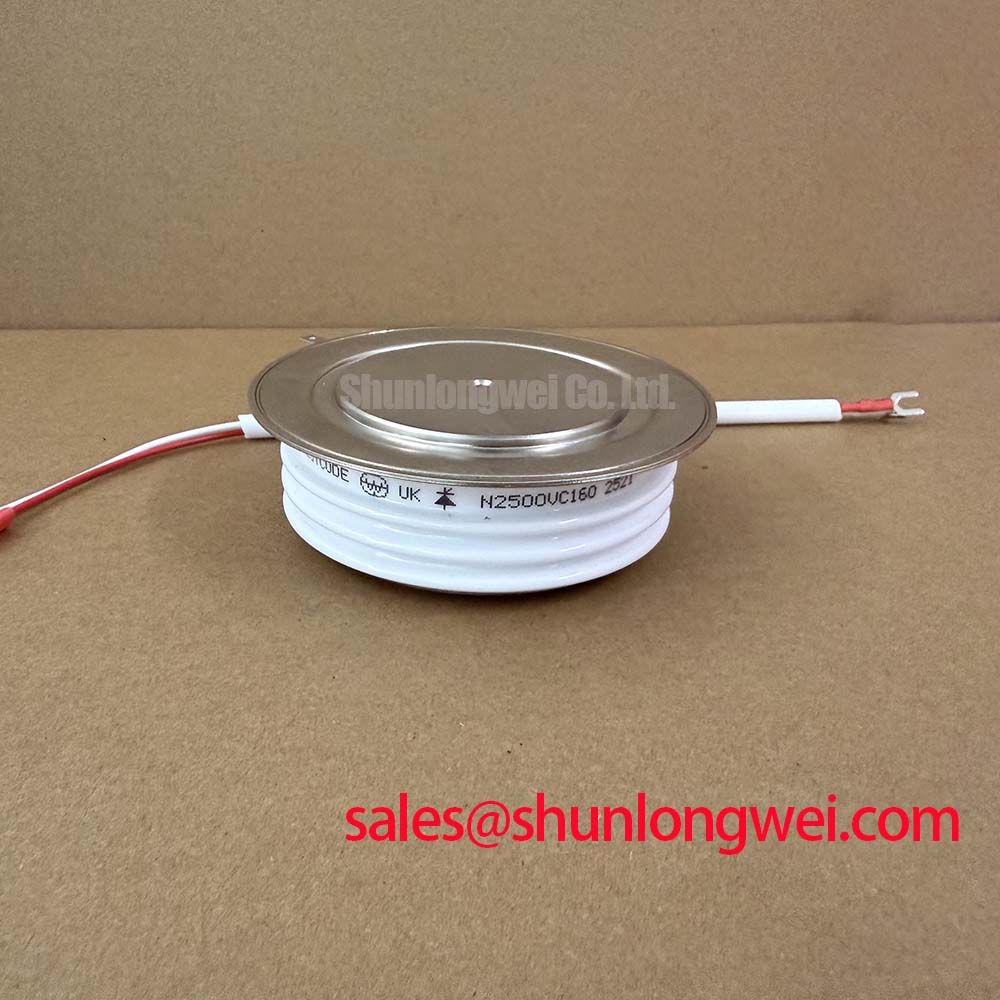
A defining feature of the T1901N75TOH is its pressure-contact, or "hockey puck," construction. Unlike conventional power modules that rely on soldered connections between the silicon chip and its package, this design uses precisely applied mechanical force to ensure electrical and thermal contact. This engineering choice is fundamental to its exceptional reliability in applications with frequent temperature fluctuations, a major source of wear in high-power systems.
In a soldered module, the different thermal expansion coefficients of silicon, copper, and solder create mechanical stress during each heating and cooling cycle. Over thousands of cycles, this can lead to solder fatigue, crack formation, and eventual device failure. The pressure-contact design completely sidesteps this failure mode. Think of it like a heavy-duty bolted connection in a steel bridge versus a welded joint; the bolted connection is designed for controlled pressure and is more resilient to the constant expansion and contraction of thermal cycles. This makes the device inherently more robust and extends its operational life, a critical factor for infrastructure investments where a 20- to 30-year lifespan is expected. This robust design is a cornerstone of effective thermal management strategy.
Frequently Asked Questions
How does the pressure-contact design of the T1901N75TOH improve reliability over soldered modules?
The pressure-contact design eliminates solder layers, which are a primary failure point due to thermal fatigue in applications with frequent temperature swings. By using mechanical force to ensure contact, it offers superior power cycling capability and a significantly longer operational lifetime, especially in demanding grid and industrial environments.
What is the practical significance of the 67 kA ITSM rating?
The 67,000 Amp non-repetitive surge current rating (ITSM) represents the device's ability to withstand massive, short-duration current spikes without failing. This is a critical survival metric for applications connected to the power grid, where events like lightning strikes or short circuits can occur. It ensures the thyristor can "ride through" such faults, preventing catastrophic system failure and improving overall grid stability.
Why is a 7500V VDRM crucial for Medium Voltage Drives?
A 7500V repetitive peak voltage (VDRM) provides the necessary headroom to operate safely and reliably on medium-voltage lines (e.g., 4.16 kV, 6.9 kV). This high blocking voltage accommodates voltage transients and provides the safety margin required by industry standards, enabling simpler multi-level converter topologies with fewer components in series, which in turn increases overall system reliability and efficiency.
What are the key considerations when mounting a disc-type thyristor like the T1901N75TOH?
Proper mounting is critical. Achieving the specified clamping force (63 to 91 kN) is non-negotiable to ensure low thermal and electrical resistance. This requires a calibrated mounting clamp and correctly prepared, flat heatsink surfaces. Uneven pressure can lead to localized overheating and premature failure. What is the benefit of a high (dvD/dt)cr rating? It ensures robustness against false turn-on in noisy electrical environments.
Strategic Implications for High-Power System Design
Integrating the T1901N75TOH is a strategic decision for projects where long-term operational availability and resilience are paramount. For designers of next-generation HVDC systems, large-scale industrial rectifiers, or multi-megawatt motor drives, this Infineon thyristor serves as a cornerstone component. Its ability to withstand extreme electrical and thermal stresses not only enhances system robustness but also contributes to a lower total cost of ownership by minimizing downtime and maintenance over the asset's extended lifecycle. As the energy grid and industrial processes move towards higher power and voltage levels, leveraging components with built-in reliability like the T1901N75TOH becomes a key competitive advantage.