Content last revised on October 26, 2026
Operating Margin from −20°C to +70°C and Cold-Start Image Response
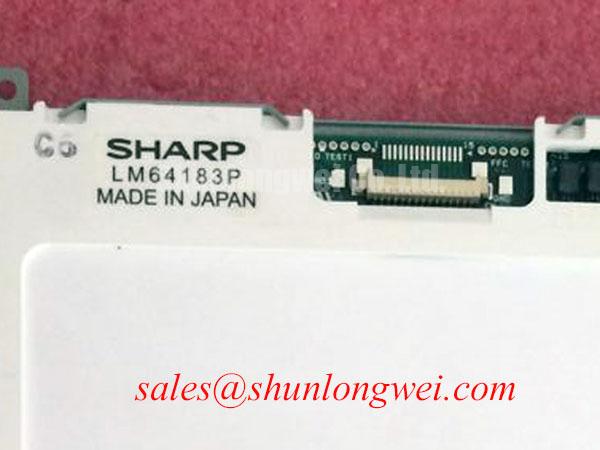
- Isolate the equipment supply, then compare the panel label and full TCG084VGLAAANN-AN50 suffix with the replacement requirement.
- Inspect the display cable, connector retention and contact condition before reconnecting the panel.
- Separate a missing image from missing illumination by checking whether a faint image remains visible under external light.
- Check bezel clearance, mounting alignment and nearby heat sources before applying power.
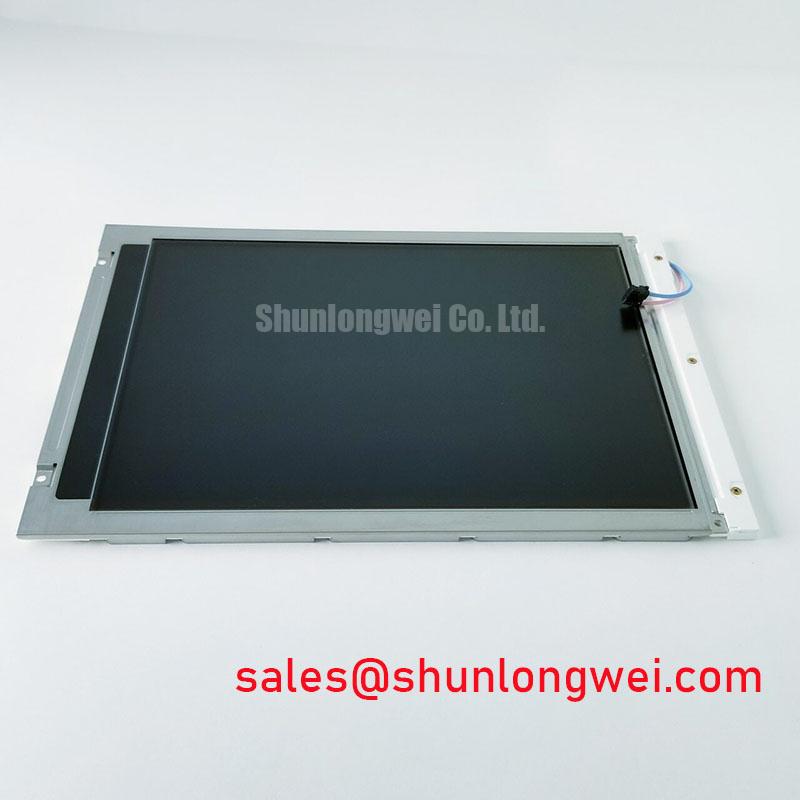
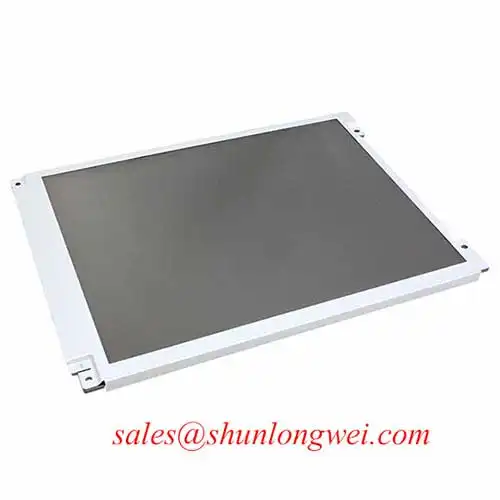
The Kyocera TCG084VGLAAANN-AN50 is an 8.4-inch VGA LCD display with a 6-bit CMOS interface. Its 850 cd/m² typical luminance is particularly relevant when assessing readability in bright surroundings, but installed visibility also depends on cover-glass reflections, viewing direction and displayed content. Repair decisions should distinguish panel faults from cable, controller and illumination-drive problems before a replacement is fitted.
Field Alert: Disconnect equipment power and allow the supply rails to discharge before inserting or removing display connectors.
| Parameter | Official Specification | Integration significance |
|---|---|---|
| Manufacturer and model | Kyocera TCG084VGLAAANN-AN50 | Match the complete part number during replacement assessment. |
| Screen size | 8.4 inches | Diagonal size alone does not establish mechanical interchangeability. |
| Resolution | 640 × 480 pixels, VGA | The controller must provide compatible raster timing. |
| Luminance | 850 cd/m², typical | Assess visibility through the finished enclosure window. |
| Operating temperature | −20°C to +70°C | Evaluate temperature at the installed module. |
| Backlight lifetime | 70,000 hours, typical | A typical backlight specification, not a complete-display lifetime guarantee. |
| Interface | CMOS, 6-bit | Requires compatible parallel signaling rather than a direct LVDS connection. |
| Contrast ratio | 500:1, typical | Does not establish contrast under direct sunlight. |
| Viewing angle | Up/down/left/right: 60°/65°/65°/65°, typical, at CR ≥ 10 | Check the intended operator viewing position. |
| Supply, pinout, timing and mounting details | Consult Datasheet | Resolve these items before electrical connection or mechanical substitution. |
Measure the temperature near the installed panel during startup and sustained operation, rather than relying on the cabinet’s external ambient reading. The specified operating range is −20°C to +70°C; it does not extend to the wider temperature limits sometimes associated with other industrial panels. Heat from adjacent electronics and restricted ventilation can make the display location substantially warmer than the surrounding workspace.
Design Consideration: Liquid-crystal response generally slows as temperature falls. Compare moving edges and grayscale transitions after a cold start with their appearance after thermal stabilization, keeping the source image and controller settings unchanged. Slower transitions alone do not establish a timing-controller fault. Persistent corruption, missing lines or unstable synchronization require a separate signal-path investigation.
When brightness changes accompany cold startup, examine the illumination supply and control signals as separate variables. Dimming behavior should be evaluated across the actual controller’s operating range, with oscilloscope measurements referenced to its documented interface. A universal PWM frequency or duty-cycle prescription would not establish compatibility with this module. Thermal-cycle qualification should also follow the equipment’s environmental requirements rather than assuming an undocumented sealant construction or an extended panel rating.
Optical Luminance Degradation and Backlight Retrofit Compatibility
Compare brightness with the same test image, dimming command, warm-up condition and measurement geometry before attributing a dark screen to backlight aging. The 850 cd/m² typical luminance is an initial optical specification, while the 70,000-hour typical backlight lifetime is a separate characteristic. Neither value establishes a field failure rate, whole-module service life or a guaranteed brightness-retention curve.
Design Consideration: A faint but recognizable image under external illumination points toward an illumination-path investigation, not a definitive backlight diagnosis. Check the host’s enable command, supply stability and driver output against the circuit documentation. Uneven brightness also warrants inspection for contamination, mounting stress and temperature gradients before replacing illumination hardware.
A CCFL-to-LED conversion is a system modification, not an automatic repair pathway for this part number. Any proposed retrofit requires compatibility checks for the optical assembly, electrical driver, brightness control and thermal behavior. Do not select an inverter ignition voltage or LED current from a generic panel-size comparison.
For washed-out grayscale with stable illumination, use a grayscale ramp to distinguish source-image settings from panel-drive behavior. Where the service schematic identifies gamma-reference test points, compare their stability with the documented values rather than adjusting them to compensate for a dim screen. Kyocera Industrial TFT-LCD Display Technologies provides manufacturer context for display technology and optical evaluation.
CMOS Timing Margin and Noise Verification at the Display Cable
Trace the 6-bit CMOS signal path before choosing an eye-diagram measurement or cable replacement. This is a parallel interface, not an LVDS differential input. An upstream controller with an LVDS output requires an appropriately designed conversion stage; matching resolution does not make the electrical interfaces interchangeable.
Design Consideration: Probe the receiving end of the cable to assess clock integrity, data stability around the sampling edge and disturbances on the local reference. Compare observations with the controller and panel timing requirements. Cable length, return-path continuity and connector condition can affect the received waveform, so a clean transmitter waveform alone is insufficient evidence of a healthy connection.
If pixel disturbances appear during nearby drive switching or machine movement, correlate their timing with supply ripple, connector motion and signal transitions. Shield termination and cable routing should follow the equipment’s EMC architecture; adding ferrites or changing grounding without measurement can alter another part of the noise path. These checks support system troubleshooting, not a claim that the panel independently meets equipment-level EMC requirements.
For broader separation of image-generation, transmission and optical faults, The Ultimate Guide to Industrial TFT LCD Technology provides supporting technical context. Keep this replacement assessment focused on the actual CMOS connection and measured symptoms.
Flush-Mount Bezel Integration and Perimeter Load Control
Check the mounting drawing against the enclosure before tightening the display into position. An 8.4-inch diagonal does not define the outer envelope, mounting-hole locations, connector clearance or permissible clamping load. For a factory-automation machine-tool HMI operator terminal, compatibility assessment should include cable exit space and the operator’s normal viewing direction.
Design Consideration: Support the module at its intended mounting features and avoid transferring uneven bezel or gasket pressure onto the display surface. If dark patches or brightness nonuniformity change as the enclosure is assembled, investigate mounting load alongside optical and electrical causes. Fastener torque and gasket compression must follow the actual module drawing and enclosure design, not a generic screw-size rule.
Evaluate the 500:1 typical contrast ratio through the finished front window under representative lighting. High luminance can improve visibility, but it does not guarantee sunlight readability or preserve the specified contrast under strong reflections. Check dark backgrounds, small text and off-axis viewing before accepting the assembly.
A touch overlay is a separate integration item. If the equipment uses one, assess its controller, cover-stack clearance and required glove or wet-touch behavior independently. Finish the mechanical check with the enclosure secured and thermally stabilized, confirming that image uniformity, connector retention and touch response remain acceptable.