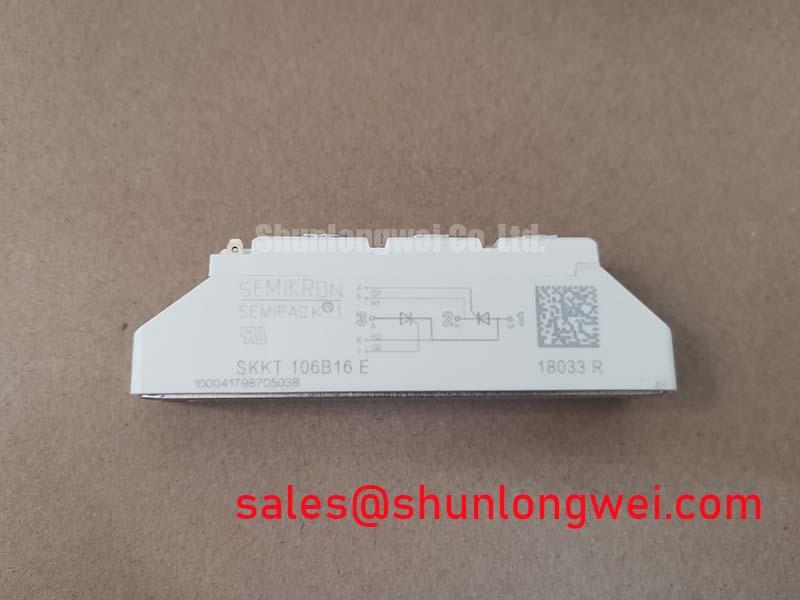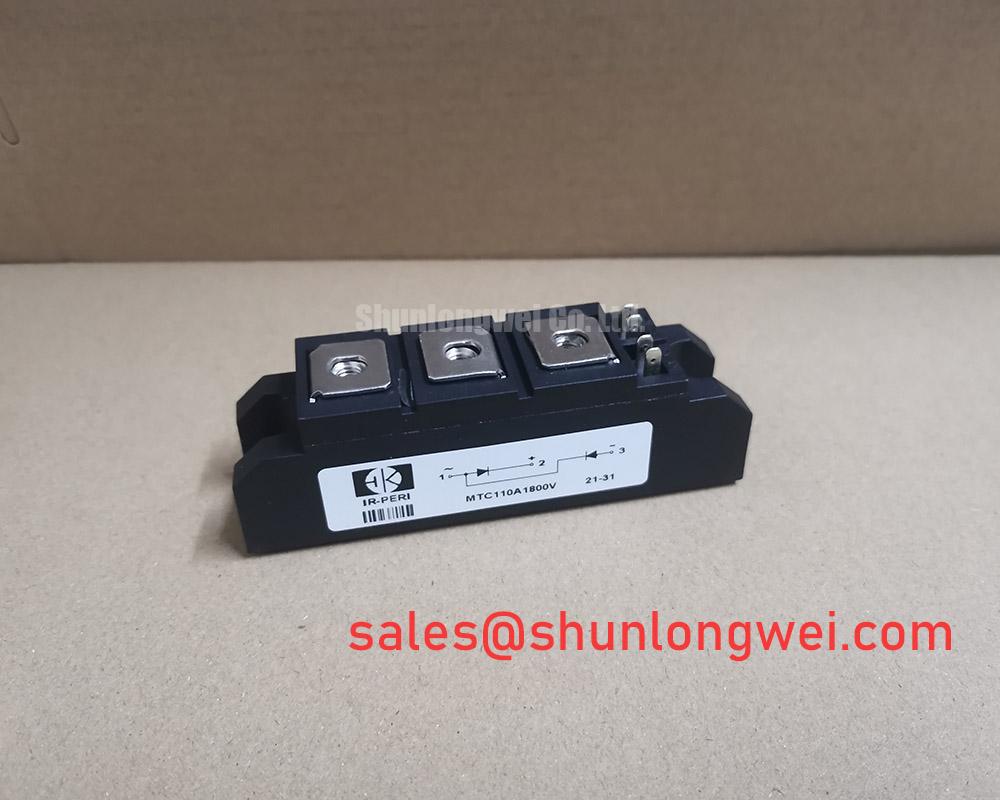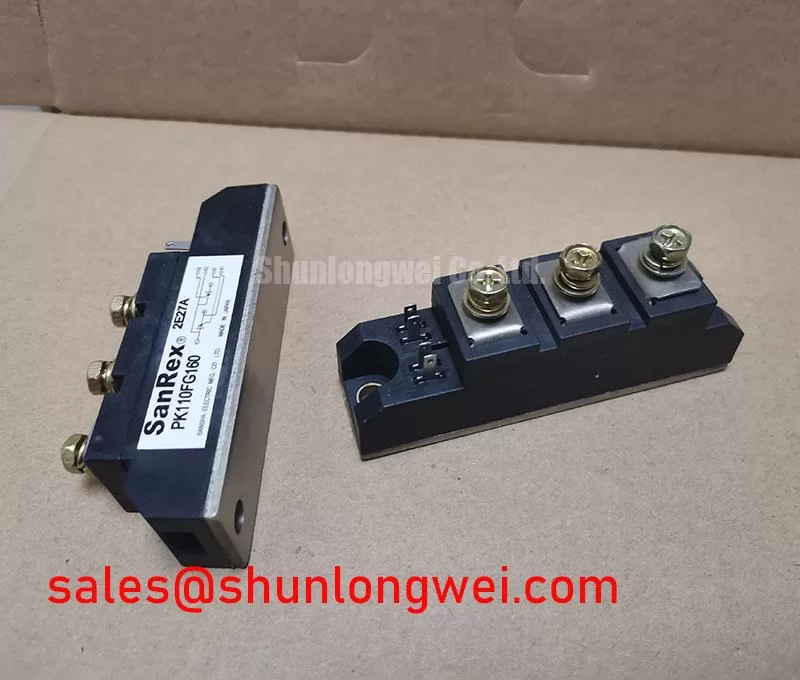
Content last revised on September 10, 2026
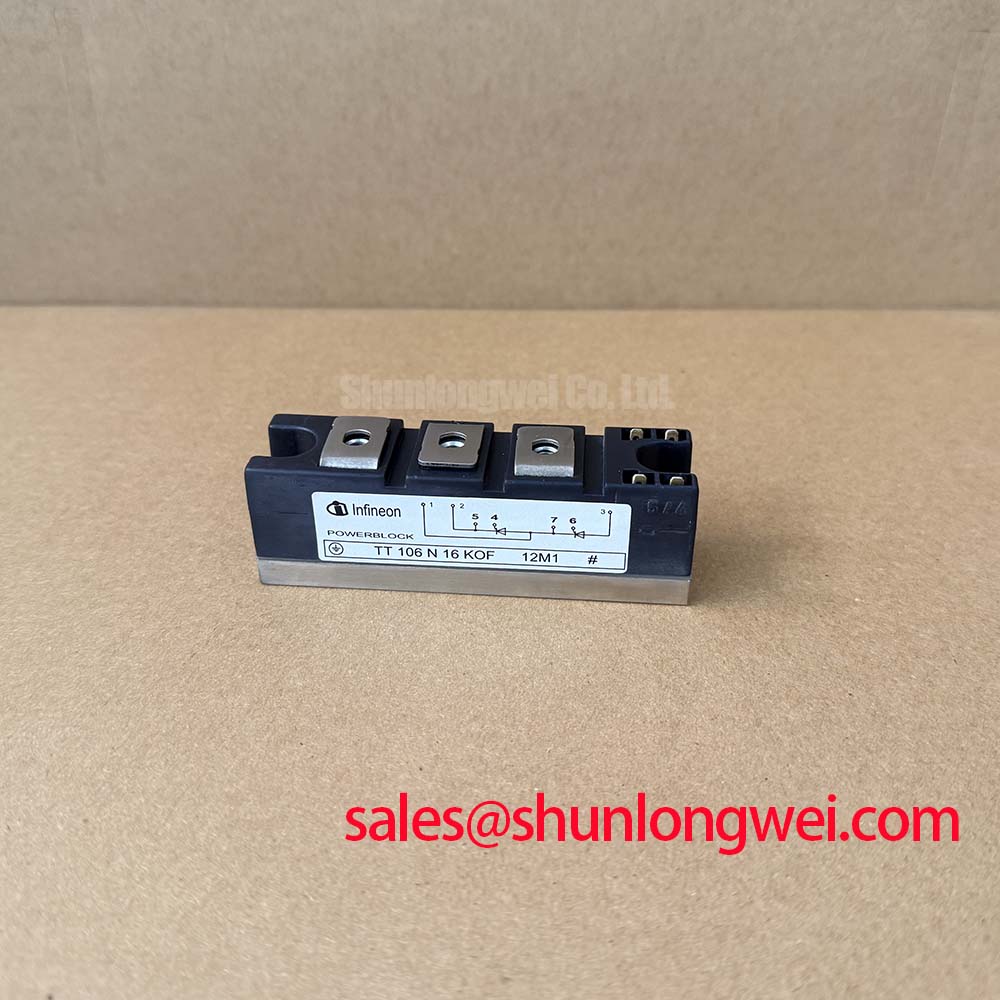
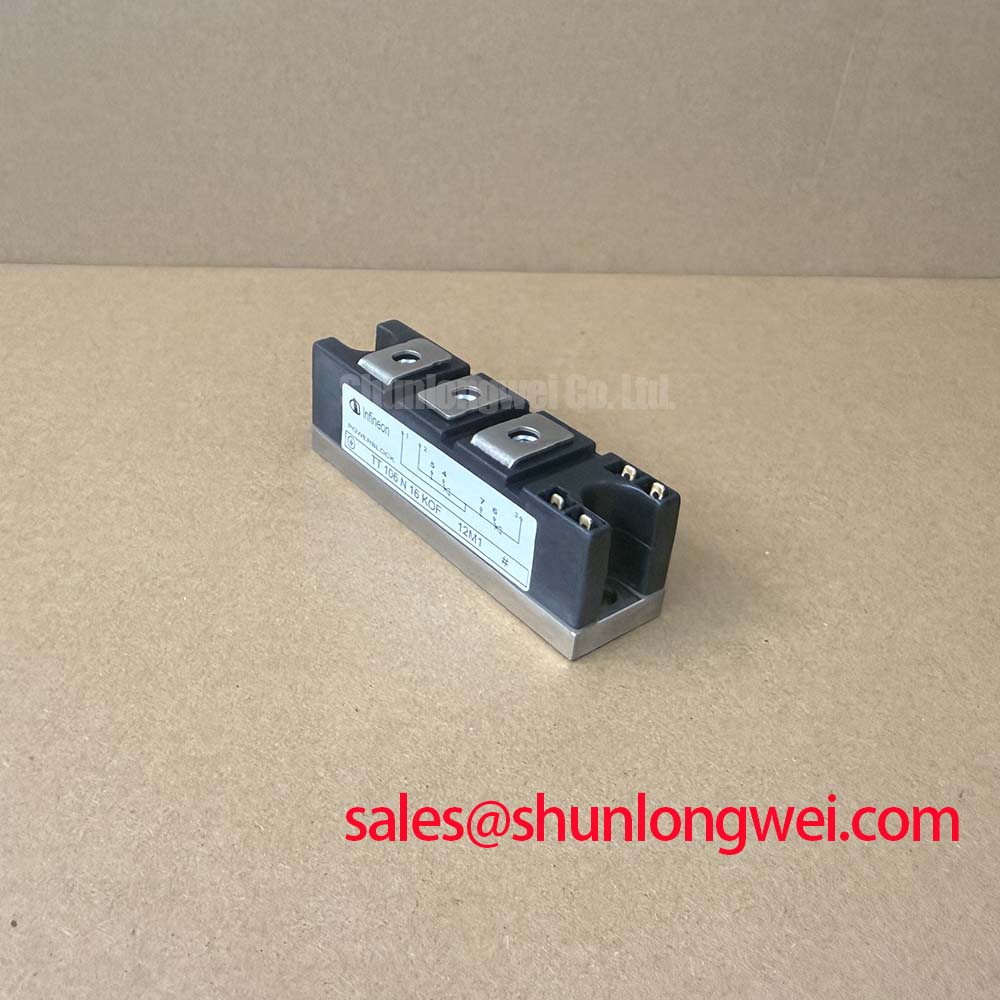
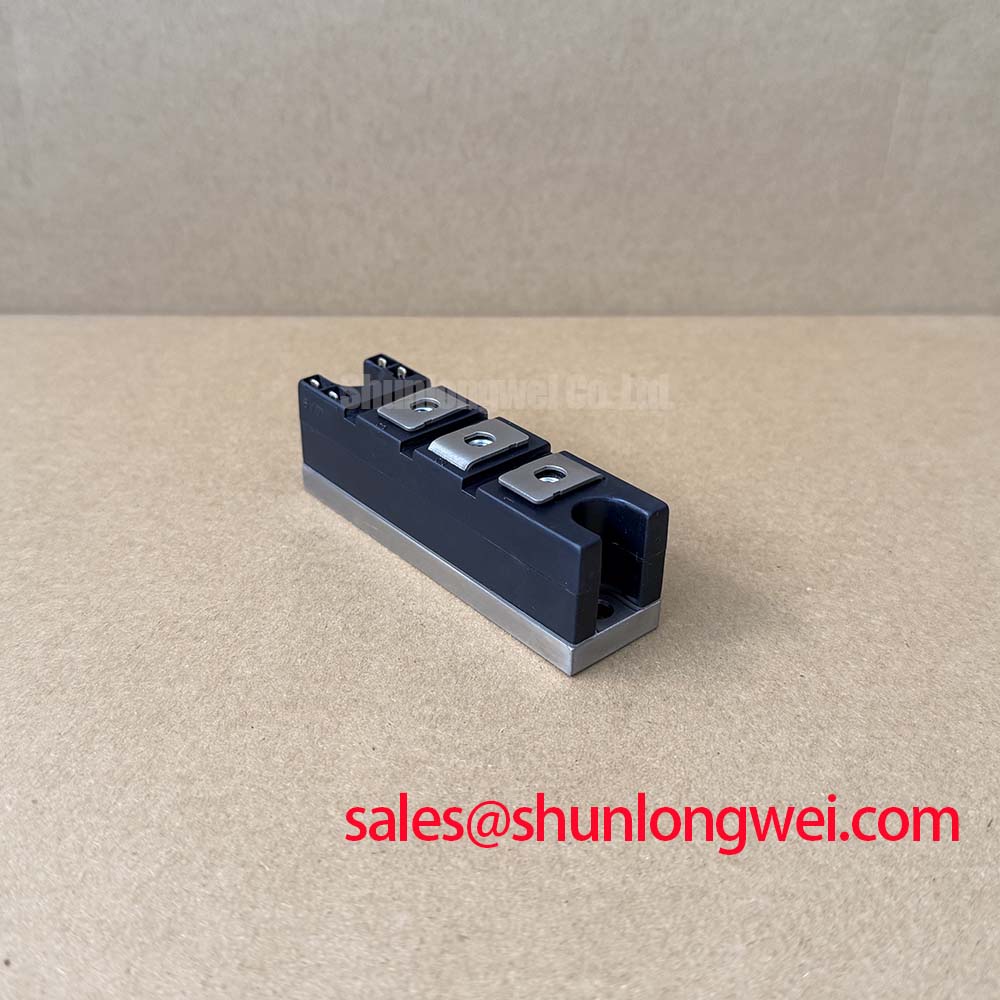
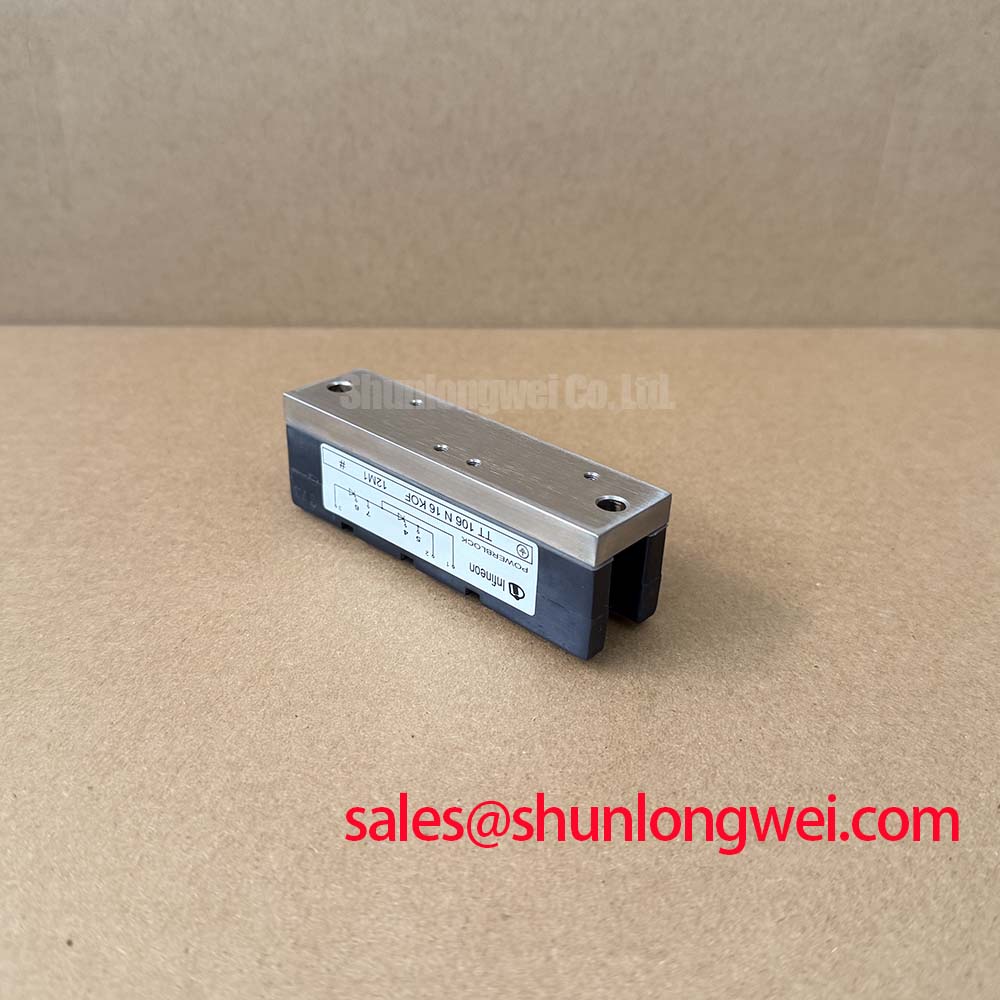
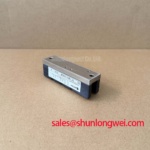
TT106N16KOF Thyristor Module: High-Reliability Phase Control for Industrial Power Systems
The Infineon TT106N16KOF is an industrial-grade 1600V dual thyristor module utilizing pressure-contact technology to ensure high thermal cycling endurance in motor control applications. Key Specifications: 1600V | 106A (Tc = 85°C) | RthJC 0.155 °C/W (DC, module). Key Benefits: Eliminates solder thermal fatigue; High surge current capacity. For engineers asking if 1600V is sufficient for 480V grid fluctuations, this module provides an optimal safety margin against peak line transients. For 480V industrial soft starters prioritizing transient margin and thermal cycling, this 1600V thyristor module is the optimal choice.
Key Parameter Overview
Decoding specs for high-voltage margins and thermal resilience
| Specification Parameter | Value | Engineering Interpretation |
|---|---|---|
| Repetitive Peak Off-state Voltage (VDRM) / Repetitive Peak Reverse Voltage (VRRM) | 1600 V | Prevents breakdown during high-voltage transients on 480V grids. |
| Average On-State Current (ITAVM) | 106 A (at Tc = 85°C) | Ensures continuous power delivery under standard industrial thermal conditions. |
| RMS On-State Current (ITRMSM) | 180 A | Maximum continuous current capability of the copper terminals and internal bonds. |
| Surge On-State Current (ITSM) | 2250 A (at Tvj = 25°C, 10ms) | Provides thermal ruggedness to survive short-circuit faults and startup inrushes. |
| Thermal Resistance, Junction to Case (RthJC) | Max 0.155 °C/W (per module, DC) | Highly efficient heat dissipation path to prevent silicon thermal runaway. |
| Isolation Test Voltage (VISOL) | 3.0 kV (RMS, f = 50 Hz, 1 min) | High electrical isolation safety between the power circuitry and heatsink. |
Download the TT106N16KOF datasheet for detailed specifications and performance curves.
Application Scenarios & Value
Enhancing operational uptime in high-cycling industrial drives
In heavy-duty industrial systems, engineers frequently face the challenge of design failures caused by sudden thermal stress during system startup. Think of industrial conveyor systems where start-up inrush currents create massive thermal stresses. The TT106N16KOF addresses this challenge directly with its surge rating of 2250 A, providing the headroom needed to absorb short-term overload spikes without degrading the silicon junction.
This phase control thyristor module is frequently selected for motor starters, input rectifiers for a Variable Frequency Drive (VFD), and static VAR compensators. In these topologies, the module operates under continuous thermal cycling, demanding robust electrical and mechanical interfaces. What is the primary benefit of its pressure-contact design? Enhanced long-term reliability by eliminating solder fatigue. By avoiding soldered internal terminals, the module remains stable even when subjected to intense, repetitive temperature swings.
For systems with standard electrical architectures, referencing a reliable power semiconductor selection guide ensures proper margin selection. While this 106A module is ideal for mid-range phase-controlled applications, for designs demanding higher current capability, the related TT162N16KOF offers an average on-state current of 162A.
Technical & Design Deep Dive
Why pressure-contact technology outclasses solder in heavy-duty cycles
The core mechanical design of the TT106N16KOF relies on pressure-contact technology. Unlike conventional power modules where internal semiconductor chips are soldered directly to the DBC substrate, this module bypasses solder joints. Under thermal load, differing thermal expansion coefficients (CTE) between silicon and copper create shear stresses, causing micro-cracks in soldered modules.
The pressure-contact interface acts like a heavy-duty suspension bridge compared to a rigid concrete bridge. As temperatures fluctuate, the suspension bridge flexes and slides without cracking, whereas the rigid concrete accumulates micro-fractures under stress. The internal layers are held together under high mechanical force, permitting lateral movement during thermal expansion without compromising electrical or thermal pathways.
Furthermore, managing the 0.155 °C/W thermal resistance requires careful consideration during mechanical assembly. When evaluating thermal performance in a field engineering guide, designers must apply the correct mounting torque and use high-performance thermal interface material (TIM). Why does the module feature a 1600V rating? To safeguard against input voltage transients on standard 480V lines. This design provides a safe voltage margin, avoiding breakdown under grid-level voltage spikes. For a deeper understanding of specs, engineers can consult decoding power module datasheets.
Frequently Asked Questions
Resolving critical design doubts for phase-control applications
How does the RthJC of 0.155 °C/W directly impact heatsink selection and overall system power density?
A lower RthJC means that heat generated at the junction is quickly transferred to the heatsink. This allows engineers to specify smaller heatsinks or run the module at higher average currents within its Safe Operating Area (SOA) without exceeding the maximum junction temperature of 140°C.
Is a snubber circuit required when using the TT106N16KOF?
Yes, transient voltage spikes (dv/dt) occur during thyristor turn-off. An RC snubber network must be placed in parallel with the module to limit the rate of voltage rise and prevent spurious triggering.
What is the significance of the 2250 A surge current rating during fault conditions?
Think of the surge current ITSM (2250 A) as an automotive airbag—designed to absorb a sudden, violent impact (such as a line fault or startup inrush) without destroying the core system. It allows safety fuses to clear the fault before the thyristor junction damages.
How does the 3.0 kV isolation voltage affect safety compliance in industrial cabinets?
The 3.0 kV isolation rating ensures that high-voltage power paths are safely separated from the grounded chassis. This simplifies cabinet design and helps meet international industrial safety standards.
Can the TT106N16KOF be used in 690V AC line configurations?
No. The 1600V rating of this module is optimized for 400V to 480V AC line inputs, ensuring an adequate safety factor. For 690V systems, transient spikes require blocking voltages of 1800V or 2200V.
When selecting phase-control modules for high-voltage systems, verifying the exact thermal profiles and mechanical tolerances remains the most reliable path to achieving the targeted system design life.