Content last revised on September 10, 2026
Vicor VI-252-CW: A High-Efficiency 100W Isolated DC-DC Converter Module
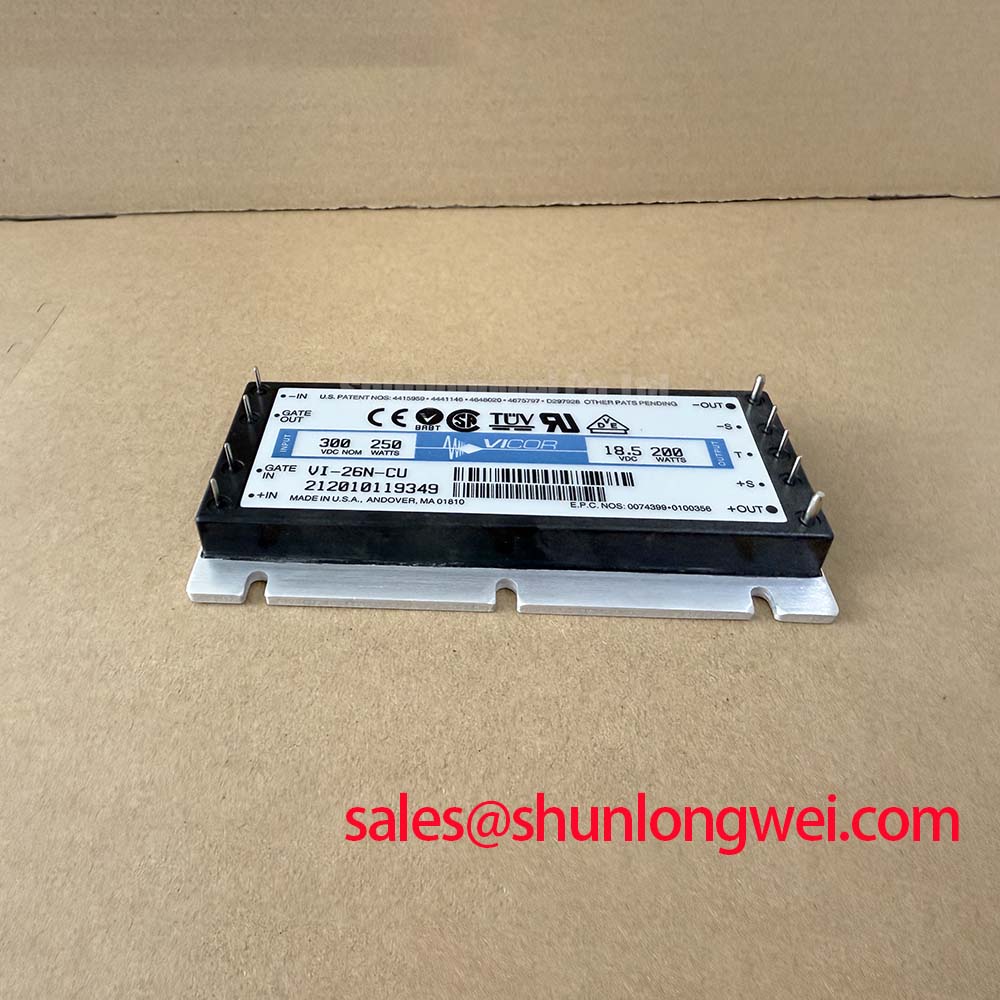
The VI-252-CW is an isolated 100W DC-DC converter engineered for high-reliability power systems, delivering a precisely regulated output from a wide-range input. Its core value lies in combining high efficiency with a suite of integrated protection features, ensuring operational integrity in demanding industrial environments. With key specifications of 100V-200VDC Input | 15V Output | 90% Efficiency, this module offers significant benefits, including simplified thermal management and enhanced system safety. It directly addresses the need for robust power conversion by providing a stable, protected output, even under fluctuating line conditions. Best suited for rugged industrial and ATE systems, this 100W converter is the optimal choice for designs prioritizing reliability and stable power under fluctuating input conditions.
Key Parameter Overview
Decoding the Specs for Enhanced Thermal Reliability
The technical specifications of the VI-252-CW are tailored for performance and dependability in embedded power systems. The highlighted parameters below are critical for system-level design, directly influencing thermal architecture, power budget, and overall reliability.
| Parameter | Value | Engineering Implication |
| Output Power | 100 W | Provides substantial power for a wide range of control circuits, sensors, and auxiliary rails. |
| Input Voltage Range | 100V - 200V DC | Offers excellent flexibility for systems with unregulated DC buses or those subject to significant voltage swings. |
| Output Voltage | 15V DC | A common voltage rail for powering analog circuitry, drivers, and various industrial components. |
| Maximum Output Current | 6.67 A | Sufficient current capacity to handle demanding loads within its power rating. |
| Efficiency | 90% (Typical) | Minimizes waste heat, allowing for smaller heatsinks, higher power density, and reduced operating temperatures. |
| Isolation Voltage | 3 kV | Ensures safety by separating input and output grounds, critical for medical and industrial applications. |
| Operating Temperature Range | -25°C to +85°C | Guarantees performance across a wide range of industrial operating conditions. |
| Package | Full Brick (116.8mm x 61.0mm x 12.7mm) | Industry-standard footprint for robust mechanical mounting and effective thermal interfacing. |
Download the VI-252-CW datasheet for detailed specifications and performance curves.
Application Scenarios & Value
Achieving System-Level Benefits in High-Reliability Power Systems
The VI-252-CW is engineered to excel in applications where power integrity and long-term reliability are non-negotiable. Its robust design makes it a foundational component in Distributed Power Architectures (DPA), where isolated, regulated power is required at the point of load.
Consider an Industrial Control System for a manufacturing line, powered by a central, high-voltage DC bus that experiences frequent sags and swells due to heavy motor activation. The challenge for a design engineer is to power sensitive PLC logic and sensor arrays with a stable 15V rail, protecting them from these fluctuations. The VI-252-CW directly solves this problem. Its wide 100V to 200V input range absorbs the voltage variations without impacting the output. This eliminates the need for bulky and expensive upstream pre-regulation circuits, saving both space and cost. Furthermore, its integrated over-voltage and over-current protections act as a final line of defense, safeguarding the downstream control electronics from potentially damaging fault conditions and ensuring maximum system uptime.
What is the primary benefit of its integrated protection features? Enhanced system uptime and prevention of cascading failures. The module's performance is also critical in ATE (Automated Test Equipment), where clean, isolated power is essential for accurate measurements. The module's low output noise and tight regulation ensure that the power source does not compromise test integrity.
Technical Deep Dive
A Closer Look at Efficiency and Reliability by Design
Two key design pillars of the VI-252-CW are its high operational efficiency and inherent robustness, which are directly linked. The module's typical efficiency of 90% is a critical engineering specification that extends far beyond simple energy savings. In a 100W converter, 90% efficiency means only about 11 watts of power is dissipated as heat. A less efficient converter, say at 80%, would need to dissipate 25 watts—more than double the thermal load. This efficiency advantage is like having a more aerodynamic car; it requires less energy to perform the same task, resulting in less waste (heat). This directly translates to smaller, lighter, and less expensive heatsinking solutions, enabling designers to build more compact and cost-effective end products. For a detailed guide on thermal design, explore our article on Mastering IGBT Thermal Management.
This thermal efficiency is complemented by the module's physical construction. Housed in a rugged, fully encapsulated Full Brick package, the VI-252-CW is mechanically resilient against shock and vibration commonly found in industrial and transportation settings. The encapsulation protects internal components from dust, moisture, and other contaminants, while the metal baseplate provides a large, flat surface for optimal thermal transfer to a heatsink. This integrated approach—combining electrical efficiency with mechanical and thermal robustness—is fundamental to the module's long-term operational reliability.
Frequently Asked Questions
How does the 90% efficiency of the VI-252-CW benefit my system's thermal design?
The high efficiency significantly reduces the amount of waste heat generated during power conversion. This means a smaller, lighter, and lower-cost heatsink is required to maintain a safe operating temperature. It allows for greater power density in the final system and improves overall reliability by reducing thermal stress on all nearby components.
What design advantages does the wide 100V to 200V input range offer in industrial applications?
This wide input range allows the converter to maintain a stable output despite significant fluctuations on the main DC bus, which is common in environments with large inductive loads like motors. It simplifies the design of the front-end power stage and enhances system resilience, making it ideal for battery-powered systems or applications with poorly regulated power sources.
Is the VI-252-CW's full-brick package suitable for harsh, vibration-prone environments?
Yes. The full-brick package is an industry standard known for its mechanical strength. The VI-252-CW is fully encapsulated, meaning its internal components are potted and protected from mechanical shock, vibration, and environmental contaminants like dust and humidity, ensuring reliable performance in demanding conditions.
From a strategic standpoint, integrating the VI-252-CW provides a distinct advantage by abstracting away the complexities of designing a discrete, high-voltage isolated power supply. This allows engineering teams to focus their resources on core application logic and accelerate their time to market. The module's pre-certified design and comprehensive protection features de-risk the power stage, contributing to a more predictable and robust final product that can be deployed with confidence in critical systems.