



Content last revised on September 20, 2026
Preventing Spurious Faults: Ensuring Uniform Heatsink Contact Pressure Guidelines for VUB116-16NO1
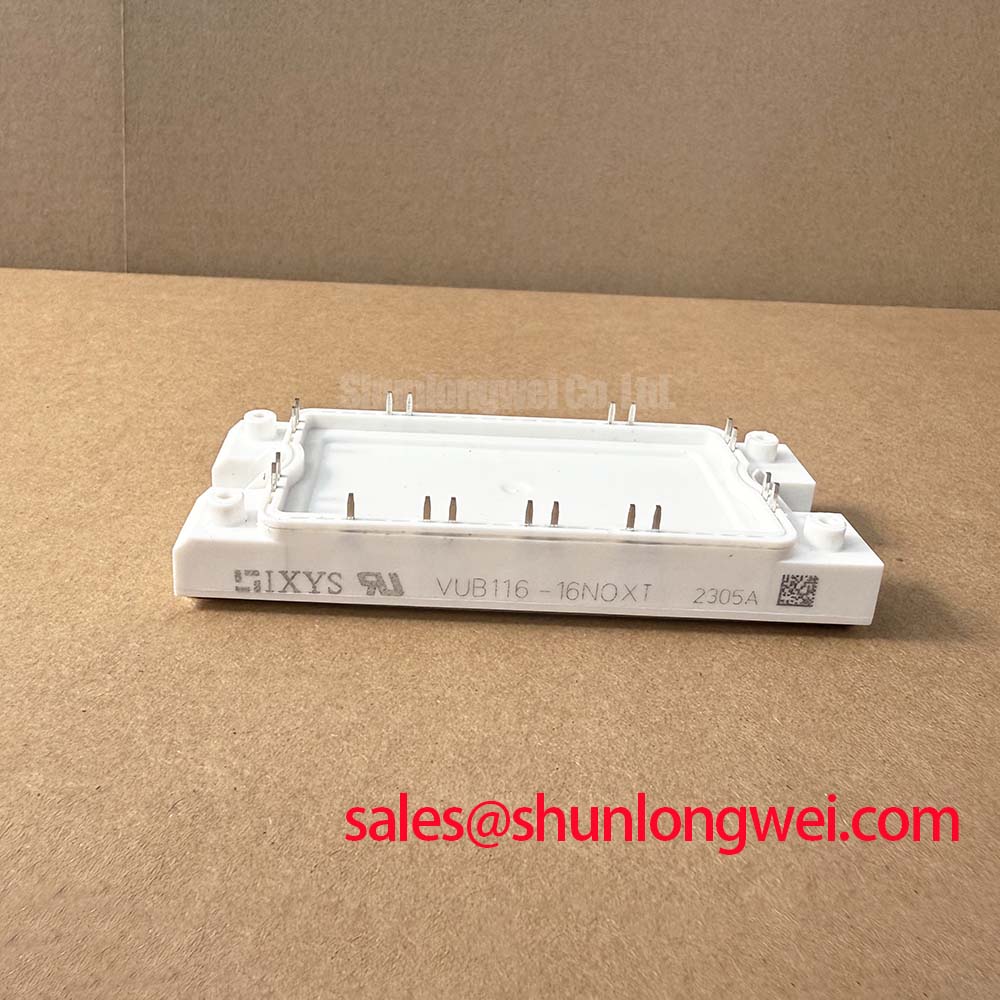
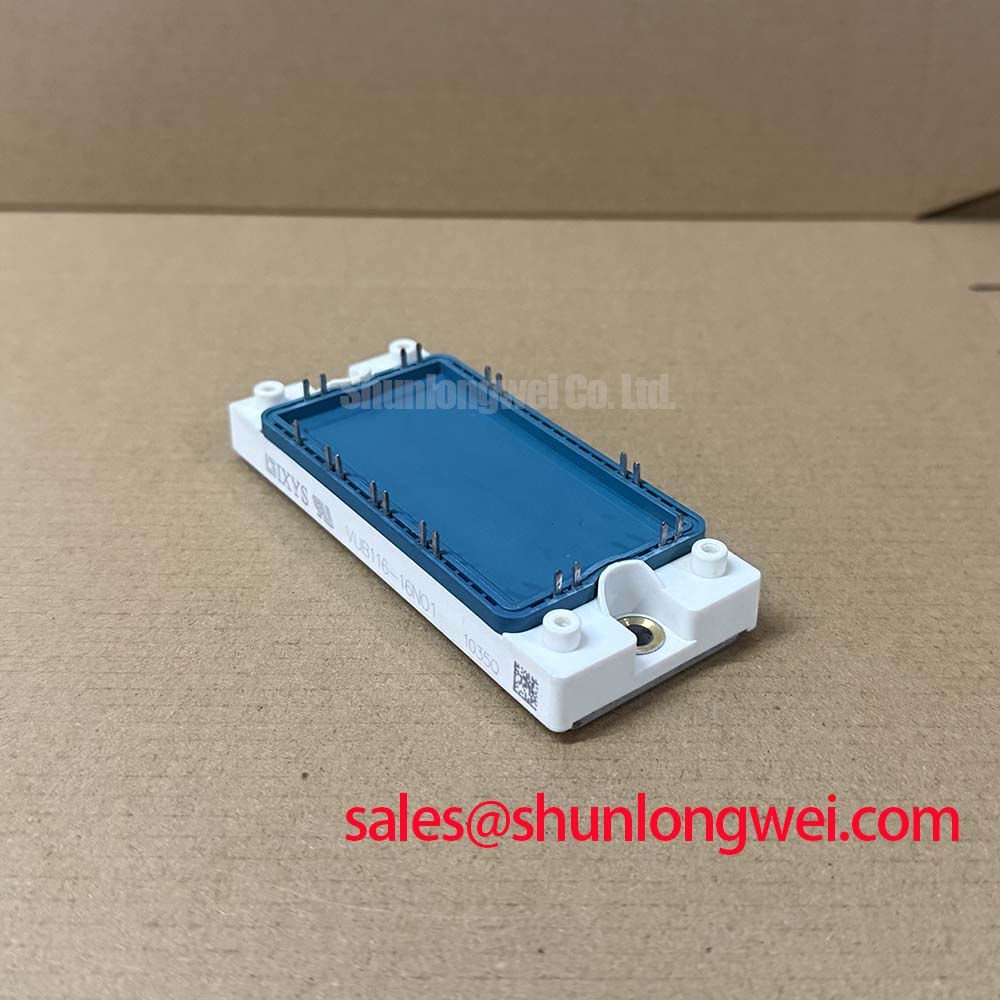
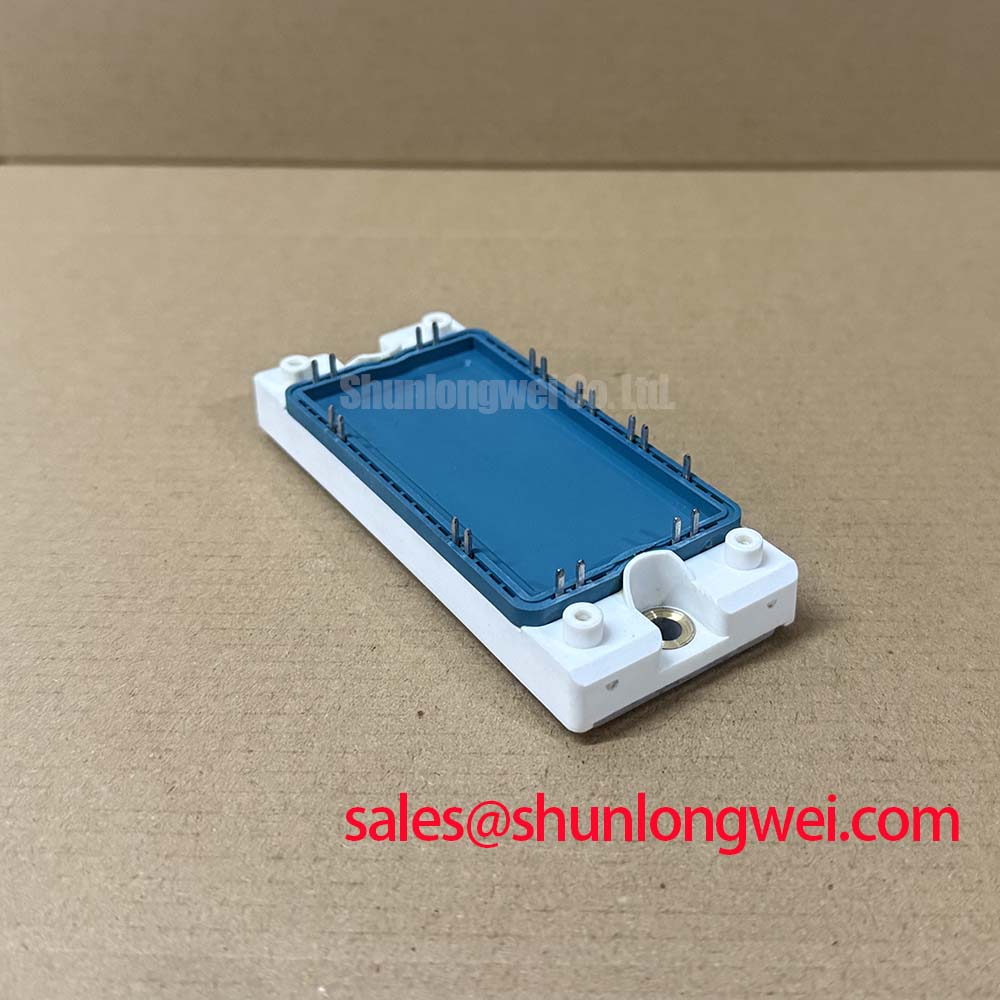
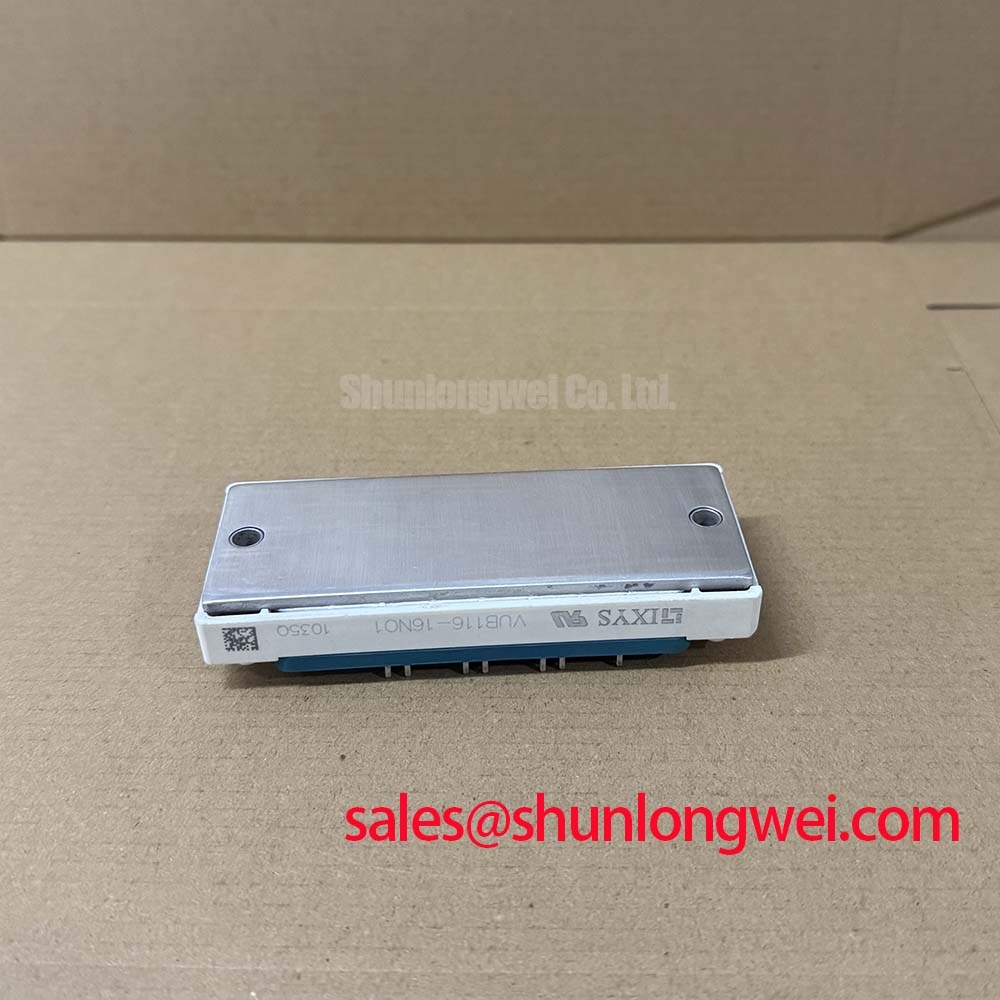
With the cabinet isolated and the DC link discharged, first verify that the installed bridge marking reads VUB116-16NO1, then inspect the VUO/VUB case for baseplate damage, loose power connections, heat discoloration, and evidence of uneven contact with the heatsink. This IXYS bridge rectifier module is specified with a 1600 V voltage rating and a 116 A current rating under the applicable datasheet conditions, making correct electrical identification and mechanical fit the first priorities before any replacement decision.
| Parameter | Value | Status |
|---|---|---|
| Product model | VUB116-16NO1 | Official product identification |
| Manufacturer | IXYS | Official product identification |
| Voltage rating | 1600 V | Official specification |
| Current rating | 116 A under applicable datasheet conditions | Official specification |
| Case style | VUO/VUB Case | Official specification |
| Product category | Bridge rectifier module | Product classification |
A bridge module can pass a cold resistance check and still fail quickly after load is restored if the thermal interface has been disturbed. Before fitting the VUB116-16NO1, clean the heatsink surface and inspect it for burrs, corrosion, old hardened compound, or localized dents. A straightedge inspection can reveal surface irregularities that prevent the module base from transferring heat uniformly.
The VUO/VUB Case must sit flat across the complete intended mounting area. Apply thermal interface material as a thin, continuous layer according to the thermal compound supplier’s process guidance, then tighten fasteners progressively and in a balanced sequence. This is a Design Consideration, not an IXYS mounting specification for this exact part, because the available official product data identifies the case type but does not provide a module specific mounting torque value.
⚠️ Field Alert: Tighten mounting hardware evenly according to the fastener and heatsink manufacturer requirements, because excessive local pressure can distort the case while insufficient pressure can leave a high resistance thermal path.
After mounting, confirm that the main terminals are clean, aligned, and mechanically supported. A stressed busbar can transfer force into a module terminal during thermal cycling. Where the original assembly uses laminated busbars, rigid copper links, or flexible straps, preserve the same support arrangement unless the system engineer has validated a revised layout.
Cold diode checks with a meter are useful only as a screening action. Compare the directional conduction behavior between corresponding bridge paths and compare results with the removed assembly or a verified reference unit where available. A reading that differs from the expected bridge relationship may indicate an internal fault, an attached snubber path, a parallel component, or measurement through surrounding circuitry. Isolate the module terminals from the circuit before drawing conclusions.
For a high current green hydrogen electrolyzer DC power rectifier, heatsink contact is especially relevant because output current commonly remains sustained rather than appearing only in short intermittent duty. The 116 A specified current rating describes the module’s electrical capability under the applicable conditions, but the usable system current is still determined by the complete thermal path, ambient conditions, airflow or liquid cooling arrangement, busbar losses, fuse coordination, and control of line current.
VUB116-16NO1 Thermal-Electrical Optimization: Fuse Total Clearing I2t versus Device Melt Practical Tuning
Do not select a semiconductor fuse from continuous current alone. In a faulted rectifier cabinet, the fuse must interrupt fault energy before the bridge module experiences destructive thermal stress, while remaining coordinated with transformer inrush, capacitor charging behavior, and expected process current. This is a system level protection exercise rather than a fixed setting that can be inferred from the 1600 V and 116 A ratings.
The available official data for VUB116-16NO1 does not provide an I²t withstand value, a semiconductor fuse coordination table, or a device melt integral. Therefore, no numerical fuse total clearing I²t limit should be assigned to this model without the applicable IXYS datasheet and the original equipment protection documentation. Treat any previous fuse selection as evidence to inspect, not as proof that the installed protection remains correct after a topology, transformer, or load change.
During repair evaluation, record the fuse part number, voltage class, fuse curve, installed location, and evidence of operation. A ruptured fuse may accompany a bridge short, but it does not independently identify whether the initiating event came from an AC line transient, downstream DC short, cooling loss, loose connection, commutation stress, or another part of the rectifier system. Inspect adjacent surge suppression parts, contactors, DC bus insulation, and load cables before returning equipment to service.
Where a metal oxide varistor network is present on the incoming AC side or DC bus, verify it against the equipment schematic and inspect for cracking, thermal discoloration, or disconnected leads. A MOV is a Design Consideration within the surrounding protection network; its required clamping behavior, energy capability, and coordination with fuses are determined by the measured system transient environment. It is not an inherent or confirmed internal feature of VUB116-16NO1.
Bridge rectifiers use diode conduction paths, not gate controlled switching paths. As a result, gate resistor selection, Miller plateau charge, active gate clamping, gate drive dead time, and gate loop damping are not integration parameters for this diode bridge module. These topics apply to controlled power switches elsewhere in a converter or inverter cabinet and should not be attributed to the VUB116-16NO1.
For engineers comparing rectifier positions in an existing repair bill of materials, the SKD 25/14 should be reviewed only against its own voltage rating, current rating, circuit configuration, case dimensions, terminal arrangement, thermal interface, and approved protection conditions. Equal voltage class alone does not establish an interchangeable replacement.
Transient Dynamics & Electrical Design: High-Reliability Multi-Bridge Architecture on VUB116-16NO1
Before connecting a replacement bridge, match every terminal to the original circuit drawing and terminal legend. Do not infer the AC inputs, positive DC output, or negative DC output from physical position alone. VUO/VUB case geometry identifies the package family, not the exact external connection arrangement for every circuit variant. The system integrator should verify the terminal assignment from the original panel documentation and the applicable module drawing.
A six pulse rectifier normally uses a three phase AC source and one bridge to create DC. A twelve pulse arrangement generally combines two phase shifted rectifier groups and requires transformer and DC combining arrangements designed for that equipment. The VUB116-16NO1 can be evaluated as one bridge position within such a system only after confirming the required circuit configuration, line voltage, thermal duty, output current sharing method, fault clearing method, and mechanical layout.
Parallel bridges are not automatically current sharing devices. Differences in connection resistance, heatsink temperature, transformer secondary impedance, and physical busbar routing can cause unequal loading. An interphase transformer may be part of a multi bridge design to manage current sharing, but its need and specifications are determined by the original rectifier topology. A repair technician should preserve conductor lengths and phase connections exactly as documented until waveform and current balance tests can be performed.
At kiloampere DC output, a module carrying 116 A is commonly one contributor in a larger rectifier assembly rather than a declaration of complete system output capacity. Trace the AC feeds, DC combining links, fuses, shunts, and cooling circuits to understand the position occupied by the module. This avoids replacing a failed bridge while overlooking the external condition that placed abnormal current or reverse voltage stress on it.
A related rectifier component such as SKD82/18 may appear in a different stage of industrial power equipment, including an upstream rectification or auxiliary supply role. It should be assessed as a separate device with its own official ratings and circuit requirements, rather than being assumed to match the VUB116-16NO1.
Fast changing line events can produce voltage excursions through source inductance and wiring. Keep power loops physically compact where the original design permits, maintain intended busbar spacing and insulation clearances, and inspect installed snubber or surge suppression connections. These are Engineering Recommendations for limiting parasitic inductance and associated overvoltage stress. Final peak voltage margins must be verified by the system engineer during representative switching and fault tests.
For context on newer power switching technologies, Wolfspeed Silicon Carbide power modules illustrate a separate family of power semiconductor products used in converter designs. Their characteristics do not define the ratings, transient behavior, or replacement conditions of this IXYS diode bridge module.
Preventing Spurious Faults: Thermal Avalanche Margins during High Peak Guidelines for VUB116-16NO1
Verify the actual disturbance sequence before assigning a surge related failure mechanism. A sudden AC fault, transformer energization event, downstream DC short, poor cooling condition, or failed suppression component can all create different electrical and thermal stress patterns. The first repair task is to inspect the event record if available, then test the isolated bridge and its protection network against the equipment documentation.
The official identification data supplied for VUB116-16NO1 confirms a 1600 V rating and 116 A rating, but does not state a sinusoidal ten millisecond half cycle surge current value, an ITSM value, an avalanche energy rating, a reverse recovery limit, or a junction to case thermal resistance value. Those figures must not be estimated from the case family or from ratings of another IXYS module. Obtain the applicable manufacturer datasheet before calculating surge margin or approving altered protection settings.
In diode bridge service, reverse voltage is reapplied during normal commutation. The system should therefore be assessed for AC waveform quality, transformer behavior, commutation inductance, DC load conditions, and any suppression devices fitted across the relevant nodes. If an oscilloscope is used, measure with a method suitable for the voltage and isolation requirements of the installation, then compare observed waveforms with known system limits. A distorted waveform may indicate a circuit issue requiring broader investigation rather than a direct module defect.
Terms such as thermal avalanche and single event burnout require device specific evidence before they can be used as a failure conclusion. No field lifetime, FIT rate, cosmic ray sensitivity, altitude derating, insulation reliability claim, EMC certification claim, or predicted operating life is stated here because no applicable official source has been provided for this exact module. These topics should remain part of the equipment level risk review where operating environment and verified component documentation are available.
After replacing the bridge, check cooling operation, terminal torque integrity, fuse continuity, phase order, DC polarity, and insulation condition before energization. Bring the equipment back under the commissioning procedure established for the rectifier, while observing current balance and temperature behavior through the available system instrumentation. For broader troubleshooting methods and controlled comparison criteria, consult the Power Semiconductor Selection Guide.