Content last revised on September 10, 2026
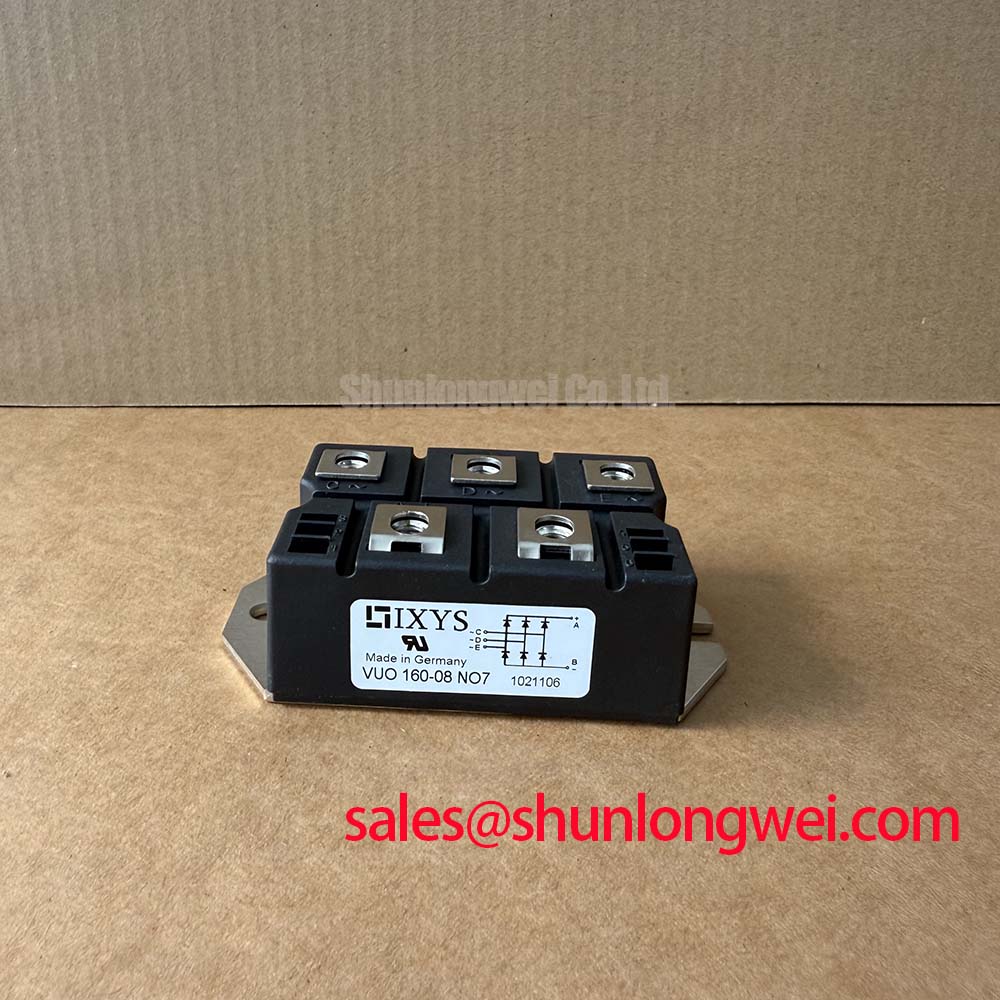
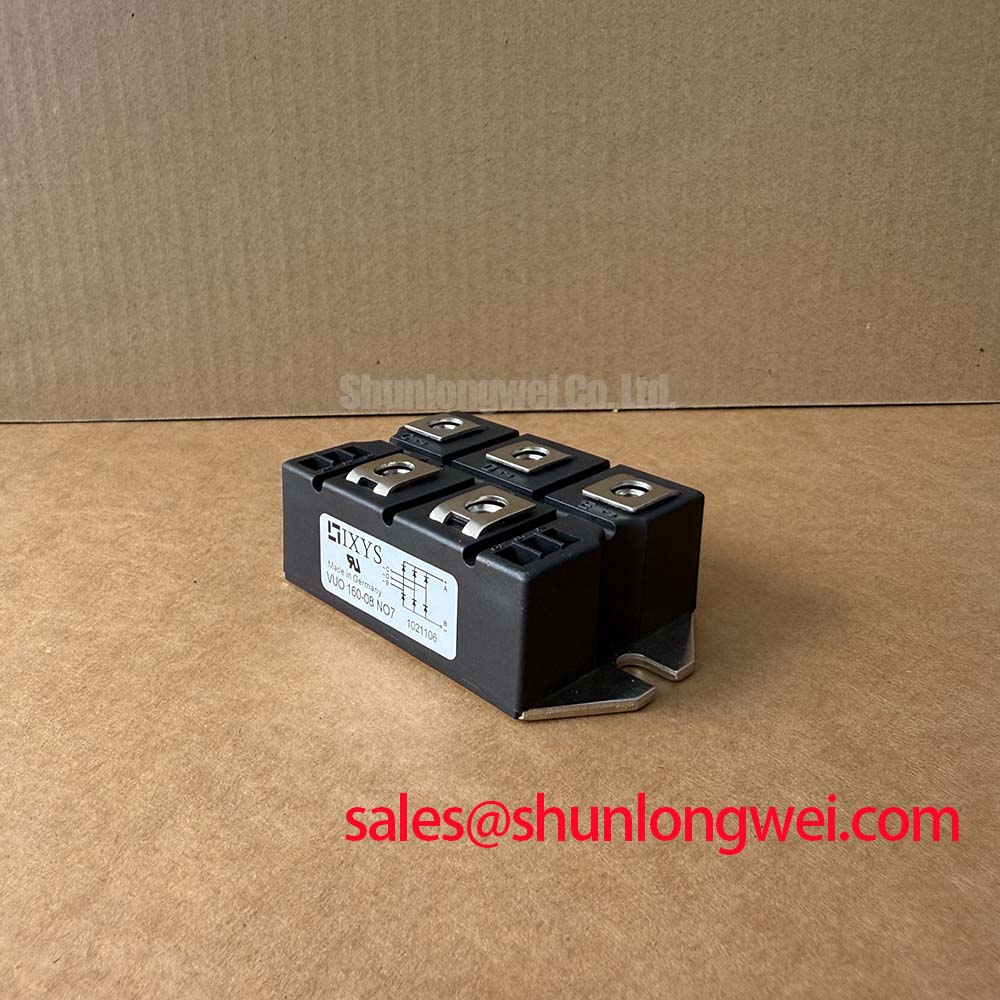
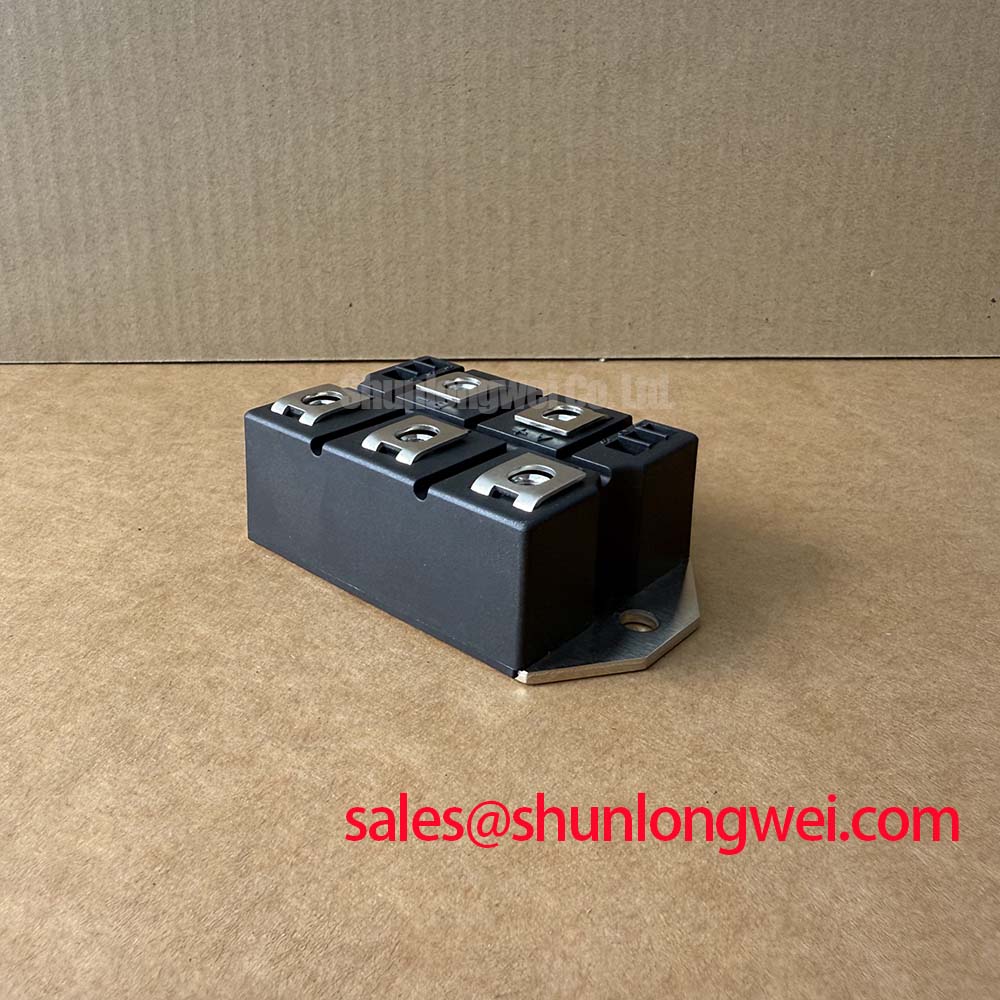
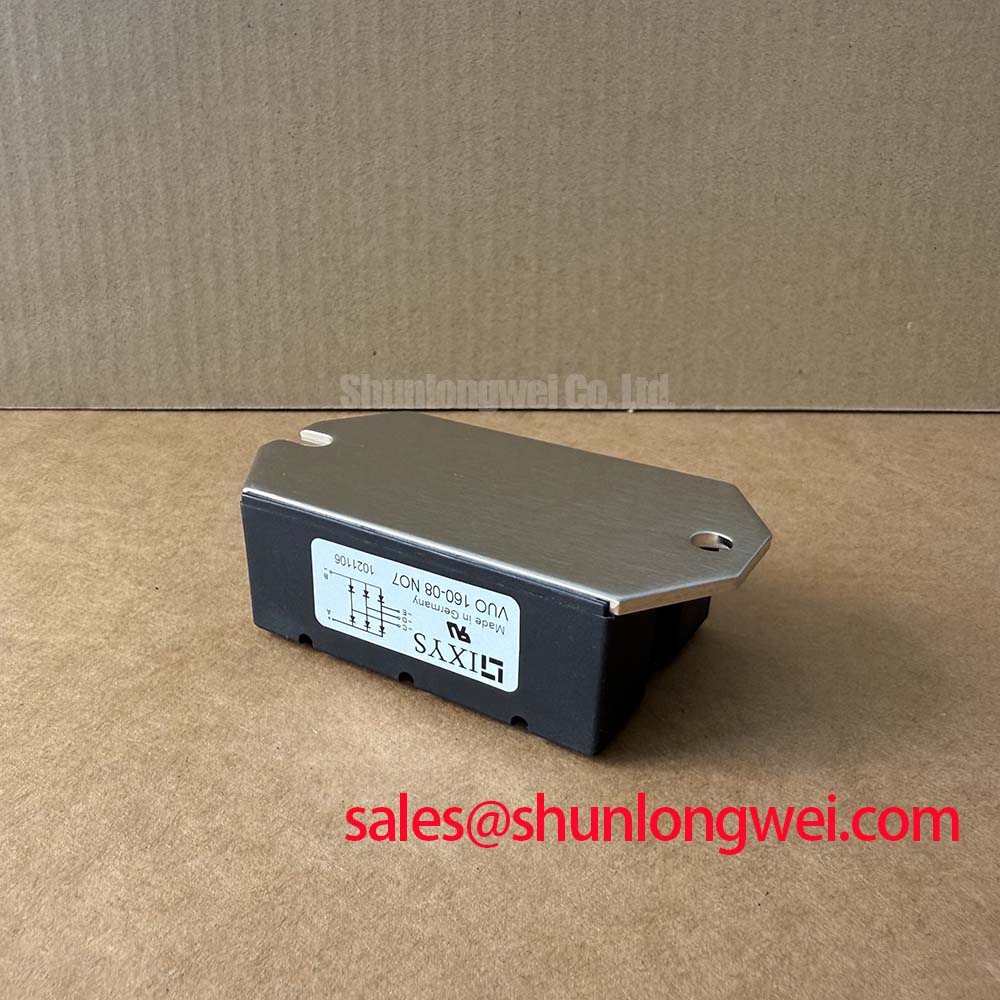
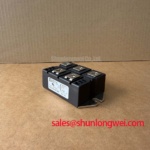
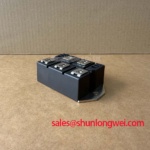
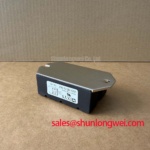
VUO160-08NO7 IXYS 800V 175A Three-Phase Bridge Rectifier Module
Introduction to High-Efficiency Power Rectification
Optimizing Three-Phase Energy Conversion with Minimal Thermal Dissipation
The VUO160-08NO7, a high-performance three-phase diode bridge rectifier manufactured by IXYS (now part of Littelfuse), is designed to provide robust power conversion for demanding industrial environments. Featuring a Vrrm of 800V and an average output current (Idav) of 175A, this module serves as a critical front-end component for power electronics. Its primary engineering value lies in its planar passivated chips, which ensure a low forward voltage drop and high surge current capability of 1800A. What is the primary benefit of its low forward voltage? It significantly reduces conductive power losses, enhancing overall system efficiency. For industrial power supplies requiring high current density in a PWS-E package, this 800V module provides the necessary thermal headroom and electrical reliability.
Application Scenarios & Value
Ensuring Stable DC Power in Fluctuating Industrial Grids
Engineers often face challenges in optimizing the power density of three-phase rectifiers while maintaining thermal stability during peak load conditions. The VUO160-08NO7 addresses these challenges through its 3000V AC isolation rating and space-saving design. In Variable Frequency Drive (VFD) applications, the module handles the initial rectification stage, where it must withstand significant inrush currents. Its 1800A surge rating (for 10ms) acts like a structural safety margin for a bridge, allowing it to absorb sudden load spikes without compromising the semiconductor junction integrity. For systems requiring higher voltage handling, the related VUB72-16NO1 offers an integrated solution with higher voltage ratings, while those needing controlled switching might consider the MCC200-16IO1.
Typical application vignettes include Welding Power Supplies and battery charging stations, where reliability against overcurrent and overtemperature is paramount. The module’s two-screw mounting system simplifies integration, ensuring consistent pressure contact for optimal thermal transfer to the heatsink.
Technical Deep Dive
Planar Passivation and Thermal Management Strategies
The core technology inside the VUO160-08NO7 utilizes planar passivated semiconductor chips. This process creates a highly stable surface at the P-N junction, resulting in a low leakage current even at the maximum 800V operating voltage. From a thermal management perspective, the module’s internal structure is engineered to minimize Rth(jc). Think of thermal resistance as a highway; a low Rth(jc) is like a wide, unobstructed road that allows heat to flow quickly from the diode junction to the baseplate. This efficiency prevents the accumulation of localized "hot spots" that typically lead to thermal runaway.
Furthermore, the high surge rating is a direct result of the large active area of the diode chips. When a motor starts up, the momentary current draw can be many times the nominal rating; the VUO160-08NO7 handles these peaks by distributing the energy across its silicon lattice, effectively managing the I²t values required for fuse protection coordination. This high ruggedness reduces the total cost of ownership (TCO) by decreasing the frequency of field maintenance caused by rectifier failure.
Key Parameter Overview
Engineering Specifications for System Design
| Feature / Parameter | Specified Value | Engineering Impact |
|---|---|---|
| Repetitive Peak Reverse Voltage (Vrrm) | 800V | Suitable for 380V/480V grid inputs |
| Average Rectified Current (Idav) | 175A (at Tc=100°C) | High power throughput in compact frame |
| Surge Current (Ifsm) | 1800A (10ms / 45°C) | Handles high inrush current events |
| Isolation Voltage (Visol) | 3000V AC | Enhanced safety for equipment users |
| Forward Voltage Drop (Vf) | 1.05V (typ. at 150A) | Minimized conductive energy loss |
| Package Style | PWS-E | Industry-standard screw terminal mounting |
Download the VUO160-08NO7 datasheet for detailed specifications and performance curves. VUO160-08NO7 PDF Datasheet
FAQ
Technical Inquiries Regarding Rectifier Implementation
How does the 3000V AC isolation rating impact safety design in industrial enclosures?
The 3000V AC isolation rating ensures that the electrical path of the power circuit is safely separated from the mounting baseplate. This simplifies the design of grounded chassis systems and meets stringent UL/IEC safety standards for industrial motor drives and power supplies.
What is the significance of the 1800A surge current for fuse selection?
The 1800A surge rating (Ifsm) provides the necessary data to calculate the I²t (ampere-squared-seconds) rating. This allows engineers to select semiconductor fuses that will trip before the VUO160-08NO7 junctions are damaged, ensuring a coordinated protection strategy for the entire power system.
Why is the forward voltage drop (Vf) of 1.05V critical for high-duty cycle applications?
In applications where the rectifier operates continuously at 175A, even a 0.1V difference in Vf results in 17.5W of additional heat per diode. The low Vf of the VUO160-08NO7 minimizes this waste heat, allowing for smaller heatsinks or higher operating temperatures in constrained spaces.
As the global power market trends toward higher efficiency and modularity, the VUO160-08NO7 remains a foundational choice for designers who refuse to compromise on thermal reliability. Its integration of planar technology into a proven mechanical package represents a strategic balance between advanced materials science and practical industrial engineering requirements.