

Content last revised on September 10, 2026
Fuji Electric 1MBI400S-120 IGBT Module: An Engineer's Product Analysis
High-Current Switching for Demanding Industrial Drives
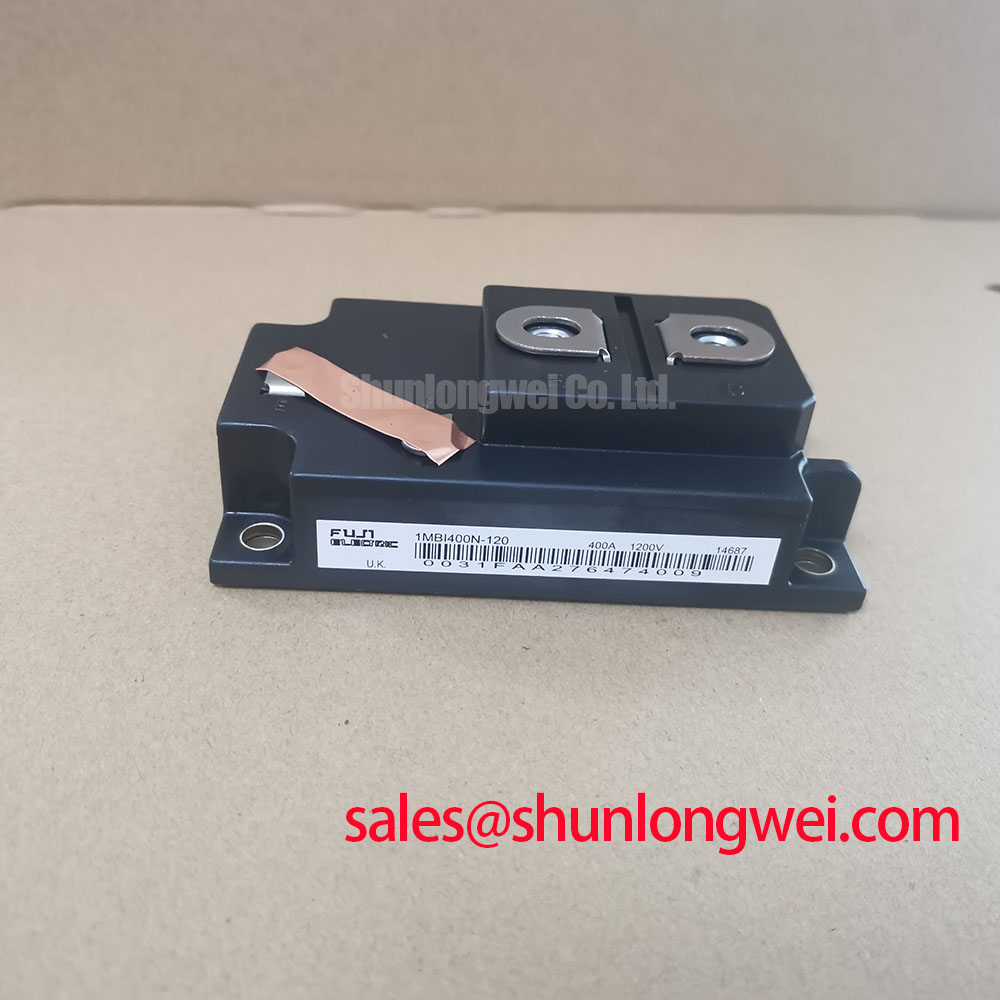
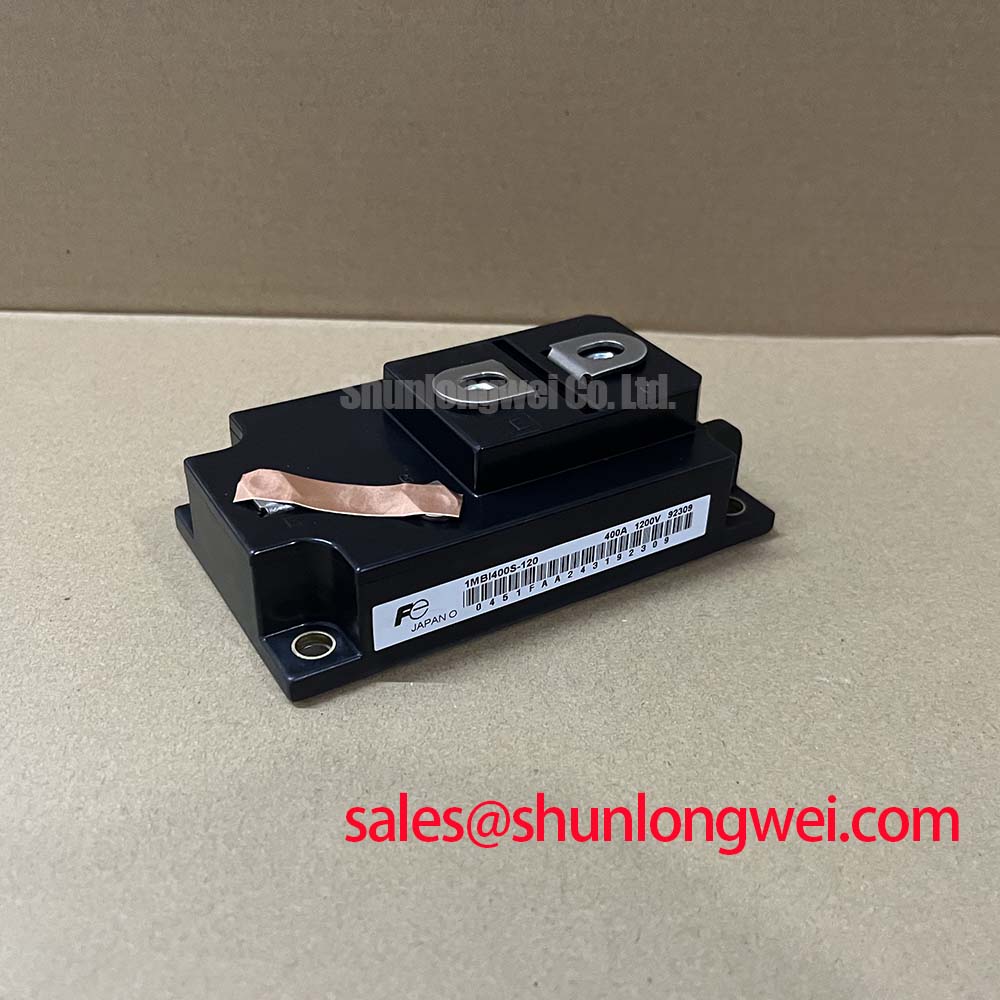
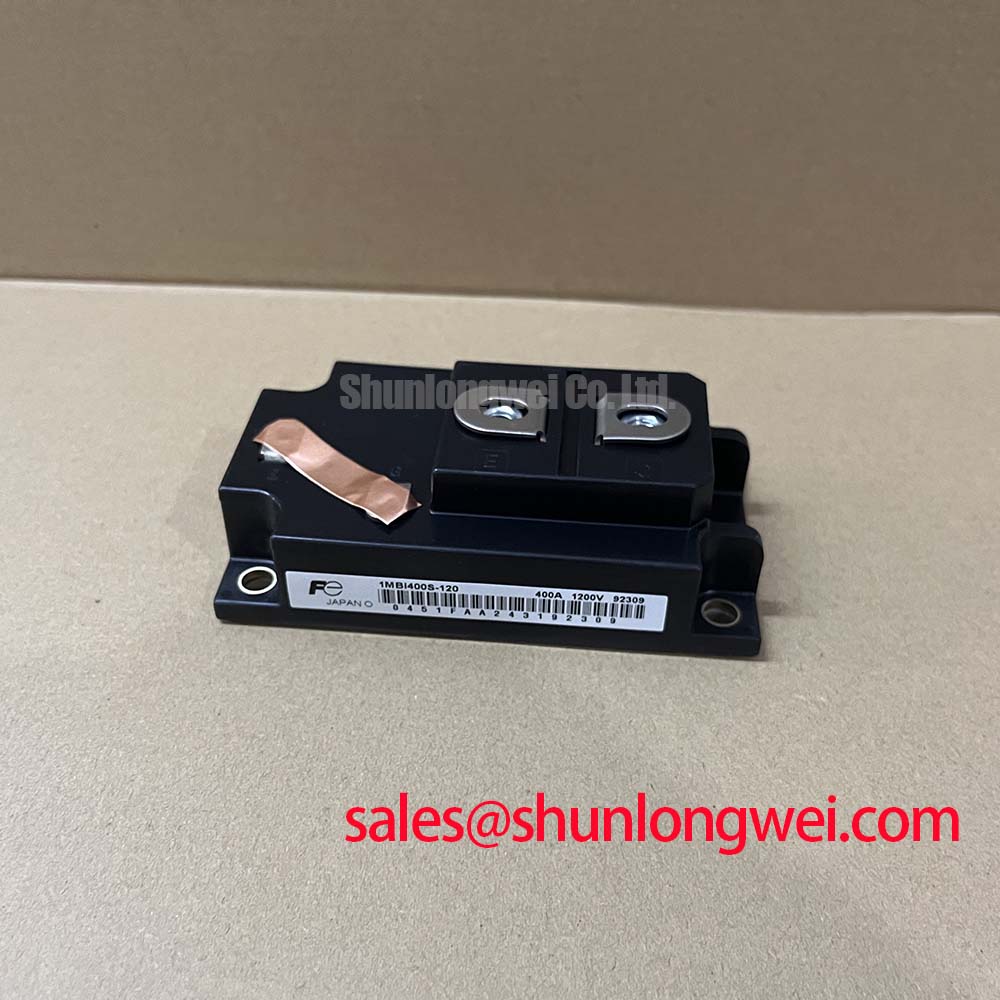
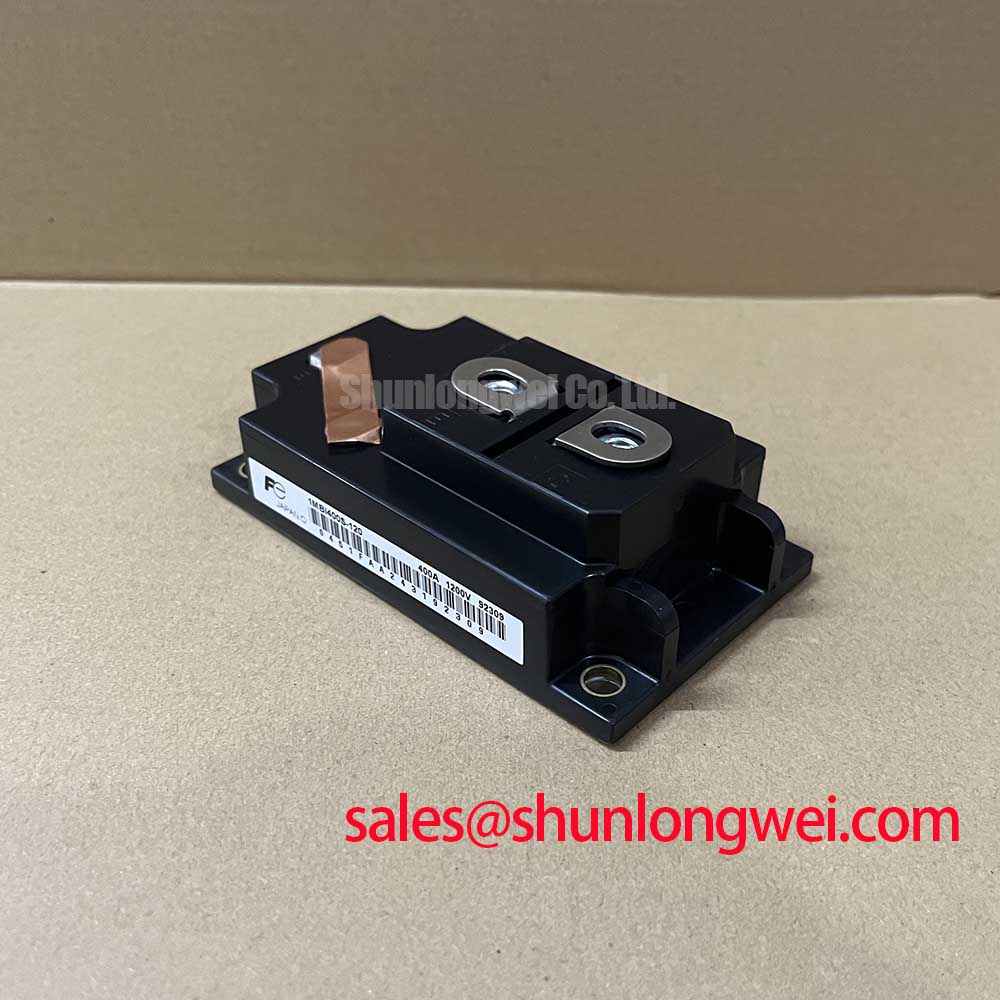
The Fuji Electric 1MBI400S-120 is a 1200V single IGBT module engineered for robust performance in high-power conversion systems. Delivering a potent combination of high current handling and optimized switching characteristics, this S-Series module provides a dependable foundation for demanding industrial applications. Its key specifications are: 1200V Collector-Emitter Voltage | 400A Continuous Collector Current | 2.5V (typ) Saturation Voltage. This design ensures both low conduction losses and high operational reliability. The module directly addresses the engineering need for a high-capacity switch that maintains efficiency under heavy loads. For industrial motor drives requiring robust performance and thermal stability, the 1MBI400S-120 offers a well-balanced solution.
Application Scenarios & Value
System-Level Benefits in High-Power Motor Control and Inverters
The 1MBI400S-120 is engineered to excel in applications where high current and voltage are standard operational parameters. Its primary value is demonstrated in systems like large-scale Variable Frequency Drives (VFDs), industrial motor controls, and high-capacity power inverters. In a VFD controlling a multi-megawatt induction motor, the challenge is to minimize power dissipation within the switching components to maximize system efficiency and reduce cooling costs. The 1MBI400S-120's typical collector-emitter saturation voltage (VCE(sat)) of 2.5V at its nominal current rating directly confronts this issue by keeping conduction losses low. This parameter is critical; a lower VCE(sat) translates to less heat generated during the on-state, simplifying thermal management and allowing for potentially smaller heatsinks, which in turn increases power density and reduces the overall system footprint. For systems with slightly lower current requirements but similar voltage needs, the related 2MBI300S-120 presents an alternative within the same voltage class.
Key Parameter Overview
Decoding the Specs for Efficient Power Conversion
The technical specifications of the 1MBI400S-120 are tailored for high-reliability power switching. The following table highlights the critical parameters that define its performance in the field.
| Parameter | Symbol | Value | Conditions |
|---|---|---|---|
| Collector-Emitter Voltage | Vces | 1200 V | Tj = 25°C |
| Gate-Emitter Voltage | Vges | ±20 V | |
| Continuous Collector Current | Ic | 400 A | Tc = 25°C |
| 1ms Repetitive Peak Collector Current | Icp | 800 A | |
| Collector-Emitter Saturation Voltage | VCE(sat) | 2.5 V (typ), 3.0 V (max) | Ic = 400A, Vge = 15V |
| Turn-on Time | t(on) | 1000 ns (typ) | Ic = 400A |
| Turn-off Time | t(off) | 500 ns (typ) | Ic = 400A |
| Total Power Dissipation | Pc | 2200 W | Tc = 25°C |
| Operating Junction Temperature | Tj | -40 to +150 °C |
Download the 1MBI400S-120 datasheet for detailed specifications and performance curves.
Application Vignette
Enhancing Reliability in Industrial Pump and Fan Controllers
Consider the design of a large-scale water treatment facility's pump control system, which requires continuous operation with high reliability to prevent service interruptions. A primary engineering challenge is managing the thermal stress on power electronics during fluctuating load cycles. The 1MBI400S-120 provides a direct solution through its robust thermal design and high power dissipation capability of 2200W. The module's structure is optimized to efficiently transfer heat from the silicon die to the heatsink. This efficiency allows the system to operate reliably even under peak load conditions without exceeding the maximum junction temperature of 150°C. Effectively, the module acts as a stable thermal bottleneck, ensuring that the heat generated by its 400A current handling capacity can be consistently and safely managed by a standard cooling system, which is a core requirement for any infrastructure application demanding 24/7 uptime and longevity.
Frequently Asked Questions (FAQ)
What is the primary benefit of the 1MBI400S-120's 3.0V maximum VCE(sat)?
The guaranteed maximum VCE(sat) of 3.0V provides a worst-case scenario for calculating conduction losses. This allows engineers to design the thermal management system with confidence, ensuring the module will perform reliably and remain within its safe operating temperature range even under the least favorable electrical and thermal conditions.
How does the 400A continuous current rating influence its use in industrial drives?
This high current rating makes the 1MBI400S-120 suitable for controlling large industrial motors, typically in the range of 200kW or higher, depending on the system voltage. It provides sufficient current handling capacity for high-torque applications like conveyors, mixers, and compressors without requiring complex paralleling of lower-rated modules.
Is a negative gate voltage required for turning off the 1MBI400S-120?
While the datasheet specifies characteristics at 0V and +15V on the gate, applying a small negative voltage (e.g., -5V to -15V) during the off-state is a standard best practice in robust gate drive design. This provides a greater noise margin and helps prevent unintended turn-on events caused by induced voltages (Miller effect), enhancing overall system immunity to electromagnetic interference (EMI).
What is the significance of the single IGBT topology?
A single switch configuration offers maximum flexibility for power stage designers. It can be used to construct various topologies, including single-phase or three-phase bridges, choppers, and other custom converter designs. This modularity allows engineers to use a standardized component across multiple platform designs, simplifying inventory and procurement.
Strategic Outlook for High-Power Systems
The 1MBI400S-120 from Fuji Electric represents a proven and reliable approach to high-current power switching. Its design prioritizes fundamental performance metrics—low conduction losses and robust current handling—which are timeless requirements for industrial power conversion. For engineers developing or maintaining systems where long-term reliability and operational efficiency are paramount, this module provides a solid, field-tested foundation. It is a component designed not for niche, fast-moving trends, but for the core infrastructure of industrial automation and power control, where durability and predictable performance are the most valuable assets.