Content last revised on September 10, 2026
2DI150ZA-100 Fuji Electric Power Transistor Module | 1000V 150A Dual Darlington
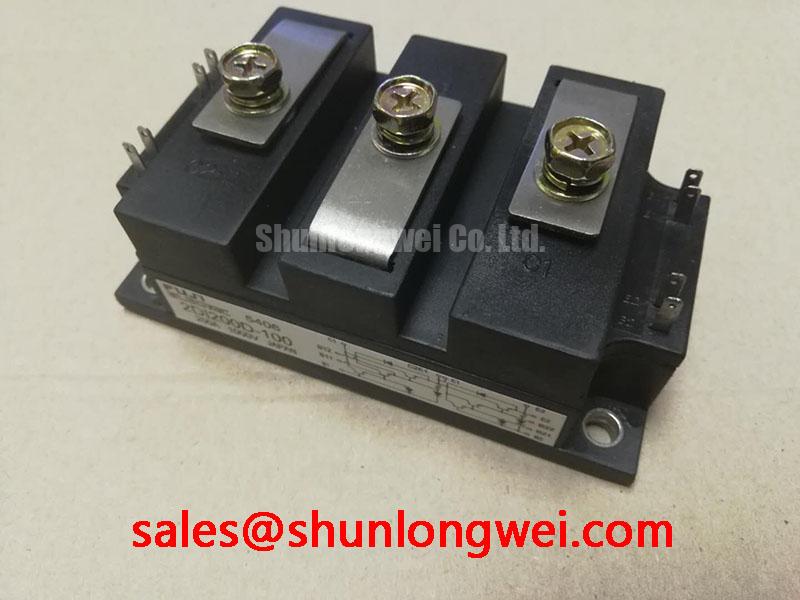
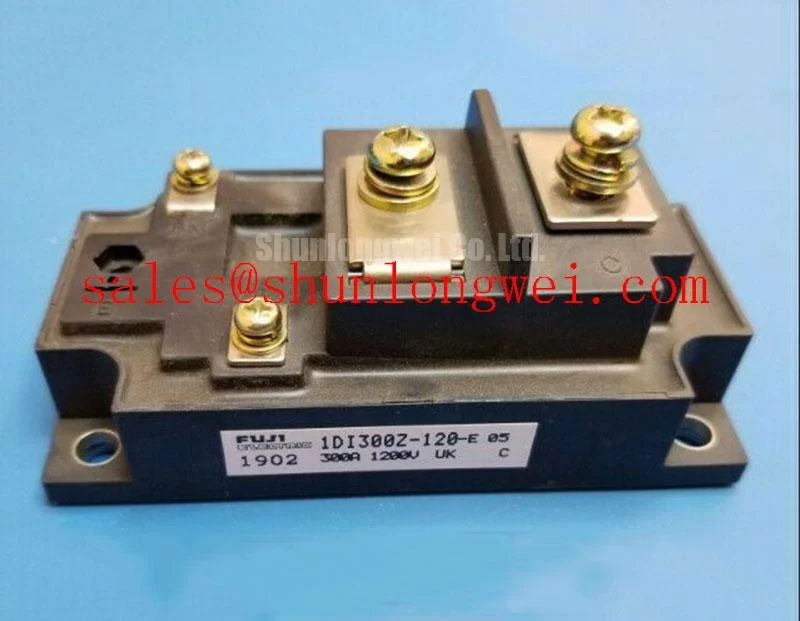
The 2DI150ZA-100, manufactured by Fuji Electric, is a high-power Dual Darlington transistor module designed for robust switching applications. Combining a 1000V collector-emitter voltage rating with a 150A continuous collector current, this module provides a reliable solution for high-voltage power conversion where high DC current gain (hFE) is required to simplify drive stage requirements. Its insulated base design allows for simplified mechanical mounting on a common heatsink with other power components, facilitating high-density system integration in legacy and specialized industrial drives. For engineers maintaining or upgrading high-capacity power systems, the 2DI150ZA-100 offers a proven electrical profile for managing substantial inductive loads.
UVP Statement: High-gain Darlington switching efficiency for legacy 1000V power systems, enabling robust current handling with simplified base-drive circuitry.
Top Specs: 1000V Vcex | 150A Ic | 1000W Pc.
Key Benefits: Simplified drive stages via high hFE; High-speed switching for Darlington-class power modules.
Core Question Answered: Does the 2DI150ZA-100 require complex gate drivers? No, its Darlington structure allows for efficient current-controlled switching using relatively low-power base drive signals compared to single-stage bipolar transistors. For 400V systems prioritizing thermal margin, this 1000V module is the optimal choice.
Key Parameter Overview
Decoding the Specs for Enhanced Switching Reliability
The following table outlines the fundamental electrical and thermal characteristics of the 2DI150ZA-100. Understanding these parameters is essential for ensuring the module operates within its Safe Operating Area (SOA).
| Technical Parameter | Value / Rating | Engineering Significance |
|---|---|---|
| Collector-Emitter Voltage (Vcex) | 1000V | High voltage overhead for 440V-480V AC line applications. |
| Continuous Collector Current (Ic) | 150A | Supports high-torque motor startup and industrial load demands. |
| Max Collector Power Dissipation (Pc) | 1000W | Defines the limits for thermal management and heatsink sizing. |
| DC Current Gain (hFE) | Min 100 (at 150A) | Reduces current requirement from the base drive circuit. |
| Isolation Voltage (Viso) | 2500V AC | Ensures safety and component isolation from the chassis. |
Application Scenarios & Value
Achieving System-Level Benefits in High-Power Industrial Control
The 2DI150ZA-100 is frequently utilized in Variable Frequency Drive (VFD) units and uninterruptible power supply (UPS) systems. Its dual-transistor configuration makes it highly suitable for half-bridge or full-bridge inverter topologies. In these environments, the module acts like a high-voltage, high-current dam, where the 150A collector current represents the massive flow of energy that can be precisely modulated by a much smaller control current.
High-Fidelity Engineering Scenario: Consider a heavy-duty industrial conveyor system that experiences frequent motor startup surge currents. Engineers face the challenge of selecting a component that can handle the initial inrush without entering thermal runaway. The 2DI150ZA-100, with its robust 1000W power dissipation capacity and high-gain Darlington structure, allows for a drive circuit that precisely controls the ramp-up current. This reduces mechanical stress on the conveyor belt and electrical stress on the factory grid. For systems requiring even higher current handling or modern IGBT switching characteristics, the 2MBI200N-120 offers an alternative with a 200A rating and 1200V Vces.
Other common applications include AC/DC servo drives and large-scale welding power supplies. For those designing 600V class systems, the related QM150DY-24 provides comparable current handling in a similar dual-module format, though the Fuji 2DI150ZA-100 remains a staple for 1000V-rated legacy infrastructure maintenance.
Industry Insights & Strategic Advantage
Legacy Support and Efficiency in Power Stage Design
While the industry has largely shifted toward IGBT Modules for new designs, the Darlington transistor modules like the 2DI150ZA-100 remain strategically important for the longevity of existing industrial equipment. The engineering philosophy behind this module was to maximize the current gain of bipolar technology. To use a mechanical analogy, if a standard transistor is like a manual lever, the 2DI150ZA-100 is like a hydraulic-assisted brake system; a small amount of input force (base current) results in a massive output force (collector current).
In the context of thermal management, the module's Rth(j-c) is a critical metric for long-term reliability. By utilizing an insulated copper base plate, Fuji Electric achieved a structure that minimizes thermal resistance, allowing for more compact heatsink designs. For engineers, this means the ability to maintain high-efficiency power systems without requiring exotic cooling solutions. Understanding the differences between BJT and IGBT technologies is vital when determining whether to replace this module with a modern equivalent or maintain the existing circuit architecture to avoid costly redesigns of the drive logic.
FAQ
How does the hFE of the 2DI150ZA-100 influence the selection of the base drive circuit?
With a minimum hFE of 100 at 150A, the 2DI150ZA-100 requires a maximum base current of only 1.5A to maintain full saturation. This allows designers to use smaller, more cost-effective drive transistors and reduces the overall power consumption of the control stage compared to single-stage bipolar power transistors.
What are the cooling requirements for the 2DI150ZA-100 when operating near its 1000W limit?
Operating near the 1000W Pc rating requires high-performance forced-air or liquid cooling. Engineers must ensure the junction temperature (Tj) does not exceed the absolute maximum rating (typically 150°C) by carefully calculating the thermal path from junction to case and selecting a heatsink with a low thermal resistance. Proper application of thermal interface material (TIM) is mandatory for these current levels.
Can the 2DI150ZA-100 be used in high-frequency PWM applications?
While the 2DI150ZA-100 is designed for "high-speed" switching, Darlington transistors generally have slower turn-off times due to stored charge in the base regions. It is typically suited for switching frequencies below 5-10 kHz. For applications requiring higher frequencies, consulting a guide to IGBT switching losses might suggest transitioning to an IGBT module.
For more detailed engineering insights, explore our comprehensive guide on power semiconductors or contact our technical support team for data verification.