

Content last revised on August 28, 2026
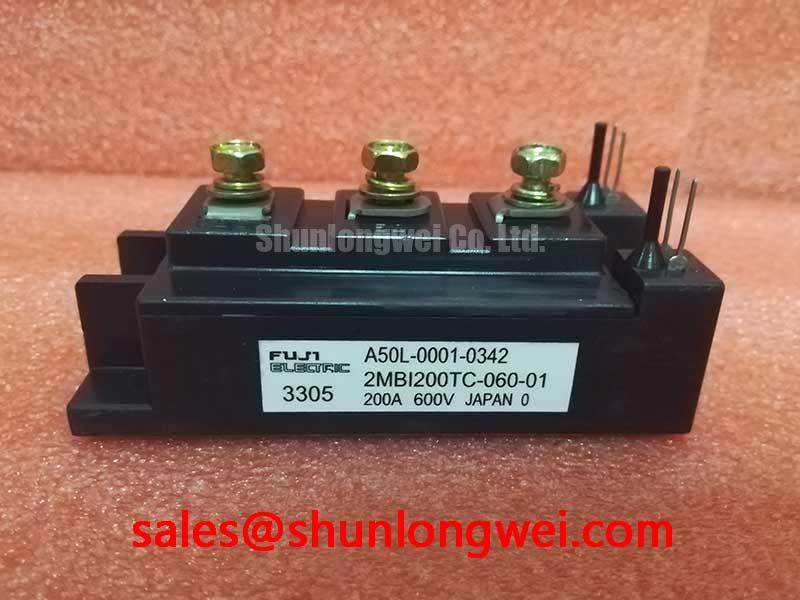
2MBI200TC-060 Fuji Electric IGBT Module: Engineering Analysis for Power Conversion Systems
An In-Depth Review of the 200A, 600V Dual IGBT Module
Engineered for robust performance in demanding power conversion systems, the Fuji Electric 2MBI200TC-060 is a dual IGBT module that integrates N-channel trench gate and field-stop technology. With its 600V collector-emitter voltage and 200A continuous collector current rating, this module provides a foundation for high-efficiency switching. Key benefits include low saturation voltage for reduced conduction losses and excellent thermal impedance for simplified heat management. This design directly addresses the need for reliable power stages in systems where thermal stability and efficiency are paramount. For motor drives requiring minimal power loss under heavy loads, the 2MBI200TC-060's low VCE(sat) makes it a strategically sound choice.
Application Scenarios & Value
System-Level Benefits in Motor Drives and Power Converters
The 2MBI200TC-060 is optimally suited for high-power, high-frequency applications where minimizing energy waste is a primary design objective. Its core value is demonstrated in systems like industrial Variable Frequency Drives (VFDs), servo drives, and general-purpose inverters. In a VFD application, for instance, engineers constantly battle the challenge of heat generated by conduction losses, which can dictate the size of the heatsink and the overall enclosure volume. The 2MBI200TC-060's low collector-emitter saturation voltage (VCE(sat)) of 2.2V at its nominal current directly translates to lower power dissipation (P = VCE(sat) * Ic). This reduction in waste heat allows for a more compact thermal design, potentially reducing system costs and increasing power density. Its robust Safe Operating Area also ensures resilience against the demanding load conditions typical of motor startup sequences. For systems demanding even greater current handling capabilities, the related 2MBI300TC-060 offers a higher current rating within a similar voltage class.
Key Parameter Overview
Specifications Translated into Engineering Advantages
The technical specifications of the 2MBI200TC-060 are not just numbers; they are direct indicators of its performance and reliability in a power circuit. The following table highlights key parameters and their practical implications for the design engineer.
| Parameter | Value (Typical @ Tj=25°C unless noted) | Engineering Value & Interpretation |
|---|---|---|
| Collector-Emitter Voltage (Vces) | 600V | Provides a sufficient voltage margin for applications operating on 200/240V AC lines, ensuring reliability against voltage transients common in industrial environments. |
| Continuous Collector Current (Ic) | 200A (Tc=80°C) | Enables the module to drive significant loads, suitable for motors and power systems in the ~50 kW to 75 kW range, depending on switching frequency and cooling. |
| Collector-Emitter Saturation Voltage (VCE(sat)) | 2.2V (Ic=200A, Tj=125°C) | This value is critical for efficiency. A lower VCE(sat) means less power is converted into heat during the 'on' state. Think of it as lower electrical "friction," which directly improves system efficiency and simplifies thermal management. |
| Total Power Dissipation (Pc) | 960W per IGBT | Defines the maximum amount of heat the module can handle. This high rating, combined with its low thermal resistance, allows for robust operation under sustained high-current conditions. |
| Thermal Resistance (Rth(j-c)) | 0.13 °C/W (IGBT) / 0.25 °C/W (FWD) | Indicates how effectively heat can be transferred from the semiconductor junction to the case. A lower value is better, signifying a more efficient thermal pathway and allowing for higher power output or operation in warmer ambient environments. |
| Short Circuit Withstand Time (tsc) | ≥ 10µs | This is a crucial safety and reliability metric. It provides a 10-microsecond window for the system's protection circuitry to detect a short circuit and safely shut down the IGBT, preventing catastrophic failure. |
Technical Deep Dive
Analyzing the Impact of Trench Gate and Field-Stop Technology
The performance of the 2MBI200TC-060 is fundamentally rooted in its use of advanced silicon technology. The "Trench Gate" structure creates a vertical channel for current flow, which significantly reduces the on-state resistance compared to older planar gate designs. This is a primary contributor to the module's low VCE(sat) value. The "Field-Stop" (FS) layer works in concert with this, allowing for a thinner silicon die. A thinner die not only reduces conduction losses but also dramatically cuts down on switching losses, particularly the turn-off energy (Eoff). For an engineer, this combination is powerful: it means the module can operate at higher switching frequencies without incurring a severe thermal penalty. This capability is essential for modern servo drive designs that require high dynamic response and for power supplies aiming for smaller magnetic components.
Frequently Asked Questions (FAQ)
How does the 2.2V VCE(sat) rating influence the thermal design of a power inverter?
A lower VCE(sat) directly reduces conduction power loss (P_cond = VCE(sat) × Ic). With less heat being generated, a smaller, lower-cost heatsink may be viable. This can lead to a more compact and cost-effective overall system design while maintaining a safe operating temperature for the module.
What is the primary benefit of the module's 10µs short circuit withstand time?
This provides a critical safety margin. In the event of a load fault, it gives the gate drive and control system enough time to detect the overcurrent condition and safely turn off the IGBT. This prevents the destruction of the module and protects the wider system from damage, enhancing overall equipment reliability.
Is this module suitable for parallel operation to achieve higher current output?
Yes, but successful paralleling requires careful design. While the module features a positive temperature coefficient for VCE(sat), which aids in current balancing, engineers must ensure symmetrical layout for gate drive signals and power connections to prevent imbalances that could lead to thermal runaway in one of the modules. Consulting Fuji Electric's application notes on IGBT paralleling is highly recommended.
What does the Rth(j-c) of 0.13 °C/W mean for system performance?
This value represents the thermal "bottleneck" between the active silicon and the module's baseplate. A low value like 0.13 °C/W indicates very efficient heat extraction. For every watt of power dissipated as heat, the IGBT junction temperature will only rise 0.13°C above the case temperature. This allows the device to handle higher power loads or operate reliably at elevated ambient temperatures.
For which AC line voltages is the 600V Vces rating appropriate?
A 600V IGBT module is typically intended for power conversion systems connected to 200V-class AC lines, such as 208V or 240V AC. The 600V rating provides a necessary safety margin to handle the DC bus voltage (which is ~1.414 times the AC RMS voltage) plus any voltage overshoots caused by stray inductance during switching events.
An Engineer's Perspective on Application
From a practical engineering viewpoint, the 2MBI200TC-060 represents a well-balanced workhorse component. It doesn't push the absolute limits of voltage or current but instead delivers proven, reliable performance with favorable efficiency and thermal characteristics for the mainstream industrial power market. Its standard package facilitates straightforward integration, while the underlying silicon technology ensures that it can meet the performance demands of modern, high-frequency designs without requiring an overly complex or expensive thermal solution. It is a component designed for longevity and predictable performance in the field.