

Content last revised on September 10, 2026
2MBI200UM-120-50: 1200V 200A Dual IGBT Module for Heavy-Duty Industrial Drives
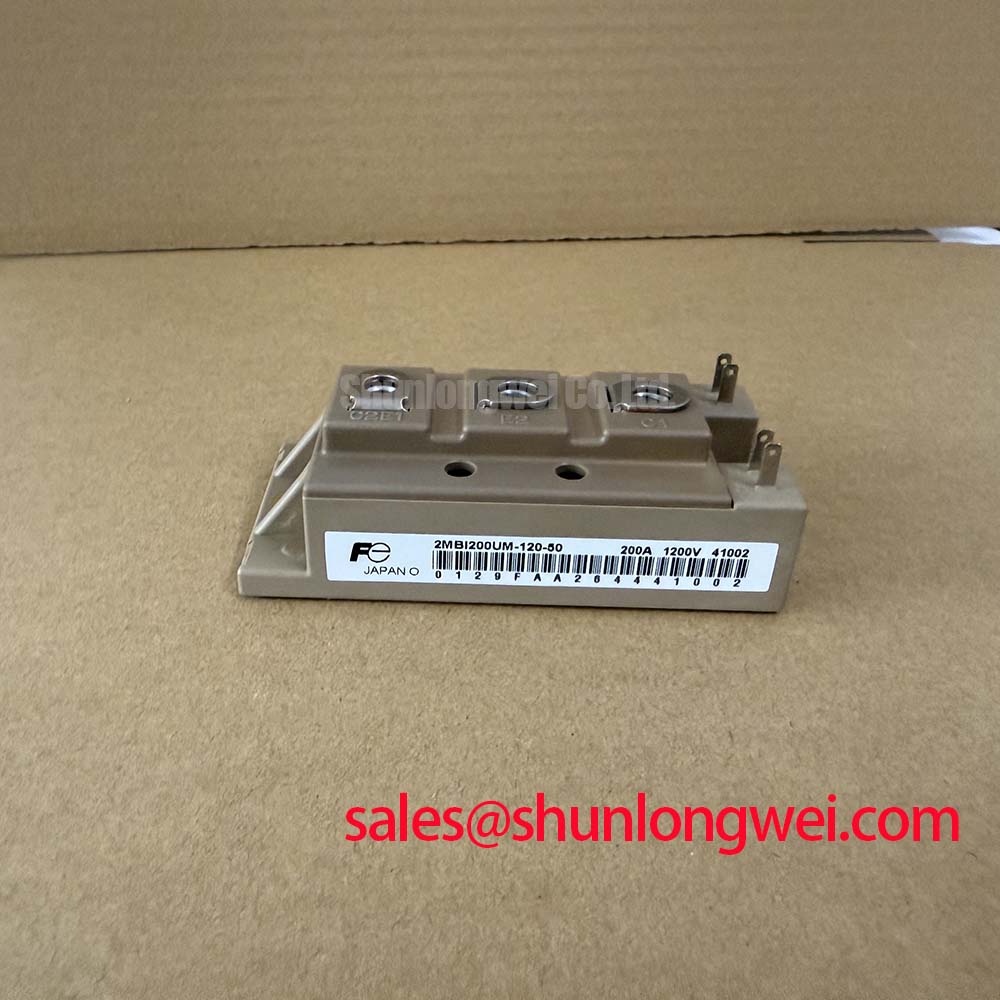
The Fuji Electric 2MBI200UM-120-50 delivers purpose-built thermal stability and field-proven reliability for heavy-duty 1200V industrial applications. Featuring a continuous 200A collector current and a standard dual (half-bridge) configuration, this U-series module addresses the rigorous demands of harsh operating environments. Key benefits include extended power cycling endurance and suppressed conduction losses. How does it handle continuous thermal stress? The robust industrial baseplate ensures superior heat dissipation during intense load fluctuations, preventing catastrophic localized heating. For 400V industrial motor drives prioritizing thermal stability under heavy load cycling, this 1200V, 200A module is the optimal choice.
Key Parameter Overview
Decoding the Specs for Enhanced Thermal Reliability
To evaluate the true capability of the 2MBI200UM-120-50, engineers must look beyond the headline ratings and analyze the thermal and switching specifications. The functional grouping below isolates the critical parameters that dictate system efficiency and cooling requirements.
| Voltage & Current Ratings (Maximum) | |
|---|---|
| Collector-Emitter Voltage (Vces) | 1200V |
| Continuous Collector Current (Ic) | 200A (at Tc = 80°C) |
| Peak Collector Current (Icp) | 400A (1ms) |
| Static & Thermal Characteristics | |
| Collector-Emitter Saturation Voltage (Vce(sat)) | Typ. 2.2V (at 200A, Tj = 25°C) |
| Thermal Resistance, Junction to Case (Rth(j-c)) | ≤ 0.075 K/W (IGBT) |
| Isolation Voltage (Viso) | 2500V AC (1 minute) |
Application Scenarios & Value
Achieving System-Level Benefits in High-Current Motor Drives
Engineers deploying Variable Frequency Drives (VFDs) for heavy industrial machinery face a persistent challenge: managing the severe thermal cycling caused by frequent motor starts and stops. The 2MBI200UM-120-50 thrives in these environments. By leveraging its 200A capacity and low thermal resistance, designers can confidently build 3-phase inverter legs that withstand aggressive load profiles without premature degradation.
In high-torque applications like industrial extruders or deep-well pumps, the transient current often exceeds nominal values. The 400A peak current capability ensures the module rides through these surges, directly enhancing the reliability of the entire PFC stage and inverter subsystem. Furthermore, its compliance with harsh environment operation aligns well with efficiency standards for industrial drives. While this model is ideal for standard high-power systems, for architectures requiring a higher current margin, the related 2MBI300U4H-120 offers a 300A rating, whereas systems on a 200V-240V AC line might optimize cost with the 2MBI200VA-060.
Technical Deep Dive
A Closer Look at the Trench Gate Design and Thermal Profiling
The U-series architecture within the 2MBI200UM-120-50 balances conduction efficiency with short-circuit ruggedness. What is the primary benefit of the U-series trench design? It minimizes conduction losses while maintaining short-circuit ruggedness. By optimizing the trench pitch and cell density, Fuji Electric successfully lowered the typical Vce(sat) to 2.2V without compromising the module's safe operating area (SOA) margin.
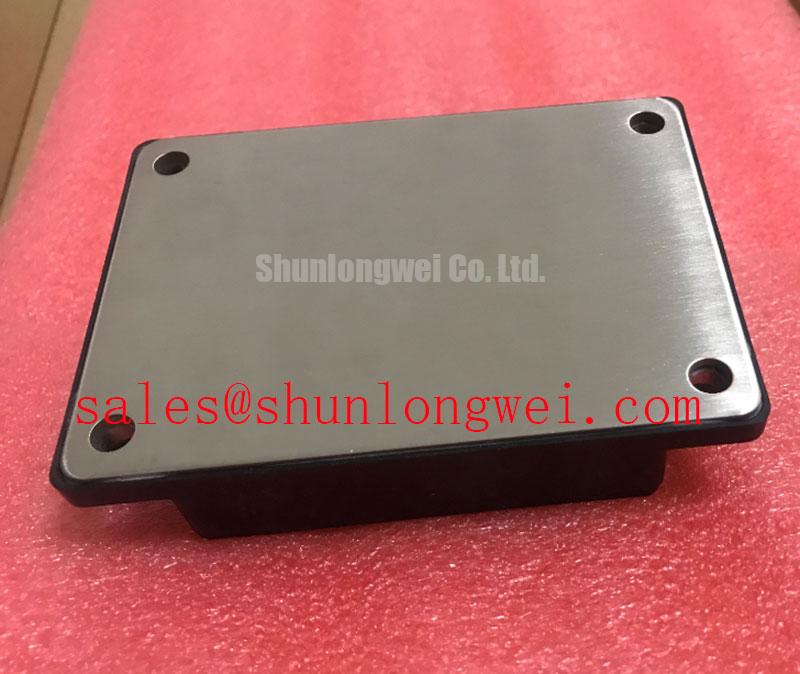
To understand the physics, consider the trench gate structure as a multi-lane highway for electrons. Compared to older planar designs that act like a single-lane road with frequent bottlenecks, the vertical trench drastically expands the conduction path, minimizing on-state resistance even at the full 200A load. From a thermal perspective, the copper baseplate acts as a thermal shock absorber. Just as a heavy-duty vehicle's suspension smooths out harsh physical impacts, the low 0.075 K/W thermal resistance smooths out aggressive temperature spikes caused by transient overloads, transferring heat rapidly to the external heat sink and protecting the delicate silicon junctions.
Frequently Asked Questions
Frequently Asked Questions on 1200V U-Series Operation
- How does the 0.075 K/W Rth(j-c) rating specifically influence my heat sink design?
This low thermal resistance indicates efficient heat transfer from the silicon to the baseplate. It allows engineers to utilize slightly more compact extruded aluminum heat sinks or operate at higher ambient temperatures without exceeding the maximum junction temperature limit. - Can the 2MBI200UM-120-50 handle the demanding power cycling of elevator drives?
Yes. The module's robust packaging and optimized wire bonding techniques are purpose-built to resist the thermo-mechanical stress induced by the continuous acceleration and deceleration profiles typical in elevator traction inverters. - What gate drive voltage is recommended to minimize switching losses for this 200A module?
A standard +15V/-15V gate drive configuration is highly recommended. The +15V ensures full saturation for lowest conduction loss, while the -15V provides a strong turn-off state, safeguarding against parasitic turn-on via the Miller capacitance during high dv/dt transients.
Ready to upgrade the thermal resilience of your next heavy-duty inverter? Consult the official specifications and evaluate your current thermal headroom to see how this 1200V U-series module can optimize your system design.