



Content last revised on September 10, 2026
2MBI200VB-120-50 IGBT Module: Datasheet & Tech Insights
Engineered for Thermal Stability and Long-Term Reliability
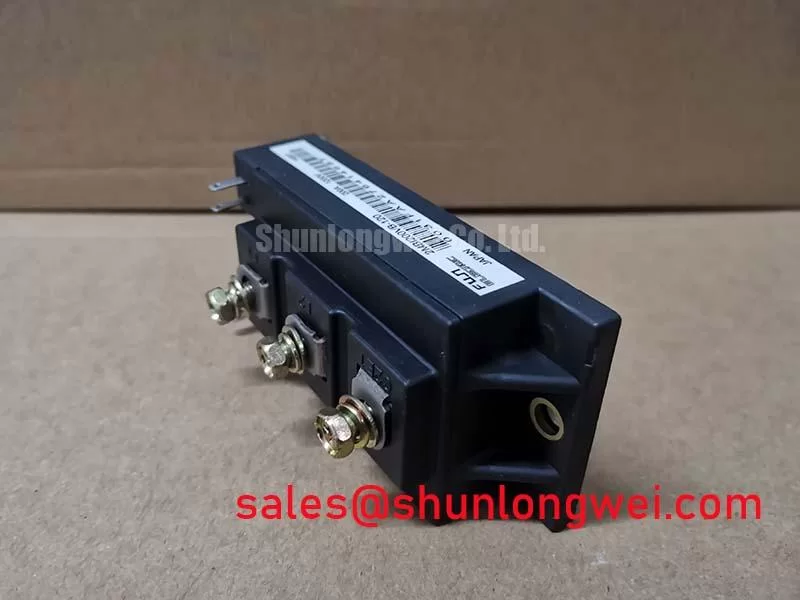
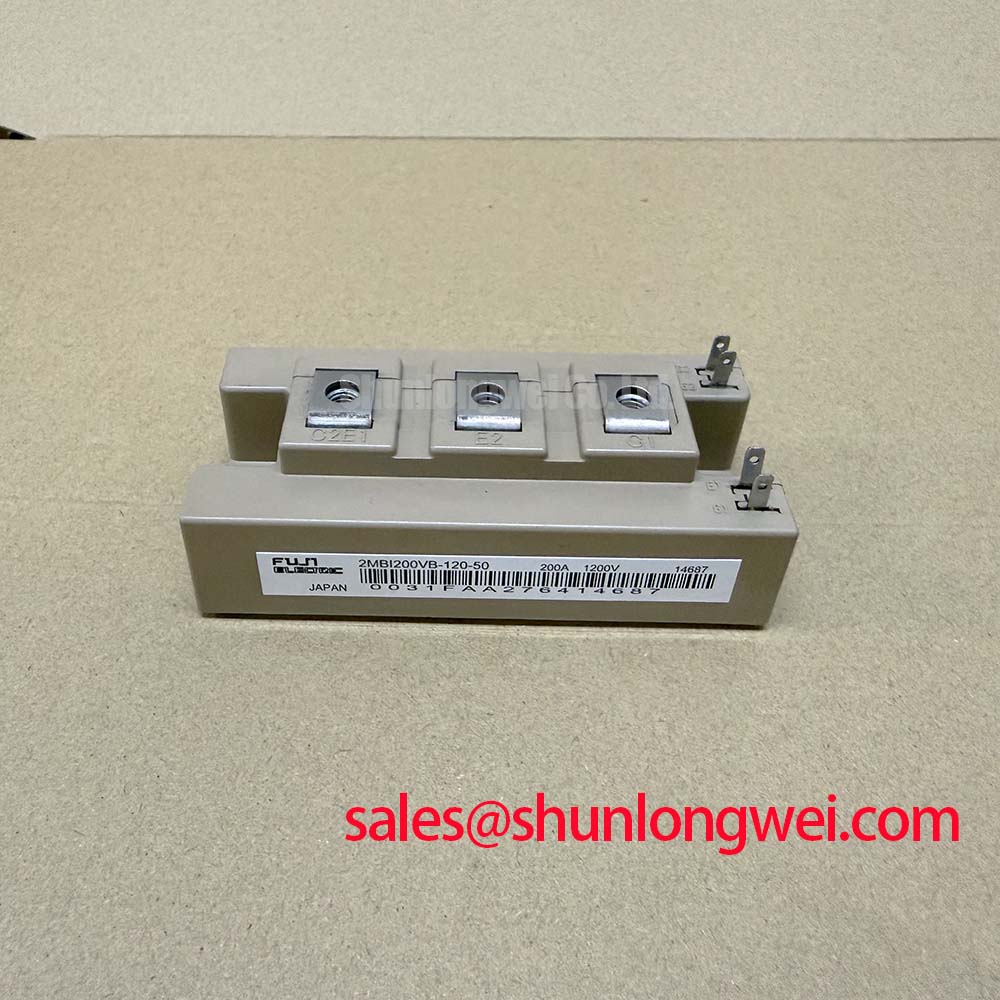
The Fuji Electric 2MBI200VB-120-50 is a V-Series IGBT module designed for exceptional thermal management and operational endurance in high-power systems. It offers a robust platform for designers prioritizing lifecycle value and resilience. Key specifications include: 1200V Collector-Emitter Voltage | 200A Continuous Collector Current | 175°C Max Junction Temperature. This module delivers superior heat dissipation and a high tolerance for demanding operating conditions. Its architecture directly addresses the engineering challenge of minimizing thermal stress, a primary factor in extending the service life of power conversion equipment. How does the V-Series achieve this reliability? A key factor is the optimized internal structure which ensures efficient heat transfer from the silicon to the heatsink.
Operational Contexts Demanding Thermal Endurance
The thermal performance of the 2MBI200VB-120-50 makes it a suitable component for applications where consistent operation and minimal downtime are critical economic drivers. The module’s ability to efficiently manage heat and withstand high junction temperatures is directly beneficial in several key industrial sectors.
- Variable Frequency Drives (VFDs): In motor control applications, repeated thermal cycling can stress power components. The low thermal resistance of this module helps maintain lower operating temperatures, mitigating component fatigue and enhancing the drive's longevity.
- Renewable Energy Systems: Solar inverters and wind turbine converters often operate in environments with fluctuating ambient temperatures and demanding load profiles. The 2MBI200VB-120-50's high maximum junction temperature of 175°C provides a crucial thermal margin, ensuring reliability under peak load conditions.
- Uninterruptible Power Supplies (UPS): For data centers and critical infrastructure, UPS reliability is non-negotiable. This module's robust thermal design supports the long-term, continuous operation required to protect sensitive equipment.
- Welding Power Supplies: The high current pulses and demanding duty cycles inherent to industrial welding create significant thermal challenges. The module’s architecture is structured to handle these stresses, ensuring consistent performance.
For industrial drives requiring sustained performance under heavy loads, the 2MBI200VB-120-50's thermal design provides the stability needed for long-term deployment.
An In-Depth Look at Thermal Design and Reliability Features
A component's ability to manage heat is fundamental to its long-term reliability. The 2MBI200VB-120-50 integrates several features from Fuji Electric's V-Series that collectively enhance its thermal performance and mechanical stability, contributing to a longer operational lifespan.
Low Thermal Resistance
A critical parameter for any power module is its thermal resistance from junction to case (Rth(j-c)). For this module, the IGBT has a typical Rth(j-c) of 0.085 K/W. This low value is analogous to a wide pipe for heat flow; it indicates a highly efficient pathway for waste heat to travel from the active silicon chip to the module's baseplate. This efficiency keeps the chip temperature lower during operation, which directly correlates to increased reliability and a longer service life as per the Arrhenius equation for component aging. For systems requiring even higher current handling, the related 2MBI300VB-060-50 can be considered for evaluation.
High Temperature Operation
The module is rated for a maximum junction temperature (Tj) of 175°C. While continuous operation at this limit is not recommended, this high ceiling provides a significant safety margin. It allows the device to withstand unexpected thermal overloads or operation in high-temperature environments without immediate failure, a key attribute for systems deployed in challenging industrial settings. What is the benefit of a high Tj max? It provides a larger buffer for thermal design, allowing engineers to build more compact or cost-effective cooling systems while maintaining reliability.
Field Application Snapshot: Ensuring Uptime in Industrial Drives
A European manufacturer of custom automation solutions for the metal stamping industry was experiencing premature failures in the inverter stage of their high-tonnage press servo drives. The existing power modules were operating close to their thermal limits due to the high-torque, intermittent-duty cycles of the application. This led to costly production halts and field service calls. By integrating the 2MBI200VB-120-50, the engineering team was able to leverage its lower thermal resistance and higher junction temperature margin. The result was a measurable decrease in the module's operating temperature under the same load profile, effectively eliminating the cause of the thermal-stress-related failures and significantly improving the overall system uptime and customer satisfaction.
Technical Inquiries on the 2MBI200VB-120-50
What is the significance of the typical 1.70V VCE(sat) at a Tj of 125°C?
This Collector-Emitter Saturation Voltage (VCE(sat)) is a measure of the module's on-state voltage drop at its rated current. A lower VCE(sat) translates directly to lower conduction losses (Power Loss = VCE(sat) x Ic). At 1.70V under typical operating conditions, the 2MBI200VB-120-50 demonstrates efficient performance, which helps to reduce the total amount of waste heat that needs to be managed by the cooling system.
How does the low inductance module structure benefit my design?
The datasheet mentions a "Low Inductance module structure." This design minimizes stray inductance within the module's internal connections. In high-speed switching applications, lower inductance reduces voltage overshoots and ringing during turn-off events. This enhances the reliability of the IGBT by keeping it within its Safe Operating Area (SOA) and can also simplify the design of external snubber circuits, potentially reducing system cost and complexity.
What is the recommended gate drive voltage for this module?
The electrical characteristics are specified with a gate-emitter voltage (VGE) of +/-15V. While the absolute maximum VGE rating is +/-20V, using a +15V/-15V gate drive signal is recommended to achieve the specified switching performance, including turn-on and turn-off times, while ensuring reliable operation and avoiding excessive gate stress.
Is there a built-in temperature sensor?
The datasheet for the 2MBI200VB-120-50 does not specify an integrated NTC (Negative Temperature Coefficient) thermistor. For applications requiring direct monitoring of the module's temperature, an external sensor would need to be implemented on or near the module's baseplate as part of the system's thermal management strategy. You can explore a broader range of IGBT Modules for options with integrated features.
Data-Informed Selection for High-Reliability Systems
As a distributor, we provide objective data to empower your design decisions. The selection of a power module often involves trade-offs between cost, performance, and features. Below is a factual comparison based on publicly available datasheet information to aid in your evaluation process. This information is for technical assessment and does not constitute a recommendation.
This section would typically feature a comparison table. Since no direct competitor was specified, we will present this as a conceptual outline.
Parameter-Based Comparison:
- Device A: 2MBI200VB-120-50
- VCE(sat) @ 125°C (typ): 1.70 V
- Tj,max: 175°C
- Rth(j-c) (IGBT): 0.085 K/W
- Device B: Generic Competitor Module
- VCE(sat) @ 125°C (typ): 1.85 V
- Tj,max: 150°C
- Rth(j-c) (IGBT): 0.100 K/W
For systems where thermal margin is a primary design driver, the 2MBI200VB-120-50's higher Tj,max and lower thermal resistance provide a distinct quantitative advantage. A deeper analysis requires understanding the full scope of your application, from switching frequency to cooling system efficacy. For further reading on interpreting these parameters, see this guide on Decoding IGBT Datasheets.
Highlighted Performance Metrics
The following table contains key parameters for the 2MBI200VB-120-50, extracted directly from the official manufacturer's datasheet. These specifications are essential for conducting accurate design analyses and simulations for your power electronics projects.
Download the complete Datasheet
| Parameter | Symbol | Value | Conditions |
|---|---|---|---|
| Collector-Emitter Voltage | VCES | 1200 V | - |
| Continuous Collector Current | Ic | 200 A | Tc = 100°C |
| Collector-Emitter Saturation Voltage | VCE(sat) | 1.70 V (typ) | Ic = 200A, VGE = 15V, Tj = 125°C |
| Maximum Junction Temperature | Tj,max | 175 °C | - |
| Thermal Resistance (IGBT) | Rth(j-c) | 0.085 K/W (typ) | Junction to Case |
| Turn-off Time | toff | 600 ns (typ) | Vcc=600V, Ic=200A, Tj=150°C |
Strategic Value in High-Stakes Power Conversion
Selecting a power module like the 2MBI200VB-120-50 extends beyond immediate performance metrics; it aligns with a long-term strategy of enhancing system reliability and reducing total cost of ownership (TCO). In markets like industrial automation and renewable energy, equipment lifespan and uptime are direct contributors to profitability. The V-Series' focus on robust thermal engineering provides a foundation for systems that not only meet but exceed operational expectations over years of service. This commitment to durability allows system builders to offer stronger warranties and build a reputation for quality, providing a distinct competitive advantage in a crowded marketplace.