

Content last revised on September 10, 2026
Fuji 2MBI300VH-120-50 | Mastering High-Frequency Power Conversion with V-Series Technology
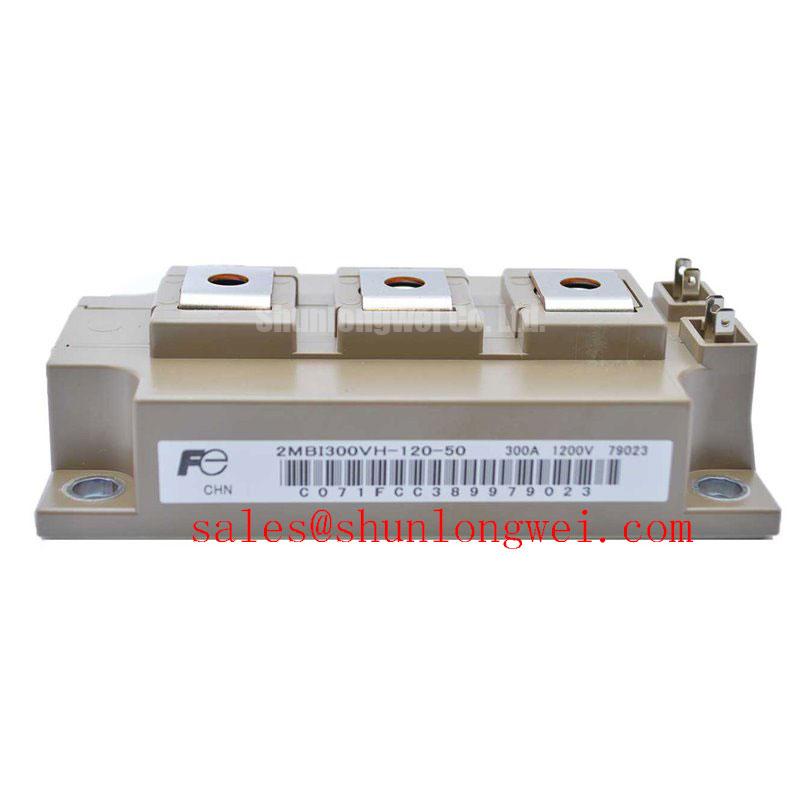
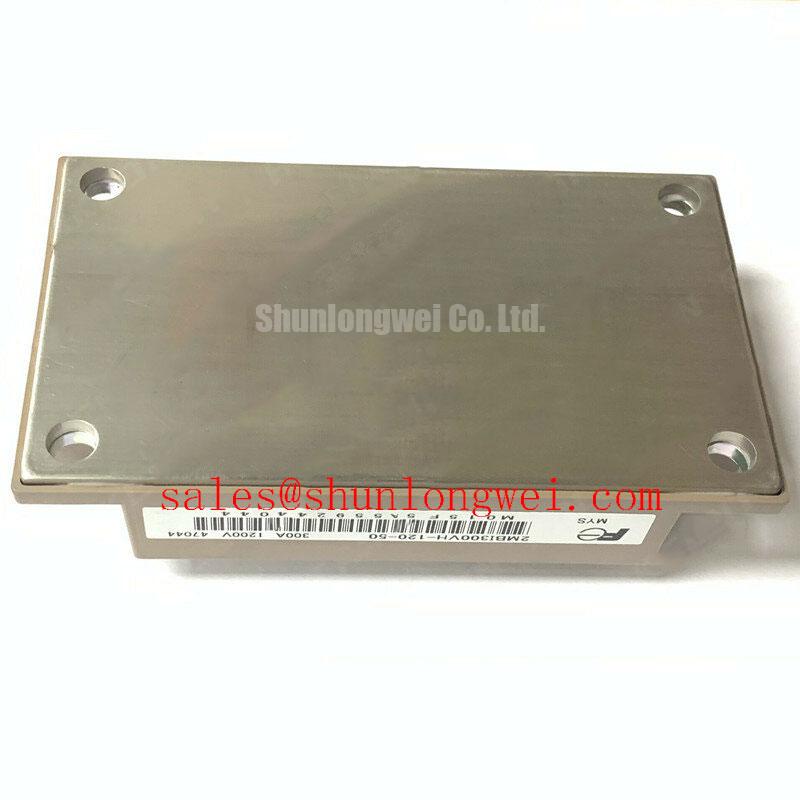
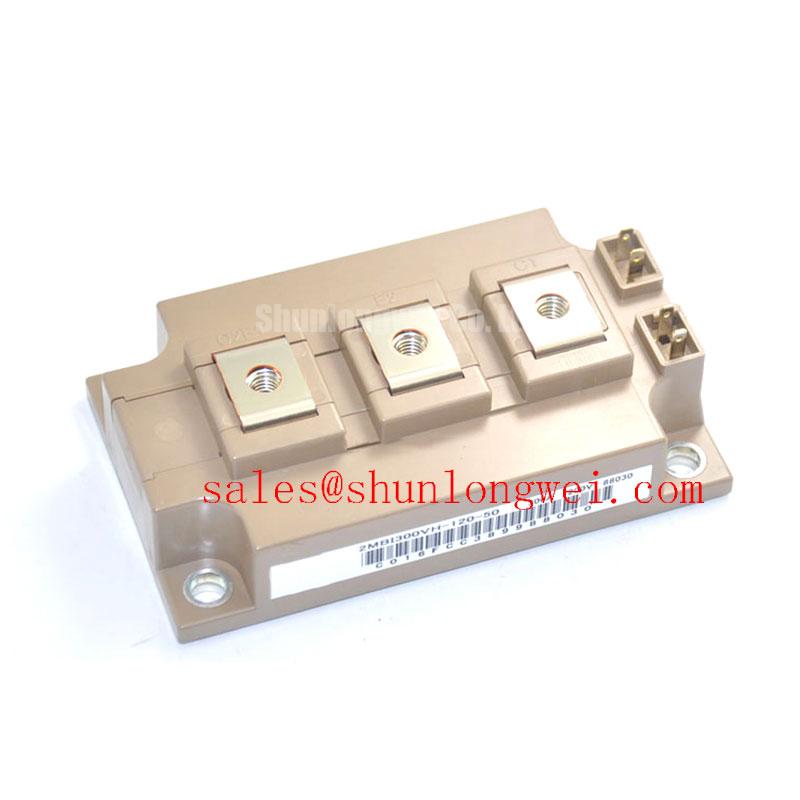
The Fuji 2MBI300VH-120-50 is a 1200V, 300A dual IGBT module engineered to meet the rigorous demands of modern high-power conversion systems. As a key component of Fuji Electric's acclaimed 6th Generation V-Series, this module offers a formidable combination of high-speed switching, low power loss, and exceptional reliability. It is specifically designed for engineers developing high-performance inverters, servo drives, and uninterruptible power supplies (UPS) who require a balance of efficiency and robust performance in a compact footprint.
Highlights of the 2MBI300VH-120-50
- 6th Generation V-Series Technology: Leverages an advanced trench gate and field-stop (FS) structure to significantly reduce both conduction and switching losses.
- High-Speed Switching: Optimized for high-frequency operation, enabling smaller and more cost-effective magnetic components in the overall system design.
- Enhanced Thermal Performance: Features a low thermal resistance design, ensuring efficient heat dissipation and stable operation up to a maximum junction temperature of 175°C.
- Low Inductance Package: The standard M276 package is engineered to minimize internal stray inductance, which is critical for reducing voltage overshoot and improving reliability in fast-switching applications.
Technical Deep Dive: The V-Series Advantage
At the core of the Fuji 2MBI300VH-120-50's performance is its sophisticated 6th generation V-Series IGBT chipset. This technology represents a significant leap forward from earlier planar designs. The transition to a trench gate structure dramatically increases the density of cells on the silicon, which directly translates to a lower on-state voltage (VCE(sat)) for a given current. For the design engineer, this means lower conduction losses and less heat to manage, a critical factor in power-dense applications.
Furthermore, the integration of a Field-Stop (FS) layer allows for a much thinner silicon wafer without compromising the module's 1200V blocking capability. This thinner drift region not only lowers VCE(sat) but also reduces the turn-off switching loss (Eoff). The result is a module that excels in applications demanding both high efficiency and high switching frequencies, pushing the boundaries of what's possible in power conversion design. This focus on loss reduction is a core tenet of modern IGBT modules.
Application Scenarios & Value Proposition
The architectural strengths of the 2MBI300VH-120-50 make it an ideal solution for several demanding applications:
- High-Frequency Motor Drives: In advanced AC and DC servo drives, the module's fast switching capabilities allow for higher PWM frequencies. This results in smoother motor operation, reduced audible noise, and improved control precision, which is vital for robotics and CNC machinery.
- Solar and Wind Inverters: For renewable energy systems, every percentage point of efficiency counts. The low VCE(sat) of the 2MBI300VH-120-50 minimizes energy loss during the DC-to-AC conversion process, maximizing the power delivered to the grid and improving the overall return on investment of the installation.
- Uninterruptible Power Supplies (UPS): Reliability is paramount in UPS systems. The module's robust design and high-temperature operational ceiling ensure dependable performance during critical power backup operations, protecting sensitive data centers and industrial processes. The V-series' proven durability provides the confidence needed for these mission-critical systems.
Key Parameter Overview
The following table provides a summary of the essential electrical and thermal characteristics for the Fuji 2MBI300VH-120-50. For comprehensive design details, including characteristic curves and application notes, please download the official datasheet.
| Parameter | Value |
|---|---|
| Collector-Emitter Voltage (VCES) | 1200 V |
| Continuous Collector Current (IC) at Tc=125°C | 300 A |
| Collector-Emitter Saturation Voltage (VCE(sat)) typ. at IC=300A, Tj=150°C | 2.30 V |
| Maximum Junction Temperature (Tvj max) | 175°C |
| Turn-on Time (ton) typ. at Tj=150°C | 0.60 µs |
| Turn-off Time (toff) typ. at Tj=150°C | 0.80 µs |
| Thermal Resistance, Junction to Case (Rth(j-c)) IGBT | 0.093 °C/W |
| Package | M276 |
Industry Insight & Strategic Advantage
The push for electrification and higher efficiency standards is reshaping the power electronics landscape. The Fuji 2MBI300VH-120-50 is perfectly positioned to address these trends. Its balance of low losses and fast switching supports the industry's move toward higher power density and system miniaturization. While this module provides a robust 300A capacity, systems requiring even greater output can consider the pin-compatible 2MBI450VH-120-50, which offers a seamless upgrade path to 450A within the same V-Series family. This strategic scalability allows engineers to develop a platform-based approach for a range of power outputs, streamlining design and simplifying inventory. Properly understanding these specifications is key, as detailed in our guide on decoding IGBT datasheets.
Frequently Asked Questions (FAQ)
1. What are the recommended gate driver settings for the 2MBI300VH-120-50?
For optimal performance, a gate voltage of +15V for turn-on and -15V for turn-off is recommended. The datasheet suggests a starting external gate resistor (RG) of 1.8Ω for balancing switching speed and controlling voltage overshoot, but this value should be optimized based on your specific layout's parasitic inductance.
2. Can this module be used in parallel for higher current applications?
Yes, the 2MBI300VH-120-50 can be paralleled. The positive temperature coefficient of its VCE(sat) helps ensure good current sharing between modules. However, careful attention to symmetrical PCB layout and busbar design is crucial to minimize imbalances in stray inductance and ensure reliable operation. For more details, consult Fuji Electric's application notes on IGBT paralleling.
3. What is the key difference between the V-Series and the older U-Series?
The V-Series (6th Gen) is a direct evolution of the U-Series (5th Gen). While both utilize a trench gate structure, the V-Series features a thinner wafer and optimized cell design. This results in lower overall power losses, particularly a lower VCE(sat) and reduced switching losses, allowing for higher efficiency and/or higher operating frequencies compared to its predecessor.