


Content last revised on September 19, 2026
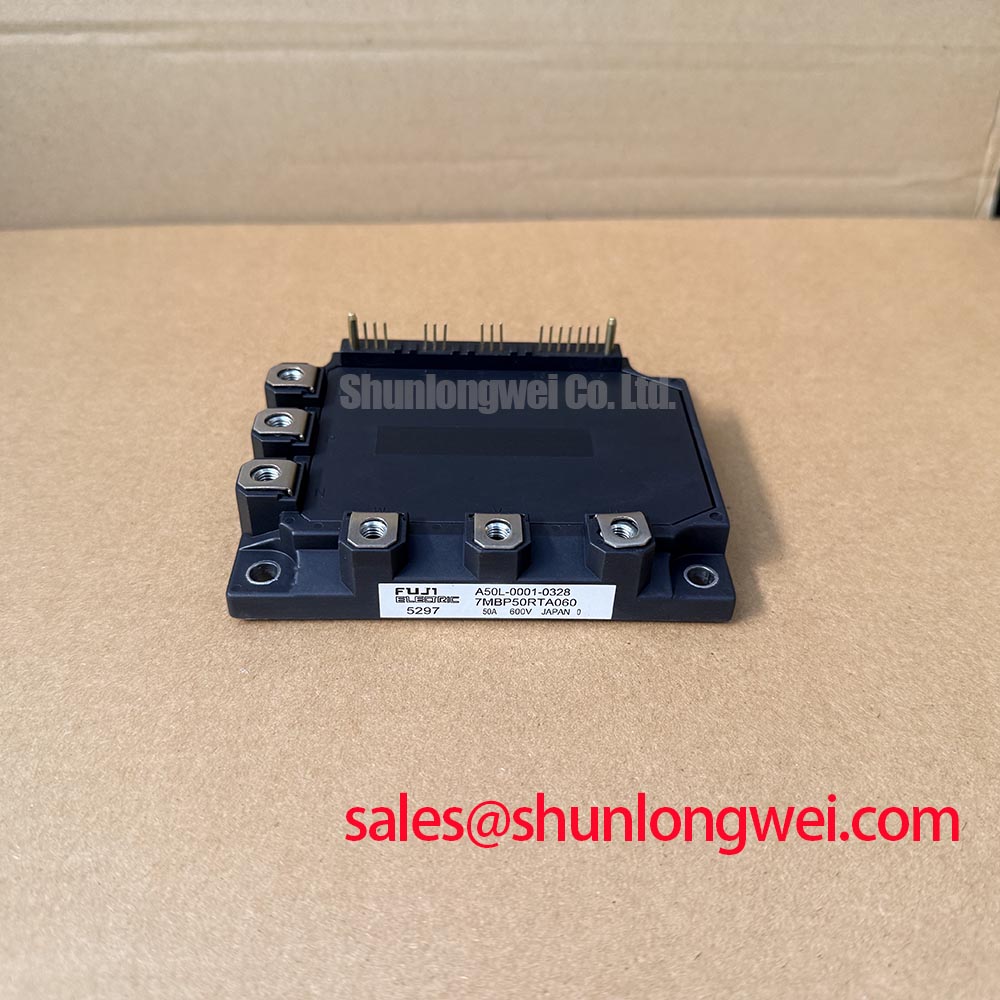
7MBP50RA060-06 Product Identification and Application Review
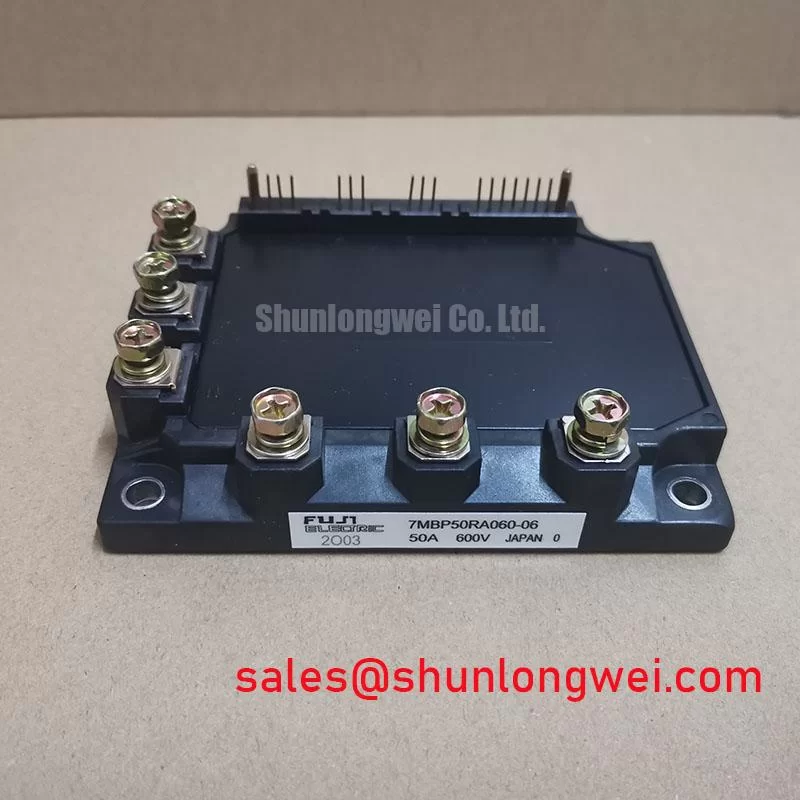
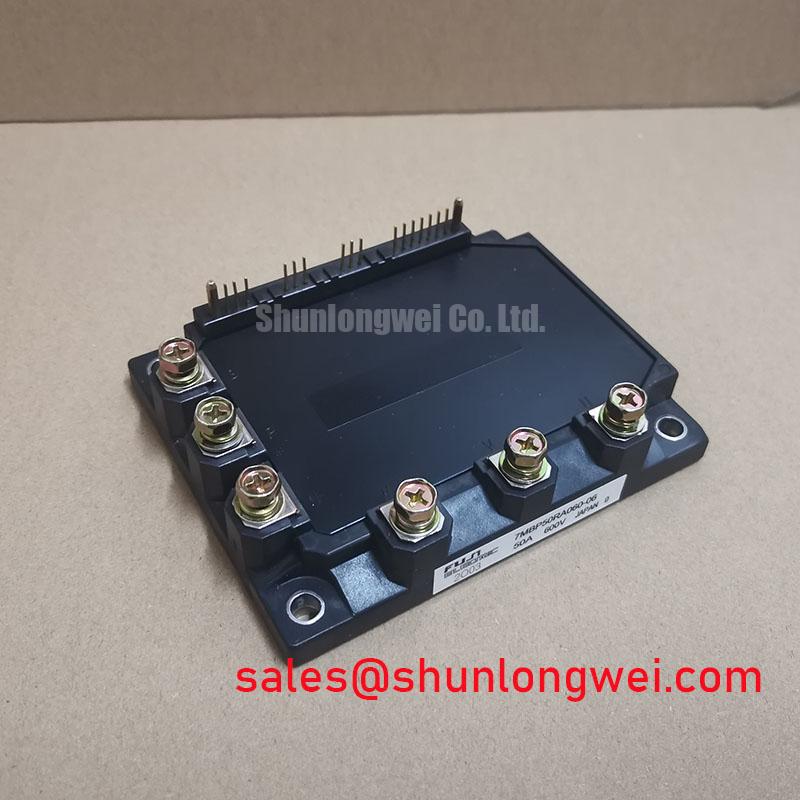
Before fitting the 7MBP50RA060-06, verify the drive cabinet nameplate, compare the module terminal arrangement with the original assembly documentation, and check that the replacement position remains within the official 600 V and 50 A ratings. This Fuji Electric PIM module should be evaluated as a power assembly within its existing converter, gate drive, cooling path, DC link, and protection architecture rather than as an isolated replacement part.
| Parameter | Specification Status | Value |
|---|---|---|
| Manufacturer | Product identification | Fuji Electric |
| Product model | Product identification | 7MBP50RA060-06 |
| Voltage rating | Official Specification | 600 V |
| Current rating | Official Specification | 50 A |
| Package style | Official Specification | Module |
| Product category | Product classification | PIM module |
The rated values define the verified electrical identity of this module. They do not establish a universal DC bus voltage, switching frequency, gate voltage, thermal interface thickness, short circuit timing, or fuse selection for every system. Those conditions remain dependent on the original equipment design and should be validated with the complete power stage under controlled test conditions.
Assembly Integrity & Layout Architecture: Implementing Fault Clearing Dynamics for 7MBP50RA060-06
A repair engineer should begin by inspecting the surrounding driver board, DC link capacitor connections, busbar contact surfaces, and gate signal routing before energizing a converter fitted with the 7MBP50RA060-06. A power module can be electrically suitable by rating while the associated assembly still contains a damaged driver, degraded connector, disturbed current sensor connection, or high resistance bus joint. These conditions can alter switching behavior and protection response after replacement.
Type I and Type II desaturation terminology is often used for gate driver protection schemes, but a specific desaturation threshold, response interval, or short circuit withstand duration is not established here as an official specification for this Fuji Electric model. The system integrator should verify the original driver documentation and the applicable module datasheet before retaining or redesigning a protection circuit. The protection objective is to identify abnormal collector emitter voltage during commanded conduction and remove gate drive in a controlled manner before the power stage exceeds its validated operating limits.
Soft turn off is a Design Consideration when desaturation protection is triggered. An abrupt interruption of fault current can create an inductive voltage overshoot across the switching loop. A two stage gate discharge strategy can reduce that stress when it is compatible with the installed driver and the module’s permitted conditions. Its effectiveness must be established by measuring collector emitter voltage, gate emitter voltage, and current at the actual equipment bus voltage. Do not assume that a protection method transferred from another inverter frame will produce the same waveform in this assembly.
Keep the fault sensing route separated from high current commutation paths where the physical layout allows. The sense connection, gate return, and driver reference should be treated as signal integrity paths, while the DC link to module path is a high di/dt energy path. Design Consideration calls for minimizing shared inductance between these routes to reduce false desaturation events and unintended gate disturbances. If intermittent protection trips occur, capture the gate command, desaturation signal, DC link voltage, and phase current together. A waveform comparison against a known functioning axis is more useful than assigning one presumed cause.
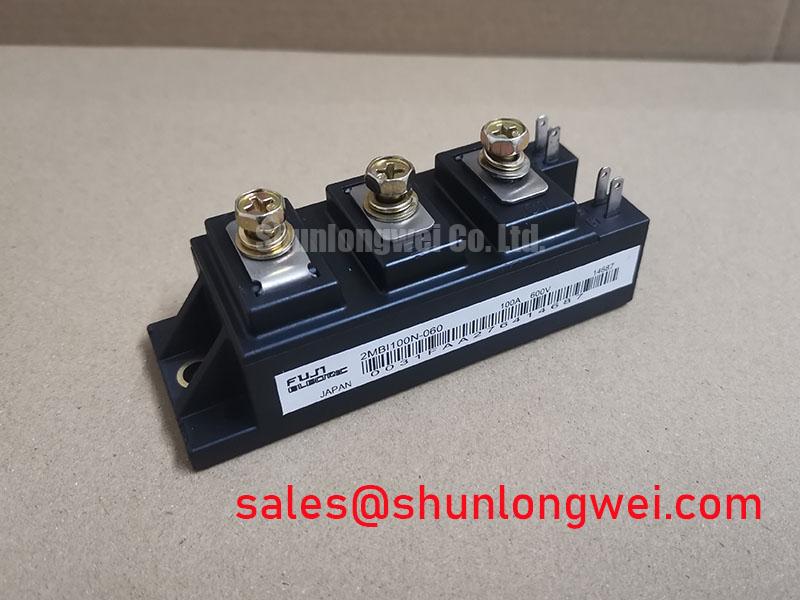
For equipment using an upstream rectifier or auxiliary power conversion stage, engineers may also assess the operating relationship with a device such as the 6MBI100L-060. This is a system level compatibility exercise, not a claim that the two modules are interchangeable. Their ratings, topology, wiring, drive method, cooling arrangement, and protection implementation must each be checked against the original circuit.
Transient Dynamics & Electrical Design: Multi Module Parallel Current Sharing on 7MBP50RA060-06
The 7MBP50RA060-06 carries an official 50 A current rating, but parallel operation requires more than adding current ratings. In steady operation, IGBT conduction behavior can exhibit a positive temperature coefficient over relevant operating regions, which can assist static current sharing. This characteristic does not guarantee balanced current in a completed machine. Dynamic current distribution is strongly affected by differences in gate loop impedance, commutation loop geometry, individual cooling conditions, and timing behavior of the driver channels.
When multiple power modules are assessed in parallel, the physical current paths should be kept geometrically comparable. Equal length alone is not sufficient because conductor spacing and return path placement influence inductance. Design Consideration favors a symmetrical laminated busbar or closely coupled bus arrangement to suppress turn off overshoot and reduce unequal commutation behavior. The system engineer should confirm peak voltage margins against the DC link voltage through switching tests at the relevant current and temperature conditions.
Switching frequency directly affects the balance between conduction loss, switching loss, heatsink capability, and airflow performance. No fixed frequency range should be prescribed for this model from the provided official ratings alone. During evaluation of a precision stepper or BLDC motor servo motion actuator, measure the temperatures of each parallel module location and observe phase current balance through representative acceleration, deceleration, and holding duty. A current mismatch may reflect gate timing, sensor scaling, thermal path variation, or motor control behavior rather than a single component defect.
Transient thermal impedance is also important during short overloads and repetitive servo motion peaks. The thermal response of a module is time dependent, so a brief junction temperature excursion cannot be judged solely from a steady heatsink reading. Engineering Recommendation is to use the applicable manufacturer thermal data for the exact module and validate the complete cooling assembly under the equipment’s real load profile. Airflow direction, blocked fins, fan health, heatsink flatness, and enclosure recirculation should all be reviewed before interpreting a thermal alarm.
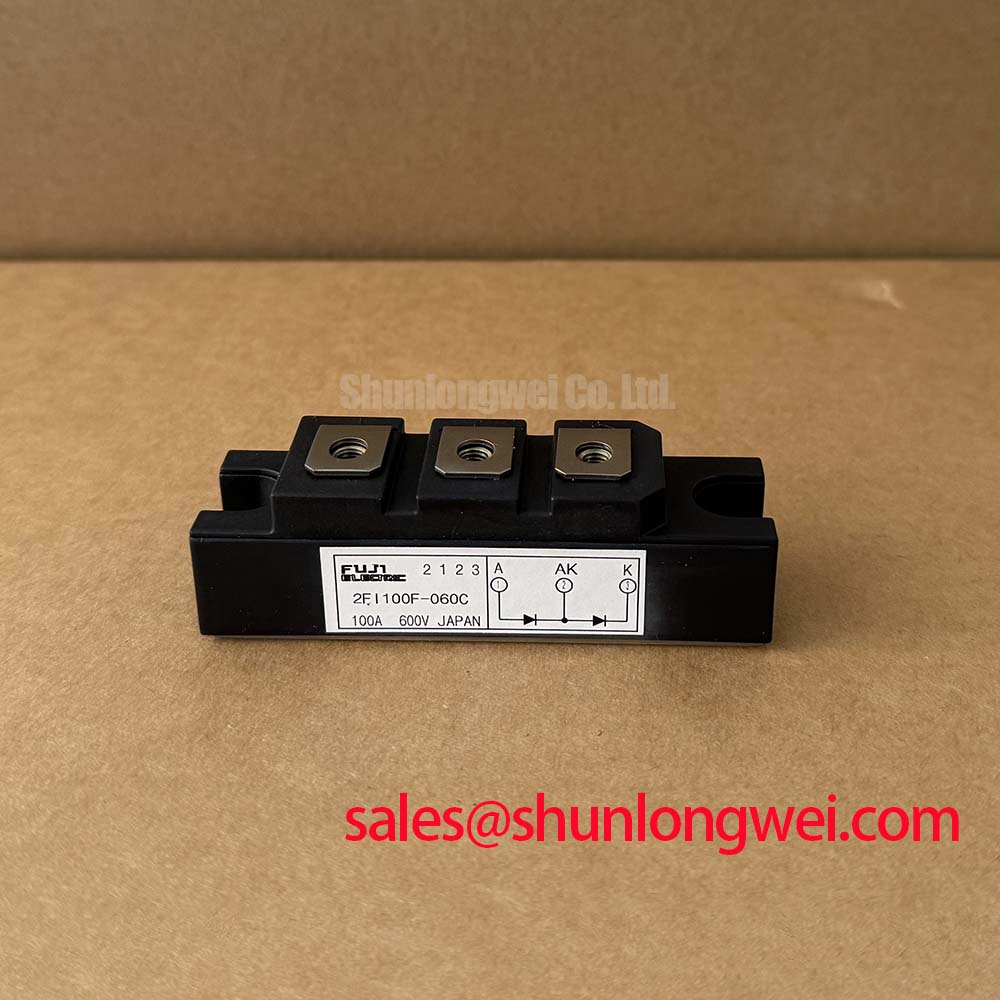
For sourcing evaluation where the existing circuit points to another Fuji Electric power module, the 7MBR50LC060 can be reviewed as a separate reference item. Its use requires formal comparison of topology, terminal map, driver interface, mechanical fit, electrical ratings, and thermal data. A matching voltage or current figure alone does not establish replacement suitability.
Assembly Integrity & Layout Architecture: Suppressing Cres Induced Gate Voltage Spikes for 7MBP50RA060-06
During commutation, collector voltage movement can couple through internal capacitances and external parasitic inductances into the gate loop. If the off state gate path is high impedance or shares a return path with high current switching, the induced voltage may approach an unintended turn on condition. In a bridge based motor drive, that condition can increase shoot through risk, create abnormal phase current, or cause irregular driver protection activity.
Active Miller clamp circuits and negative gate bias are commonly considered as Design Considerations for high dv/dt IGBT applications. The required gate drive arrangement, clamp behavior, and bias level must be taken from the original drive design and validated against the permitted operating conditions of the exact module. The official information supplied for the 7MBP50RA060-06 confirms its 600 V and 50 A identity, but does not establish a universal gate bias prescription. The system integrator should verify required gate drive limits from original module documentation.
Use a low impedance gate return routed close to its associated gate conductor where practical. This reduces the area exposed to switching magnetic fields and helps the driver retain control of the gate potential. Gate voltage should be measured directly at the module control terminals with a suitable differential measurement method. Measurements taken only at the driver board can conceal ringing produced by lead inductance between the board and module.
When diagnosing unexplained current spikes, inspect the driver supply stability, isolation barrier behavior, command overlap, and the relationship between switching node voltage and the inactive device gate waveform. Industrial drive boards may use optocouplers or digital isolators, and their common mode transient immunity is a system specification that must be verified against the actual switching environment. A gate disturbance may indicate layout coupling, insufficient return control, driver supply movement, or a timing issue. Oscilloscope evidence should guide the corrective action.
💡 Pro Tip: Keep positive and return conductors of each gate loop closely coupled, then verify turn off voltage overshoot and inactive gate behavior with double pulse testing before approving a layout revision.
EMI performance is likewise determined by the complete converter, including busbar geometry, cable routing, motor leads, enclosure bonding, filtering, and switching waveforms. The module itself should not be represented as independently compliant with system EMC standards. Engineers seeking broader context on fast switching power conversion can consult The 1200 V CoolSiC™ MOSFET Advantage in Three as a technical reference, while retaining separate validation for this 600 V Fuji Electric PIM implementation.
7MBP50RA060-06 Thermal Electrical Optimization: Baseplate Convexity Compensation and Screw Practical Tuning
Before mounting the module, clean the heatsink contact surface, remove residue from the prior interface material, and inspect for burrs, dents, corrosion, or visible flatness concerns. A mechanically sound interface supports predictable heat transfer from the module base to the heatsink. Excess thermal compound can trap air or create an uneven separation layer, while insufficient coverage can leave local contact areas poorly coupled. The applicable mounting instructions for the exact package should govern torque, screw sequence, compound type, and interface method.
Baseplate curvature and heatsink flatness should be considered together. A module can appear fully installed while localized contact pressure remains uneven. Engineering Recommendation is to apply thermal interface material in a controlled, uniform layer consistent with the original assembly method, then use a progressive diagonal tightening sequence where the mechanical documentation permits it. This approach distributes clamping force more evenly than fully tightening one corner before the remaining fasteners are seated.
Do not assign a screw torque value from generic module practice unless it is confirmed for the installed package hardware and manufacturer documentation. Torque depends on thread size, washer arrangement, mounting material, fastener condition, and module construction. After installation, inspect that the module is seated without rocking and that busbar connections are aligned without imposing mechanical side load on terminals.
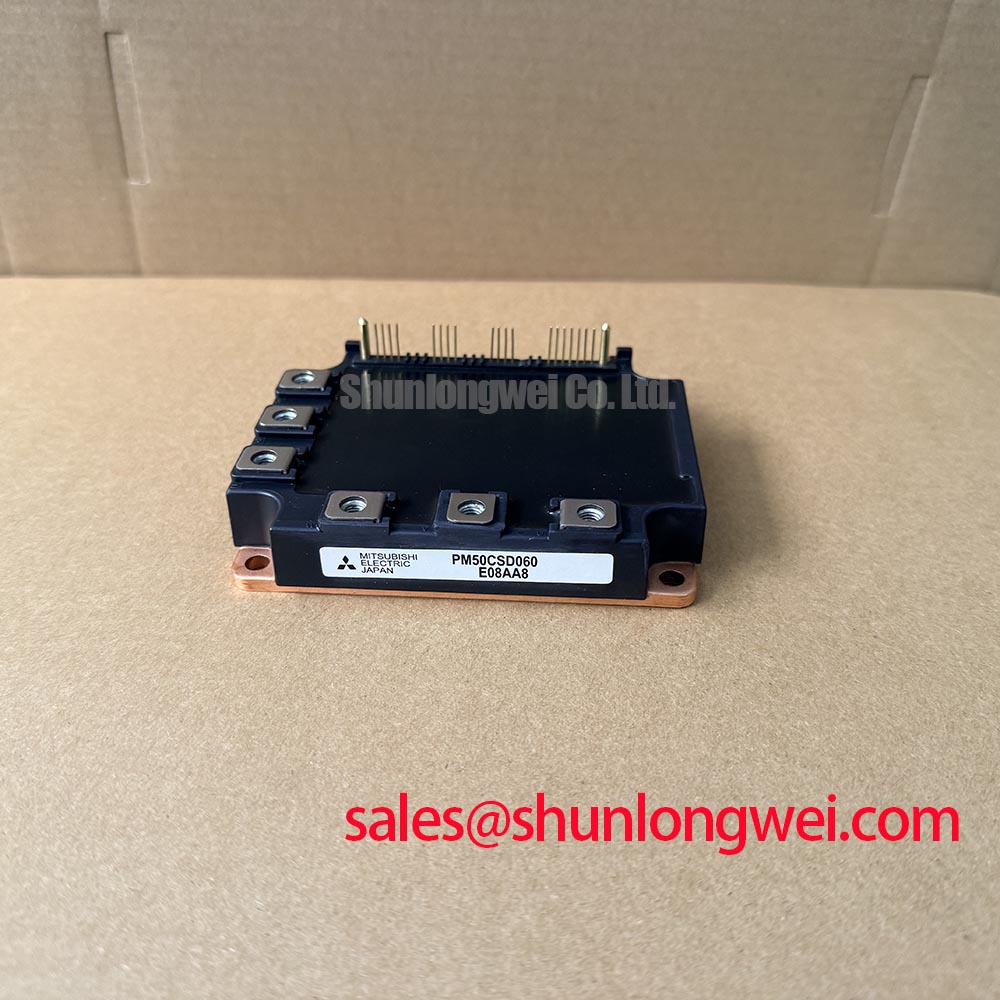
Thermal troubleshooting should connect physical inspection with electrical evidence. A localized temperature rise can be associated with interface degradation, obstructed airflow, abnormal switching loss, unbalanced current, or changes in the motor load profile. Check cooling fan operation, airflow path cleanliness, heatsink attachment, phase current waveform, and gate signal integrity before replacing a power module again. Fuji Electric’s Power Semiconductor and IPM Modules information and its PIM 7 Pack technical material provide useful manufacturer context for reviewing power module families, while the exact equipment documentation remains the controlling source for replacement integration.