Content last revised on September 10, 2026
CM150DU-12F: A Deep Dive into this 600V/150A Dual IGBT for Reliable Power Conversion
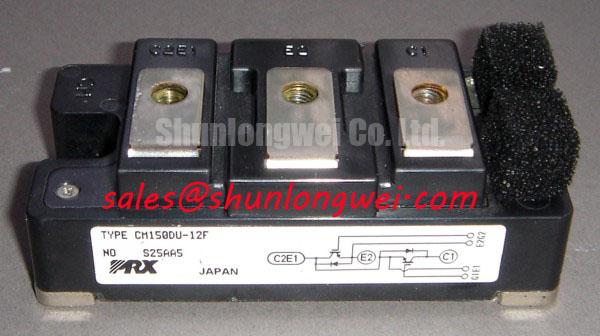
The CM150DU-12F is a dual IGBT module engineered for robust thermal management and high reliability in demanding industrial applications. With core specifications of 600V, 150A, and a typical V_CE(sat) of 2.2V, this module provides a balance of efficient power switching and durability. Its primary engineering benefits include reduced conduction losses and a simplified inverter design topology. For motor drives and power supplies prioritizing thermal stability and design simplicity, the CM150DU-12F is a benchmark solution. What is the primary benefit of its dual-IGBT configuration? It significantly simplifies the layout and assembly of a half-bridge inverter leg.
Key Parameter Overview
Decoding Key Electrical and Thermal Specifications
The performance of the CM150DU-12F is defined by its electrical and thermal characteristics. These parameters are critical for engineers to accurately model system efficiency, predict thermal behavior, and ensure operational reliability under specified load conditions. The module integrates two IGBTs in a half-bridge configuration, each paired with a super-fast recovery free-wheel diode.
| Absolute Maximum Ratings (Tj = 25°C) | |
| Collector-Emitter Voltage (V_CES) | 600V |
| Collector Current (I_C) | 150A |
| Peak Collector Current (I_CM) | 300A |
| Maximum Power Dissipation (P_C) | 520W |
| Operating Junction Temperature (T_j) | -40 to 150°C |
| Electrical & Thermal Characteristics (Tj = 25°C) | |
| Collector-Emitter Saturation Voltage (V_CE(sat)) (typ. at 150A) | 2.2V |
| Gate-Emitter Threshold Voltage (V_GE(th)) | 5V to 7V |
| Thermal Resistance, Junction to Case (R_th(j-c)) (IGBT) | 0.20°C/W |
| Thermal Resistance, Junction to Case (R_th(j-c)) (Diode) | 0.36°C/W |
| Turn-on Delay Time / Rise Time (t_d(on) / t_r) | 180ns / 60ns |
| Turn-off Delay Time / Fall Time (t_d(off) / t_f) | 450ns / 100ns |
Download the CM150DU-12F datasheet for detailed specifications and performance curves.
Application Scenarios & Value
System-Level Benefits in Motor Drives and Power Conversion
The CM150DU-12F is engineered as a foundational component for power conversion systems operating on 200/240V AC lines. Its specifications make it particularly well-suited for applications such as AC motor controls, Uninterruptible Power Supplies (UPS), and industrial welding equipment. In a Variable Frequency Drive (VFD), for instance, managing thermal load is a primary engineering challenge. The module's specified thermal resistance (R_th(j-c)) of 0.20°C/W provides a reliable metric for designing an effective cooling system. This allows engineers to keep the IGBT junction temperature within the safe operating area, ensuring system longevity even under demanding start-stop cycles or high ambient temperatures. The dual-IGBT design inherently simplifies the inverter leg construction, reducing assembly complexity and the number of high-current connections compared to using discrete components.
This module's low collector-emitter saturation voltage (V_CE(sat)) directly contributes to higher system efficiency by minimizing conduction losses. What is the impact of lower conduction loss? It reduces the amount of waste heat generated, which can lead to smaller heatsinks and more compact overall system designs. For applications where higher current handling is needed within the same voltage class, the related CM200DU-12F offers a 200A capability. For systems requiring operation on higher voltage lines, the CM150DU-24F provides a 1200V blocking voltage.
Technical Deep Dive
An In-Depth Analysis of Thermal Performance and CSTBT™ Technology
A crucial aspect of power module reliability is its thermal performance, which is fundamentally governed by the thermal resistance from the semiconductor junction to the case, or R_th(j-c). The CM150DU-12F's value of 0.20°C/W for the IGBT is a key performance indicator. This can be thought of like the diameter of a pipe; a lower resistance value is like a wider pipe, allowing heat to be evacuated from the chip more efficiently. This parameter's predictability is vital for thermal simulations, enabling engineers to optimize heatsink selection and prevent thermal runaway. The module's isolated baseplate further simplifies thermal design by allowing direct mounting to a shared heatsink without complex insulation layers, which could otherwise increase thermal resistance.
The module's electrical efficiency is rooted in Mitsubishi's CSTBT™ (Carrier Stored Trench Gate Bipolar Transistor) technology. This chip structure is designed to reduce the collector-emitter saturation voltage (VCE(sat)) by optimizing the carrier concentration in the device during the on-state. The result is lower power dissipation during conduction, a critical factor for applications with high duty cycles or continuous operation, directly impacting the total cost of ownership through energy savings and reduced cooling requirements.
Frequently Asked Questions
How does the V_CE(sat) of 2.2V impact the thermal design of a system?
A lower V_CE(sat) directly reduces conduction power loss (P_loss = V_CE(sat) x I_C), meaning less heat is generated by the IGBT for a given current. This reduction in waste heat lessens the burden on the cooling system, potentially allowing for a smaller, lighter, or lower-cost heatsink to maintain the junction temperature within safe operating limits.
What makes the dual (2-in-1) configuration beneficial for a Variable Frequency Drive (VFD) design?
The dual, or half-bridge, configuration integrates two IGBTs and their corresponding freewheeling diodes into a single, isolated module. This simplifies the design of an inverter phase leg by reducing component count, minimizing the complexity of the DC bus bar layout, and lowering parasitic inductance, which can cause voltage overshoots during high-speed switching.
For designers specifying power components for new or existing industrial systems, the CM150DU-12F offers a mature and reliable platform. To evaluate its fit for your specific application requirements or to inquire about procurement, please contact our technical sales team for a consultation.