Content last revised on September 10, 2026
PM25RL1A120: Engineering Analysis of a 1200V, 25A Intellimod™ Module
An Integrated Power Stage for Efficient Motor Control
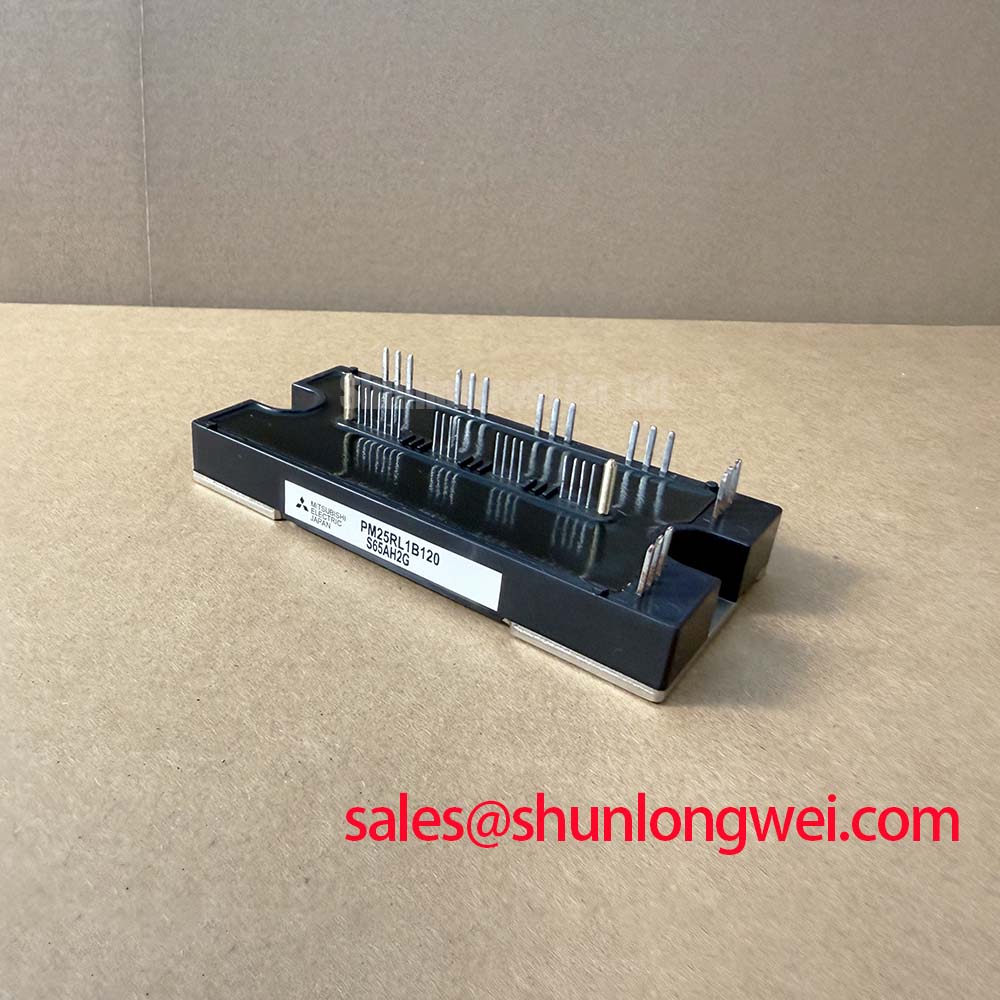
The PM25RL1A120 is an advanced Intellimod™ L1-Series Intelligent Power Module (IPM) from Mitsubishi, engineered to streamline the design of high-efficiency power conversion systems. It delivers a robust 1200V collector-emitter voltage and a 25A continuous collector current rating, integrating a three-phase inverter, brake circuit, and intelligent drive and protection logic into a single, compact flat-base package. At its core, the module leverages Mitsubishi's 5th generation CSTBT™ (Carrier Stored Trench-Gate Bipolar Transistor) technology, enabling significant reductions in conduction and switching losses. Key benefits include enhanced system reliability through direct chip-level protection and a simplified bill of materials. What is the primary benefit of its integrated design? It drastically reduces design complexity and time-to-market for compact motor drives. For applications requiring a balance of performance and high integration, the PM25RL1A120 provides a decisive engineering advantage.
Key Parameter Overview
Decoding Specs for Performance and Reliability
The technical specifications of the PM25RL1A120 are pivotal for system design, particularly in thermal management and fault tolerance. Understanding these values allows engineers to optimize performance and ensure long-term reliability. Below is an interpretation of its most critical parameters.
| Parameter | Value | Engineering Significance |
|---|---|---|
| Collector-Emitter Voltage (Vces) | 1200V | Provides a substantial safety margin for applications running on 400V to 575V AC lines, ensuring resilience against voltage transients common in industrial environments. |
| Collector Current (Ic) | 25A (at Tc=25°C) | Defines the module's capacity for continuous operation, making it suitable for driving small to mid-sized AC induction or servo motors up to approximately 7.5 kW, depending on switching frequency and cooling. |
| Collector-Emitter Saturation Voltage (Vce(sat)) | Typ. 1.9V (at 25A) | This low value, a hallmark of the 5th Gen CSTBT™ technology, directly minimizes conduction losses. Lower heat generation allows for more compact heatsink designs or operation at higher ambient temperatures. |
| Short-Circuit Withstand Time (tsc) | >10µs (at Vcc=800V) | This critical safety parameter indicates the module can survive a direct short-circuit for a brief period, giving the integrated protection circuit ample time to detect the fault and safely shut down the device, preventing catastrophic failure. |
| Over-Temperature Protection Trip Level (OT) | Tj = 125°C | Unlike case-based sensors, protection is based on the actual junction temperature of the power chips. This provides immediate, accurate thermal protection, maximizing performance without compromising the device's safe operating area. |
Download the PM25RL1A120 datasheet for detailed specifications and performance curves.
Application Scenarios & Value
System-Level Benefits in Compact Servo and VFD Systems
The PM25RL1A120 is the optimal choice for applications where space, efficiency, and reliability are non-negotiable. Its high level of integration makes it particularly valuable in modern automation equipment.
A primary application is in high-performance Servo Drives used for robotics and CNC machinery. In these systems, rapid acceleration and deceleration are constant, requiring precise current control and effective energy management. The module's integrated brake circuit simplifies the handling of regenerative energy from the motor, eliminating the need for a separate external braking chopper. This integration not only reduces the component count and overall footprint but also minimizes parasitic inductance, which can improve dynamic response. The 25A rating is well-suited for the peak current demands of servo motors in this class. You can learn more about this specific application by reading our guide on the role of IGBTs in robotic servo drives.
For systems that require higher power handling for larger motors, the related PM50CL1A120 offers double the current capacity at 50A within a similar 1200V class. Conversely, for lower-voltage AC servo applications, the 600V PM15CMA060-1 provides a cost-effective, integrated solution.
Technical Deep Dive
A Closer Look at 5th Generation CSTBT™ for Reduced Losses
The performance of the PM25RL1A120 is fundamentally enabled by Mitsubishi's 5th generation Carrier Stored Trench-Gate Bipolar Transistor (CSTBT™) technology. This advanced chip design directly tackles the classic trade-off between conduction loss (Vce(sat)) and switching loss (Eoff) that engineers constantly navigate. In essence, it achieves a low Vce(sat) comparable to older generations while maintaining fast switching characteristics.
The innovation lies in the "carrier stored layer" implemented beneath the n-drift layer of the IGBT. This layer effectively increases the carrier concentration at the collector side during the on-state. The engineering analogy for this is like optimizing a highway. Older IGBTs were like a single-lane road, where heavy traffic (high current) led to significant congestion (high Vce(sat)). The CSTBT™ structure acts like adding a dedicated express lane—the carrier stored layer—that allows more traffic to flow with far less resistance. This results in a lower voltage drop across the device, directly reducing the power dissipated as heat during conduction. This is a core reason why IPMs offer a clear path to simplifying design, a concept explored further in our IPM vs. Discrete IGBTs guide.
Application Vignette
Enhancing Reliability in a Conveyor System VFD
Consider the design of a Variable Frequency Drive (VFD) for an industrial conveyor system that is subject to frequent start/stop cycles and potential overloads. Reliability is paramount, as downtime can halt an entire production line. Here, the integrated intelligence of the PM25RL1A120 provides a tangible engineering advantage beyond just its power ratings.
The key challenge is protecting the power stage from thermal runaway during a stall or jam condition. The PM25RL1A120's on-chip over-temperature protection offers a far superior solution to traditional methods that rely on an NTC thermistor mounted on the module's baseplate. Relying on case temperature for protection is like having a smoke detector in the hallway for a kitchen fire; by the time it triggers, significant thermal stress has already occurred. The PM25RL1A120's on-chip sensing is like having the detector right over the stove. It measures the heat at the silicon junction—the source of the problem—allowing the control logic to initiate a safe shutdown before the IGBT's thermal limits are breached. This proactive protection dramatically extends the service life of the module and improves the overall robustness of the VFD in demanding industrial settings.
Frequently Asked Questions (FAQ)
Engineering Insights for the PM25RL1A120
What is the primary advantage of the 5th Gen CSTBT™ chip in the PM25RL1A120?
Its primary advantage is achieving a very low collector-emitter saturation voltage (Vce(sat)) of typically 1.9V at its nominal 25A rating. This directly translates to lower conduction losses, meaning less waste heat is generated, which allows for smaller heatsinks and higher overall system efficiency.
How does the integrated brake circuit simplify motor control system design?
It integrates the braking chopper function directly into the module. This eliminates the need for an external brake resistor controller, associated wiring, and a separate mounting location. This simplifies the PCB layout, reduces the overall Bill of Materials (BOM), and shrinks the physical volume of the final drive, a key goal in modern industrial automation.
What is the engineering benefit of the PM25RL1A120's direct chip over-temperature protection?
The key benefit is faster and more accurate fault detection. By sensing temperature directly on the IGBT silicon, it responds to thermal stress almost instantly, preventing the device from exceeding its maximum junction temperature. This is far more reliable than sensing case temperature, which has a significant thermal lag, and allows the system to operate safely closer to its performance limits.
Can the PM25RL1A120 be used for applications other than servo drives?
Absolutely. While it is ideal for Servo Drives, its characteristics make it an excellent choice for general-purpose inverters, small-to-medium Variable Frequency Drives (VFDs), commercial HVAC systems, and power supplies for industrial equipment that require a compact, reliable, and highly integrated power stage.
What gate drive considerations are needed for this IPM?
Minimal. As an Intelligent Power Module, the PM25RL1A120 contains its own optimized gate drive circuit. The designer only needs to provide a clean logic-level PWM signal and a stable control voltage (typically 15V). This eliminates the complex tasks of gate drive design, such as component selection, layout, and protection implementation, significantly accelerating the development cycle.
From an engineering standpoint, the PM25RL1A120 is more than a collection of power devices; it's a pre-validated power system core. By offloading the complexities of gate drive design, protection circuits, and thermal sensing to the module itself, it allows design teams to concentrate on higher-level system functionality and software development. This level of integration is a direct enabler for creating more compact, efficient, and reliable motor control solutions faster.