Content last revised on August 28, 2026
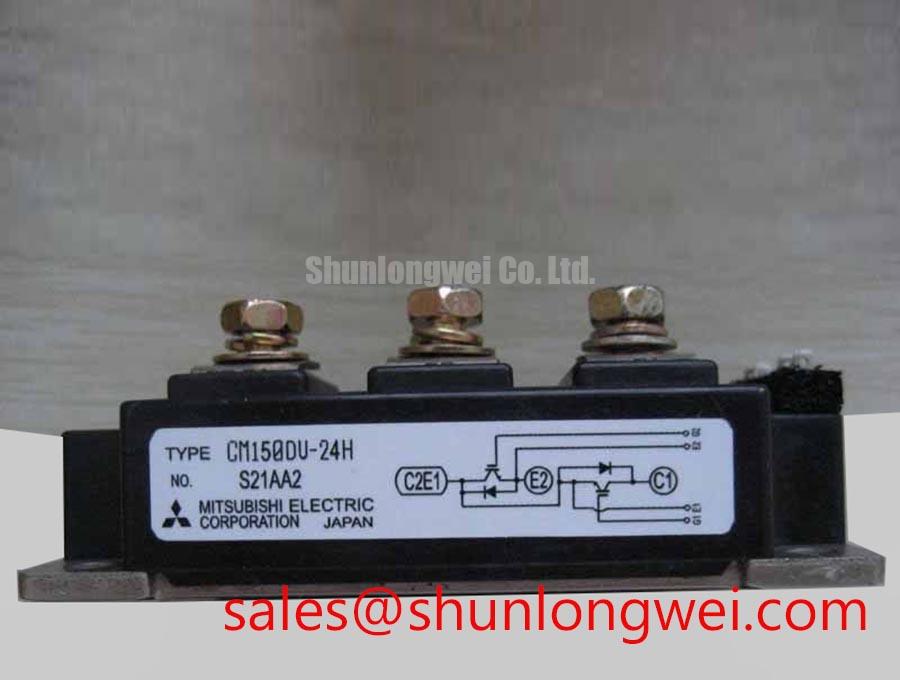
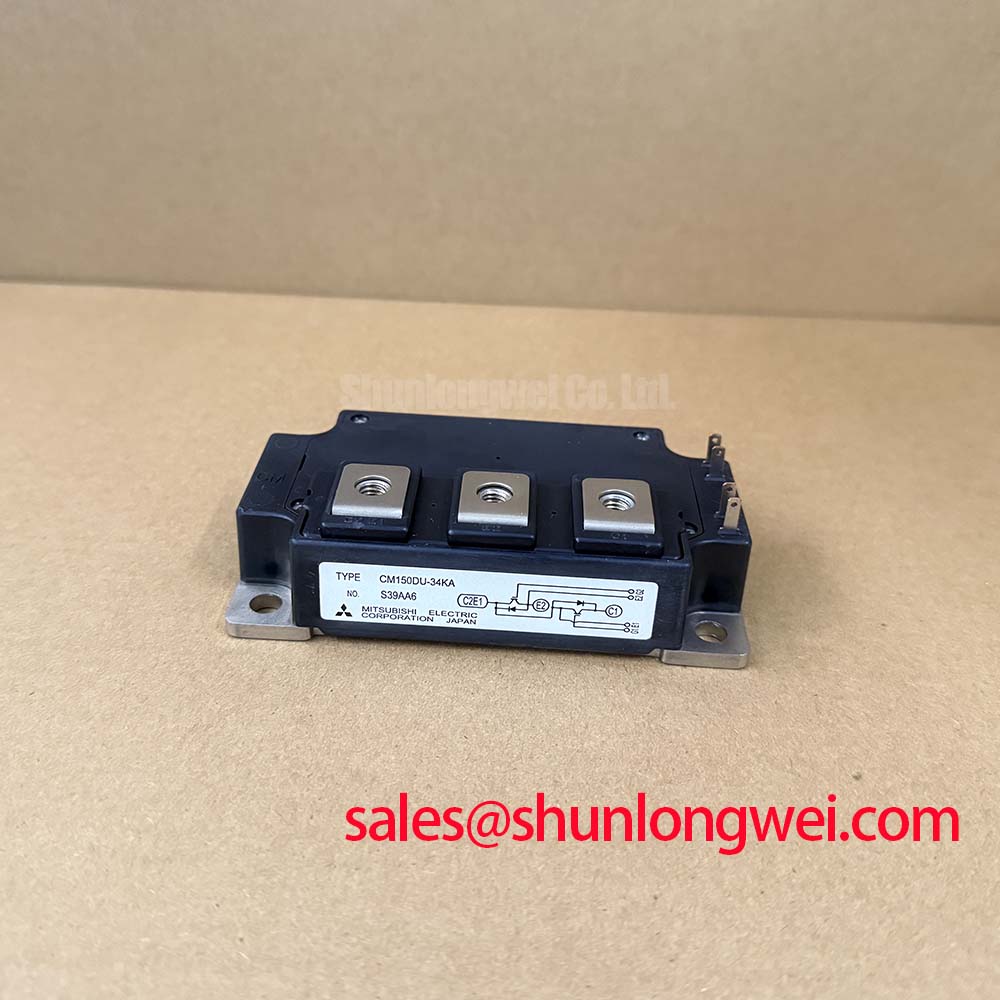
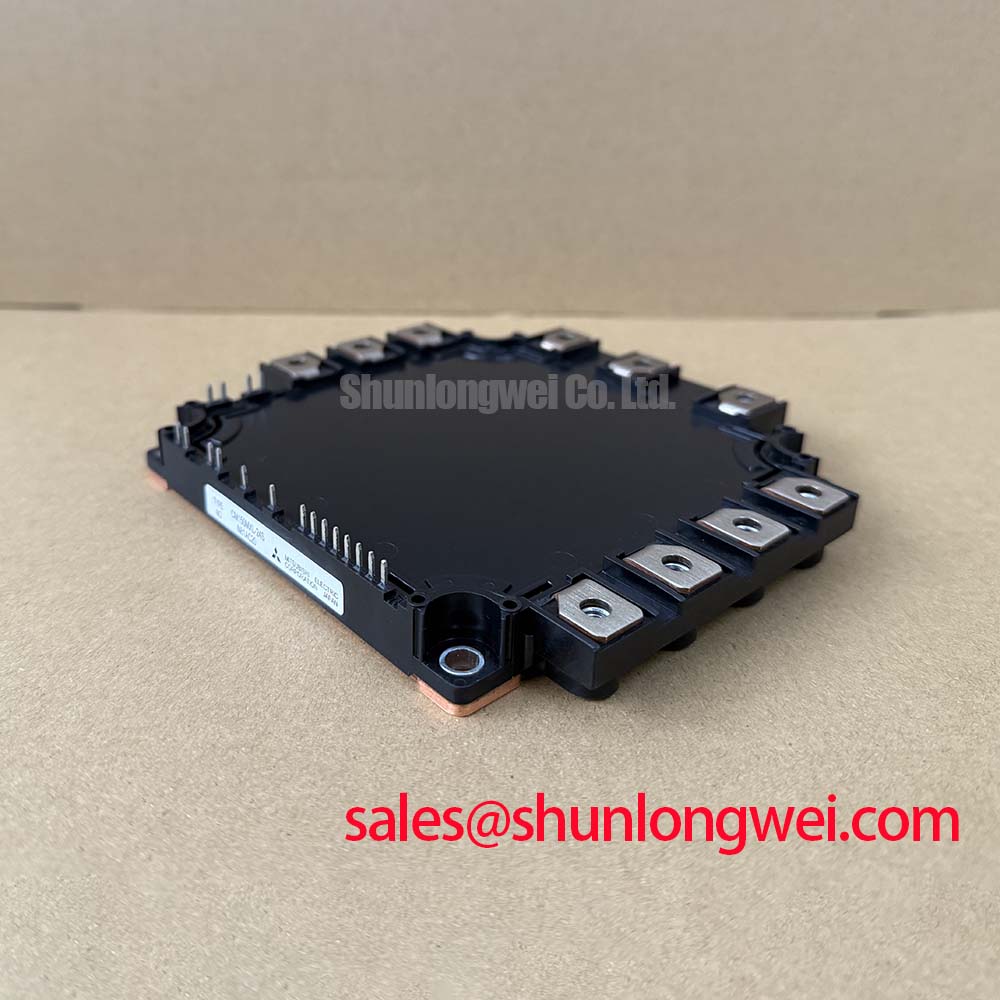
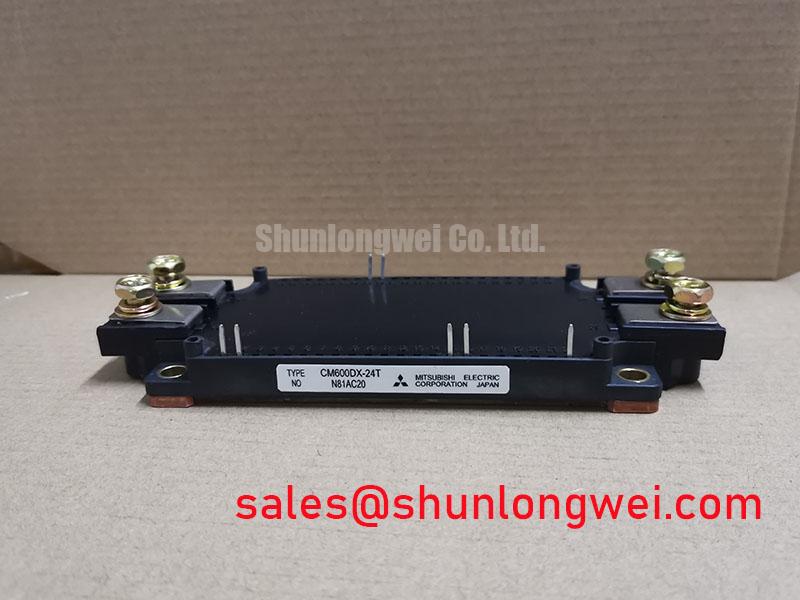
Mitsubishi CM150DU-24NFH 1200V 150A High-Speed IGBT Module
The CM150DU-24NFH is a specialized high-speed trench gate IGBT module belonging to the Mitsubishi Electric NFH-Series, designed for applications where switching efficiency at higher frequencies is the primary design constraint. By utilizing the CSTBT™ (Carrier Stored Trench-Gate Bipolar Transistor) architecture, this module delivers a collector-emitter voltage (Vces) of 1200V and a continuous collector current (Ic) of 150A. It is specifically optimized for soft-switching topologies and high-frequency resonant inverters, offering significantly lower turn-off switching losses (Eoff) compared to standard industrial modules. For high-frequency resonant inverters requiring minimal switching losses at 1200V, the CM150DU-24NFH is the precision choice.
Key Parameter Overview
Decoding the Specs for Enhanced Thermal Reliability
The following table outlines the critical technical specifications for the CM150DU-24NFH, based on official technical documentation. Understanding these values is essential for calculating system-level efficiency and thermal management requirements.
| Voltage and Current Ratings (Tj = 25°C) | |
|---|---|
| Collector-Emitter Voltage (Vces) | 1200V |
| Collector Current (Ic) | 150A |
| Total Power Dissipation (Pc) | 890W |
| Switching and Performance Metrics | |
| Collector-Emitter Saturation Voltage (Vce(sat)) | 5.0V (Typical at Rated Ic) |
| Turn-off Switching Loss (Eoff) | Optimized for High-Speed Switching |
| Gate-Emitter Threshold Voltage (Vge(th)) | 6.0V to 8.0V |
| Thermal and Mechanical Characteristics | |
| Thermal Resistance (Rth(j-c)) | 0.14 K/W (Per IGBT) |
| Maximum Junction Temperature (Tj) | +150°C |
| Isolation Voltage (Viso) | 2500V AC (1 min) |
Download the CM150DU-24NFH datasheet for detailed specifications and performance curves.
Application Scenarios & Value
Achieving System-Level Benefits in High-Frequency Power Conversion
The NFH-Series optimization makes this module particularly effective in high-frequency induction heating and resonant power supply designs. In these environments, engineers often face the challenge of cumulative switching losses that can lead to thermal runaway when operating above 20 kHz. The CM150DU-24NFH addresses this by focusing on ultra-fast switching transitions, which reduces the energy dissipated during each cycle.
For example, in a medical X-ray power generator or high-power resonant converter, the low Eoff profile of the CM150DU-24NFH allows for a more compact heatsink design, thereby increasing the overall system power density. For systems requiring higher current handling while maintaining these high-speed characteristics, the CM300DU-24NFH offers a 300A rating within a similar technical framework. This module also finds significant utility in UPS systems and high-efficiency PFC stage architectures.
Technical & Design Deep Dive
A Closer Look at the NFH-Series High-Speed Architecture
The engineering behind the CM150DU-24NFH centers on the trade-off between conduction loss and switching speed. While a standard 1200V module might prioritize a lower Vce(sat) for low-frequency applications, the NFH architecture shifts the focus toward reducing the "tail current" during turn-off.
To visualize this, consider the switching process like a high-speed camera shutter: a standard module shutter might linger, letting in unnecessary light (energy loss), whereas the NFH series functions as a precision high-speed shutter, cutting off the current flow almost instantaneously. This high-speed performance is bolstered by the CSTBT™ structure, which maintains a stable carrier concentration. For designers, this means the module can be integrated into designs following IEC 61800-3 standards with fewer requirements for complex snubber circuits, provided that gate drive impedance is carefully managed.
Industry Insights & Strategic Advantage
Powering the Future of Resonant Power Electronics
As global industries move toward "Green Electronics" and more stringent efficiency regulations, the demand for high-frequency switching has escalated. Operating at higher frequencies allows for a reduction in the size of passive components like inductors and capacitors, which are often the bulkiest parts of a power system.
The CM150DU-24NFH is strategically positioned for the induction heating market and medical imaging sectors, where precision and thermal stability are non-negotiable. By minimizing switching energy, this module supports the transition to soft-switching topologies, which are essential for achieving the efficiency targets set by modern power density requirements. Engineers can gain further insights into optimizing these designs by reviewing our guide on IGBT selection for high-frequency designs.
FAQ
Technical Insights for Design Engineers
What is the primary difference between the CM150DU-24NFH and the standard CM150DU-24NF?
The NFH version is specifically optimized for high-frequency operation (typically above 20-30 kHz). While it may have a higher Vce(sat) than the standard NF series, it compensates with dramatically lower switching losses, making it the superior choice for resonant and soft-switching circuits.
How does the Rth(j-c) of 0.14 K/W influence the selection of a thermal interface material (TIM)?
A low thermal resistance of 0.14 K/W means the IGBT chip can effectively transfer heat to the module's baseplate. To maintain this advantage, engineers must select a thermal management solution with high thermal conductivity and ensure proper mounting torque to minimize the contact resistance between the module and the heatsink.
For further technical exploration, engineers may find our analysis on IGBTs in high-frequency induction heating particularly relevant for mapping module characteristics to system performance.