

Content last revised on September 10, 2026
Mitsubishi CM2400HCB-34N: 1700V 2400A High-Power IGBT Module for Heavy-Duty Traction and Grid Systems
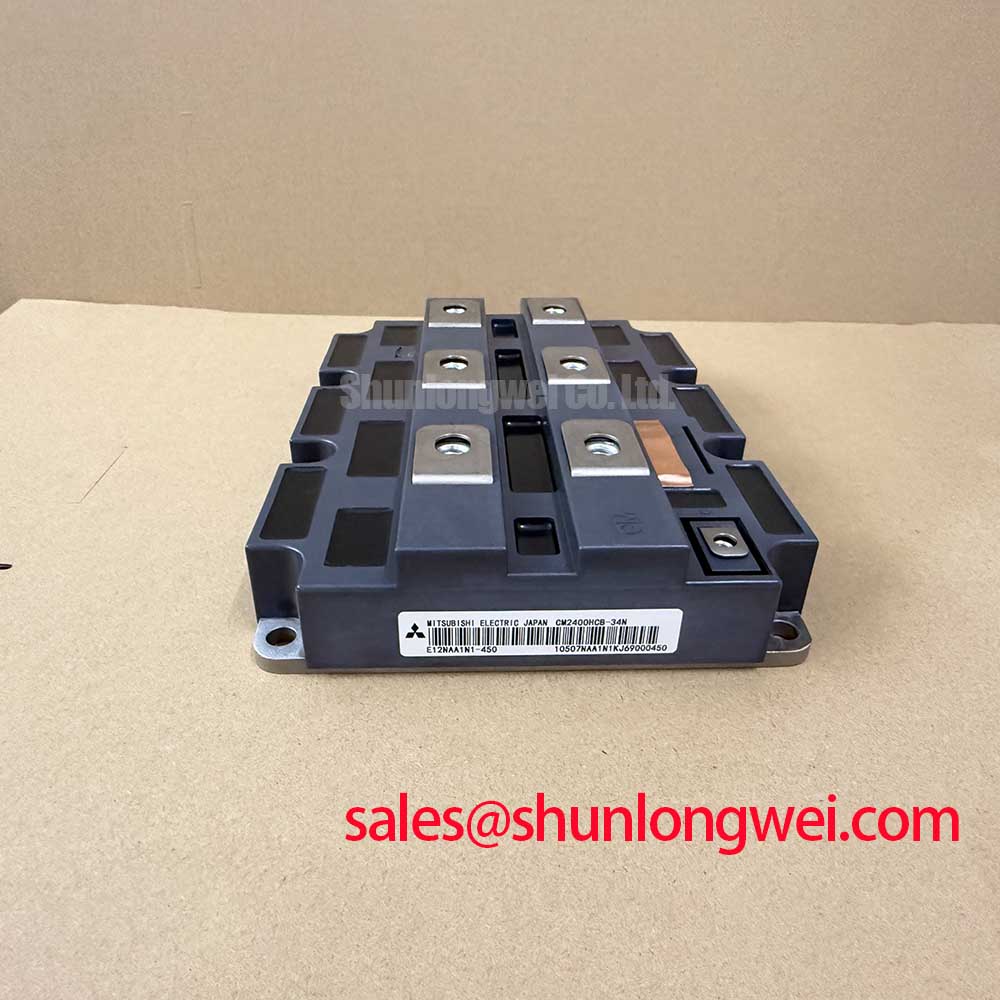
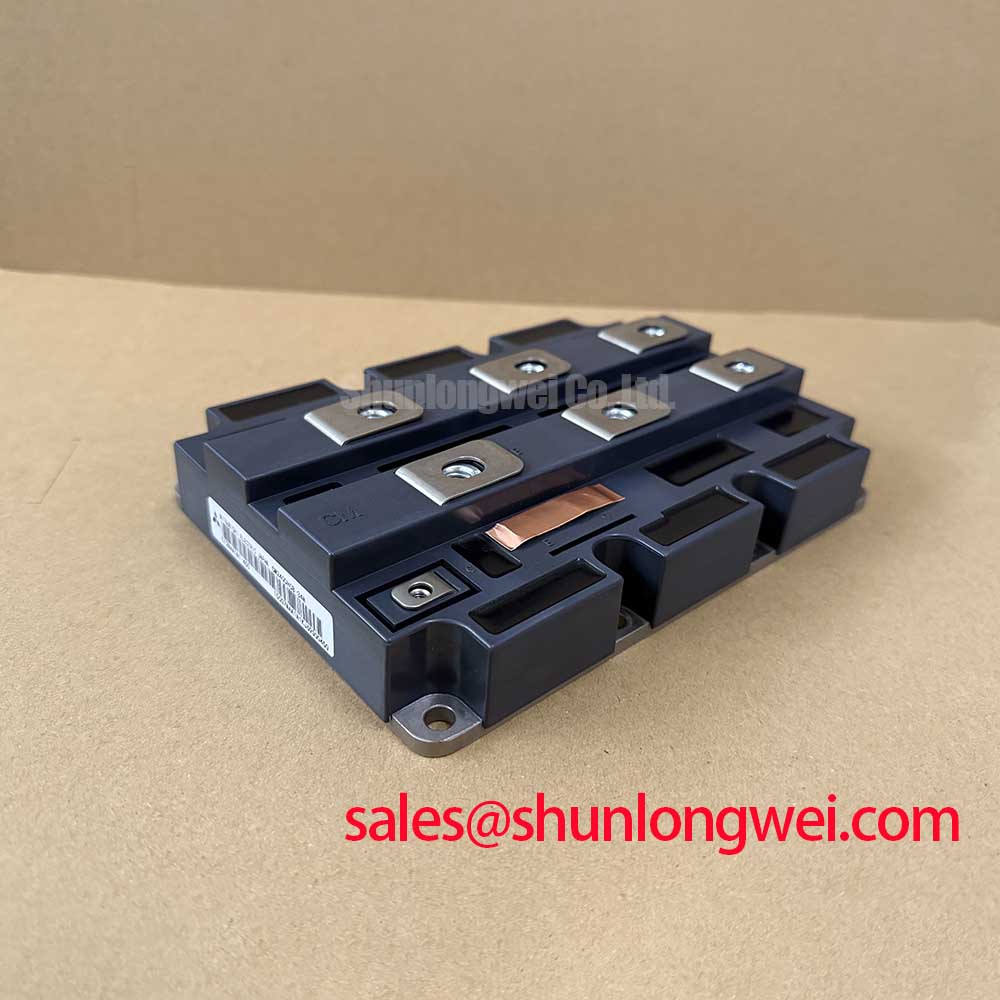
The Mitsubishi CM2400HCB-34N represents a pinnacle in high-power semiconductor engineering, delivering a massive 2400A collector current within a 1700V framework. This module is specifically designed to maximize power density while maintaining the rigorous thermal reliability required by high-speed rail traction and large-scale renewable energy conversion systems. By utilizing 5th Generation CSTBT™ (Carrier Stored Trench-gate Bipolar Transistor) technology, it offers an optimized trade-off between on-state voltage and switching losses, directly addressing the efficiency challenges in high-frequency, high-power environments. For engineers prioritizing long-term thermal margin in 1700V platforms, the CM2400HCB-34N is the definitive choice for robust power stage design.
Top Specs: 1700V | 2400A | CSTBT™ Technology
- Enhanced Thermal Efficiency: Industry-leading low junction-to-case thermal resistance for superior heat dissipation.
- High Current Density: Enables compact converter designs by handling 2400A in a standardized high-power package.
What is the primary benefit of the CSTBT™ architecture in the CM2400HCB-34N? It significantly reduces collector-emitter saturation voltage while maintaining a wide safe operating area for rugged industrial switching.
Key Parameter Overview
Decoding the Specs for Enhanced Thermal Reliability
Technical precision is paramount when evaluating modules of this scale. The following data highlights the CM2400HCB-34N's performance boundaries, focused on its ability to manage extreme electrical loads while minimizing internal heat generation.
| Symbol | Parameter Description | Typical / Max Value | Unit |
|---|---|---|---|
| V_CES | Collector-Emitter Voltage | 1700 | V |
| I_C | Continuous Collector Current (DC) | 2400 | A |
| V_CE(sat) | Collector-Emitter Saturation Voltage (Tj=125°C) | 2.20 | V |
| R_th(j-c) | Thermal Resistance (Junction to Case, IGBT) | 0.0084 | K/W |
| V_iso | Isolation Voltage (AC 1 min, 60Hz) | 4000 | Vrms |
| T_j | Operating Junction Temperature | -40 to +150 | °C |
Download the CM2400HCB-34N datasheet for detailed specifications and performance curves.
Application Scenarios & Value
Achieving System-Level Benefits in High-Power Conversion
The Mitsubishi CM2400HCB-34N is built for environments where downtime translates to significant economic loss. In the context of Traction Inverters for high-speed locomotives, the 2400A rating allows the system to handle the immense surge currents required during initial acceleration without exceeding safe junction temperatures. The 1700V blocking capability provides the necessary headroom for operation on 750V or 1500V DC bus lines, adhering to strict safety margins even during transient voltage spikes common in rail networks.
In renewable energy applications, specifically Wind Power Converters, this module serves as the primary switching element in the rotor-side or grid-side inverter. The CSTBT™ technology ensures that conduction losses are minimized during high-load periods, which is critical for meeting stringent energy efficiency regulations and reducing the total cost of ownership (TCO). Engineers can leverage the extremely low R_th(j-c) of 0.0084 K/W to optimize heatsink size or increase the system's power throughput under ambient temperature variations. This low thermal resistance acts like a high-capacity drainage pipe for heat; the wider the pipe (the lower the resistance), the faster the heat can "flow" away from the sensitive silicon junction, preventing catastrophic thermal runaway.
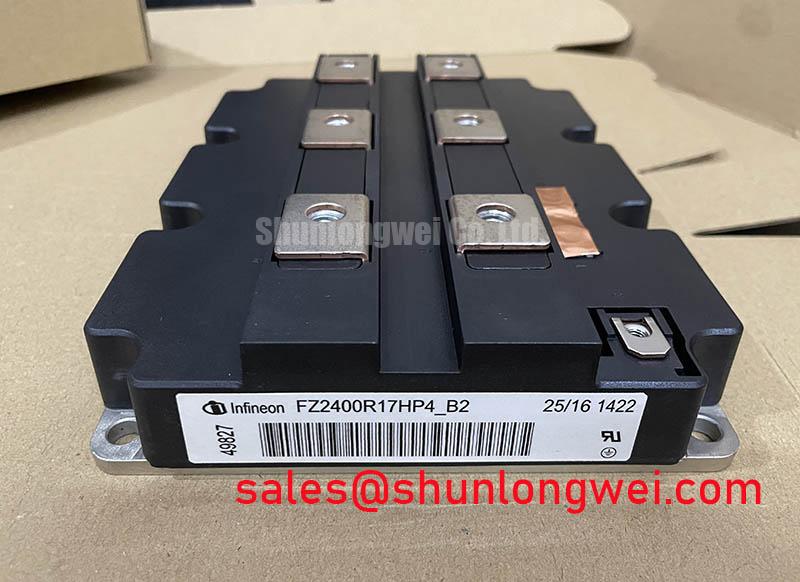
For systems requiring different current scaling or footprint considerations, the CM1200DB-34N offers the same 1700V rating at half the current capacity, while the FZ2400R17HP4_B2 provides a comparable 2400A alternative for cross-platform evaluation. Understanding the core trio of IGBT module selection—voltage, current, and thermal management—is essential for integrating such high-power components into IEC 61800-3 compliant industrial drives.
FAQ
Technical Insights for High-Power Integration
How does the R_th(j-c) of 0.0084 K/W directly impact heatsink selection and overall system power density?
The 0.0084 K/W rating is remarkably low for an IGBT module. This enables the designer to either use a smaller, more cost-effective cooling solution for a given power level or, conversely, to drive more current through the module without increasing the heatsink volume. This high thermal conductivity is a key enabler for increasing power density in constrained environments like locomotive under-carriages or compact offshore wind nacelles.
What design considerations are necessary to handle a 2400A continuous current at the busbar interface?
Handling 2400A requires meticulous attention to the parasitic inductance of the DC link and the mechanical integrity of the connections. Designers must use laminated busbars to minimize loop inductance, preventing damaging voltage overshoots during high-speed switching. Furthermore, the CM2400HCB-34N's terminals must be torqued precisely to manufacturer specifications to prevent localized ohmic heating, which could compromise the module's 150°C junction temperature limit.
Technical & Design Deep Dive
A Closer Look at the CSTBT™ Architecture for Long-Term Reliability
The heart of the CM2400HCB-34N is Mitsubishi's proprietary CSTBT™ (Carrier Stored Trench-gate Bipolar Transistor) technology. To understand its significance, consider a dam reservoir: by creating a "storage layer" for charge carriers (holes and electrons) near the emitter side of the trench gate, Mitsubishi effectively increases the carrier concentration during the "on" state. This "carrier reservoir" ensures that the voltage drop across the device remains low even at a massive 2400A load, much like a full reservoir maintains high pressure for power generation.
This architecture solves a classic engineering dilemma: reducing the V_CE(sat) usually results in slower switching or a narrower Reverse Bias Safe Operating Area (RBSOA). However, the CM2400HCB-34N achieves a typical V_CE(sat) of 2.2V without sacrificing the ruggedness required for inductive load switching. From a system-level perspective, this translates to higher efficiency in HVDC (High-Voltage Direct Current) systems and large UPS units, where every millivolt saved in conduction loss scales into kilowatts of reduced energy waste at the MW level. Natural integration into 3-level topologies further enhances harmonic performance, making it a cornerstone for modern IGBTs in wind-to-grid conversion technology.
As grid infrastructure and transportation systems demand ever-higher efficiency and reliability, components like the Mitsubishi CM2400HCB-34N provide the technical foundation for the next generation of power electronics. For engineering teams developing high-current 1700V converters, verifying these parameters against specific load profiles is the first step toward a resilient system design. Consult our technical specialists to align these specifications with your thermal management strategies and gate drive requirements.