Content last revised on September 10, 2026
CM150DUS-12F by Mitsubishi: A 600V Dual IGBT Module Engineered for High-Frequency Efficiency
Introduction: Balancing Power and Precision in Modern Converters
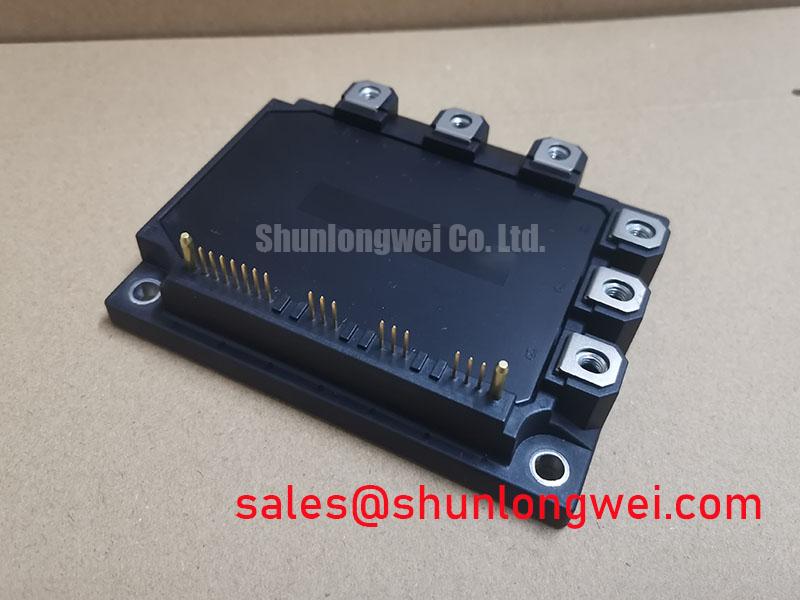
The Mitsubishi CM150DUS-12F, a key component in their F-Series of IGBT Modules, is engineered as a high-performance dual switch module designed to excel in demanding power conversion applications. This device delivers a robust combination of specifications: 600V | 150A | VCE(sat) 1.7V (typ.). By focusing on the reduction of both conduction and switching losses, it provides engineers a direct path to improving system efficiency and increasing power density. Key benefits include significantly lower total power dissipation and the capability for higher frequency operation. For engineers asking how to reduce power loss in mid-range converters, the CM150DUS-12F offers a compelling solution through its optimized semiconductor technology. Best suited for designers of motor drives and UPS systems targeting high efficiency and power density.
Application Scenarios & Value
Achieving System-Level Benefits in High-Frequency Power Conversion
The CM150DUS-12F is engineered for power systems where efficiency and compact design are critical design criteria. Its primary value is demonstrated in applications such as industrial Variable Frequency Drives (VFD), uninterruptible power supplies (UPS), and high-performance welding power supplies. In a typical VFD design, engineers are often challenged to increase switching frequency to reduce audible motor noise and shrink the size of passive components like output filters. However, higher frequencies inherently increase switching losses. The CM150DUS-12F directly addresses this challenge with its fast turn-on and turn-off characteristics, which minimize the energy lost during each switching event. This allows for a higher operational frequency without incurring a prohibitive thermal penalty, enabling a more compact, quieter, and efficient motor drive design.
What is the primary benefit of a low VCE(sat)? Reduced conduction losses and improved thermal performance. For systems requiring a similar current rating but for higher voltage bus applications, the CM150DY-24H provides a 1200V blocking capability. Conversely, for applications demanding higher current at the same 600V rating, the CM200DU-12F is an alternative to consider.
Key Parameter Overview
Decoding the Specs for Enhanced Switching Performance
The technical specifications of the CM150DUS-12F are carefully balanced to deliver optimal performance in its target applications. The parameters below highlight the module's capability for efficient and reliable power switching. Understanding these values is the first step in leveraging the module's full potential in your design, as detailed in many guides on decoding IGBT datasheets.
| Parameter | Symbol | Condition | Value |
|---|---|---|---|
| Collector-Emitter Voltage | VCES | - | 600V |
| Collector Current (DC) | IC | TC = 25°C | 150A |
| Collector-Emitter Saturation Voltage | VCE(sat) | IC = 150A, VGE = 15V | 1.7V (Typ.), 2.2V (Max) |
| Diode Forward Voltage | VEC | IE = 150A | 1.5V (Typ.), 2.0V (Max) |
| Turn-On Switching Loss | Eon | VCC=300V, IC=150A, RG=5.1Ω | 12.5 mJ/pulse (Typ.) |
| Turn-Off Switching Loss | Eoff | 16.0 mJ/pulse (Typ.) | |
| Thermal Resistance (IGBT) | Rth(j-c) | Junction to Case | 0.24 °C/W (Max) |
| Maximum Junction Temperature | Tj | - | 150°C |
Download the CM150DUS-12F datasheet for detailed specifications and performance curves.
Technical Deep Dive
The Engineering Trade-Off: Conduction vs. Switching Losses
In power electronics design, a fundamental challenge is managing the trade-off between conduction losses and switching losses. The CM150DUS-12F leverages Mitsubishi's advanced semiconductor technology, such as their CSTBT™ (Carrier Stored Trench-gate Bipolar Transistor) structure, to optimize this balance. The low VCE(sat) is a direct measure of conduction efficiency. Think of it as the 'electrical friction' the device exhibits when fully turned on; a lower value means less power is wasted as heat while current flows through the device. This is critical in applications with high duty cycles, such as motor control.
Simultaneously, the module's fast switching times (ton, toff) are crucial for minimizing switching losses, which occur during the transition between the on and off states. This can be compared to the energy required to quickly open and close a heavy valve; a faster, more agile valve wastes less energy during each cycle. By minimizing both sources of loss, the CM150DUS-12F enables higher overall system efficiency, reduces the requirements for thermal management hardware, and supports the design of more compact and reliable power converters.
Frequently Asked Questions
How does the low VCE(sat) of the CM150DUS-12F contribute to system reliability?
A low VCE(sat) directly translates to lower conduction losses, meaning less heat is generated within the IGBT chip for a given current. This results in a lower junction temperature, which is a critical factor for long-term reliability and extending the operational lifetime of the power module. It also provides a greater thermal margin, making the system more resilient to overload conditions.
What are the design considerations for the gate drive circuit given the module's fast switching speed?
To fully exploit the fast switching speeds of the CM150DUS-12F and minimize losses, the gate drive circuit must be designed with low stray inductance. A proper layout, the use of a negative gate voltage for turn-off to prevent parasitic turn-on, and a carefully selected gate resistor (RG) are essential to control switching speed and manage dv/dt and di/dt, thereby ensuring both efficiency and electromagnetic compatibility (EMC).
Is the CM150DUS-12F suitable for hard-switching topologies?
Yes, this module is specifically designed and characterized for hard-switching applications. Its low switching loss values (Eon and Eoff) and integrated fast-recovery free-wheeling diode (FWD) make it well-suited for classic hard-switched converter topologies like pulse-width modulated (PWM) inverters and choppers where efficiency is paramount.
Strategic Advantage in System Design
Integrating the CM150DUS-12F into a power system is a strategic decision that aligns with key industry trends toward greater energy efficiency and power density. Its optimized performance allows designers to not only meet but exceed modern efficiency standards. By reducing the thermal load and enabling the use of smaller passive components, this module provides a tangible advantage in developing next-generation power converters that are more compact, reliable, and cost-effective over their lifecycle.