

Content last revised on September 25, 2026
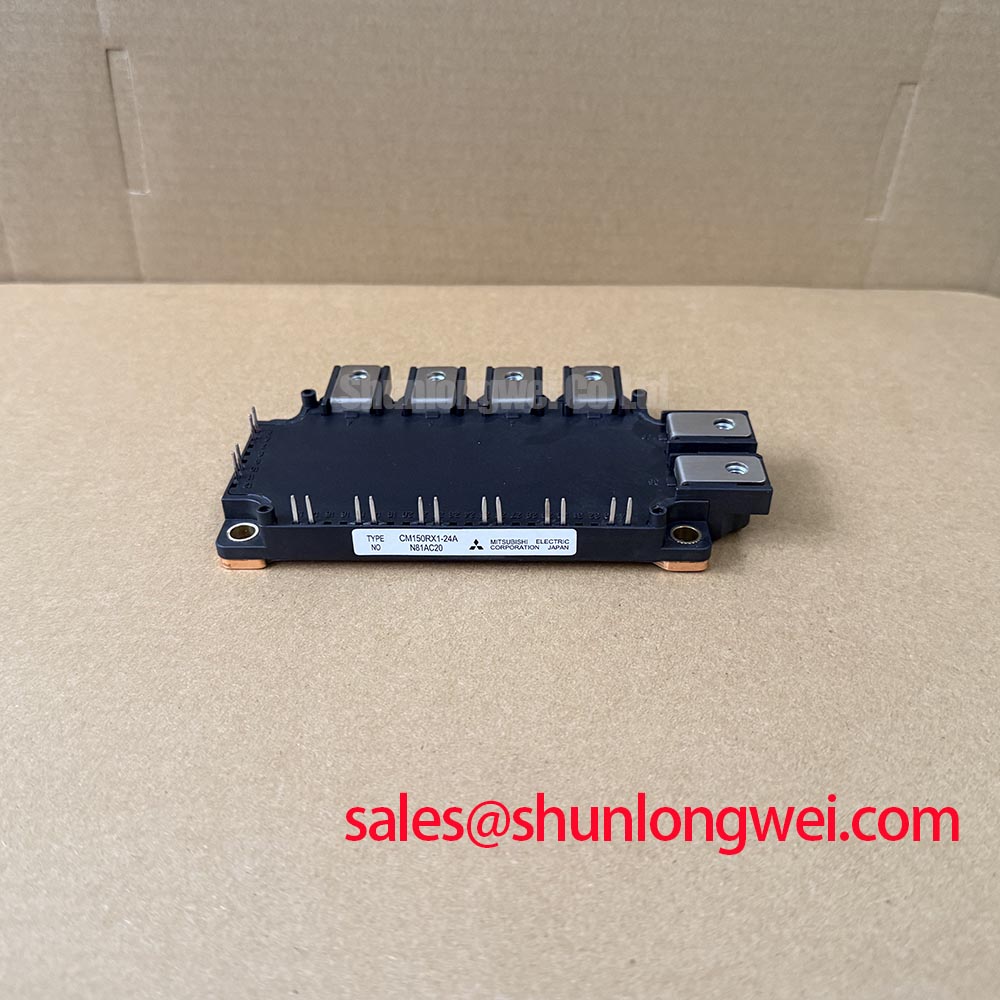
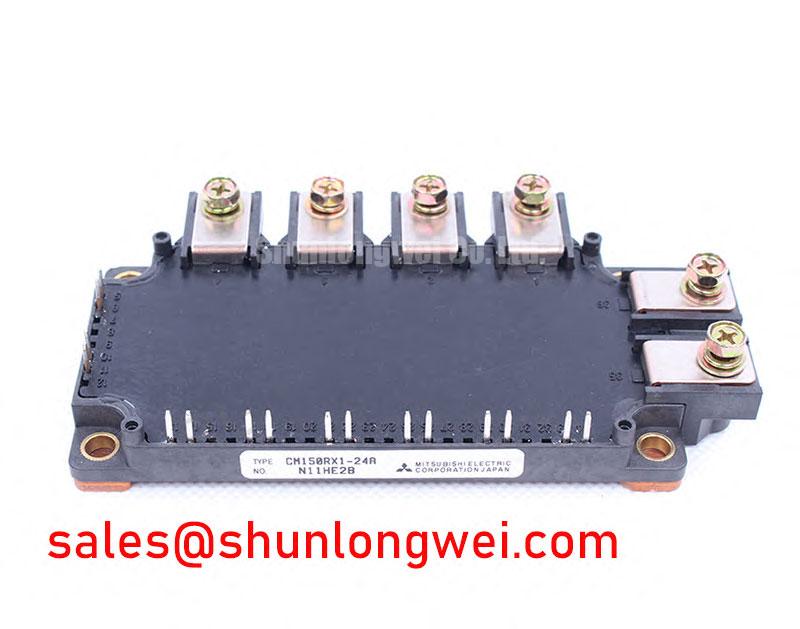
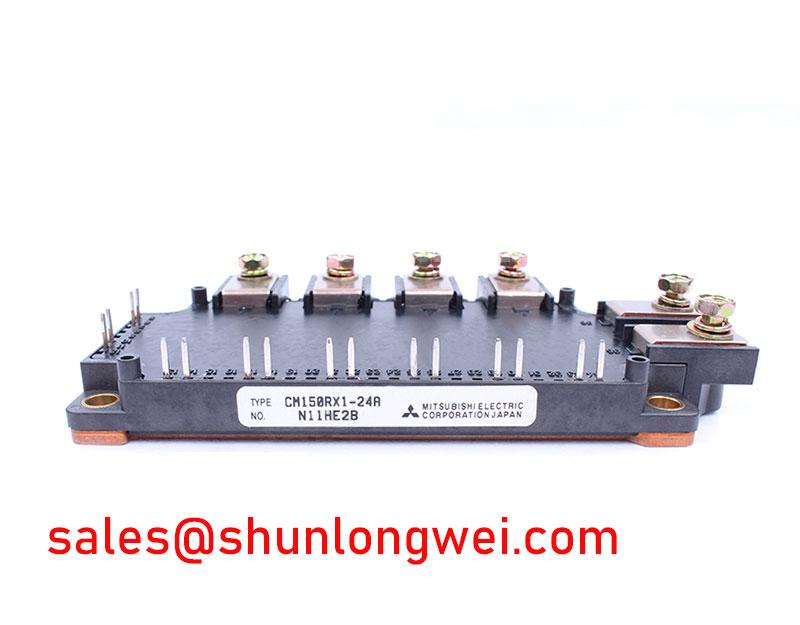
CM150RX1-24T Mitsubishi 1200V 150A IGBT Module for High-Reliability Power Conversion
For 690V-class industrial drives that demand thermal headroom and switching efficiency, the CM150RX1-24T from Mitsubishi Electric delivers a robust 1200V, 150A platform built on advanced trench-gate IGBT technology. A low-loss chip set paired with optimized internal layout trims both conduction and switching losses, easing the thermal burden on your heatsink. Key benefits at a glance: reduced power dissipation, integrated brake chopper, and stable operation under demanding load cycles. For mid-power three-phase inverters prioritizing efficiency and thermal margin, this 1200V module is an industry-standard fit.
Application Scenarios & Value: Translating Switching Efficiency into Real-World Power Density
Engineers building variable-frequency drives often wrestle with the same constraint: how to push more current through a fixed enclosure without exceeding junction temperature limits. The CM150RX1-24T addresses this directly. Its low VCE(sat) and reduced turn-off energy let designers raise carrier frequency in a variable frequency drive while keeping losses in check.
Consider a 75 kW pump or fan drive operating from a 480V line. During motor start, inrush current can spike well above nominal. The module’s 150A collector rating and rugged short-circuit handling give the design the margin needed to ride through these transients without nuisance trips. This makes it well suited to industrial automation, UPS systems, and PFC stages where reliability under repetitive stress is non-negotiable. This device is commonly applied across solar inverters, servo drives, and welding power supplies.
For higher current density at the same voltage class, the related CM150RX-24T offers a closely matched alternative, while designs needing larger current capability can evaluate the CM300DY-24H. Teams seeking a dual-pack configuration at this rating may also review the CM150DY-24H.
Key Parameter Overview: Decoding the Specs for Enhanced Thermal Reliability
The following table provides verified factory electrical and thermal specifications for the CM150RX1-24T module:
| Parameter | Symbol | Value | Specification Type |
|---|---|---|---|
| Collector-Emitter Voltage | VCES | 1200V | Official Datasheet Specification |
| Continuous Collector Current | IC | 150A | Official Datasheet Specification |
| Peak Collector Current | ICM | 300A | Official Datasheet Specification |
| Gate-Emitter Voltage | VGES | ±20V | Official Datasheet Specification |
| Internal Configuration | Topology | Seven-Pack (Inverter + Brake Chopper) | Official Datasheet Specification |
| Isolation Voltage | VISO | 2500V AC (1 min) | Official Datasheet Specification |
| Manufacturer | Brand | Mitsubishi Electric | Official Datasheet Specification |
Two parameters deserve a closer read. The 1200V VCES rating provides a comfortable safety factor over 600V–690V DC bus voltages, much like specifying a bridge rated well above its expected peak traffic load. The peak current capability of 300A acts as a shock absorber, allowing the device to handle brief overload events that would stress a thinly rated part. Understanding these margins is central to selecting the right heatsink and avoiding thermal derating in the field. For comprehensive architectural guidance, refer to our foundational analysis on IGBT design integration, gate drive and thermal management.
Technical Deep Dive: How Trench-Gate Design Lowers Conduction and Switching Penalties
The trench-gate cell structure used in this module narrows the trade-off between on-state voltage and switching loss. By increasing channel density, the design lowers VCE(sat) without forcing a proportional rise in turn-off tail current. The practical outcome is cooler operation at a given output power.
Think of switching loss like friction in a moving mechanism. Every transition between on and off generates heat. A faster, cleaner switch reduces that friction, so less energy is wasted as the device toggles thousands of times per second. This becomes decisive in high-frequency designs, where accumulated switching loss can dominate the thermal budget.
The co-packaged free-wheeling diode is matched to the IGBT’s switching profile, controlling reverse recovery and limiting voltage overshoot. Device integration conforms to standards such as IEC 60747-2 Semiconductor Devices, supporting cleaner EMC behavior under adjustable-speed motor drive operation. Further technical insights into Mitsubishi power device packaging can be reviewed via Mitsubishi Electric Power Semiconductors official documentation.
Frequently Asked Questions
Does the 1200V rating suit a 690V industrial line?
Yes. The 1200V VCES provides ample margin above a rectified 690V bus, leaving critical headroom for line transients and switching overshoots.
How does the 300A peak current rating affect overload design?
The 300A ICM lets the module ride through brief motor inrush and dynamic load surges, simplifying protection coordination and eliminating nuisance trips.
What thermal design considerations apply to the CM150RX1-24T?
Standard industry assembly guidelines recommend uniform heatsink mounting torque (2.5–3.5 N·m for M5 screws) and an even thermal paste layer (50–80 μm) to maintain thermal resistance Rth(j-c) within datasheet limits.